
The claim
What OpenAI actually said it solved — and what is still unverified
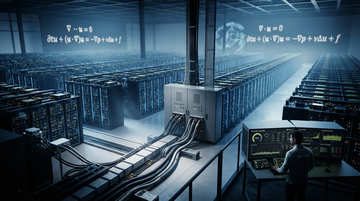
On September 8, 2026, OpenAI published a 249-page manuscript plus a machine-checkable Lean proof on GitHub asserting that an internal AI model — described as significantly more capable than GPT‑6 Astra — proved a finite-time blowup for the 3D incompressible Navier–Stokes equations. The result, an open problem for roughly 90 years, is one of seven Clay Mathematics Institute Millennium Prize Problems and carries a $1 million award. The company's own account states the work was driven by roughly 10,000 coordinating agents that reached the resolution on Saturday, September 5, about 88 hours after the first agents were launched on September 1.
The claim is narrower than the headline suggests. Theorem 1.1 of the OpenAI paper proves blowup for the forced Navier–Stokes equations on ℝ³ and the 3-torus T³, with a smooth, compactly supported external force — not the unforced problem (alternative C in Fefferman's Millennium formulation) that the prize was framed around. OpenAI's writeup argues this addresses alternative (D) as well, and notes that the result, taken with a related unforced-Euler work, contradicts the unforced smoothness hypothesis. Still, the Clay Mathematics Institute's problem page for Navier–Stokes carries no formal recognition of any solution, and the institute has not publicly accepted or rejected the claim. As of September 9, no independent mathematician has stated that they have fully audited the Lean certificate.
- The Millennium Prize Problem asks for a proof about unforced Navier–Stokes; OpenAI proved blowup for forced Navier–Stokes, a related but technically weaker statement that the paper argues still answers parts of the original problem.
- The Lean certificate is on GitHub in a single-commit repository with ~1,500 stars, and OpenAI concedes the model itself is not being released for independent experimentation.
- A machine-checked proof, if it survives community audit, would be the first Millennium-grade result attributable to a frontier AI model — that is the real precedent, regardless of the prize committee.
The compute
10,000 agents, 88 hours, ~130 billion output tokens — and a $6.5M–$40M cost range
Strip the math away and the Navier–Stokes effort looks like a budget line. OpenAI's own writeup reports the Navier–Stokes work alone consumed about 2.7 million agent messages and roughly 130 billion output tokens, with an additional 17 hours of Lean formalization on GPT‑6 Astra. Across all problems the team worked on in the same period — ten-plus open problems including the related Euler result — agents sent 4.9 million messages and produced about 300 billion output tokens. At consumer API rates, the output-token cost for Navier–Stokes alone lands at roughly $6.5 million; total estimated cost across the run, including input tokens and compute, is reported at $10 million to $40 million.
OpenAI's own framing, in a September 8 companion post, is that the research organization now consumes about 3.1 agent-workdays for every human workday, and that the same swarming pattern is being turned inward on day-to-day R&D. If that ratio scales with capacity, the implied research budget is no longer a small line item; it is the largest single input cost on the income statement. That changes how investors should value the gap between OpenAI's $852 billion March 2026 post-money valuation and the cash-burn forecasts that an S‑1 would have to disclose.
Wall-clock to solution
~88 hours
From agent launch on Sept 1 to resolution on Sept 5, plus 17 hours of Lean formalization
Concurrent agents at peak
~10,000
Per OpenAI's post; Buckmaster and Alpöge posted competing papers ~12 hours earlier
Output tokens on Navier–Stokes
~130 billion
Per OpenAI; ~2.7M agent messages
Output tokens across all problems
~300 billion
Ten-plus open problems, including unforced-Euler blowup
API-rate cost for N–S output tokens
~$6.5M
At OpenAI's published consumer rate of ~$50/M output tokens
Run-rate research productivity
3.1 agent-days per human-day
OpenAI Research Organization, mid-August 2026
Supply chain
Six stocks absorb the bill: Microsoft, NVIDIA, AMD, Broadcom, Oracle, Salesforce
OpenAI's claim is unverified, but the compute it consumed is real, contracted, and partially disclosed. The agent fleet ran on a stack OpenAI has spent two years assembling across at least six publicly disclosed partners, and the same stack has to scale to absorb whatever follow-on workload a 'PhD-per-watt' productivity claim implies. The marginal buyer of AI capacity is not a hyperscaler; it is OpenAI's own R&D function, contracting through hyperscalers and direct GPU partners.
Microsoft sits in two seats at once — Azure exclusive cloud host, and equity holder. The February 2026 joint statement reaffirmed Azure as the exclusive provider of stateless OpenAI APIs, including any future third-party collaborations (e.g., the Amazon partnership announced in March 2026), and Microsoft retains its exclusive IP license across OpenAI models. Microsoft also recognized about $6.5 billion in net gains on its OpenAI investment in fiscal 2026, including the dilution gain from the OpenAI recap, a tailwind in a year when Microsoft otherwise spent $115.9 billion in capex, almost 80% more than fiscal 2025.
NVIDIA is the largest single counterparty. Its 10 GW letter of intent and up to $100 billion of progressive investment tie the chip leader directly to OpenAI's R&D capacity, and the August 2026 conditional $105 billion financing guarantee on the Ohio SB Energy site extends the same exposure into the power-and-real-estate layer. NVIDIA's most recent quarter (Q2 FY2027, ended July 26, 2026) booked $96.2 billion of revenue and $63.7 billion of operating income, so the math problem is not the chip seller's bottleneck — it is the customer's ability to keep drawing down the contracted gigawatts.
AMD and Broadcom are the second-source swing factors. AMD's Q2 FY2026 revenue jumped 50% year over year to $11.5 billion with a 54% gross margin, and its Data Center segment alone grew 107% — a step-function that the OpenAI 6 GW deal materially underwrites. The first gigawatt of MI450 is to deploy in 2H 2026; warrant tranches vest on those purchase milestones, with the OpenAI warrant exercisable through October 5, 2030. Broadcom is the custom-silicon arm: the June 2026 'Jalapeño' inference chip, co-designed with OpenAI in nine months, is the first deployment of the 10 GW custom-accelerator program; Q2 FY2026 revenue of $22.2 billion and $10.9 billion of operating income give Broadcom the R&D headroom to absorb that custom program alongside its mainline AI ASIC and Tomahawk networking franchises.
Oracle is the most fragile link. OpenAI's 4.5 GW Stargate expansion from July 2025 is the contracted volume, but in March 2026 Oracle walked away from expanding the flagship Texas Stargate site, and a February 2026 report indicates the $500 billion Stargate program is stalling on unresolved Oracle/SoftBank/OpenAI disputes. Oracle's Q4 FY2026 capex of $16.5 billion on $19.2 billion of revenue is a clear sign it is willing to fund the build; the question is whether OpenAI redirects those watts to NVIDIA-tied or Broadcom-tied sites. Salesforce is the cleanest downstream read on whether OpenAI's R&D output actually flows to enterprise customers — its October 2025 partnership expansion with OpenAI puts frontier OpenAI models behind Agentforce, and Salesforce's Q2 FY2027 revenue of $11.3 billion and $2.3 billion of operating income are the public-market proxy for that channel.
Latest-quarter capex burden: how each counterparty's most recent quarterly capex stacks up against its revenue
Trailing-quarter capex as % of revenue, from the most recent 10-K or 10-Q disclosed by each company
Unit: Capex % of revenue
Microsoft (FY26 Q4)
$35.8B capex on $90.0B revenue
39.8%
Oracle (FY26 Q4)
$16.5B capex on $19.2B revenue
85.9%
NVIDIA (FY27 Q2)
$2.7B capex on $96.2B revenue
2.8%
AMD (FY26 Q2)
$0.8B capex on $11.5B revenue
7%
Broadcom (FY26 Q2)
$0.2B capex on $22.2B revenue
1%
Salesforce (FY27 Q2)
$0.2B capex on $11.3B revenue
1.5%
The S-1 math
What the math headline does to OpenAI's S-1 calculus
OpenAI closed a $122 billion private round in March 2026 at an $852 billion post-money valuation, with a reported $1 trillion IPO target in the second half of 2026. The math headline lands squarely in the middle of that timeline. It does two opposing things to the equity story. On the upside, it gives the prospectus a marquee R&D result to anchor the 'frontier capability' narrative; on the downside, it forces the S-1 to disclose the agentic-compute line in a way the company has previously kept opaque.
OpenAI's own 'work now within reach' framing — 3.1 agent-days per human-day of research labor — is the most direct preview of what an S-1 will have to say. If the ratio holds across the research organization, output-token burn scales linearly with the number of problems the company is willing to throw its swarm at, and the Navier–Stokes run's $6.5M–$10M output-token cost becomes a per-initiative unit. Investors stress-testing the cash-burn forecasts that Reuters has reported ($27B in 2026, $63B in 2027) should ask which of those dollars are agentic-research burn, which are training, and which are user-facing inference.
The inference side of the equation is moving in OpenAI's favor. On July 30, 2026, OpenAI cut API prices 80% on GPT‑5.6 Luna and 20% on Terra, citing a 20% reduction in end-to-end serving cost from GPT‑5.6 Sol kernel work and 15%+ gains in token-generation efficiency. That trajectory — cheaper inference, more expensive research — is the textbook shape of an AI economics S-curve, and the Navier–Stokes result is the cleanest public evidence so far that research-side productivity is moving on a similar curve.
- Inference economics: serving cost on the GPT‑5.6 line is down 20% and token-generation efficiency is up more than 15% versus the prior generation, per OpenAI's own July 30, 2026 post.
- Research economics: the Navier–Stokes run consumed ~130 billion output tokens in 88 hours; the question for the S-1 is how many such runs per year OpenAI is willing to fund.
- Equity overhang: at the $852B March 2026 mark, the next round is dependent on the IPO narrative — and the 10,000-agent headline gives that narrative a non-revenue anchor for the first time.
- Disclosure bar: a Millennium-grade AI result in the public domain will raise investor scrutiny of every other capability claim OpenAI makes in the S-1, including AGI framing, which the Microsoft joint statement still preserves as 'unchanged.'
What to watch
Short-term catalysts and long-term moat
Short-term (days to quarters), the catalyst list is short and specific: a Clay Mathematics Institute statement on whether the proof is accepted (none as of September 9); independent audit of the Lean certificate (the GitHub repository has 1 commit, 1,500 stars and 131 forks, but no third-party stamp); the OpenAI S-1 filing window (reported 2H 2026); and the Ohio SB Energy site financing closing tied to NVIDIA's $105B conditional guarantee. Of these, the Clay response and the S-1 disclosure are the two that will move Microsoft and Oracle the most, because they directly determine whether the announced compute spend lands in fiscal 2027 income statements as revenue or as a renegotiated capex cycle.
Long-term (1 to 3 years), the structural question is whether the '10,000 agents in 88 hours' pattern repeats. If it does, NVIDIA's contracted 10 GW and Broadcom's custom-accelerator pipeline give both names visibility into a frontier-lab R&D budget that has historically been invisible. AMD's MI450 ramp and warrant structure are the cleanest exposure to that scaling, conditional on OpenAI hitting the 1 GW first-tranche milestone in 2H 2026. Microsoft's risk is the opposite: its $115.9 billion fiscal 2026 capex bill is the largest single line in the AI infrastructure build, and any agentic-compute productivity gain accrues to OpenAI's valuation, not to Azure's P&L. Salesforce is the cleanest downstream read on whether the research output translates into paid enterprise product.
- Days–quarters: Clay statement, Lean audit, OpenAI S-1 filing window, Ohio/NVIDIA financing close, Oracle–OpenAI Stargate renegotiation outcome.
- 1–3 years: NVIDIA gigawatt drawdown under the 10 GW LoI; AMD MI450 first-gigawatt deploy in 2H 2026 and OpenAI warrant vesting; Broadcom Jalapeño ramp and follow-on custom chips; Microsoft capex absorption rate; Salesforce Agentforce attach through OpenAI models.
- Bear-case triggers: Clay rejection, an unfixed Lean error, a re-cut of the Stargate program, or a capex freeze at Microsoft / Oracle.
- Bull-case triggers: Clay recognition, clean third-party Lean audit, OpenAI S-1 with explicit agentic-R&D disclosure, and a quarterly Microsoft capex-to-revenue ratio that does not accelerate further.
How the Navier–Stokes claim maps to specific listed names
- Exposed to $115.9B FY2026 capex and a revenue-share cap on OpenAI; the $6.5B FY2026 OpenAI dilution gain is the largest single equity-level tailwind, but Azure's exclusive-cloud role means Microsoft absorbs compute-cost inflation before it passes through to OpenAI.
- Holds exclusive IP license across OpenAI models per the Feb 27, 2026 joint statement — preserves optionality on any revenue derived from OpenAI research productivity, but also locks Microsoft in as a counter-party on the cost side.
- Days–quarters: S-1 disclosure window is the next catalyst; 1–3 years: capex-to-revenue ratio (39.8% in Q4 FY2026) is the leading indicator of whether the OpenAI build pays off at the Azure line.
- 10 GW of contracted OpenAI systems and up to $100B of progressive NVIDIA investment tie the chip leader directly to OpenAI's R&D throughput, with a $105B conditional financing guarantee on the Ohio SB Energy site layered on top.
- Q2 FY2027 revenue of $96.2B and $63.7B of operating income give NVIDIA the headroom to fund the OpenAI investment without margin compression — capex/revenue is 2.8% in the most recent quarter.
- Days–quarters: First-gigawatt deployment in 2H 2026 is the next visible milestone; 1–3 years: drawdown rate against the 10 GW LoI is the structural read on whether OpenAI's R&D productivity claim survives scrutiny.
- 6 GW definitive agreement with OpenAI plus a warrant for up to 160M AMD shares at a $0.01 strike; Q2 FY2026 Data Center revenue grew 107% YoY, the cleanest segment-level evidence that the OpenAI pipeline is already translating to shipped silicon.
- First 1 GW of MI450 to deploy in 2H 2026 is the binary near-term catalyst; warrant tranches vest against purchase milestones through October 5, 2030, so the equity overhang scales with execution, not with the share price alone.
- Days–quarters: MI450 shipment cadence and 1 GW deploy sign-off; 1–3 years: vesting schedule and whether AMD becomes a genuine second source for OpenAI rather than a hedge for NVIDIA supply.
- 10 GW of custom OpenAI accelerators plus the June 2026 'Jalapeño' inference chip — Broadcom is the custom-silicon arm of the OpenAI stack, with Tomahawk networking and Celestica system integration inside the same program.
- Q2 FY2026 revenue of $22.2B and $10.9B of operating income mean Broadcom can absorb the OpenAI custom-program R&D without diluting the core AI ASIC franchise; capex/revenue of 1.0% leaves the balance sheet untouched.
- Days–quarters: detailed Jalapeño performance report expected in coming months per OpenAI; 1–3 years: deployment pacing under the 2H 2026 to end-2029 deployment window in the October 2025 term sheet.
- 4.5 GW Stargate expansion contracted, but the March 2026 walk-away from the flagship Texas site and the unresolved Oracle/SoftBank/OpenAI disputes make the actual volume binary rather than linear.
- Q4 FY2026 capex of $16.5B on $19.2B of revenue (capex/revenue 85.9%) shows Oracle is willing to fund the build; the question is whether OpenAI redirects contracted watts to NVIDIA-tied or Broadcom-tied sites.
- Days–quarters: resolution of the Stargate dispute and any contract revisions; 1–3 years: Oracle's ability to retain a meaningful share of OpenAI's 7+ GW of disclosed U.S. capacity.
- The October 2025 OpenAI partnership expansion puts frontier OpenAI models behind Agentforce — the cleanest downstream read on whether the research-productivity claim actually flows to enterprise customers, supporting the offsetting positive of $11.3B Q2 FY2027 revenue and $2.3B of operating income.
- Counter-pressure: Salesforce is also exposed to the same enterprise-AI cannibalization risk that frontier models bring to SaaS incumbents, which is why CRM trades at 22.8x trailing P/E versus the 80x+ multiples on the supply chain.
- Days–quarters: any attach-rate disclosure on Agentforce-on-OpenAI; 1–3 years: share of enterprise AI agent revenue that flows through the Salesforce–OpenAI channel.