Latest
The day's market news, with the argument attached
New notes every trading day on earnings, policy and market structure. Each one opens with the conclusion, then the evidence, then the companies it hits.
2026-11-09


Agentic Hiring Is Repricing the Fee Pool, Not Emptying It: Robert Half Earned 5.3% More per Placement in Q3 2026 While ManpowerGroup's Staffing Margin Fell 50 Basis Points
The November 8 recruiting-fee debate was aimed at the wrong line item: AI is deflating the billable hour, not the placement fee. Robert Half raised its average fee per placement 5.3% year over year while placing only 0.9% more candidates, and permanent placement still converts at a 99.8% gross margin, whereas ManpowerGroup grew revenue 4% but saw gross profit fall 1.2% as staffing margin contracted 50 basis points. The rent on those freed hours is migrating upstream into agent software and downstream into direct-hire platforms — Workday, Salesforce, Kanzhun and Recruit Holdings — not into consumer prices. With private-industry wages up just 3.1% and a 29% global hiring outlook, the December Fed decision turns on inflation prints and hiring volumes, not on agency margins.
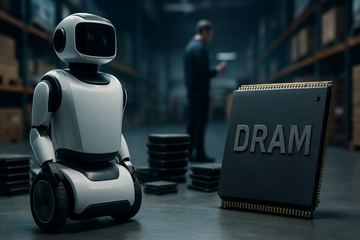
Amazon's Home-Robot Team Arrives Just as DRAM Prices Quadruple — iRobot's Collapse Shows Who Actually Wins
Amazon has assembled a home-robotics team and is hiring for a \"new-to-world robot product,\" according to a November 8, 2026 CNBC analysis of the company's own job postings. But this is not a category war: the benchmark brand iRobot was cancelled out in a Chapter 11 that handed 100% of its equity to its Chinese contract manufacturer, and Amazon's own first attempt, Astro, was retired in 2024. The binding constraint is the memory bill — DRAM prices have risen more than 400% since the start of 2024 and are still rising 10–15% quarter on quarter, while every robot class from cobots to humanoids needs memory bought at the worst prices in the modern DRAM cycle. Memory makers are already sold out through 2028 and do not need consumer robots; the cost lands on whoever tries to build one.

$2,000 a Kilowatt: Anthropic Paid Peak-of-Cycle for 1.7 GW of Turbines and Inherited the Gas Risk
Anthropic PBC agreed in late September 2026 to pay about $3.4 billion for commitments covering 1.7 GW of heavy-duty gas generators bought from OnePWR Solutions — roughly $2,000 per kilowatt for the machines plus the engineering scope to install them, the same all-in cost analysts put on a new combined-cycle plant. What the lab bought at peak-of-cycle prices was the right to skip the grid, and with it a fuel bill of roughly 0.25 Bcf per day: about $332 million a year at the EIA's 2026 Henry Hub forecast, and $95 million for every $1/MMBtu move. The cash itself went to the turbine order book and the construction chain, not to the grid — Caterpillar enters the fourth quarter with a record $78.1 billion backlog, and the developer that had been holding the slot exited with $3.4 billion. So this is a repricing of who buys power equipment in 2026-27, not a liquidity test of a company holding $131.7 billion of cash and about $895.4 billion of committed spend.
Anthropic's $895 Billion Compute Book Is Financed by Suppliers — While CoreWeave's Debt Yields 16%
Anthropic's amended prospectus was filed on Nov. 2, not Nov. 8 or 9, and it is not a bond deal: it adds a roughly $17 billion third quarter and $895.4 billion of purchase commitments while registering no new public debt. The $10 billion figure belongs to Alphabet's option over Class N shares at the IPO price, and the real debt capacity is roughly $77 billion of bilateral convertible notes from Alphabet, Amazon and Broadcom. That structure has split AI credit into two markets that never meet: CoreWeave's 2032 bonds cleared above 16% yield with five-year CDS near 1,155 basis points the same week Alphabet priced a 16-tranche investment-grade deal from 2.375% to 5.500%. The read-through for investors is that contract structure, not AI demand, now sets the price of AI infrastructure credit, and the risk has migrated onto the supplier guarantees and landlord backstops holding the other side of the buildout.

AppLovin's 43.9% Two-Session Jump Priced the Toll, Not the Quarter: Inference Cost 11 Cents on the Dollar
AppLovin closed 43.9% higher over Nov. 5 and Nov. 6 after reporting third-quarter revenue of $2.18 billion and an 84.3% adjusted EBITDA margin, but the print itself is not what moved the stock. Cost of revenue — the line where rented datacenter inference sits — fell to 11.0% of revenue from 12.4% a year earlier even as management shipped a model transition it calls 'as significant as Axon 2.0,' and 81 cents of every new revenue dollar dropped to operating income. Because AppLovin prices dynamically to campaign goals and books revenue net of publisher payouts, inference is the auction's input cost rather than the toll it charges, so the re-rating paid for pricing power, not for a beat. The cracks are already visible: Q4 guidance embeds an increase in data-center cost, and the constancy of model uplift is now the subject of a securities class action with a Nov. 16 lead-plaintiff deadline.
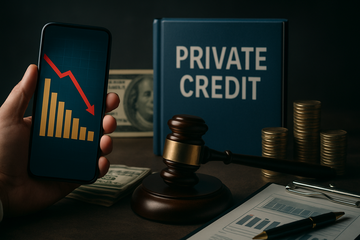
Australia Froze Four Private-Credit Funds in Five Weeks. The US Equivalent Covers $600 Billion — and the SEC Has Proposed It
Between September 22 and October 26, 2026, Australia's ASIC froze new subscriptions, secondary transfers and retail advice in four retail private credit funds holding A$1.66 billion of assets, and revoked every order within eleven days once the disclosure was fixed. The freezes were about the wrapper, not the credit, which is why the US read-through runs through flows rather than defaults: the retail semi-liquid shelf that promises liquidity at net asset value holds roughly $600 billion of the $2.66 trillion private credit universe the Federal Reserve began measuring on October 16, 2026. On September 30, 2026 the SEC proposed letting interval funds defer their first repurchase offer for up to two years, which would convert a promise of cash into an option held by the manager. For equity investors the transmission is fee-earning assets that keep compounding while the exit quietly closes.

China's 2.2 Trillion Yuan Deleveraging Is the Consumption Weakness the Market Is Misreading
Roughly 100 million Chinese borrowers — about one in ten adults — owe at least RMB 2.2 trillion in overdue personal debt, and the bad-debt market built to work that paper has grown from RMB 18.6 billion at end-2021 to RMB 454 billion at end-2025. Household credit is now contracting in every bucket (PBOC: -RMB 1.03 trillion in the first nine months of 2026), which is why retail sales grew only 1.1% while the value of car sales dropped about 23% year on year in September. The exposure for investors is not the consumer but the chain around them: Qfin Holdings and FinVolution on origination volume, China Cinda and China Renaissance Holdings on recovery rates, and ICBC, where the credit-card overdraft NPL ratio has already reached 5.37%.

China's 24-Point Tariff Suspension Got Two Months, Not a Year: October Imports +8.5%, January 2027 Forecast −1.9%
Beijing's suspension of 24 points of its April 2025 tariff on US goods, and of its rare-earth export controls, now runs to Jan. 10, 2027 — bought at the Sept. 24–26 Washington summit and still, as of Oct. 29, without a published implementing notice. The bridge changes nothing about the US duty stack (22.8% effective on Chinese goods in July 2026 against a 6.7% average) and everything about the two levers that can still break: China's retaliation and its rare-earth licensing. Because importers pulled orders forward — October volumes 8.5% above last year, January 2027 forecast 1.9% below — the decision that matters was made in December, when Chinese factories booked first-quarter books, so Walmart, Target, Hasbro, ZIM, MP Materials and China Northern Rare Earth are all trading on a deadline whose legal paperwork did not exist on Oct. 29.

China's 5.7% Producer Inflation Is an Import Bill, Not a Recovery — the Deflation Trade Is Delayed, Not Dead
China's factory-gate prices rose 5.7% year on year in October, the fastest since June 2022 and above the 5.3% consensus, while headline CPI slipped to 0.7% and core CPI to 0.8%. The surge is an imported energy bill, not a demand cycle: mining prices jumped 27.9%, consumer-goods producer prices still fell 0.1%, and capped retail fuel prices kept the shock out of the checkout basket. That transferred profit upstream — CNOOC and Sinopec earnings jumped while Baoshan Iron & Steel net profit fell 29.7% — and left the demand-driven deflation story intact. With Brent down 7.63% on Iran peace-talk headlines and monthly producer-price momentum already cooling from +1.2% to +0.7%, the actionable move is to fade the energy complex now and re-own Chinese deflation in 2027.
CoreWeave's Print Is a Coupon Test, Not a Backlog Test: 16% Marginal Debt Meets a $28 Billion Funding Gap
CoreWeave reports Q3 2026 after the close on November 10, and the $104 billion backlog will not decide the stock — the coupon will. Second-quarter interest expense of $640 million already consumed 94% of operating cash flow, management has guided the third quarter to $860–940 million, and the market demanded more than 16% on CoreWeave's 2032 notes even with the 10-year Treasury at 4.86%. Closing the $28–32 billion gap between 2026 capital spending and operating cash flow at that rate would add $4.5–5.1 billion of annual interest, roughly four times guided 2026 adjusted operating income, while funding the same gap with stock at $46.40 would roughly double the share count. Read the print for the interest line, the capex guide and the terms of any new issue — not the backlog.

Two Prices for Powered AI Land: Google's Undisclosed Wyoming Deal and the 45.5% Premium Paid Elsewhere
Alphabet's Google unit acquired Crusoe's stalled southeast Wyoming campus on Nov 6, 2026 and committed $17 billion to build on it, with neither side disclosing a price. The only other observable prints on powered AI land that week were premiums — a 45.5% premium for a non-control 9.9% stake in NEXTDC and talks about a $100 billion Vantage IPO — while the Nasdaq 100 shed $2.5 trillion in one trading day and IREN pushed $4 billion of revenue start to January 2027. The mechanism matters more than the headline: Google bought the entitlements and the schedule risk Crusoe could not carry, while the power itself (a 702 MW fuel-cell plant under a 20-year contract, a 2.7 GW gas hub, nearly 1 GW of contracted carbon capture) never changed hands. Investors should read this as a repricing of developer equity, not of powered capacity, and own the contracted power and the equipment with booked slots.
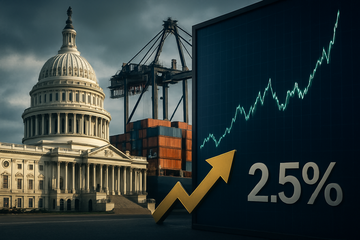
Gridlock, Not Relief: Democrats' January Tariff Bill Can't Undo Section 232 — and the Tape Is Trading a 2.5% Gridlock Rally
House Democrats will put tariff repeal on the floor in the first 100 hours of the 120th Congress, starting with the 50% duty on Canadian goods, but the tariffs that matter now live in statutes rather than proclamations — and with 54 Democratic senators, 60 needed for cloture and 67 to override a veto, real repeal is a 2027 problem, not a January one. The market has already voted on the headline: Costco, Dollar General and P&G rose on the Nov. 4 relief rally, but by no more than the Dow's 2.5% surge, which tells you investors are trading gridlock, not repeal. The tradeable split is between consumer names that rally on the promise of relief and the Section 232-protected steel and chip producers whose pricing power no House vote can touch.
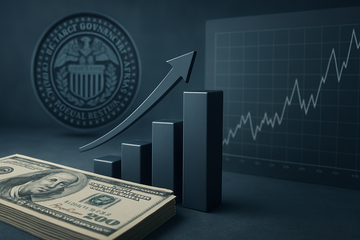
The Blue Sweep Closed Trump's Fed Path for 2027 — and Futures Already Paid for Two Hikes the Committee's Dots Don't Show
Democrats took both chambers on Nov. 3, and the first thing that changes is not fiscal policy but the Federal Reserve: a Senate that starts Jan. 3 can block every replacement Trump wants on the seven-member Board, so the 2027 rate path belongs to the sitting committee. Futures have already paid for that outcome — the two-year closed at 4.51% on Nov. 6, implying roughly two more increases in 2027, while the Fed's September median dot stops at 4.1% and holds there through the year. So the trade is no longer the Dec. 9 decision, which looks close to a formality; it is the projection round attached to it, and the roughly 50 basis points of 2027 tightening the dots must now validate. Bank earnings are already collecting the hiking cycle — JPMorgan Chase's net interest income rose 12.8% to $27.0 billion in Q3 2026 — while housing and long-duration assets are still paying for it at a 7.18% mortgage rate.
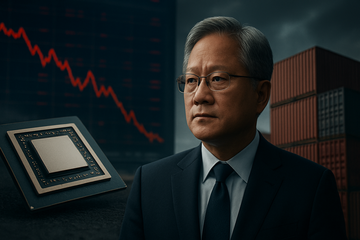
NVIDIA's Governance Risk Is a Multiples Problem; China's 34% Share Is a Revenue Problem Nobody Owns
The NVIDIA board opened an independent investigation on Nov 8, 2026 into whether founder and CEO Jensen Huang was the target of a foreign intelligence effort, hours after Huang told staff in writing that he had been unfaithful to his wife. The probe lands nine days before a quarter guided to $108.0 billion of revenue and one day before a closed-door Congressional briefing, so what it reprices is the multiple, not the earnings: the outlook already assumes no China data-center compute revenue and data-center Hopper shipments to China ran under 1% of data-center revenue. The number that matters more is one the probe makes riskier: China's share of AI accelerator shipments has fallen to 34% from 55% in 2025, roughly 600,000 H200 chips are sitting in Hong Kong awaiting Beijing's import approval, and the index owns 6.93% of this name with no mechanism to replace a founder.
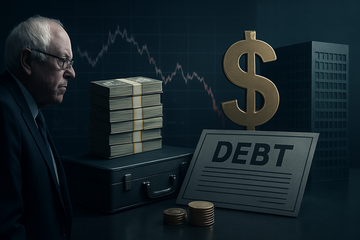
Sanders' No-Bailout Line Misreads the Ledger: AI's Real Backstop Is a $108.5 Billion Guarantee Book
On Oct. 30, 2026, Sen. Bernie Sanders told Big Tech it “won't be bailed out, period” — a day after Reps. Greg Casar and Maxine Waters introduced a House resolution opposing any federal rescue of AI firms. The promise costs nothing, because the AI buildout was never financed by taxpayers: the $3 trillion Sanders cites is contractual commitments, mostly undrawn leases, and the credit support that actually matters sits in private hands — Nvidia's guarantee book tops out at $108.5B, Broadcom backs the first lien on a $63B financing vehicle, and roughly $500B of AI debt was issued this year alone. What the no-bailout posture removes is the implicit put private lenders and insurers were pricing at, so losses now arrive as marks on retirement portfolios — private credit is 13% of U.S. insurers' cash and invested assets — while the five largest hyperscalers funded $301.8B of the last twelve months' capex with net new debt and $76.0B with net new equity. The trade is therefore not against AI but against the borrowers whose equity has been stripped out, starting with CoreWeave, where $51.6B of debt sits on $25.6B of market value.
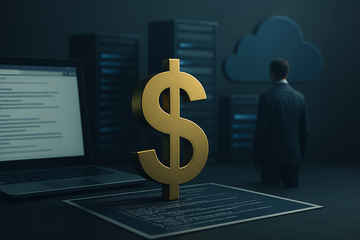
One robots.txt Line, Four AI Giants, Zero Dollars: The AI Training Opt-Out Standardizes Refusal, Not Payment
On October 30, 2026, OpenAI, Google, Microsoft and Anthropic said they would honour a single robots.txt token, so a publisher can refuse AI training once instead of crawler by crawler. The text behind it is an individual IETF draft with no formal standing, Anthropic has already implemented it, and Google and Microsoft only promise 2027 dates, which makes this a deployment schedule rather than a rulebook. The token standardizes the refusal and not the payment: it hands the labs a documented compliance record in the publisher litigation while the real gate stays a CDN default, where mixed-use crawlers are 36.6% of Cloudflare's verified crawler traffic and Cloudflare owns the billing relationship. The gap the token cannot close is the shadow supply chain, including a 30-billion-page index that publishers say resold their journalism to five AI labs.
2026-11-08

Only the First Bag Counts: JetBlue Airways Raised a Price the December FOMC Cannot See
On November 3, JetBlue Airways lifted checked-bag fees for the second time in 2026, taking the first bag to $50 and the second to $75 at peak, to offset a fuel bill that ran $868 million in the third quarter at $3.91 a gallon. US airlines are passing the Iran-driven fuel shock through twice: fares are already 22.4% higher than a year earlier, and the fee layer is now rising on top of them. But the Bureau of Labor Statistics prices only the first checked bag into its airline-fare index, so the second and third bag never enter the CPI the Fed reads at its December 8-9 meeting — an unmeasured price increase landing on shoppers who report being 44% more financially stressed than last year and 72% locked into a strict holiday budget. Meanwhile Phillips 66 and Marathon Petroleum collect the refining spread upstream, and the carriers with the balance sheets to pass the most through are the ones still profitable.
A Research Firm Read Anthropic's Customer Budgets. The $1.5 Trillion IPO Prospectus Still Doesn't Mention It
On Nov. 7 Anthropic began warning business customers that an outside cybersecurity research firm may have reached their contact, account and spend data — five days after its amended registration statement was filed and roughly a week before the Nasdaq offering can be priced. What leaked was not a chat log but a commercial file: plan tier, usage and spend for a base where more than half the Fortune 500 each spend at least $100,000 a year. Because Anthropic cannot say whose records were viewed, the loss cannot be litigated, so it gets priced through contract indemnity, cyber insurance and the prospectus itself. The investable consequence is a security budget line that moves from agent defence to vendor-access audit.

Anthropic's IPO Buyers Are Talking $1.1 Trillion — Below OpenAI's Just-Closed $1.25 Trillion: The Frontier AI Mark Is Falling From Above
On Nov. 6, prospective Anthropic IPO buyers were discussing $1.2–1.3 trillion for Anthropic, with some weighing as low as $1.1 trillion, the same morning OpenAI closed $11 billion of new capital at a $1.25 trillion valuation. That is the first reported inversion of the frontier-lab mark hierarchy, and it happened while the compute bill was still rising: Anthropic's amended filing shows $895.4 billion of committed spending, $16.96 billion of third-quarter revenue and a $23.29 billion quarterly net loss. The inversion is a financing signal rather than a demand signal, because buyers are repricing a company whose growth slowed from 144% to 47% in a quarter and whose cash cannot cover the next twelve months of contracted compute. For public investors the read-through runs upstream to accelerators and memory, and downstream to the neoclouds financing the buildout, where credit spreads rather than order books are now the transmission channel.
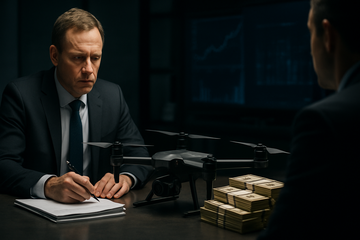
Axon Paid $5.2 Billion for 37% of Skydio — More Than Ondas' Entire Market Cap — and Its Own Shares Fell 18%
Axon Enterprise agreed on Nov. 5, 2026 to invest $1.2 billion for roughly 20% more of Skydio, lifting its fully diluted stake from about 15% to about 37% at a $5.2 billion pre-money valuation and becoming Skydio's exclusive public-safety distributor in the US and Canada. The transaction says the marginal buyer of drone autonomy is no longer a defense prime but a camera-and-evidence company that already owns the procurement relationship with police departments. Skydio's mark exceeds Ondas Holdings's entire $3.1 billion market capitalization at the Nov. 6 close and approaches Kratos Defense's $6.6 billion, while Shield AI's $28.8 billion financing mark is 2.3 times the combined market value of AeroVironment and Kratos Defense. Investors sold the one listed vehicle that owns the channel by 18% on the day it bought it.
What to expect
Evidence-first notes with a visible point of view.
This section collects sharp takes on earnings, shareholder meetings, and market structure. Each new piece should make the thesis, the facts, and the implications obvious within the first few screens.
Expect direct analysis, not generic commentary.
Expect the data to be explicit and the argument to be easy to follow.