Capital Markets
Deals, listings and the cost of money
IPOs, mergers, buybacks and credit issuance — what the terms of a deal say about what this market is willing to fund right now.
2026-11-09


2026-11-08

A Research Firm Read Anthropic's Customer Budgets. The $1.5 Trillion IPO Prospectus Still Doesn't Mention It
On Nov. 7 Anthropic began warning business customers that an outside cybersecurity research firm may have reached their contact, account and spend data — five days after its amended registration statement was filed and roughly a week before the Nasdaq offering can be priced. What leaked was not a chat log but a commercial file: plan tier, usage and spend for a base where more than half the Fortune 500 each spend at least $100,000 a year. Because Anthropic cannot say whose records were viewed, the loss cannot be litigated, so it gets priced through contract indemnity, cyber insurance and the prospectus itself. The investable consequence is a security budget line that moves from agent defence to vendor-access audit.

Anthropic's IPO Buyers Are Talking $1.1 Trillion — Below OpenAI's Just-Closed $1.25 Trillion: The Frontier AI Mark Is Falling From Above
On Nov. 6, prospective Anthropic IPO buyers were discussing $1.2–1.3 trillion for Anthropic, with some weighing as low as $1.1 trillion, the same morning OpenAI closed $11 billion of new capital at a $1.25 trillion valuation. That is the first reported inversion of the frontier-lab mark hierarchy, and it happened while the compute bill was still rising: Anthropic's amended filing shows $895.4 billion of committed spending, $16.96 billion of third-quarter revenue and a $23.29 billion quarterly net loss. The inversion is a financing signal rather than a demand signal, because buyers are repricing a company whose growth slowed from 144% to 47% in a quarter and whose cash cannot cover the next twelve months of contracted compute. For public investors the read-through runs upstream to accelerators and memory, and downstream to the neoclouds financing the buildout, where credit spreads rather than order books are now the transmission channel.

94% of Bitcoin's $1.28 Billion ETF Exit Came From One Fund — in the Same Week the AI Trade Crashed
US spot bitcoin ETFs shed $1.28 billion in the week to Nov. 6, 2026 — the worst week since late June — pushing 2026 net flows to -$914 million, but the \"crypto complex is exiting at once\" story breaks on the fund-level data: BlackRock's IBIT accounted for $1.21 billion, or 94.4%, of the outflow, while Fidelity's FBTC absorbed $93.1 million. Concentration matters mechanically, because IBIT's bitcoin sits with Coinbase Custody Trust Company and its cash redemptions are executed through Coinbase as prime execution agent, so the selling landed on one venue rather than spreading across crypto. The same five sessions saw the Nasdaq Composite fall 5.52% into correction on AI-capex fears, which makes this balance-sheet de-risking rather than a rotation into AI equity — and it puts bitcoin's $73,188 200-day moving average, not the flow print, at the centre of the decision.

Fireworks AI's $40 Billion Ask Never Printed — Now Meta's CFO Has to Make $17.5 Billion Work
Fireworks AI's valuation has not been cut; it has stopped moving — $17.5 billion, set on July 15, 2026, while the company was reported on Oct. 20 to be chasing $30 billion to $40 billion, and peers reprinted higher (Fal closed at $16 billion on Nov. 3). Dave Wehner's Nov. 6 arrival as Meta's former chief strategy officer says the binding constraint is capital structure, not product: 95% of Fireworks' 40 trillion daily tokens now run on customer-specialized models, 25,000 GPUs sit inside customer data centers, and the capacity is leased from landlords such as IREN that earn 86% gross margin. At roughly $0.07 of revenue per million tokens against a $0.05 best-in-class cost that Nvidia publishes, the margin in this stack sits upstream of the layer priced at 17.5x revenue. Read the stale mark and the CFO hire together: the layer is becoming infrastructure, and infrastructure does not keep a software multiple.
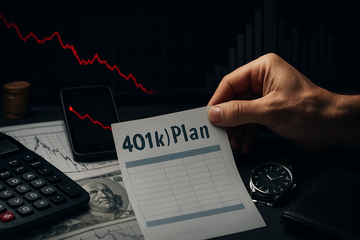
The Household Is Now the Marginal Seller: Record 401(k) Redemptions, a Failed Buy-the-Dip Bid and a December Hike at 76%
Retail investors sold a net $338 million of single stocks on November 5, 2026 — the largest one-day outflow since March 2020 — on the worst second session after a midterm election in 44 years, and the buy-the-dip bid never showed up. That failure sits on a balance sheet that has been thinning for six straight years: 6% of workers in Vanguard-administered 401(k) plans took a hardship withdrawal in 2025, about 3.5 times the 2020 rate, while money market funds reached a record $8.02 trillion before the selloff. With a 25 basis point hike priced at 76% to 77% for December 9 and the 10-year Treasury at 4.86%, the household is the marginal seller of crowded AI beta and levered crypto — and the flow lands on names whose earnings are at records, as AMD showed when data center revenue nearly doubled in the same week its shares fell 17.3%. Own the institutions that catch the flow rather than the beta they fund.

Nooks Took $500 Million Without Diluting — AI-App Growth Capital No Longer Comes From Equity Markets
On Nov. 4, 2026, Nooks took a $500 million growth-capital commitment from General Catalyst's Customer Value Fund and launched Node, its first AI personal assistant for sales. The money is non-dilutive, has no maturity date and no covenants, and is repaid only from collections on the customer cohorts it financed — 7.1x everything Nooks has raised as equity in its life. The closest published term sheet, General Catalyst's $1 billion facility with IM8 filed with the SEC, shows the instrument: capped return per cohort, no equity instrument, downside held by the fund. That is why the card rails and banks are the natural next owners of this paper — Visa and Mastercard already credential agents and settle their purchases, and FIS ships a know-your-agent platform to issuing banks — while the equity market is repricing the apps themselves: HubSpot lost 59% of its market value in the year to September 2026 even as trailing revenue grew 20%.
2026-11-07

Airbnb Spent $7 Million on Capex and Authorized $12 Billion of Buybacks While the AI Complex Spent $615 Billion
On Nov. 5, 2026, the Nasdaq 100 fell 6.36% — its worst session since March 2020 — and roughly $2.5 trillion of market value evaporated as investors pressed the case that a $900 billion AI capex wave is running ahead of returns. That night, Airbnb reported revenue up 19% to $4.87 billion, a 39% net margin, and a new $12 billion repurchase authorization. The divergence is structural rather than lucky: Airbnb spent $7 million on capital expenditure over the trailing year because the AI it buys is operating expense rented from hyperscalers that spent $615 billion on the same balance sheets. Capital allocation has become the AI factor, and on the test of who turns AI into cash without capitalizing it, Airbnb behaves like an annuity trading at 21 times trailing free cash flow.
Berkshire Hathaway Doubled Its Buyback to $9.6 Billion — and Became AI Capex's Buyer of Last Resort
Berkshire Hathaway more than doubled its share repurchases in the third quarter of 2026, buying $9.65 billion of stock — roughly 76% of the quarter's operating earnings — and then added about $2 billion more in October, after buying nothing at all in 2025. That bid is not a passive cash pile: headline cash and Treasury bills of $377.4 billion are flat year over year, deployable cash outside rail and utilities fell 1.9% in the quarter, insurance underwriting profit dropped 43%, and the same balance sheet wrote a $10 billion check for Alphabet's June equity raise that is roughly $1.9 billion underwater today. So the \"anti-capex refuge\" is really two positions in one: a price-insensitive bid for its own shares while AI duration unwound, and a private backstop for the AI capex cycle — which, at 14.4 times trailing earnings, leaves Berkshire far more expensive than the memory and test equipment names selling off at four to six times earnings.

The Equity Window Has Two Doors: Anthropic's $1.5 Trillion Test and a $91 Million Bank That Already Cleared
The Renaissance IPO Index fell 6.8% year to date through Nov 5, 2026 against an S&P 500 up 8.2%, and only 121 IPOs priced all year — yet those raised $148.6 billion, so the window is narrower rather than shut. Anthropic's roadshow from the week of Nov 9 is the only door wide enough to matter at the top, and investors are already marking it down from about $2 trillion toward $1.5 trillion. The small-deal door that is actually working belongs to banks: Narragansett Bancorp sold 9,098,800 shares at $10.00 on Nov 2 for $91 million, at 1.31 times June's tangible book, with its mutual holding company retaining 55% of the company. That door exists because of regulators, not markets — the FDIC's September 2026 proposal would clear the smallest bank mergers in five days, leaving acquirers paying 141% of tangible book while sellers want 175%.

Five9's AI Revenue Grew 91%, Its Legacy Seat Business Grew 7.5%, and the Stock Fell 17.6%
Five9 beat on revenue ($323.3 million, up 13%) and raised full-year revenue guidance by $6 million on Nov. 5, yet the stock fell 17.6% the next trading day because the non-GAAP profit guide was cut from $3.26 to $3.19 per share at the midpoint while gross margin slipped 110 basis points. Strip out the $45 million of AI revenue and the subscription business that still licenses human agents grew about 7.5%, less than half the AI line's pace. The $325 million cash purchase of Level AI (Ujwal, Inc.), at roughly 16 times its $20 million of ARR, marks agent revenue at a price about nine times what the public market now pays for all of Five9's revenue.

Goldman Sachs Is Asking the Supreme Court to Save an Arbitration Clause in a Card Book It Is Handing to JPMorgan Chase
On Nov. 6, 2026 the Supreme Court agreed to hear Goldman Sachs Bank USA v. Brown, No. 25-1408, on whether a bankruptcy court may override a valid arbitration agreement when the claim is a debtor's Section 362(k) claim for willful violation of the automatic stay. The clause at issue sits in the Apple Customer Agreement covering Apple Card accounts issued by Goldman, and the portfolio behind it — more than $20 billion — is being transitioned to Chase over roughly 24 months. For investors this is a precedent about who pays when a card issuer keeps collecting from a customer who has already filed for bankruptcy, not an earnings event: Goldman reported $18.68 billion of third-quarter net revenues while consumer bankruptcy filings rose 11.4% year over year to 594,057.

Stablecoin Rails' Single Point of Failure Is a Compliance Screen: One Vendor's Breach Froze Crypto Transfers in Three Countries
On Nov. 6, 2026, Nu Holdings, MercadoLibre and Japan's Coincheck Group all stopped moving customer crypto within hours of each other, and none named the provider responsible. The closest fit for the common cause is Chainalysis, the blockchain-analytics vendor that took its transaction-monitoring and address-screening products offline from Nov. 2 and only began a phased restore on Nov. 6, with every customer first having to reset credentials, rotate API keys and submit an IP allowlist. Address screening is a legal obligation, so a vendor failure cannot degrade into a slower service — it becomes a legal halt, and recovery runs institution by institution rather than vendor by vendor. For Circle, Coinbase and the 21 banks assembling a dollar stablecoin for the first half of 2027, distribution plumbing, not issuance or reserves, is where the stablecoin thesis now carries its risk.

OpenAI Closed $11 Billion at $1.25 Trillion. Anthropic's $1.5 Trillion IPO Is Now the Political One
Private capital funded the buildout; voters set the discount rate. OpenAI closed $11 billion at a $1.25 trillion mark on Nov. 6, three days after voters in 10 states backed restrictions in 40 of 41 local data-center ballot measures, and its CFO said the spending continues regardless. Anthropic, by contrast, must sell its story to the public market at the same moment: its amended S-1 shows $33.2 billion of nine-month revenue against $895.4 billion of mostly non-cancellable compute commitments and a $104 billion net loss driven by fair-value marks on the instruments that paid for that compute. The result is a two-tier frontier stack in which private money carries the buildout without a daily mark while the public market is asked to absorb the political and contractual risk at IPO. For listed suppliers, the read-through is that contracted demand is intact while the equity financing it is losing.
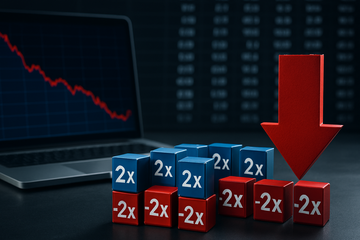
Twelve Leveraged Anthropic ETFs Are Armed Before a Single Share Trades — and the Bid Comes From a Tape That Just Fell 5.5%
ProShares' Nov. 6 launch of a 2x and a -2x Anthropic ETF completes a 12-fund single-stock complex whose own prospectuses state that ANT has not yet commenced its IPO, so the vehicles are registered but not tradeable. Once Anthropic lists, the complex will not offset itself: on an up day the +2x cohort adds exposure while the -2x cohort covers its short, and on a down day both sell, which makes the debut price a reflexive flow artifact before it is a valuation verdict. That matters now because the AI tape those flows would ride has already broken — the Nasdaq fell more than 5.5% on Nov. 5 and SK hynix dropped 10.44% on Nov. 6 — while the print under discussion is roughly 41x trailing sales.
Scottish Mortgage Took $6.2 Billion Off Tesla and Bought AI's Bottlenecks: The SpaceX Trim Is a Valuation Call, Not a Midterm One
The headline frames this as a Musk discount. The filings say something narrower and more useful: Scottish Mortgage sold its last Tesla shares in April 2026 for roughly $6.2 billion of realised profit on about $470 million invested, and then trimmed SpaceX from 15.0% to 11.1% of assets in the five weeks after its June listing. Neither leg was an election trade — the exit was priced in April and the trim began in October as IPO trading restrictions lifted. Where the money went is the investable part: memory, wafer inspection, dicing, power and gas, plus a 24.9% private-company book that now sits at 53 companies. For investors, the signal is a change in where the AI build-out gets paid, not a change of theme.
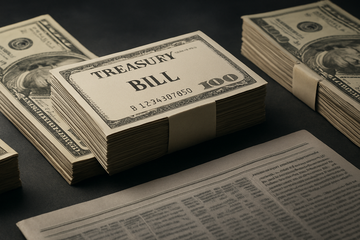
The February Squeeze Lands in Bills: $800 Billion of Borrowing, a $7.4 Trillion Bill Market, and a Fed That Stopped Buying
Wall Street's February call is arithmetic, not alarmism: roughly $754 billion of room under the $41.104 trillion debt cap against the $800 billion of privately-held borrowing Treasury expects between January and March. The first squeeze lands in Treasury bills, because coupon sizes are flat to smaller at the long end, buybacks are running, and the entire January cash rebuild has to be sold as bills into a market whose aggregate supply already reaches $7.4 trillion. The cushion that used to absorb it has thinned: the Fed's reserve-management bill purchases fell from $40 billion a month to $10 billion by mid-2026 and were reported paused in October, leaving dealers, banks and money funds to warehouse the risk. That points investors at JPMorgan Chase's dealer and custody economics and at the fee-waiver arithmetic inside BlackRock and Franklin Resources, not at the 30-year.

Warren's Banking Gavel Is a Hearing Calendar, Not a Statute Machine: 145 Bank Mergers and a $73.9 Billion Stablecoin Float Now Have an Owner
Democrats took the Senate and the House on Nov. 3, and Elizabeth Warren is widely expected to take the Senate Banking gavel in January. The rulebook she inherits is already written — the March 2026 Basel III endgame reproposal, the FDIC's September 2026 merger-review framework, and the GENIUS Act rules that switch on Jan. 18, 2027 — so the tradable variable is not whether bank capital gets tougher but who signs, who testifies and who waits for confirmation. That points to a slower deregulatory merger pipeline, a frozen crypto market-structure statute, and a private credit transparency agenda that lands on the five banks holding 63% of committed business-development-company loan amounts.

Three Consumer IPOs Priced in 2026 — and Wonder's $9 Billion Confidential Filing Shows Which Consumer Story the Window Still Funds
Wonder Group's confidential Form S-1, submitted on Nov. 5, 2026, registers a food-delivery and kitchen-automation platform — roughly 170 storefronts, projected net revenue just under $2 billion this year and a $618 million adjusted EBITDA loss — not a turnaround retailer, and that distinction decides what the filing is worth as a gauge. The consumer IPO window has narrowed to three consumer discretionary deals priced in all of 2026, split cleanly by cash conversion: Jersey Mike's is down 17.4% from its offer price while Reformation is up 20.3% and Bob's Discount Furniture up 14.2%. Meanwhile the trade-down dollar has shown up in incumbent retailers' comparable sales rather than in new paper, and delivery assets are being cleared by strategic buyers paying a 26% control premium, which sets the private-market reference point Wonder's $9 billion mark depends on more than any IPO window does.
2026-11-06

What to expect
Evidence-first notes with a visible point of view.
This section collects sharp takes on earnings, shareholder meetings, and market structure. Each new piece should make the thesis, the facts, and the implications obvious within the first few screens.
Expect direct analysis, not generic commentary.
Expect the data to be explicit and the argument to be easy to follow.