Financials
Banks, credit, and where the risk is sitting
Net interest margins, credit quality, capital rules and deal flow — what the numbers say about the banks, insurers and asset managers reporting them.
2026-11-09


Australia Froze Four Private-Credit Funds in Five Weeks. The US Equivalent Covers $600 Billion — and the SEC Has Proposed It
Between September 22 and October 26, 2026, Australia's ASIC froze new subscriptions, secondary transfers and retail advice in four retail private credit funds holding A$1.66 billion of assets, and revoked every order within eleven days once the disclosure was fixed. The freezes were about the wrapper, not the credit, which is why the US read-through runs through flows rather than defaults: the retail semi-liquid shelf that promises liquidity at net asset value holds roughly $600 billion of the $2.66 trillion private credit universe the Federal Reserve began measuring on October 16, 2026. On September 30, 2026 the SEC proposed letting interval funds defer their first repurchase offer for up to two years, which would convert a promise of cash into an option held by the manager. For equity investors the transmission is fee-earning assets that keep compounding while the exit quietly closes.

China's 2.2 Trillion Yuan Deleveraging Is the Consumption Weakness the Market Is Misreading
Roughly 100 million Chinese borrowers — about one in ten adults — owe at least RMB 2.2 trillion in overdue personal debt, and the bad-debt market built to work that paper has grown from RMB 18.6 billion at end-2021 to RMB 454 billion at end-2025. Household credit is now contracting in every bucket (PBOC: -RMB 1.03 trillion in the first nine months of 2026), which is why retail sales grew only 1.1% while the value of car sales dropped about 23% year on year in September. The exposure for investors is not the consumer but the chain around them: Qfin Holdings and FinVolution on origination volume, China Cinda and China Renaissance Holdings on recovery rates, and ICBC, where the credit-card overdraft NPL ratio has already reached 5.37%.

CoreWeave's Print Is a Coupon Test, Not a Backlog Test: 16% Marginal Debt Meets a $28 Billion Funding Gap
CoreWeave reports Q3 2026 after the close on November 10, and the $104 billion backlog will not decide the stock — the coupon will. Second-quarter interest expense of $640 million already consumed 94% of operating cash flow, management has guided the third quarter to $860–940 million, and the market demanded more than 16% on CoreWeave's 2032 notes even with the 10-year Treasury at 4.86%. Closing the $28–32 billion gap between 2026 capital spending and operating cash flow at that rate would add $4.5–5.1 billion of annual interest, roughly four times guided 2026 adjusted operating income, while funding the same gap with stock at $46.40 would roughly double the share count. Read the print for the interest line, the capex guide and the terms of any new issue — not the backlog.
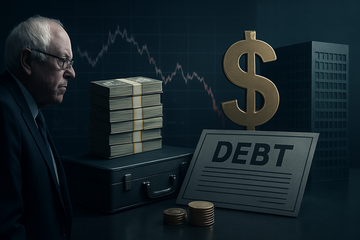
Sanders' No-Bailout Line Misreads the Ledger: AI's Real Backstop Is a $108.5 Billion Guarantee Book
On Oct. 30, 2026, Sen. Bernie Sanders told Big Tech it “won't be bailed out, period” — a day after Reps. Greg Casar and Maxine Waters introduced a House resolution opposing any federal rescue of AI firms. The promise costs nothing, because the AI buildout was never financed by taxpayers: the $3 trillion Sanders cites is contractual commitments, mostly undrawn leases, and the credit support that actually matters sits in private hands — Nvidia's guarantee book tops out at $108.5B, Broadcom backs the first lien on a $63B financing vehicle, and roughly $500B of AI debt was issued this year alone. What the no-bailout posture removes is the implicit put private lenders and insurers were pricing at, so losses now arrive as marks on retirement portfolios — private credit is 13% of U.S. insurers' cash and invested assets — while the five largest hyperscalers funded $301.8B of the last twelve months' capex with net new debt and $76.0B with net new equity. The trade is therefore not against AI but against the borrowers whose equity has been stripped out, starting with CoreWeave, where $51.6B of debt sits on $25.6B of market value.
2026-11-08

2026-11-07

Berkshire Hathaway Doubled Its Buyback to $9.6 Billion — and Became AI Capex's Buyer of Last Resort
Berkshire Hathaway more than doubled its share repurchases in the third quarter of 2026, buying $9.65 billion of stock — roughly 76% of the quarter's operating earnings — and then added about $2 billion more in October, after buying nothing at all in 2025. That bid is not a passive cash pile: headline cash and Treasury bills of $377.4 billion are flat year over year, deployable cash outside rail and utilities fell 1.9% in the quarter, insurance underwriting profit dropped 43%, and the same balance sheet wrote a $10 billion check for Alphabet's June equity raise that is roughly $1.9 billion underwater today. So the \"anti-capex refuge\" is really two positions in one: a price-insensitive bid for its own shares while AI duration unwound, and a private backstop for the AI capex cycle — which, at 14.4 times trailing earnings, leaves Berkshire far more expensive than the memory and test equipment names selling off at four to six times earnings.

The Equity Window Has Two Doors: Anthropic's $1.5 Trillion Test and a $91 Million Bank That Already Cleared
The Renaissance IPO Index fell 6.8% year to date through Nov 5, 2026 against an S&P 500 up 8.2%, and only 121 IPOs priced all year — yet those raised $148.6 billion, so the window is narrower rather than shut. Anthropic's roadshow from the week of Nov 9 is the only door wide enough to matter at the top, and investors are already marking it down from about $2 trillion toward $1.5 trillion. The small-deal door that is actually working belongs to banks: Narragansett Bancorp sold 9,098,800 shares at $10.00 on Nov 2 for $91 million, at 1.31 times June's tangible book, with its mutual holding company retaining 55% of the company. That door exists because of regulators, not markets — the FDIC's September 2026 proposal would clear the smallest bank mergers in five days, leaving acquirers paying 141% of tangible book while sellers want 175%.

Goldman Sachs Is Asking the Supreme Court to Save an Arbitration Clause in a Card Book It Is Handing to JPMorgan Chase
On Nov. 6, 2026 the Supreme Court agreed to hear Goldman Sachs Bank USA v. Brown, No. 25-1408, on whether a bankruptcy court may override a valid arbitration agreement when the claim is a debtor's Section 362(k) claim for willful violation of the automatic stay. The clause at issue sits in the Apple Customer Agreement covering Apple Card accounts issued by Goldman, and the portfolio behind it — more than $20 billion — is being transitioned to Chase over roughly 24 months. For investors this is a precedent about who pays when a card issuer keeps collecting from a customer who has already filed for bankruptcy, not an earnings event: Goldman reported $18.68 billion of third-quarter net revenues while consumer bankruptcy filings rose 11.4% year over year to 594,057.

Stablecoin Rails' Single Point of Failure Is a Compliance Screen: One Vendor's Breach Froze Crypto Transfers in Three Countries
On Nov. 6, 2026, Nu Holdings, MercadoLibre and Japan's Coincheck Group all stopped moving customer crypto within hours of each other, and none named the provider responsible. The closest fit for the common cause is Chainalysis, the blockchain-analytics vendor that took its transaction-monitoring and address-screening products offline from Nov. 2 and only began a phased restore on Nov. 6, with every customer first having to reset credentials, rotate API keys and submit an IP allowlist. Address screening is a legal obligation, so a vendor failure cannot degrade into a slower service — it becomes a legal halt, and recovery runs institution by institution rather than vendor by vendor. For Circle, Coinbase and the 21 banks assembling a dollar stablecoin for the first half of 2027, distribution plumbing, not issuance or reserves, is where the stablecoin thesis now carries its risk.

165,000 Jobs Put a December Fed Hike at 80% — and the Margin That Justifies It Is 42,000 People
October payrolls came in at 165,000 against a 59,000 consensus, and San Francisco Fed President Mary Daly said the report put a \"definitive tick in the yes column\" on further tightening, pushing December odds to roughly 80%. The household survey tells a thinner story: unemployment fell to 4.1% only because employment grew 463,000 against a 421,000 labor force gain, a 42,000-person margin, even as U-6 jumped to 7.9% and long-term unemployment reached 27.1 weeks. That matters because the AI buildout has quietly shifted from cash flow to credit: Amazon issued $124.6 billion of net new debt in the trailing twelve months while CoreWeave carries $45.2 billion of net debt against $5.0 billion of equity. Banks love the hike — JPMorgan Chase grew net interest income 12.8% year over year in Q3 2026 — but the same policy move reprices the AI lending that sits on their own balance sheets.

Cash Buyers Now Set the Price of New Homes — and 28% of First-Time Buyers Are Buying With an Inheritance
NAR's 2026 buyer profile, published Nov. 5, 2026, shows a record 10% of first-time buyers paying all cash, with a median age of 54 versus 38 for buyers who financed and 28% funding the purchase with an inheritance. At a 7.18% 30-year mortgage against a 4.17% three-month bill, the financed entry ticket fails the standard payment-to-income test for the median buyer, so the marginal entrant is now a wealth-transfer buyer rather than a wage earner. Because cash sales carry no appraisal, their recorded prices anchor the comps that force builders to give up 13.8% of home sales revenue in subsidies — which makes a record cash share a builder-margin story rather than a demand story. The 2027 tax reset (401(k) limit to $25,500, catch-up at 60-63 to $11,750, standard deduction to $33,200) expands the cash side of the market while leaving the cost of borrowing untouched.

Warren's Banking Gavel Is a Hearing Calendar, Not a Statute Machine: 145 Bank Mergers and a $73.9 Billion Stablecoin Float Now Have an Owner
Democrats took the Senate and the House on Nov. 3, and Elizabeth Warren is widely expected to take the Senate Banking gavel in January. The rulebook she inherits is already written — the March 2026 Basel III endgame reproposal, the FDIC's September 2026 merger-review framework, and the GENIUS Act rules that switch on Jan. 18, 2027 — so the tradable variable is not whether bank capital gets tougher but who signs, who testifies and who waits for confirmation. That points to a slower deregulatory merger pipeline, a frozen crypto market-structure statute, and a private credit transparency agenda that lands on the five banks holding 63% of committed business-development-company loan amounts.
2026-11-06
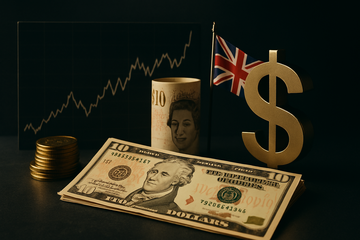
Gilts Now Yield More Than Treasuries at Every Maturity: Britain's First Hike in Three Years Hands the Funding Advantage to the Dollar — and to JPMorgan Chase
The Bank of England's first hike in three years — 25 basis points to 4.00% on November 5, 2026, carried 8–1 — matters less for the move than for what it reveals: the Bank's own projections assume Bank Rate of 4.9% through 2028 while inflation peaks near 5% in mid-2027, so sterling is on course to be the most expensive major funding currency in the world. On November 5, ten-year gilts yielded 5.15% against 4.84% on ten-year Treasuries, and two-year gilts 4.78% against 4.07%, while the Debt Management Office cut long-dated issuance to under 7% of the remit and the Bank unwinds its own gilt holdings to zero by 2034. With the Fed still on ample reserves and Japanese investors back in foreign duration after six weeks of selling, global funding demand converges on the dollar: JPMorgan Chase and BlackRock monetise that, HSBC faces the 2027 UK credit bill, and SK Innovation sits on the oil shock that caused it all.

Claude Reads Your Bank Account but Cannot Move Your Money — and Plaid Just Became the Toll Booth for Every AI Lab
Anthropic put Personal Finance into Claude on Nov. 5, 2026: US-only, paid tiers only, read-only, and running on Plaid's rails. Six months after OpenAI opened ChatGPT Finances to every US tier, both labs now buy the same account connectivity from one private aggregator that bills by connected account and by successful API call. The read path is where consumer AI can monetize today; the write path, where interchange lives, still belongs to the card networks building agentic rails. Investors are being asked to price that grid in real time — Anthropic filed its IPO prospectus on Oct. 26, the networks keep compounding services revenue, and the bank-technology vendors are already choosing which lab to build for.
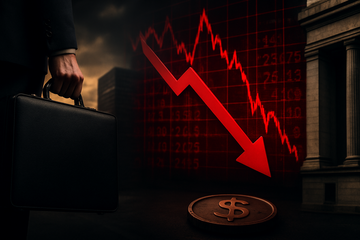
Banks Are All That's Left Standing: Hedge Funds Dumped the Rest After a 19-Month-Worst Day
The Nov 5 crash — the S&P 500's worst day since April 2025 — and Nov 6's Seoul circuit breaker left hedge funds holding one crowded long, financials, and an AI basket with no marginal buyer. Prime-brokerage data show gross equity exposure 7.8% below peak, the largest cut in the series since 2016, five straight October sessions of AI selling that erased every dollar of net buying since early 2025, and funds now underweight the AI trade for the first time since 2023. Banks are where the money went, from Samlyn Capital's restructuring to Citrini's paid-to-wait basket, but the Q3 2026 beat was paid by the crowd now liquidating, with equities revenue up 72% at Goldman Sachs and 41% at Morgan Stanley while JPMorgan and Bank of America missed. The result is a rate-sensitive, increasingly crowded long in the one sector nobody can afford to sell.

77% Hike Odds, a 16% Drop in Brent: December's Fed Is an Energy Story, While the Blue Sweep Breaks the AI Capex Chain
October payrolls beat by about 95,000 jobs and pushed market-implied odds of a December rate hike to 77%, but the print only removed the option of pausing — it did not decide the meeting. What decides it is energy: Brent has dropped 16% in a week to $98.55 on hopes that a Democratic Congress ends the Iran war, pulling out the inflation impulse that produced the September hike. The sweep's real damage landed in equities, not bonds: about $2.3 trillion came off the Nasdaq100 on Nov. 5, data-center developers fell 10% to 14%, and the 10-year yield actually fell to about 4.83%. The investable result is a higher-for-longer path that banks and insurers collect on while long-duration AI capex names pay for it.
2026-11-05

Eurozone Inflation Just Printed 4% With Energy Doing All the Work — the ECB Will Hike in December Anyway, and Friday's Payrolls Show the Rest of the World Isn't Following
Euro area inflation hit 4.0% in October, a three-year high, but the acceleration was entirely energy: energy prices rose 20.8% year on year while the rate excluding energy was unchanged at 2.3%. The ECB will lift its deposit rate to 2.75% on 17 December and then pause, because its own staff estimates say the rise in bond yields already subtracts a full percentage point from cumulative 2027-28 growth. The United States is the leg that is not turning hawkish — ISM services missed at 54.5% and September payrolls printed just 29,000 — so the tradable expression is the energy pass-through rather than a synchronized global hike: upstream cash flow at ConocoPhillips and CNOOC, peak-margin caution at Marathon Petroleum and ENEOS Holdings, and long duration as the payrolls hedge via iShares 20+ Year Treasury Bond ETF.

Banks Swung 19 Points From Easing to Tightening in One Quarter: The Credit Cycle Turned Before the Fed's December Hike
The Fed's October Senior Loan Officer Opinion Survey, released Nov 2, 2026 and covering the third quarter, shows domestic banks reversing their spring easing: net tightening in CRE construction standards jumped to 15.5% from -3.7% a quarter earlier, nonfarm nonresidential swung 20.1 points to 8.8%, and subprime mortgage standards hit 20.0%. The reversal was demand-led — banks reported weaker C&I, CRE and mortgage demand — and it landed in the same window as the Sept. 16 hike to 3.75%-4.00%, with a December hike priced. The sharpest signal sits in the special questions: banks are cutting credit to the private credit funds that are supposed to absorb the borrowers they are losing, so middle-market credit supply is contracting rather than rotating. Read it as slower bank loan growth into 2027, while nonbank lenders such as Ares Capital and consumer specialists such as OneMain Holdings pick up borrowers at the cost of funding they also depend on banks to provide.

$15.48 Million, Indexed: The Estate Exemption Is the Only Federal Break That Grows Without a Vote
The IRS's tax year 2027 release, published Nov. 5, 2026, re-indexed every bracket by 3.2% and changed no tax rate — but it also lifted the estate and gift exclusion from $15.00 million to $15.48 million, and that number now rises automatically every year. With the fiscal 2026 deficit at $2.0 trillion and Democrats holding both chambers, the one federal concession written to keep widening is the one Washington's new majority will have to defend. Meanwhile voters in Washington preserved a 9.9% rate on income above $1 million starting in 2028, which gives the wealth-transfer calendar a new, dated deadline and shifts where that money is monetized: trust banks and custodians upstream, private credit and evergreen vehicles downstream.
2026-11-04

What to expect
Evidence-first notes with a visible point of view.
This section collects sharp takes on earnings, shareholder meetings, and market structure. Each new piece should make the thesis, the facts, and the implications obvious within the first few screens.
Expect direct analysis, not generic commentary.
Expect the data to be explicit and the argument to be easy to follow.