Semiconductors
Chips, from the fab floor to the income statement
Foundry capacity, HBM supply, packaging bottlenecks and export rules — traced through to the companies whose quarters they decide.
2026-11-09

2026-11-08

Gabon's $2 Billion Rare-Earth Restart: No Offtake, No Financing, No Separation Plant — and No Price Floor
Gabon has told Beijing it wants $2 billion to restart the dormant Mabounié niobium and rare-earth project, presented on Nov 6, 2026 by Emirati-backed New Energy Metals, its Dusk Gabon subsidiary and Chinese engineer ENFI. None of the three ingredients that make a price floor — a signed offtake, a closed financing and separated, magnet-grade output — exists yet, and Gabon's own commitment to the promoter is 35.02 billion CFA francs, roughly 3% of the plan. So a revived Mabounié is more likely to become cheaper feedstock for the Chinese refining chain that already holds 91% of world refined output than to set a price for anyone else. The tradeable consequence is not the mine but the spread: NdPr at roughly $103-106/kg inside China against $125-140/kg outside it makes the scarce assets the contract, the export licence and the toll collectors.
No Buyer for a $40,000 GPU: Microsoft Winds Down Oracle and Puts a Rental Rate on 'Good Enough' AI Compute
Microsoft's walk-away from Oracle's 2023 AI-cloud lease does not put a single accelerator on an auction block, because the chips stay inside Oracle's data centers, depreciated over six years. What it released is contracted demand, and contracted demand is what a market of compute prices against. The consequence is that the marginal price of 'good enough' AI is being set by a rental rate rather than a hardware print, which is why the damage lands on the layer where depreciation is more than half of revenue:69% at IREN and 53% at CoreWeave, against 15% at Oracle, 12% at Microsoft and 1% at Nvidia. Own the facility layer, where occupancy is now the pricing variable and renewal rents are rising, and treat Oracle's $127.8 billion of property and equipment as the balance-sheet expression of a repricing that has barely started to show up in reported numbers.
2026-11-07
2026-11-05
Moonshot's 8,000 Blackwell GPUs in Europe Carry a ~$666M-a-Year Price Tag — About Six Times What Oracle's Canceled Tencent Lease Implied
Washington's chip ban is no longer being enforced at the border; it is being enforced in contracts, and the price shows up in the rent. Moonshot AI's reported talks about leasing clusters of 8,000 or more Nvidia Blackwell GPUs from European neoclouds — roughly $666 million a year at published list prices, and 30% to 50% more upfront than a non-Chinese customer would pay — are the clearest measure yet of what the third-country rental channel costs after Nvidia capped Chinese business at 49% and Oracle scrapped a $7 billion lease to Tencent. For investors the channel is immaterial to Nvidia's revenue, punitive for Tencent, and a pricing-power windfall for European capacity owners such as Nebius and CoreWeave, with the real risk sitting in contract language and in the stalled Remote Access Security Act rather than in chips.
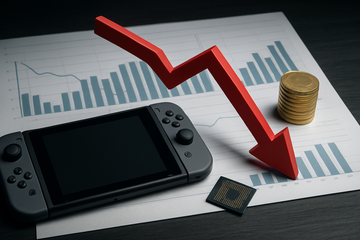
Nintendo's 41% Unit Drop Is a Memory-Cost Event — and the Unchanged 16.5M Forecast Is the Real Risk
Nintendo sold 2.67 million Switch 2 units in the September quarter, down 41%, after lifting prices by $50 in the US and ¥10,000 in Japan to cover a memory and tariff bill the company now sizes at about ¥100 billion. Units broke; profit did not — first-half operating profit rose 49.1% to ¥216.5 billion while software shipments climbed 18.8%. The real problem is the guidance Nintendo refused to touch: 16.50 million units for the year now requires a 5.5% second-half rebound in the most price-elastic purchase in consumer hardware.
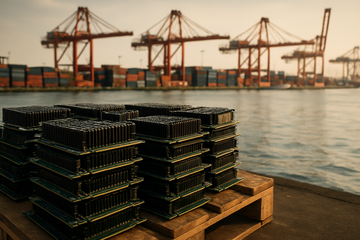
600,000 NVIDIA GPUs Are Stranded in Hong Kong — and Beijing Now Holds a $51 Billion Pricing Option
Reuters reported on Nov 5, 2026 that roughly 600,000 Nvidia AI chips are sitting in Hong Kong waiting for a mainland import approval that Beijing is withholding, even though Washington already cleared the shipments for export. The chokepoint has flipped sides: with Nvidia's own guidance assuming zero China data-center compute revenue, the stranded pile is no longer a US earnings problem but a China pricing and share problem — mainland street quotes for an eight-card H200 server ran past 6 million yuan, roughly four times the official chip price, while IDC data put Nvidia's share of China's data-center AI chip market at 34% in the first half of 2026. Upstream is insulated either way because TSMC redirected capacity and memory is sold out, while downstream buyers are rationed at 5% to 10% fill rates on approved cards and paying multiples of list price to get the rest. The investable question is no longer whether Nvidia can ship to China, but who owns the option to let China buy — and at what price the survivors pay.
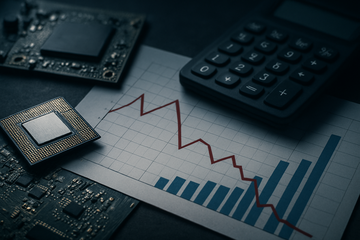
Qnity Electronics Beat, Raised, and Still Got Its Price Target Cut: AI's Interconnect BOM Is Repricing Two Steps Above the Connector
Qnity Electronics reported a 22% organic quarter, beat adjusted EPS by 21%, and raised full-year guidance by $200 million at the sales midpoint — then watched a price target fall from $180 to $165 with consensus slipping to $176.30. The cut blamed semiconductor pressure, but the evidence points elsewhere: AI's interconnect bill of materials is repricing at the conversion layer that owns the scarce inputs, with laminate gross margin up more than 1,200 basis points at Kingboard Laminates and Shengyi Technology against 380 basis points at Qnity's own interconnect business and roughly 120 at Amphenol's connector assembly. The uncomfortable conclusion for the consensus target is that the take is largest where the scarce input is owned, which makes Qnity a second-derivative way to own AI interconnect rather than the first.
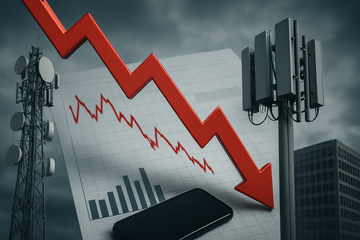
Qualcomm's Biggest 5G Order Ever Landed in the Same Week Its Margin Guide Fell to 20%
SpaceX picked Qualcomm's Dragonwing radios and baseband to build the first standalone nationwide US 5G network on Nov. 4, 2026 - hours before Qualcomm guided its own segment margin down to 20%-22% from 24% and reported handsets down 26% to $5.14B. Both events are one trade: Qualcomm is swapping a shrinking handset franchise for network and data-center hardware that carries thinner margins, while the customer's cash goes elsewhere - 83% of SpaceX's nine-month capital spending went to AI compute, not cell sites. The suppliers paid in every branch of the story are the tower landlords and the memory makers, not the chip vendor in the middle.
2026-11-04
2026-11-02

Kioxia Guided Flat Profit and Rising 2027 Bit Demand — and the Stock Fell 15.8%
Kioxia's September quarter was a record: revenue of ¥2.48 trillion, operating profit of ¥1.996 trillion at an 80% margin, and one quarter that out-grew all of fiscal 2025. Its December-quarter guide then held profit flat at about ¥2.0 trillion, roughly 15% below the ¥2.35 trillion the market expected, and the shares fell as much as 15.8% in Tokyo before closing 13.3% lower at ¥11,680. The guide was a price call, not a demand call: Kioxia raised its 2027 NAND bit-growth forecast to 20–24% and said fiscal 2027 capacity is fully contracted, while the sequential rise in flash prices dropped from about 70% to the mid-20% and is expected at 15–20% in the December quarter. That is the trade now on offer — roughly 4x trailing EBITDA for pure NAND at peak margin versus about 9x for AI memory with a DRAM base — so being wrong on cycle timing, not on demand, is what costs you a double-digit percentage in a single session.
Seoul's $3.5 Billion Frontier AI Bet Is Less Than One Week of SK hynix Revenue — and Memory, Not Money, Is the Bottleneck
On October 5, 2026, South Korea's science ministry put 4.7 trillion won of state equity behind a frontier AI model starting in March 2027, with 3.85 trillion won of it earmarked for GPU capacity and roughly 29,000 government GPUs to be allocated by year-end. The cheque is small next to the industry it targets: it equals about 58% of one week of SK hynix revenue and 5% of what SK hynix alone returned to shareholders in 2026. The binding constraint is allocation, not money — SK hynix's long-term agreements already cover more than half of 2027-28 capacity and the shortage runs to 2030 — and on October 26, 2026 Washington denied Korea the licence exception covering semiconductor items, leaving the sovereign stack captive at home. The read-through investors are missing: a state-anchored Korean buyer for domestic HBM4 arrives while the memory complex runs at 80% operating margins on capacity that is already spoken for.
Marvell's $115 Billion Lumentum Deal: A 23.9% Premium That Melted Into a Discount in Two Sessions
The biggest semiconductor deal of 2026 is also the strangest: Marvell is paying a fixed 4.500 of its own shares for every share of Lumentum, so the purchase price is set by Marvell's stock — and Marvell's stock fell about 22% in the two sessions after the talks leaked, cutting the value of that same exchange ratio from $1,132 to roughly $862 per Lumentum share. That flips a 23.9% premium into a small discount without a word of the agreement changing. The asset being bought is genuinely scarce: Lumentum is sold out through early 2029 and guides to 45% non-GAAP operating margins next quarter. But at 38 times trailing sales for Lumentum's fiscal 2026 revenue, Marvell is handing over roughly a third of a company that trades at 18 times sales, so the share count, the Chinese review clock and the $1 billion synergy target matter more than the $115 billion headline.
MaxLinear Beat and Raised, Then Fell 25% in a Month: 92% of Its Growth Comes From One Product Line, and the 1.6T Payoff Lands in 2027
MaxLinear beat on revenue and earnings, guided fourth-quarter sales about 10% above consensus and raised its 2026 optical data-center outlook to $250-270 million on October 22, 2026 — and the stock fell 13.9% that day, then 25% over the following month. The tape is not mispricing the quarter; it is repricing where the AI connectivity profit pool actually sits. Infrastructure supplied $84.6 million of the $91.6 million year-over-year revenue increase, the 2026 optical ramp is 800G silicon with 1.6T revenue only starting in early 2027, and the company booked $28.9 million of GAAP net income while consuming $13.6 million of operating cash. At roughly eight times estimated 2026 sales, MaxLinear is now a bet that 1.6T optics and active-copper silicon convert into cash in 2027 and 2028.
Tower Semiconductor's Record Quarter Proves the AI Power Chain Is Real. Its 34% Gross Margin Proves Pricing Isn't.
Tower Semiconductor closed 2026 with record third-quarter revenue of $526.2 million, up 33% year over year, and guided the fourth quarter to $600 million — a $2.0 billion year and a $2.4 billion exit run rate. The engine is mix, not price: silicon photonics heads to a $1.1 billion annualized run rate, five times 2025, while $321 million of customer prepayments funded the capacity buildout that fills it. What shareholders get for that growth is a 34.0% gross margin against Taiwan Semiconductor Manufacturing's 66.4%, which is why Tower trades within a turn of the leader on sales but at 27.8 times forward earnings versus TSMC's 18.3 times.

Nov. 29 Puts a Price on \"China+1\": $176 Billion of Vietnam Shipments and Two Companies Telling Washington No
The Trade Representative's intellectual-property investigation into Vietnam concludes Nov. 29, 2026, and the manufacturers who built the most capacity in Vietnam have already told Washington what new duties would do: Tesla asked USTR to weigh American manufacturers' supply chains, while Samsung Electronics's US unit said Vietnam builds a large share of the smartphones and network equipment it ships into the US. The exposure is no longer hypothetical — US goods imports from Vietnam ran roughly $176.1 billion in the first eight months of 2026, up 42% year on year, on top of the 12.5% Section 301 duty that took effect July 24. What matters for portfolios: Nov. 29 decides whether USTR will act, not what any duty will be, and the same tariff lands on a 2.6% operating margin at Tesla and a 55% operating margin at Samsung Electronics.
2026-11-01

Apple's CEO Won't Ship AI for AI's Sake — and a 47%–48% Gross-Margin Guide Is the First Crack in the Memory Upcycle's Demand Leg
Apple chief executive John Ternus told WIRED on Oct. 30 that the company \"doesn't want to ship AI for AI's sake,\" three days before his first earnings call as CEO on Nov. 2 — and the hardware is already obeying. The 16GB tier planned for the iPhone 18 Pro was abandoned, the Pro price rose $100, and October component orders were trimmed by at least 15%. The mechanism matters more than the quote: Apple guided September-quarter gross margin down to 47%–48% from 50.1% with memory named as the cause, while Micron prints an 86.8% gross margin. Consumer memory margins now rest on contract price rather than content growth, so for the semis complex the near-term earnings stay intact while the 2027 multiple becomes hostage to hyperscaler capital spending alone.
Korea's $115 Billion October Was Already Contracted: The AI Selloff Is Pricing Funding, Customs Is Pricing Shipments
Korea's October trade data, published Sunday, showed exports up 93.7% to $115.28 billion with semiconductor exports up 259.4% to $56.44 billion — half of everything the country ships — and a $42.50 billion surplus, two days after the AI cash-burn selloff took the Nasdaq down 2.86% and SK hynix down 7.1%. The two facts are compatible: the selloff repriced the financing of AI capital spending, while customs data records money already spent on memory that has already shipped. Most of the export growth was price rather than volume, so the honest signal is the level — $115 billion a month, $930 billion in ten months — not the growth rate. And the demand behind it is largely pre-sold and pre-funded: more than 50% of SK hynix's 2027–28 capacity is already under long-term agreement, and Micron holds $32 billion of customer cash deposits. The real risk is not a demand collapse but concentration: semiconductors are now half of Korean exports, and the buyers are funding themselves with debt.
2026-10-31
2026-10-30
What to expect
Evidence-first notes with a visible point of view.
This section collects sharp takes on earnings, shareholder meetings, and market structure. Each new piece should make the thesis, the facts, and the implications obvious within the first few screens.
Expect direct analysis, not generic commentary.
Expect the data to be explicit and the argument to be easy to follow.