Semiconductors
Chips, from the fab floor to the income statement
Foundry capacity, HBM supply, packaging bottlenecks and export rules — traced through to the companies whose quarters they decide.
2026-10-25


2026-10-24
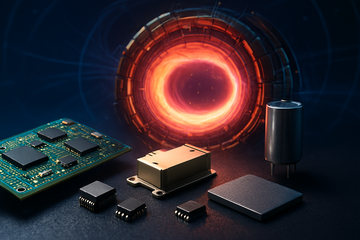
Two-Thirds of a $389M Federal Chip Award Went to Fusion: Commonwealth Fusion's $85M Buys Electronics, Not Equity
On October 22, 2026 the Commerce Department signed letters of intent worth up to $389 million with four companies, and $260 million of it — two-thirds — went to the two private fusion developers. Commonwealth Fusion Systems's $85 million is not a venture round: it funds radio-frequency heating semiconductors, high-voltage power electronics, advanced packaging and radiation-hardened controllers, because power systems and power components are now the most-cited bottleneck in fusion at 48% of fusion companies, ahead of heat management at 44% and vacuum hardware at 32%. The listed exposure is the supplier of record, not the fusion story: Fujikura has booked the largest superconducting-tape order in history, GlobalFoundries hosts Helion's semiconductor program at its Burlington fab, and the same high-voltage device class is being funded on both sides of the fusion and AI-power markets. At $260 million against $681 million of projected 2026 fusion supply-chain spending, fusion remains a small buyer of chips: this is a qualification and design-in story, not a revenue story.

Getty Filed Chapter 11 on Wednesday, Nvidia Backed Creative AI on Friday: Higgsfield's $1 Billion Run-Rate Is an Inference Order Book, Not Revenue
NVIDIA did not buy a creative app on Oct. 23, 2026 — it bought the demand side of its own order book. Higgsfield's claimed $1 billion annualized revenue is a four-week exit rate, not twelve months of sales, and the more useful number sits underneath it: 150 million generations and 12 trillion tokens a month, rendered on Nvidia hardware that Higgsfield now plans to extend onto Vera Rubin. That is a standing inference order, and it arrives exactly as memory shortages compress Nvidia's own margin. Two days earlier, Getty Images filed for Chapter 11, wiping out the equity of the company that owned visual content — while the company that generates it was marked at 5.4 times exit run rate by a buyer with a reason to overpay.
2026-10-23
Google Unblocks PyTorch on TPUs with “TorchTPU” makes inference demand captive
Google’s new open-source “TorchTPU” removes the engineering friction that keeps many AI apps pinned to Nvidia-style GPU stacks, directly targeting the inference workload routing layer. Combined with Amazon’s “TorchNeuron,” hyperscalers are shifting the battleground from GPU pricing power to the app-to-accelerator funnel—where independent startups lose flexibility and hyperscaler silicon wins utilization.
Free to Run, $410 Million to Build: Recursive's Flint Re-Prices Cloud Inference
Recursive's Flint, a 39.8-billion-parameter mixture-of-experts coding model released on October 21, 2026 under Apache 2.0 with no revenue gate, runs at more than 125 tokens per second on an M4 Pro MacBook Pro and was built in under four months with help from the company's automated research system. The leaderboard is the least important part: an unrestrictively licensed model running on hardware the developer already owns turns the price of an agentic coding token into a rounding error, while the same lab signed a $410 million compute deal with Amazon Web Services to build it. On-device inference relocates AI spending rather than removing it, so recurring per-token revenue migrates to the device while the lumpy training bill stays in the cloud and the fixed-cost layer in between gets squeezed first. We read that as value migrating toward compute, distribution and memory and away from the model layer, with CoreWeave carrying the clearest exposure and Microsoft the clearest transmission into a reported income statement.

SK hynix Shelved Solidigm's US IPO With ₩66.9 Trillion of Net Cash — the Memory Equity Window Moved to Shanghai, Not Closed
On October 23, 2026, SK hynix ended its review of a pre-IPO round and US listing for NAND subsidiary Solidigm, 79 days after the plan first surfaced, blaming capital market conditions. The balance sheet says the money was never the point: SK hynix held ₩88.0 trillion of cash and short-term investments against ₩21.1 trillion of total debt at June 30, 2026, and had already raised $26.5 billion on Nasdaq three months earlier. What closed was a valuation window, not a funding window — and the memory equity market did not disappear, it relocated to Shanghai, where CXMT closed its debut 465.8% above its offer price and YMTC filed to raise $4.6 billion. The consequence is narrow but sharp: the listed NAND pure-plays keep the pricing cycle without a new listing rival, the equipment chain keeps the order book, and the margin squeeze lands on the downstream storage buyers.
TTM Technologies Just Printed the Largest Quarter in Its History — and the Market Sold the Stock 28%
TTM's third quarter of 2026 was a genuine inflection: net sales of $1.20 billion (+60% year over year), data center and networking revenue of $493.6 million (+115%, 41% of sales), record adjusted EBITDA margin of 20.1%, and initial 2027 guidance of $6.5–6.75 billion of revenue and $8.10–8.90 of non-GAAP EPS. The stock still fell 27.7% to $73.89 on October 22, because a $1.43 billion Q4 revenue midpoint sat below the $1.44 billion consensus while material lead times stretched toward 24 weeks and $650 million of cash went out for Ophir Optics. The deeper read is where the profit is being printed: Kingboard Laminates grew first-half revenue 55% on just 14% more shipment volume, and Ajinomoto raised ABF build-up film prices about 30% into a market that may be 40% short by 2028. The AI server content cycle is real, but its economics accrue one tier above the board — and every layer of the chain adds capacity in 2028, the same year TTM's own new lines start shipping.

Western Digital Beat Its Own Guidance and the Shares Fell Anyway: AI Storage Has Switched From Demand to Price
Western Digital's fiscal Q1 2027 report, released after the close on Oct 22, 2026, was the cleanest proof yet that the AI build-out converts into hard-disk margin: revenue of $4.38B (up 55%), a 58.1% non-GAAP gross margin, non-GAAP EPS of $4.64 against $4.08 expected, a 17% dividend increase, and a December-quarter guide of $5.1B versus roughly $4.57B of consensus. The shares still closed down 6.4% at $354.19 that session and fell further after hours. The arithmetic explains why: 248 exabytes shipped, up 22%, while blended price per terabyte rose 28%, so roughly 60% of the $1.56 billion revenue increase was price and mix rather than units. Investors no longer pay for storage demand; they pay for the durability of a price, and they are discounting it because memory inflation is capping cost-per-terabyte improvement while component suppliers announce new capacity.
2026-10-22
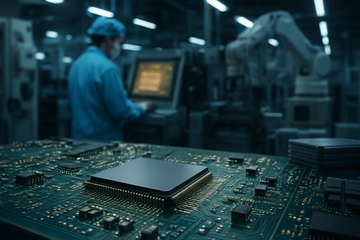
Nvidia and Tesla Now Fund the Substrate Lines They Depend On: $2.8B Moves AI Capex Inside a Korean Fab
The order of events in AI hardware has inverted: the buyer now pays for the supplier's factory. Korean reporting puts Nvidia's and Tesla's combined commitment to dedicated FC-BGA lines at Samsung Electro-Mechanics's Sejong plant at KRW3.7 trillion (about $2.8 billion) — roughly 87% of the KRW4.27 trillion the company itself approved for Sejong — and Nvidia confirmed the instrument in Berlin on October 21, 2026: a multibillion-dollar capacity reservation advance to Ibiden plus dedicated Sejong and Busan lines built for its own accelerators. This is capacity with money attached to volume, and it only makes sense because AI package area per accelerator has risen about twelvefold, pushing the real bottleneck out of substrate lines and into Ajinomoto's ABF film, where a third plant does not open until 2032. The investable consequence is a reordering of risk: Samsung Electro-Mechanics swaps capex risk for volume risk, the material layer above it earns scarcity rents, and unbacked substrate makers — including China's — get squeezed.
The $389 Million Power-Chip Award Is 77% of Everything Washington Has Actually Spent on Chip R&D
On October 22, 2026, the Commerce Department's CHIPS R&D Office signed four letters of intent worth up to $389 million for power semiconductors and critical materials — the first federal R&D money pointed at the grid-facing end of the AI buildout instead of at accelerators. Against the $506.8 million Commerce had actually spent on the whole advanced-microelectronics R&D program, this single round equals about 77% of delivery to date. Two-thirds of it ($260 million) goes to fusion companies that have nothing to do with data centers, only $73 million targets vertical gallium nitride for a 2.5-megawatt AI rack, and the metal behind that transistor — gallium — is still roughly 99% Chinese. The investable read-through sits with the vendors already selling power into AI racks (onsemi, Vertiv, Eaton), the specialty foundry being paid to build the tooling (GlobalFoundries), and the substrate and materials layer with real pricing power (Coherent, Shin-Etsu Chemical, Sumitomo Metal Mining).
2026-10-21
One Generation Behind, on Purpose: Samsung and SK Hynix Upgrade Their China Fabs as the Licenses Expire Every December
Reuters reported on Oct 21, 2026 that Samsung Electronics is moving its Xi'an fab to 286-layer V9 NAND and that SK Hynix is targeting at least 240 layers at Dalian — which reads as defiance until you notice that both China lines now sit one node generation behind Korea. After Washington struck Samsung China's, SK hynix's and Intel's Dalian entities off the validated end-user list in September 2025, the two groups run their China fabs on annual, case-by-case export licences, so the binding constraint is a renewal calendar rather than a node specification. That has three consequences: the tool vendors have not lost China — Applied Materials, Lam Research, KLA and Tokyo Electron still ship roughly 30–34% of revenue there — Chinese tools are substituting only below the advanced nodes, and the live binary is SK hynix's Dalian authorisation, which expires Dec 31, 2026 with no 2027 approval issued. The market's mistake is to read China's buildout as pricing power: Chinese accelerator makers are repricing upward because HBM is scarce, so CXMT's 9.5% share of global DRAM revenue is a commodity share gain, not an HBM threat, until its reported HBM3E output scales.
Super Micro's $4 Billion Quarter Was Already Funded — Nov. 3 Audits the Cash, Not the Revenue
On Oct. 20, 2026, Super Micro Computer pre-announced fiscal first-quarter revenue of $18.5–19.5 billion, $4.0 billion above the $14.5–15.5 billion it had guided on Aug. 11, roughly 25% above the $15.23 billion consensus, and disclosed 14 days before the Nov. 3 print — with gross margin guided to 12.0–12.5% against the 17.5% posted in the June quarter. The money behind that revenue was committed months earlier: a June financing raised $4.90 billion of net equity proceeds earmarked for components against roughly $39 billion of orders, inventory reached $12.90 billion at June 30, and fiscal 2026 operating cash flow was minus $6.81 billion. The revision converts a publicly disclosed order book faster than the plan implied; it does not create demand, and at roughly 4.9% sequential incremental gross margin the dollars accrue to memory, GPU and power suppliers rather than to the integrator. Nov. 3 decides who finances the ramp, and it does so against one customer that bought 28.1% of last year's revenue, unremediated material weaknesses, and a live export-control investigation.
2026-10-20
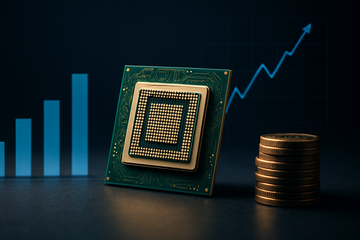
TorchNeuron Just Made Leaving CUDA a 30-Second Choice — and AWS Has 7 Gigawatts of Demand Behind It
On Oct 20, 2026, Amazon open-sourced TorchNeuron under Apache 2.0 at PyTorch Conference, registering AWS Trainium as a native PyTorch device via the framework's PrivateUse1 backend mechanism — collapsing a CUDA migration that took months into a configuration change. The new backend already powers 89% of the top 100 Hugging Face text-generation architectures on Trainium, versus 46% on the prior Optimum Neuron path. With Anthropic committed to 5 GW and OpenAI to 2 GW of Trainium capacity and Amazon guiding its silicon business to a $20B annual run rate, the wedge into Nvidia's CUDA moat now starts at the developer experience layer — not the silicon.

Tenstorrent Doubles to $6.2B Private, but the $1.5B Round Costs ~6% of One Nvidia Buyback Quarter
Toronto-based Tenstorrent closed a $1.5B Series E at a $6.2B post-money mark on October 19, 2026 — its first hard private valuation event since a $575M up-round in August and the highest profile open-weight AI chip mark of the year. The round, led by Trace Capital and Innovation X with Sandisk and Cadence Ventures on the cap table, is large enough to fund Galaxy server volume manufacturing, but is roughly equal to what NVIDIA Corp returned in stock during six weeks of its $235B buyback. Investors holding Advanced Micro Devices Inc, Broadcom Inc, and the public comp Cerebras Systems Inc now have a defensible read on whether the open-weight inference trade is finally being priced twice — once in private and once at the 2027 IPO window.
2026-10-19
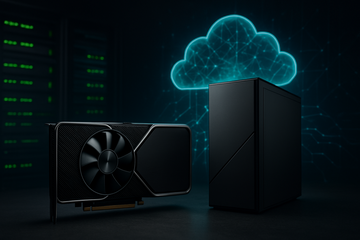
Nvidia Just Gave The Cloud‑vs‑On‑Device Inference Trade A New Anchor — Open Weights, Same Day, Both Ends Of The Stack
NVIDIA shipped open‑weight agent models on Oct 15, 2026 — Nemotron 3.5 Super VL (120B) for enterprise servers and Nemotron 3.5 Bolt for RTX Spark PCs — and three days later Microsoft, Dell, Lenovo and HP began moving that same stack onto desktops starting at $2,599.99. The combined move gives investors a hard anchor for the cloud‑vs‑on‑device inference trade: on‑premises GenAI already runs 4–17× cheaper than frontier APIs at high utilization, and Bolt‑sized models now run entirely inside a GeForce RTX box. The moat is software — NVIDIA's $4,500/GPU‑year AI Enterprise license, NIM and Dynamo — sold on commodity‑adjacent edge silicon.
Modal Just Made Nvidia's Vera CPU the Default for AI Agents — and Took That Seat From AMD and Intel
Modal, the $15.75 billion inference neocloud whose sandboxes run agent workloads for Anthropic, Meta, DoorDash and Cognition, said Monday it will start hosting AI agents on Nvidia's Vera CPU after early tests showed the chip doubling throughput over comparable x86. The deal pulls a 100% Intel-and-AMD CPU fleet into a mixed architecture and puts a real reference customer behind Nvidia's $20 billion Vera revenue target for the fiscal year ending January 2027 — pressuring AMD's grip on neocloud CPU shelf space and validating Arm-based silicon as the third rail of the AI data center.

Qualcomm Pitches Agentic AI to Smartphones. Smartphones Aren't Buying — Memory Suppliers Are
Qualcomm shipped its most ambitious smartphone silicon ever on Sep 22 — the first mobile CPU to break 5GHz, a 2nm Hexagon NPU 35% faster than its predecessor, and an explicit 'agentic AI' pitch. Four weeks later the same company is staring at a smartphone market that just printed its worst quarter in 14 years: Counterpoint counts global unit shipments -20% YoY in Q3 2026, the steepest decline since 2012, with ASPs up roughly 20% on memory costs. The suppliers cashing in on that squeeze are not chip designers — they are the memory vendors behind it, with Samsung Electronics guiding to a record $80B operating profit, Micron Technology posting 379% revenue growth, and SK Hynix riding a near-pure memory upcycle.
2026-10-18
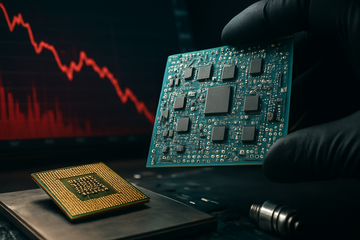
Memory Tape Broke for Real: Samsung, Not China, Is the Bigger Threat as Micron Loses $1T
On Oct 17, Micron fell 5.63% to $878.84 and slipped back below $1T in market value, capping an eight-session SOX losing streak — the longest since 2008 — that erased more than $700B from Samsung, SK Hynix, Micron, and SanDisk combined since Oct 6. World Trade Securities' Nicholas Mugalli used the session to reframe the narrative: the real memory-chip pricing threat for the next two years is Samsung's mature-node DRAM and HBM build-out, not CXMT's 4F² architecture that triggered the selloff. With Samsung's HBM capacity rising ~50% in 2026, operating margin at 36.9% on 485T-won trailing revenue, and unrivaled capex firepower, the bear case now rests on Samsung's willingness to fight for share — not on whether a Chinese DRAM entrant can validate volume production on a denser cell.
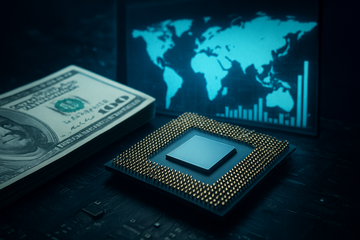
Ricursive's $4B Bet Says the Compute Crisis Gets Solved in Software, Not Silicon — And It Reshapes the EDA Business
A 10-month-old, 80-person startup just closed a $4 billion round to argue that AI designing chips is the only way to keep up with AI's compute demand — a claim TSMC's $60–85 billion annual fab buildout can't satisfy on its own. Backed by NVIDIA, Sequoia, and Lightspeed, Ricursive Intelligence inherits the AlphaChip work already running on four Alphabet TPU generations and at MediaTek, while Cadence and Synopsys — incumbents running $87–88 billion businesses — are scrambling to ship agentic EDA of their own. The investment question isn't whether AI-designed chips work; it's who captures the multiple when the EDA layer breaks open.
2026-10-16
What to expect
Evidence-first notes with a visible point of view.
This section collects sharp takes on earnings, shareholder meetings, and market structure. Each new piece should make the thesis, the facts, and the implications obvious within the first few screens.
Expect direct analysis, not generic commentary.
Expect the data to be explicit and the argument to be easy to follow.