Semiconductors
Chips, from the fab floor to the income statement
Foundry capacity, HBM supply, packaging bottlenecks and export rules — traced through to the companies whose quarters they decide.
2026-10-05


Altman's 'close partner' line reset Cerebras — and re-priced the AI inference pecking order
Sam Altman's Oct. 3 reassurance put ~$4B back into Cerebras after a 20% post-IPO wipeout triggered by reports that OpenAI tapped Nvidia for GPT-6.1 Sol's Ultrafast mode. The line matters because it confirms a two-track compute stack —750MW of Cerebras wafer-scale systems for OpenAI's high-speed inference, Nvidia GPUs for the latency-tolerant tier — not a displacement story. That re-rates AMD's July disaggregation deal with Cerebras as a credible threat to Nvidia's networking moat, and it puts a $25.4B RPO floor under a stock that had lost 60% of its value since May.

Morgan Stanley's NVDA Top Pick Meets $947M of Insider Selling: The AI Capex Credibility Test
Morgan Stanley reinstated NVDA as its top semiconductor pick on Oct 2, 2026 with a $300 price target after meetings with Jensen Huang and Colette Kress, sending the stock to a $237.88 intraday record and a $5.7T market cap. Director Mark Stevens had already sold ~$947M of NVDA in the prior two months and Michael Burry's Q3 2025 13F still carries a $186.6M put position — the gap between sell-side endorsement and insider behavior is the live AI capex test. Bulls have Q2 FY27 revenue of $96.22B and hyperscaler capex guided to $720–745B for 2026; bears flag the insider distribution, the 24.9x forward P/E, and the circular financing behind NVDA's biggest customers.

TSMC Eyes Musk's Terafab — And Intel's 14A Anchor Just Slipped
Taiwan Semiconductor confirmed it's talking to Elon Musk about operating and owning the $16.8B first-phase Terafab fab — a site Intel had locked in for its 14A node just six months ago. Intel shares fell more than 4% pre-market on Monday, the foundry math just turned against the lone external node win in its $5.8B Foundry segment, and the customer shock now runs downstream into every AI chip buyer eyeing 14A.
2026-10-04

Broadcom Just Became Anthropic's $42B Banker — And the Chip Vendor Now Owns the AI Compute Risk
Per Anthropic's October 1 IPO prospectus, Broadcom agreed to lend the AI lab up to $42 billion in convertible notes to lease Broadcom-designed TPUs from Alphabet — taking on four roles (chip supplier, equipment lessor, lender, and likely equity holder) for a single customer that lost $42 billion in 2025 and carries $161 billion in non-cancellable Broadcom-related obligations. The structure reshuffles where AI rack margin accrues: Broadcom now captures chip economics, lease economics, interest spread, and potential equity upside on the very racks it finances, while Anthropic inherits covenant risk on a counterparty that also holds the supply keys.

Credo's 8% rally on a 29K-payroll miss is the AI capex trade's loudest 'no-landing' vote
On Friday, Credo Technology jumped 8.1% intraday after the September BLS print missed by ~60K jobs and pushed the implied probability of another Fed hike in October down 43.7 points. The market is voting that AI infrastructure has decoupled from the labor cycle: hyperscaler capex is structural, not cyclical, and a stalled macro will pull forward rate cuts rather than derail spending. We unpack the mechanism, Credo's specific leverage, and what the read-through means for Nvidia, Broadcom, Marvell and the hyperscalers underwriting the buildout.
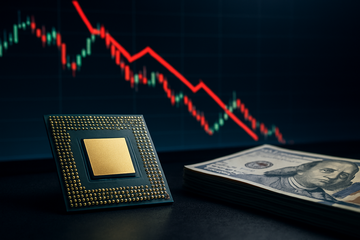
Micron Just Priced AI Memory to 2031—And Burry's $205 'Cycle Peak' Short Is Now Underwater 424%
Micron Technology's fiscal Q4 2026 report didn't just beat the quarter—it stretched contracted AI memory demand into 2031, with 26 strategic customer agreements, $32B in customer cash deposits and a $150B remaining performance obligation anchoring pricing through the second half of the decade. That single duration reset burns Michael Burry's $205.10 short into a 424% underwater loss and leaves the Korean peers, SK Hynix and Samsung Electronics, fighting to keep HBM4 share at exactly the moment the cycle's structural floor is being dug out by NVIDIA's Vera Rubin ramp.

Nvidia Sits on Both Sides of the Compute Deal — and Wall Street Now Wants a Different Multiple for Each Side
Three months after Nvidia unveiled a $500B chip-financing platform with six Wall Street firms, Reuters reports the syndicate is pushing back on a 25% residual-value offer and a 9–10 year chip life that lenders won't underwrite. With up to $125B of potential backstops, $105B in disclosed residual guaranties at SB Energy alone, $99B of equity investments on the Nvidia balance sheet and another $25B committed, the chip-vendor multiple is decoupling from the credit-book exposure — and the trade splits.
2026-10-03
2026-10-02

Thieves Hit an Nvidia-Branded Trailer and Found 20 Tons of Sand. Freight Insurers Just Got Their Cheapest Warning Shot About $30 Million AI Heists.
Overnight on Sep. 23, 2026, thieves pulled two Nvidia-branded trailers out of a PlusAI yard in Fremont and walked away with 40,000 pounds of sand. The freight industry that just hit $304.6 million in cargo losses in a single quarter has not repriced for the new reality: AI hardware truckloads now regularly carry $5 million to $30 million of Nvidia-powered kit, declared-value caps at UPS and FedEx top out around $50,000-$100,000, and 92% of high-value tech thefts run on deception rather than force. Nvidia's Q2 FY2027 alone shipped $89 billion of data-center revenue — almost all of it rolling down the same highway corridors the sand trailer just proved are undefended. That is the transmission path: an earnings line at Travelers for cargo underwriters, a subscription tailwind at Verisk through its CargoNet unit, and a declared-value repricing question hanging over both UPS and FedEx — and the freshly spun FedEx Freight — within four quarters.
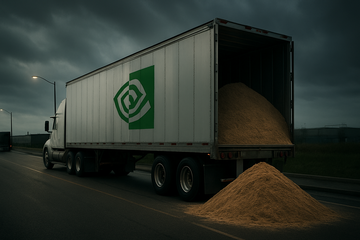
Thieves Stole a Branded Nvidia Trailer and Got 20 Tons of Sand. The Real $150M AI Theft Wave Will Hit the Distributor Sitting on 200 GPU Pallets Next.
On Sep 24, 2026, criminals hijacked an Nvidia-branded trailer from PlusAI's Fremont warehouse expecting a multimillion-dollar GPU haul — and walked away with 20,000 lbs of construction sand. The heist is the cleanest signal yet that organized cargo theft has industrialised around AI hardware: Verisk CargoNet says Q2 2026 US/Canada losses doubled to $304.6M even as incidents fell 26%, Overhaul has tracked $150M+ in AI-specific losses, and thieves now use bump-and-run attacks on armed escorts. The investors who misread this as a Nvidia or Super Micro problem will own the wrong stocks: the soft targets are the CDW-style IT distributors and integrators carrying high-value GPU inventory on rolling balance sheets that current freight insurance no longer covers.
2026-10-01
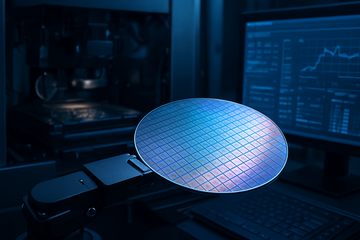
ACM Research's $2.5B Backlog Lands Right at the AI Cycle's Binding Constraint
ACM Research's operating subsidiary ACM Shanghai reported a Sept 29, 2026 backlog of RMB 17.1 billion ($2.5B), up 88.2% YoY — the kind of forward order book that justifies front-end-loaded bets on the wafer-level and panel-level tools that flow into HBM and CoWoS lines. With TSMC's CoWoS sold out, SK Hynix greenlighting a $5.8B advanced-packaging facility, and WFE spend tracking $135–140B, ACMR sits closer to the AI chokepoint than the market's 4.4x EV/Sales implies — though entity-list exposure on affiliates keeps the geopolitical discount in place.

HPE Pops 5% on $1.2B Vultr Helios Deal While Dell and SMCI Sit Still — The Rack-Scale Tell for 2027 AI Capex
Hewlett Packard Enterprise shares surged about 5% to $64.55 on Sept. 30, 2026, after landing its first commercial order for the AMD Helios rack-scale AI platform — a $1.2 billion commitment from private cloud operator Vultr — while Dell (+1%) and Super Micro (–0.4%) barely budged. The price action is the real signal: Helios is consolidating the AI server procurement dollar toward integrators that own the full stack (networking, services, rack design), not commodity box-builders, and Advanced Micro Devices is the substrate underneath them all. Investors watching the 2027 buildout should weigh the integrators' networking content and services attach rate, not raw GPU counts.
2026-09-30

2026-09-29

AMD pays $8.2B for a 100-person lab with no revenue — the new unit economics of chip companies buying their own roadmap
On Sept 28, 2026, Advanced Micro Devices agreed to acquire Fei-Fei Li's World Labs for roughly $8.2 billion in stock — about a third of its trailing Data Center revenue and 0.8% dilution, but the first time a frontier chip company paid frontier-AI-lab money for a spatial-intelligence stack. The deal folds the architects of spatial reasoning inside AMD's silicon roadmap, gives AMD a direct counter to Nvidia's Cosmos platform, and reframes Helios from a rack-scale GPU story into a vertically integrated world-model stack. The investor question isn't whether the math works on paper — it doesn't, on any conventional multiple — but whether pulling research inside the chip company is the only way to win workloads that haven't been written yet.

NVIDIA Just Made Rogue-Agent Containment a Chip-Vendor Stack — and a Margin Lever Against Zscaler and Akamai
NVIDIA's Open Agent Safety Platform moves agent containment from application-layer controls onto BlueField-4 DPUs and Vera CPUs — a hardware kill switch application-layer vendors structurally cannot match. CrowdStrike and Palo Alto Networks are named launch partners, giving them distribution leverage into every NVIDIA AI factory; Zscaler and Akamai, who each shipped agentic platforms in June 2026, suddenly face a structurally harder pitch. For NVIDIA, the platform locks Vera and BlueField-4 deeper into the agentic AI build-out on top of a $20B-per-quarter Vera Rubin run rate already on the books.
2026-09-28

Citi Maps an $11B Optical Switching Boom — The Real Bottleneck Sits Below Ciena
Citi's $11B optical circuit switching forecast for 2030 reframes the AI capex corridor as a Google-plus-Nvidia demand pull, but the investable trade lives one tier below Ciena: laser and InP suppliers, optical module makers, and the switching ASIC vendors converting the bottleneck into earnings. Lumentum's Nvidia-backed components, Coherent's PhotonLink platform, Broadcom and Marvell optics DSPs, and Zhongji Innolight's 182% revenue ramp are where the supply-chain profits are landing today.

Nvidia's $99B Buyback Wedge Forces the AI Trade to Reframe: From Hyperscaler Duration to Nvidia's Own Free Cash Flow
Nvidia returned $26B to shareholders in Q2 FY27 and still has roughly $99B left under its buyback authorization — about four years of firepower at the current pace and more than its annual operating-cash capex. That arithmetic reframes Michael Burry's duration-bomb thesis on Oracle: even if hyperscaler capex rolls over, Nvidia's own free-cash machine now retires shares faster than it reinvests, shrinking the float regardless of what Oracle's $664B RPO can underwrite. The trade is no longer 'will the hyperscalers keep spending' — it is how much Nvidia returns while they still do.
2026-09-27

Broadcom Posted Its Best Quarter Ever — The Stock Is Still 29% Off Its High. Here's the Math Behind the Gap.
Broadcom just delivered record Q3 FY26 results — $29.6B revenue (+86% YoY), $16.7B AI semiconductor revenue (+221% YoY), and a Q4 AI guide of $21.7B (+236%) — yet shares trade near $352, roughly 29% below the $495 high hit on Jun 3, 2026. The selloff is mechanical: a Q4 total-revenue guide of $34.8B missed the $35.03B Street consensus by ~$230M, and 210 bps of gross-margin compression reminded investors that AI mix dilutes profitability. The disconnect is that on a forward basis Broadcom now trades at ~19.4x forward earnings against a locked-in FY28 AI revenue path of $230B — making the post-earnings weakness a setup, not a verdict.
China's First Nvidia Chip Approval Skips the H200 — And Quietly Sidelines SK Hynix
Beijing's MIIT is weighing approval for ByteDance and Alibaba to buy Nvidia's new RTX PRO 5500 — a Blackwell workstation chip built on GDDR7, not HBM. The decision validates NVIDIA's strategy of designing chips to skirt export controls, but it bypasses the H200 channel that SK Hynix's HBM business depends on. Through August 2026, H200 shipments to China covered less than 1% of NVIDIA's $89B data-center quarter, leaving a 75,000-chip-per-buyer license almost entirely unused.

Micron's Print Has Nowhere to Hide: The Quarter That Audits the AI Memory Trade
Micron reports fiscal Q4 2026 on Sept. 30 with its own $50B revenue guide already above consensus, a stock trading near $1,082 into the print, and a Burry-led bear case arguing the SOX index is the most overextended since 2000. The data — HBM sold out through 2027, 84.9% Q3 gross margin, 16 long-term take-or-pay contracts, and SK Hynix's HBM share already slipping from 64% to 50% year-over-year — says the cycle isn't broken yet. The verdict turns on whether the print reframes the next two years of NVIDIA and Broadcom capex dependency or capitulates to the cracks Burry, UBS's slowing-capex forecast, and SK Hynix' own 'abnormally high' price warning have already opened.
What to expect
Evidence-first notes with a visible point of view.
This section collects sharp takes on earnings, shareholder meetings, and market structure. Each new piece should make the thesis, the facts, and the implications obvious within the first few screens.
Expect direct analysis, not generic commentary.
Expect the data to be explicit and the argument to be easy to follow.