Power & Grid
Load growth, and who gets to build for it
Interconnection queues, rate cases, turbines and transmission — what data-center demand is doing to utilities and the equipment makers behind them.
2026-11-09


Agentic Hiring Is Repricing the Fee Pool, Not Emptying It: Robert Half Earned 5.3% More per Placement in Q3 2026 While ManpowerGroup's Staffing Margin Fell 50 Basis Points
The November 8 recruiting-fee debate was aimed at the wrong line item: AI is deflating the billable hour, not the placement fee. Robert Half raised its average fee per placement 5.3% year over year while placing only 0.9% more candidates, and permanent placement still converts at a 99.8% gross margin, whereas ManpowerGroup grew revenue 4% but saw gross profit fall 1.2% as staffing margin contracted 50 basis points. The rent on those freed hours is migrating upstream into agent software and downstream into direct-hire platforms — Workday, Salesforce, Kanzhun and Recruit Holdings — not into consumer prices. With private-industry wages up just 3.1% and a 29% global hiring outlook, the December Fed decision turns on inflation prints and hiring volumes, not on agency margins.

$2,000 a Kilowatt: Anthropic Paid Peak-of-Cycle for 1.7 GW of Turbines and Inherited the Gas Risk
Anthropic PBC agreed in late September 2026 to pay about $3.4 billion for commitments covering 1.7 GW of heavy-duty gas generators bought from OnePWR Solutions — roughly $2,000 per kilowatt for the machines plus the engineering scope to install them, the same all-in cost analysts put on a new combined-cycle plant. What the lab bought at peak-of-cycle prices was the right to skip the grid, and with it a fuel bill of roughly 0.25 Bcf per day: about $332 million a year at the EIA's 2026 Henry Hub forecast, and $95 million for every $1/MMBtu move. The cash itself went to the turbine order book and the construction chain, not to the grid — Caterpillar enters the fourth quarter with a record $78.1 billion backlog, and the developer that had been holding the slot exited with $3.4 billion. So this is a repricing of who buys power equipment in 2026-27, not a liquidity test of a company holding $131.7 billion of cash and about $895.4 billion of committed spend.

Two Prices for Powered AI Land: Google's Undisclosed Wyoming Deal and the 45.5% Premium Paid Elsewhere
Alphabet's Google unit acquired Crusoe's stalled southeast Wyoming campus on Nov 6, 2026 and committed $17 billion to build on it, with neither side disclosing a price. The only other observable prints on powered AI land that week were premiums — a 45.5% premium for a non-control 9.9% stake in NEXTDC and talks about a $100 billion Vantage IPO — while the Nasdaq 100 shed $2.5 trillion in one trading day and IREN pushed $4 billion of revenue start to January 2027. The mechanism matters more than the headline: Google bought the entitlements and the schedule risk Crusoe could not carry, while the power itself (a 702 MW fuel-cell plant under a 20-year contract, a 2.7 GW gas hub, nearly 1 GW of contracted carbon capture) never changed hands. Investors should read this as a repricing of developer equity, not of powered capacity, and own the contracted power and the equipment with booked slots.
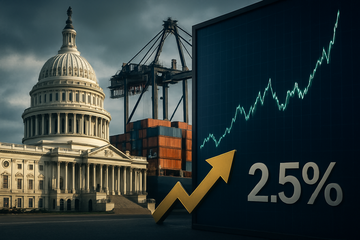
Gridlock, Not Relief: Democrats' January Tariff Bill Can't Undo Section 232 — and the Tape Is Trading a 2.5% Gridlock Rally
House Democrats will put tariff repeal on the floor in the first 100 hours of the 120th Congress, starting with the 50% duty on Canadian goods, but the tariffs that matter now live in statutes rather than proclamations — and with 54 Democratic senators, 60 needed for cloture and 67 to override a veto, real repeal is a 2027 problem, not a January one. The market has already voted on the headline: Costco, Dollar General and P&G rose on the Nov. 4 relief rally, but by no more than the Dow's 2.5% surge, which tells you investors are trading gridlock, not repeal. The tradeable split is between consumer names that rally on the promise of relief and the Section 232-protected steel and chip producers whose pricing power no House vote can touch.

The Blue Sweep Closed Trump's Fed Path for 2027 — and Futures Already Paid for Two Hikes the Committee's Dots Don't Show
Democrats took both chambers on Nov. 3, and the first thing that changes is not fiscal policy but the Federal Reserve: a Senate that starts Jan. 3 can block every replacement Trump wants on the seven-member Board, so the 2027 rate path belongs to the sitting committee. Futures have already paid for that outcome — the two-year closed at 4.51% on Nov. 6, implying roughly two more increases in 2027, while the Fed's September median dot stops at 4.1% and holds there through the year. So the trade is no longer the Dec. 9 decision, which looks close to a formality; it is the projection round attached to it, and the roughly 50 basis points of 2027 tightening the dots must now validate. Bank earnings are already collecting the hiking cycle — JPMorgan Chase's net interest income rose 12.8% to $27.0 billion in Q3 2026 — while housing and long-duration assets are still paying for it at a 7.18% mortgage rate.
2026-11-08
The 2.5 Cent AI-Power Premium Is a Policy Choice — and China's $945 Billion Is the Proof
China will spend $945 billion on energy in 2026, 1.5 times the United States, and the marginal dollar is going into grid hardware the West cannot make fast enough. That build-out is why transformers got scarce without becoming unaffordable — until Executive Order 14420 closed the factory door in August 2026. We size the US data-centre capacity premium at roughly 1.5 to 3.7 cents per kWh, about 2.5 cents at the midpoint, and show where the rents land: Western backlogs and US power sellers near term, Chinese exporter volume without profit in the long run.
Washington's Nov. 7 Permitting Bill Prices a $615 Billion AI Buildout Before Any of It Is Energized
On Nov. 7 two Republicans and two Democrats released the agreed substitute amendment to the Bipartisan American Affordability and Jobs Act, and the American Council on Renewable Energy and Evergreen Action both endorsed the same text on the same day — proof the bill now trades as a settled framework rather than a partisan wish list. What matters is the machinery: FERC gets project-by-project siting authority, utilities can have their return on equity cut for failing to build grid upgrades, and any data center of 20 MW or more must pay the entire incremental cost of the generation, storage and wires built to serve it. That clause is why the bill is investable and why it is not a demand subsidy — an estimated $6 billion a year of grid cost moves off ratepayers and onto large loads. The buildout it unlocks is already funded: Amazon, Alphabet, Microsoft and Meta spent $615.4 billion on property and equipment in the twelve months to Sept. 30, 2026, and $201.9 billion of that in the September quarter alone, while federal tax support for new wind and solar has been withdrawn. With Democrats controlling both chambers from Jan. 3, 2027, the Nov. 9 cloture vote matters less as a passage event than as a deadline for locking in a framework the next Congress must negotiate against.
$17 Billion and 86% of Alphabet's Free Cash Flow: OpenAI and Google Just Put a Balance-Sheet Test on the AI Buildout
On November 5, 2026 OpenAI published a compact promising to pay the full cost of electricity and grid infrastructure at every compute campus it owns, dropped non-disclosure agreements with public officials and offered financial assurances if a project is cancelled — the same day Google committed $17 billion to its first Wyoming campus and said it would pay for 100% of the power it uses. The political cost of AI power has stopped being a ratepayer problem and become a corporate capital line, and the buildout is consolidating into the few balance sheets that can carry it. That advantage is not free: Alphabet's trailing free cash flow has fallen to $19.7 billion against $159.8 billion of trailing capital expenditure, so one Wyoming campus absorbs 86% of a year of cash generation. Every supplier on the critical path is now pricing a buildout that UBS estimates could lose 30% of its planned 2028 capacity, and the tell for who wins is a credit spread, not a press release.
2026-11-07

Oklo Rose 22.7% on $1.86 Million of Services Revenue: The AI-Power Trade Now Pays for Milestones, Not Meters
Oklo's third quarter produced $1.86 million of revenue and a $41.7 million net loss, and the stock still closed 22.7% higher at $23.55 on Nov. 6, because the print carried a package of dated milestones: the NRC's final rule letting Department of Energy reactor data feed commercial licenses (effective Nov. 25), a domestic forging-capacity reservation with U.S. Forged Rings (first components 2030), and 900 MW under active consideration in PJM's 2026 interconnection cluster study. The revenue itself was the least important number in the release — it came from two engineering-services firms Oklo bought in June, and depending on whose consensus you use the same $1.86 million was either an 80% beat or a 1.2% miss. What the market paid for was a schedule: fuel from Centrus beginning in 2029, a safety analysis management does not expect until roughly 2028, and an interconnection queue that has already cost Oklo one 750 MW project. For investors, that makes the pre-revenue developers a duration instrument on the license-and-fuel calendar rather than a claim on electrons, which is why the leg now trades at roughly 1,400 times trailing sales with a quarter of dilution each year, and why the fuel and component suppliers are the better-structured way to own the same buildout.

Vistra's $1.14 Billion Quarter Is 37% Paper — and the AI-Power Payday Doesn't Arrive Until 2029
Vistra booked third-quarter GAAP net income of $1,140 million and Ongoing Operations Adjusted EBITDA of $2,378 million, but $559 million of that net income was an unrealized gain on hedges expected to settle in future years — roughly $426 million after tax, or about 37% of the bottom line. The gain exists because the ERCOT forward curve fell, not because AI demand rose, and Vistra has already sold 98% of its 2027 power. So the AI-load option management describes does not land in cash until 2029-2030, the same window in which the hedges behind the mark mature. The investable AI-power trade sits elsewhere: contracted floors at Constellation and Talen, equipment backlog at GE Vernova, Baker Hughes and Doosan Enerbility, and cargoes at Cheniere.
2026-11-06

The Marginal Buyer of Energy Is a Data Center — and Baker Hughes Already Holds $39.4 Billion of Those Orders
At ADIPEC on Nov. 5, 2026, Baker Hughes's Lorenzo Simonelli pitched a \"demand decade\" while bp's Meg O'Neill told CNBC to plan for a lower-price environment. They were describing two different cycles, and only one of them is investable. The volume cycle is real and already contracted: Venture Global has committed up to 11.52 GW of behind-the-meter power with GE Vernova and Baker Hughes, Vistra has contracted 2,609 megawatts of nuclear output to Meta, and Baker Hughes' industrial backlog hit a record $39.4 billion in Q3 2026. That is why the cycle survives the AI capex trims that knocked the power complex 30% to 42% off its 52-week highs — the buyer signs 20-year contracts while the equity market still prices a one-year budget. Trade booked backlog and contracted off-takers, not barrels.

Dropbox's $350M Tigris Bid Prices S3 Compatibility at a Commodity Level — While the Drive Makers Keep the Pricing Power
Dropbox agreed on Nov. 3, 2026 to buy S3-compatible object-storage startup Tigris Data for about $350 million in cash — its largest acquisition since 2007 — and wrapped it in DBX Agent Cloud, a storage product sold to developers building AI agents. The read-across is not that storage software is scarce: the S3 API now has at least four credible implementations, and Dropbox paid roughly 11 times everything Tigris has raised and about 61% of the enterprise value of the only listed pure play in the layer, Backblaze. What the price reveals is where the durable margin sits: Seagate and Western Digital grew revenue 61% and 55% year over year at 57%-plus gross margins on AI exabyte demand, while the software toll layers convert that same demand into 53% ARR growth on $6.3 million of trailing capex. For investors the toll is real but the economics accrue upstream to the bytes, while the software layer's pricing power is capped by a $0.015 per gigabyte-month zero-egress card that Cloudflare publishes.

Google's $17 Billion Wyoming Bet: The First Hyperscaler That Pays for Its Own Grid
Google will build its first $17 billion data center in Wyoming and pay for 100% of the power it uses, locking 2.7 GW of contracted resources with Black Hills and a $4 billion, 702 MW fuel-cell plant from AEP — two days after voters rejected 40 of 41 data-center ballot measures across ten states. The mechanism matters more than the megawatt count: a hyperscaler that signs 22-year, cost-bearing power contracts converts a political objection into a financial cost it can absorb. That splits the AI buildout into two tiers and moves value toward utilities holding credit-backed, self-funded load.
2026-11-04

Garry Tan's $200,000 Token Bill Prices an AI Employee Like a Utility — and It Breaks Seat Pricing
Y Combinator CEO Garry Tan said he spends $100,000 to $200,000 a year on model tokens to run AI agents, which is the first operating line anyone has put on the record for what vendors call an AI employee. At Anthropic's published prices that bill buys roughly 167 premium seats, about 225,000 finished agent jobs, or 1.47 times the median software developer's salary — so the unit of AI labor is consumption, not a licence. The pricing industry is already repricing to match: Microsoft switches new Microsoft365 Copilot Business licences to usage-based billing by default from December 1, 2026, and Salesforce sells the same agent by conversation or by Flex Credit. Margin migrates with it, from seat vendors to meters, memory and compute, while Chinese open-weight models deflate the price of a token faster than seat prices can fall.
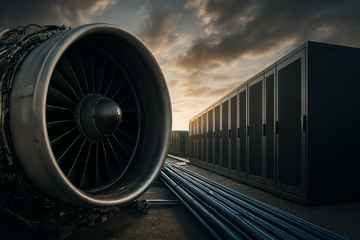
Converted Jet Engines Won a $1.465 Billion Order — and the AI Power Queue Still Runs to 2031
Retired aircraft engines have become sellable power: FTAI Aviation disclosed a $1.465 billion initial purchase order for 25-megawatt gas turbine generator sets built from CFM56 engines, with more than 100 units under contract for delivery in 2027 and 2028. The channel adds almost no megawatts — it adds time, because new-build aeroderivative turbines are sold out through 2029 while a converted engine can deliver in 2027 and bridge a data center for five to seven years. That makes repurposed engines a bridge-power market rather than a power source, with roughly 1,000 retiring engines setting a hard ceiling on supply. The investable result is a new toll layer between aerospace and AI power, captured by whoever already holds the engine cores.
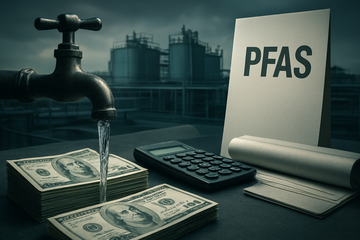
3M’s $7.35B PFAS settlement is creating a new pricing floor—starting with the municipal-water bills utilities can now capitalize on
3M’s $7.35B PFAS personal-injury resolution (timed across 2026–2034) doesn’t just cap chemical-maker liability—it also sets the first nationwide “unit” market reference point for how future PFAS costs get booked and financed by the municipal-water complex. New Jersey’s separately approved $2.5B PFAS settlements show the other half of the pipeline: long-duration, annual payments that translate contamination risk into predictable, credit-relevant cash flows for utilities and their suppliers.

CME Never Became Versant: The Nov. 3 Print Puts Pricing Power in Data, Not Volume
CME Group did not rebrand. Its third-quarter results were released on Oct. 21 under its own name, and the Nov. 3 print that has been mistaken for it belongs to Versant Media Group, the cable and news networks Comcast spun off on Jan. 5, 2026. Read together, the two prints describe the same mechanism: volume-linked tolls are cyclical cash machines — clearing and transaction fees still supply 79% of CME's revenue, and 16% more contracts converted into only 13% more revenue because the rate per contract fell — while everything sold as data or subscription compounded, from CME's record $243.1 million market data line (+20%) to ICE's record $336 million of fixed income data and analytics, Nasdaq's $3.365 billion recurring revenue base, and Versant's $245 million platforms line (+9.6%). Positioning follows the attach rate, not the volatility premium: the near-term test is a January print season in which Versant Media Group must clear an implied fourth-quarter revenue bar of $1.275 billion to $1.525 billion against $1.610 billion a year earlier.
2026-11-03
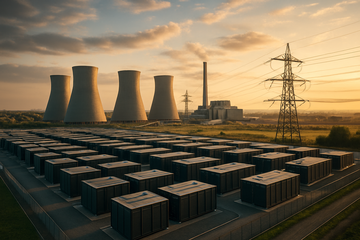
Brookfield's £20bn Selby AI Campus Contains No New Turbine: Britain's AI Bottleneck Is an Existing 4GW Connection
On 3 November 2026, Drax Group, Brookfield, the group's UK compute platform Radiant and Qai — the AI infrastructure company backed by the Qatar Investment Authority — announced a partnership to build more than 1GW of AI data centre capacity on the Drax power station estate in North Yorkshire, a programme that could exceed £20bn with £2.5bn for a 100MW first phase running from Q1 2028. Phase 1 draws electricity straight from the national grid through the site's existing 4GW connection, so it adds compute without adding a power plant. That is what makes the template interesting: it bypasses a queue where developers are seeking 72GW of connections against 45GW of national peak demand, and the 2026 Budget's Data Centre Covenant has turned legacy connections into policy-protected, transferable scarce assets. The read-through is not the obvious one — the electrical stack gets paid, the turbine order book does not — but the whole structure still rests on a tenant nobody has named.

MS NOW's $7.99 Membership Makes Live News a Platform Utility — and Roku's Buyer Is a News Rival
Versant's MS NOW put its 24/7 live feed on Roku, Apple TV, Samsung, Google TV and Amazon Fire TV on Nov. 2, 2026 for $7.99 a month — the first time a 24-hour cable network reached a television without a cable subscription. The money moves with the feed: Versant's platforms revenue grew 9.6% to $245 million in Q3 2026 while linear distribution fell 5.8% to $935 million, and Roku's platform revenue rose 23% to $1.31 billion as third-party subscriptions attach to somebody else's box. The read-through for investors is that the platform, not the cable operator, now owns the customer relationship; the $7.99 price is still an acquisition price rather than a settled utility price; and Fox's pending $22 billion purchase of Roku means the device that sells MS NOW's membership will also carry Fox's own news channels.
2026-11-02
What to expect
Evidence-first notes with a visible point of view.
This section collects sharp takes on earnings, shareholder meetings, and market structure. Each new piece should make the thesis, the facts, and the implications obvious within the first few screens.
Expect direct analysis, not generic commentary.
Expect the data to be explicit and the argument to be easy to follow.