Power & Grid
Load growth, and who gets to build for it
Interconnection queues, rate cases, turbines and transmission — what data-center demand is doing to utilities and the equipment makers behind them.
2026-11-02


BWXT Owns the U.S. Naval Fuel Gate — Tonight's Print Is About Commercial Growth, Not the $189 Million Headline
BWX Technologies is the sole supplier of nuclear fuel to the U.S. Navy, has just booked a $189 million naval contract, and has won a $1.5 billion federal contract to enrich the very fuel it currently only downblends — yet the stock closed Oct. 30 at $130.48, 46% below its 52-week high, because the market sold the AI-power trade rather than the fuel business. The two loudest announcements of the quarter sit in the slow-moving 81% of backlog that is government work, where second-quarter adjusted EBITDA fell 4.9% year over year, while the growth engine, Commercial Operations, rose 71.8% to $302.5 million and is about to shrink again as medical is sold for up to $800 million. Consensus of $1.18 of adjusted EPS on $970.5 million of revenue will look light by construction, since management expects roughly 55% of second-half earnings in the fourth quarter. The investable question is whether commercial nuclear equipment and TRISO fuel justify27 times 2026 guidance — and whether the upstream gate, held by Centrus Energy and demanded by Meta Platforms's reactor buildout, is the better place to sit.

Tower Semiconductor's Record Quarter Proves the AI Power Chain Is Real. Its 34% Gross Margin Proves Pricing Isn't.
Tower Semiconductor closed 2026 with record third-quarter revenue of $526.2 million, up 33% year over year, and guided the fourth quarter to $600 million — a $2.0 billion year and a $2.4 billion exit run rate. The engine is mix, not price: silicon photonics heads to a $1.1 billion annualized run rate, five times 2025, while $321 million of customer prepayments funded the capacity buildout that fills it. What shareholders get for that growth is a 34.0% gross margin against Taiwan Semiconductor Manufacturing's 66.4%, which is why Tower trades within a turn of the leader on sales but at 27.8 times forward earnings versus TSMC's 18.3 times.
2026-11-01
India's Coal Burn Is Back at a Three-Year High — and Almost None of It Is Imported Coal
India's coal-fired generation rose 13.3% year on year in September 2026 and the power deficit hit 560 million kWh, the largest since August 2023, yet the coal was domestic: the government is cutting power-sector thermal coal imports by at least 15 Mt this year while national output heads for a record 1,095 Mt. That matters for the sovereign-compute build-out, because the 26.3 GW of data-centre load India has projected for 2031-32 will be served by coal plants running on three days of fuel and by gas at a tripled $33/MMBtu benchmark, not by clean firm power. The money sits in power equipment, turbines, cooling and compute — not in the seaborne coal trade the headlines imply.
The Ballot Won't Cancel the Build — It Will Decide Who Pays: Georgia Power's $16.3 Billion Test Case Before Nov. 3
Utilities are no longer asking regulators for permission to build for AI; after Nov. 3 they will be asking voters. The cost of that shift is not slower construction but a political cap on who pays for it: 25 states now have an approved large-load tariff, and Virginia's commission just cut Dominion Energy's residential transmission charge by two-thirds by assigning the cost to the data centers that caused it. The result is a barbell — utilities holding binding, collateralized data-center contracts grow rate base without a rate fight, utilities without that book absorb the heat, and the equipment layer, led by GE Vernova at a 116 GW gas-turbine backlog, is insulated from the vote entirely.
46 Turbines Without Permits, a Denied Dismissal: The Memphis Ruling Reprices How 130 GW of AI Power Gets Built
On Oct. 30 a federal judge in Mississippi refused to dismiss the NAACP's Clean Air Act citizen suit against xAI and its affiliate MZX Tech over the gas turbines powering the Colossus 2 data center in Southaven, sending the case into discovery. The claim attacks the trick behind the meter — trailer-mounted units classified as 'mobile' and run without air permits — which is how AI campuses sidestepped interconnection queues now running 36-84 months. Because SpaceX now carries the claim in its own filings alongside $40.0 billion of nine-month AI-segment capital spending, the investable read-through is that time-to-permitted-megawatt matters more than time-to-megawatt: value migrates to fast-to-permit equipment and grid-side suppliers, and away from operators who treat permits as optional.

A Judge Put AI's Power Build-Out on a Court Calendar: xAI's 59 Unpermitted Turbines, $40 Billion of Quarterly AI Capex, and the New Premium on Permitted Power
On October 30, 2026, Judge Debra M. Brown of the U.S. District Court for the Northern District of Mississippi denied xAI's motion to dismiss the NAACP's Clean Air Act suit over the gas turbines at the Colossus 2 site in Southaven, Mississippi, rejecting the arguments that citizen suits are unconstitutional and that temporary mobile turbines escape federal permitting. The shutdown question is still open — a preliminary injunction filed in May remains undecided — so what changed is not the power flow but the price of everything built on top of it. That matters because SpaceX spent $40.0 billion on AI-segment capital expenditure in the first nine months of 2026 while the fleet that feeds those servers has no federal permit to operate. For investors the ruling reprices fast, behind-the-meter gas against permitted, contracted power: GE Vernova is selling into a 122 GW gas backlog, Constellation Energy is signing 20-year nuclear agreements, and CoreWeave is trying to service $51.6 billion of debt against compute that only works if the power is lawful.
2026-10-31

Hedge Funds' Record Short in US Gas Is Betting on Weather — AI Turbines and Qatar Now Set the Price
Money managers took their net short in US natural gas futures to 223,591 contracts in the week to Oct. 27, the most bearish positioning since the Covid crash, built on a strong El Niño forecast and a mild-winter call the EIA's own base case already assumes. What the short ignores is three demand curves that ignore the weather: Qatar's LNG force majeure has left Europe with its lowest seasonal storage since 2011, US LNG exports are set to reach 18.6 Bcf/d in 2027, and 378 GW of US gas-fired capacity tied to data centres is in development. The equity trade is therefore not long gas but the fee-based tolling and the equipment layer — Cheniere Energy has raised 2026 guidance again, while EQT has hedged roughly four-fifths of 2027 but almost none of 2028.

NVIDIA's $108.5 Billion of Guarantees Covered OpenAI. A West Virginia Neocloud May Be Next
NVIDIA is in talks to guarantee billions of dollars of construction debt for the first 460MW building of Nscale's Monarch campus in Mason County, West Virginia — the site of a six-year, $44.6 billion compute deal with Anthropic — using a residual value guarantee that would let the chip vendor take over the site if the build fails. The instrument is not new: NVIDIA's Q2 fiscal 2027 filing already carries $108.5 billion of off-balance-sheet guarantees, $105 billion of it supporting OpenAI's Ohio lease at SB Energy, alongside $279 billion of supply and capacity commitments. What is new is the counterparty: Nscale's Sept 18, 2026 IPO filing shows $1.48 billion of cash against $27.5 billion of equipment and construction commitments, while Anthropic reported an $80.7 billion first-half net loss of its own. Read the reported guarantee as NVIDIA underwriting a building in a grid-constrained state, not as a sale of more silicon.
2026-10-30

90 Days, 500 Bases, No Costed Plan: The Pentagon's FORTRESS Mandate Is a Duration Play for Switchgear, Not Reactors
The Pentagon's FORTRESS initiative, unveiled by Defense Secretary Pete Hegseth on Sept. 30, 2026 and confirmed by chief spokesman Sean Parnell on Oct. 25, would require every major continental U.S. installation to run 90 days with no outside power, water, fuel or communications — with officials assessing roughly 500 bases and costs still unquantified. The investable read is duration, not capacity: autonomy goes from 14 days to 90, a 6.4x jump at unchanged critical load, which pushes incremental dollars into generators, batteries, switchgear and fuel storage rather than turbines or reactors. That points at the same OEM lines already supplying hyperscale, and at their cheaper multiples: Cummins at 15.2x trailing EV/EBITDA and Caterpillar at 17.7x, against Vertiv at 31.2x and Bloom Energy at 97.3x. The catch is timing — a second, appropriations-gated buyer rather than a budget-insensitive one, which makes the first published per-base cost the thing to watch.
Dnipro Went Dark on October 30. Ukraine's Grid Rebuild Is Being Bought in China, Not Europe
Russian strikes on October 30, 2026 cut power to more than 350,000 consumers in Dnipro and stopped the city's metro, and the deeper cause is a repair bottleneck that turns every destroyed substation into procurement. Ukraine's own customs data shows where that money lands: $1.14 billion of transformers, inductors and reactors imported in the first nine months of 2026, up 47.3% year on year, with 87.8% of the value coming from China while Europe's factories stay booked out for years. GE Vernova exited the third quarter with a $42.2 billion Electrification backlog, up 60% year on year, and is committing $6.0 billion through 2028 to add capacity, so the war's cash flow reaches Western and Korean primes through European and NATO grid-hardening budgets rather than Ukrainian tenders. The binding constraint on the $91 billion energy-sector rebuild is financing and factory allocation, not demand: a €922 million EU package and a €90 million EBRD substation loan against a World Bank estimate of nearly $91 billion.
2026-10-29
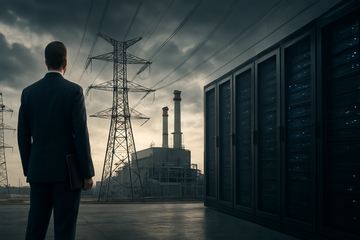
2026-10-28

2026-10-27

2026-10-26

EQT Pays $16.97 a Molecule for Range, Against Its Own $16.94 — So the AI Power Prize Is the Contract, Not the Rock
EQT agreed to buy Range Resources in an all-stock deal worth $12.83 billion on Oct 26, 2026, creating a company with more than 9 Bcfe/d of production and over $50 billion of enterprise value. Measured by enterprise value per Mcfe of annual production, EQT is paying $16.97 for Range's molecules against its own $16.94, so the molecules change hands at par and the real prize is the contracting machine that can sell them to AI data centers. The evidence says the AI power boom is a volume story, not a price story: the EIA's October forecast has Henry Hub falling 9% to $3.16 per MMBtu in 2027 even as consumption and LNG exports rise. Range shareholders banked most of the announced premium on day one while EQT shareholders paid 1.8%.
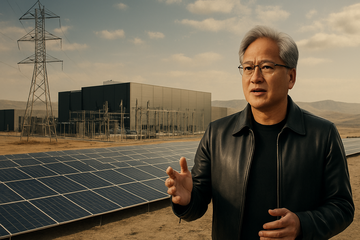
Huang's Kazakhstan Trip Priced AI in Watts, Not Chips: At 2.5 Cents per kWh, the Bottleneck Moves to the Grid
On October 23, 2026 Jensen Huang made his first visit to Kazakhstan, and the announcements that mattered were about electricity and export licenses rather than chip orders: 300 megawatts already allocated at Data Center Valley in Ekibastuz, a proposed long-term tariff of about 2.5 US cents per kilowatt-hour for data-centre investors, and a US export license for 45,000 Grace Blackwell GPUs to Firebird. Read together, they reframe the AI trade — the scarce input is not demand but an energized, permitted megawatt, and NVIDIA's own filing shows the squeeze arriving as purchase obligations and inventory provisions. The metals leg is thinner than the headlines imply: S&P Global Market Intelligence has data-centre copper demand rising only from 1.1 million tonnes in 2025 to 2.5 million tonnes by 2040, with fibre substitution removing another 4-5 tonnes per megawatt. The tradeable exposure therefore sits in grid and power equipment (Vertiv, Q2 2026 sales up 24%), fuel and firm power (Cameco at US$67.79 per pound realized uranium), and the vendors of both (NVIDIA, $89.0 billion of data-centre revenue in Q2 FY2027).
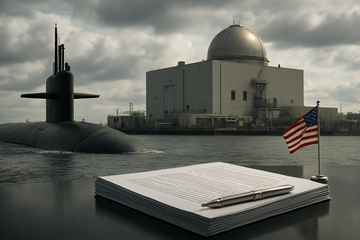
The Navy Just Added $2.41B for Its Reactor “Test-to-Fleet” Pipeline—And AI Cant Buy In
A $2.409B Navy modification sent to Fluor Marine Propulsion expands the Naval Nuclear Laboratory’s naval-reactor work—training and readiness for the submarine and carrier fleet, not data centers. That split matters for investors: the next wave of nuclear demand driven by AI power looks fundamentally non-fungible with the margin structure and contracting leverage of naval propulsion.
2026-10-25

Audi's $4 Billion Georgia Plant Prices a Tariff, Not a Car — While Georgia's Grid Already Carries 17 Gigawatts of Data Centers
Volkswagen's Audi will build 200,000 premium SUVs a year at the Middle Georgia Megasite for about $4 billion, with full production in 2031, after 25% Section 232 duties cost the brand roughly €1.2 billion in 2025. The plant is a hedge priced against a policy variable, not a growth bet: VW Group's2025 operating profit roughly halved to €8.9 billion and first-half 2026 operating profit fell 12% on a 3.8% margin. The grid framing is the wrong worry — Southern Company already carries 17 GW of contracted large load and an $81 billion 2026-30 capital plan, while Georgia's dedicated large-load tariff means an industrial customer pays for its own grid build. The tradeable consequences sit in the tariff schedule, the rate base and the rail, not in the plant itself.

The AI power trade has its first hard denominator: 412.6 terawatt-hours a month, and 9–17% by 2030 is now an arithmetic test
The EIA's August electricity data, published October 23, 2026, is the first official measurement of a US power market that is no longer flat: retail sales reached 412,568 GWh in August, up 4.6% year on year, with commercial sales — the customer class that holds data centers — up 5.1% while industrial sales fell 1.5%. That turns EPRI's contested 9% to 17% data-center share by 2030 into arithmetic: at the low end it fits inside the EIA's own load forecast, at the high end it needs a 2030 US electricity market roughly 11% larger than any published federal baseline. The supply chain has already booked that demand — GE Vernova took $24.2B of orders in a single quarter and lifted backlog to $176B — yet the complex has de-rated 19% to 49% from its 12-month highs. The investable question is no longer whether AI needs power; it is who is paid when the denominator is re-priced.
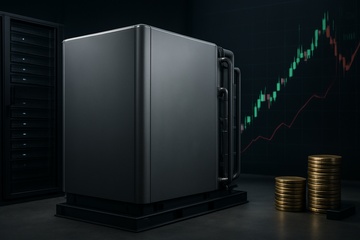
Bloom Energy grew revenue 138% and its stock fell 11%. The fuel cell bottleneck is cash, not orders
Rystad Energy, reported Oct 23, 2026, expects data-center fuel cell spending to reach about $30 billion by 2030 from roughly $2.8 billion in 2025, with a visible order book near 9 GW. Bloom Energy is the one vendor turning that demand into hardware — third-quarter 2026 revenue of $1,235.8 million, up 138.1%, at a 33.8% gross margin — but its own Form 10-Q shows why the stock dropped 11.24% the next day: operating cash flow of negative $27.1 million, contract assets up $617.5 million, and roughly69% of revenue in two customers. Speed-to-power is a real moat, but the fuel cell build is a working-capital machine, and margin only appears for the vendor that can manufacture at scale.
Venture Global's $17.2 Billion Bet Is a Slot Option: Only 8 of 15 Turbines Are Reserved
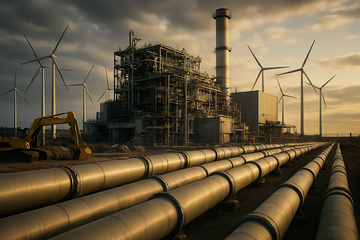
Venture Global's October 9 power and grid frame agreements with GE Vernova and Baker Hughes cover up to 16 gas-fired power islands and an aggregate ~$17.2 billion of equipment, but only eight of the fifteen remaining islands sit under a definitive manufacturing reservation. The economics are not a gas story: at 720 MW a block, the islands could burn up to 1.9 Bcf/d, which turns a fee-based, gas-price-neutral LNG exporter into the operator of a gas-cost-exposed merchant power book where one dollar per MMBtu of Henry Hub moves roughly $424 million of annual EBITDA. For investors this is a slot option — cheap to hold, expensive to exercise — and the test is whether data center customers sign power contracts before the mid-December 2026 grid reservation deadline.
What to expect
Evidence-first notes with a visible point of view.
This section collects sharp takes on earnings, shareholder meetings, and market structure. Each new piece should make the thesis, the facts, and the implications obvious within the first few screens.
Expect direct analysis, not generic commentary.
Expect the data to be explicit and the argument to be easy to follow.