Power & Grid
Load growth, and who gets to build for it
Interconnection queues, rate cases, turbines and transmission — what data-center demand is doing to utilities and the equipment makers behind them.
2026-08-09

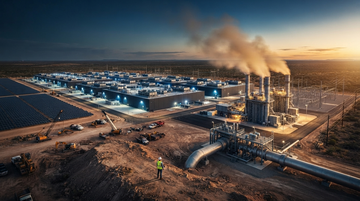
Amazon’s Texas gas permit flips the AI power debate from “capacity” to “carbon cap”—and it makes the ESG discount a competitive advantage
A Texas air-permit authorization for Amazon-backed GW Ranch (Pecos County) contemplates emissions up to 33M tons of CO2e per year, turning AI “power availability” into an immediately measurable climate trade. The result is a reshuffling of who wins in the AI buildout: hyperscalers internalize the permitting risk, while grid and gas-infrastructure names with execution-ready capex ramps are positioned closer to the cash register.

Apple's CXMT test isn’t a price story—it’s a sanctions-and-qualification story that can *stabilize Apple’s bill or strengthen SK hynix and Samsung’s pricing power
Apple is reported to have progressed to qualification testing of [CXMT] PRC DRAM for iPhone/Mac devices sold in China, while also engaging US policy for clearance. The first-order market implication is that CXMT can’t credibly undercut pricing yet, so the substitution “math” likely sharpens near-term leverage for SK Hynix and Samsung Electronics while raising a binary compliance risk for Apple’s sourcing pipeline.
2026-08-08
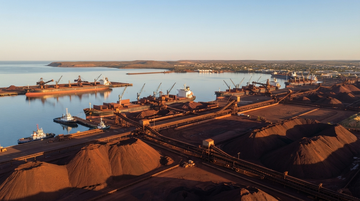
BHP’s Port Hedland 48-hour stoppage is a “steel-margin repricer,” not an iron-ore headline blip
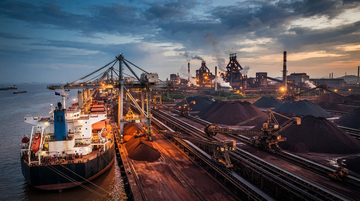
A two-day protected action at BHP ’s Port Hedland Bulk Export Terminal starts with a 24-hour ship-loading ban (Aug 8) and then a 24-hour terminal stoppage (Aug 9). With the stoppages likely affecting ~800,000 metric tons of seaborne iron ore shipments per day, the shock hits steel input costs and downstream pricing faster than iron ore itself can mean-revert.
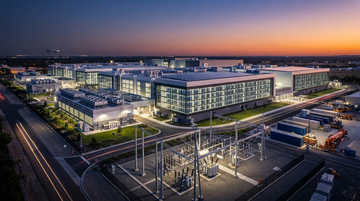
Nvidia’s $3B Lancium Bet Turns Stargate Into a Power-Site Landlord Play—Not a GPU Story
The key market constraint behind Stargate-style AI buildouts is shifting from GPU availability to multi-year power + grid interconnect lock-up. Nvidia’s $3B-scale equity commitment to Lancium (the power infrastructure developer tied to Stargate) matters because it anchors the “AI grid” that determines where compute can actually be deployed.
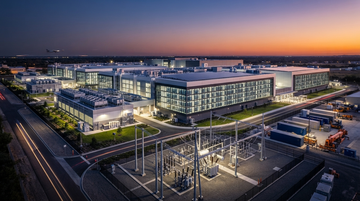
Switch’s confidential IPO filing puts “independent data center” pricing to the test—while Westinghouse’s filing shows the window is still open
Switch’s confidential U.S. IPO process signals that late-stage private capital is willing to underwrite public-market multiples again for scaled data-center operators. The investment question is whether the market is already pricing that transition—or whether an “IPO trust premium” still exists for operators that can monetize power-constrained AI capacity fast enough.
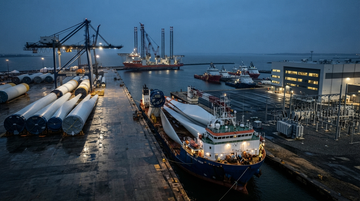
Trump’s “cancel offshore wind and pay” policy turns developers’ sunk costs into a utility balance-sheet problem—$4B becomes a 2027 grid reprice trigger
The Trump administration’s offshore-wind buyouts have reached nearly $4B in taxpayer-backed settlements to cancel leases and projects, shifting risk from developers to whoever ultimately must fund the replacement generation build. For investors, the signal isn’t just lower clean power supply—it’s a new cancellation-with-compensation mechanism that can re-rate regulated utilities’ capital plans starting in 2027.
2026-08-07

AIG’s underwriting surge is real—cat losses fell and prior-year development swung, so the “pricing power” answer depends on how much of the beat was accident-year vs. reserve mechanics
AIG’s first-quarter 2026 earnings jump was driven by a sharp reduction in catastrophe-related charges and favorable prior-year loss reserve development—not just by accident-year underwriting. SEC disclosures show favorable prior-year development in the same period, reinforcing that the beat has a reserve-development component. For investors, the key question is whether AIG can sustain favorable development while catastrophe costs normalize—because that’s what determines whether the US P&C cycle sees durable pricing power.
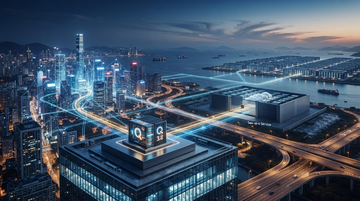
American International Group's underwriting “beat” is mostly lower catastrophe losses and reserve, not broad pricing power
In American International Group’s latest disclosed underwriting results, the General Insurance combined ratio improved to 90.1 vs 91.8, with the underwriting income increase tied to $258m lower catastrophe losses and $183m higher favorable prior-year development. The implication for investors isn’t “pricing is the only story”—it’s that the cycle is still dominated by loss-cost variability, catastrophe timing, and reserve/reinsurance mechanics.
2026-08-06
2026-08-05
2026-08-04
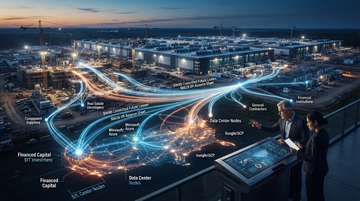
AI’s $1 Trillion Lease Tab: Hyperscalers Shift Utilization and Refinancing Risk—But It Reappears Everywhere
Moody’s estimates $662B of future data-center lease commitments across the largest U.S. hyperscalers sit off balance sheets because they’re not yet commenced—despite the projects being financed and under construction. That shifts occupancy and refinancing risk down the supply chain, turning “leased compute” into a system-wide obligation map investors can’t ignore.

onsemi's guided-up AI data-center demand is shifting the “power bottleneck” from GPUs to SiC and power-silicon
In its latest quarter and outlook, onsemi guided to faster AI data-center momentum, with silicon-carbide and power-silicon demand framed as scaling alongside broader power architectures. The practical investor read: when hyperscalers add AI racks, the spend doesn’t only show up in GPUs/HBM—it increasingly pulls forward discrete power devices, SiC, and server-power capacity, tightening the link between AI capex and onsemi’s growth.
2026-08-03
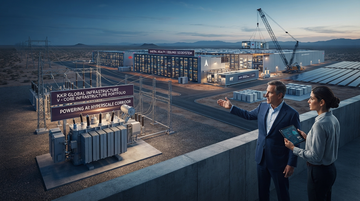
KKR’s $19.2B infrastructure close marks the LP “go-ahead” for AI power + data-center deals (and it changes the deal math)
KKR’s KKR Global Infrastructure Investors V closing at $19.2B is the clearest public confirmation that large LP capital is willing to fund long-duration AI-adjacent infrastructure. The investable takeaway: this capital should compress the risk premium—and therefore improve entry valuations—for equity, credit, and lease/contract structures that sit between hyperscalers and the grid.
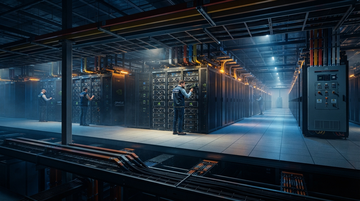
OpenAI’s “abundant intelligence” is a capex doctrine—and the bill routes through Nvidia, Oracle, and the AI power grid
OpenAI’s Jul 31 “Building abundant intelligence” framing reads less like a product roadmap and more like a compute-scale-out discipline: plan infrastructure years ahead, measure success by useful work per cost, and keep pushing the capability-per-dollar frontier. When you combine that with OpenAI’s explicit GPT-5.6 cost cuts and its Nvidia partnership commitment to deploy at least 10 GW starting in 2H’26, the likely winners are the suppliers who monetize GPU scale, cloud capacity, and (most underpriced) reliable power.
2026-08-01
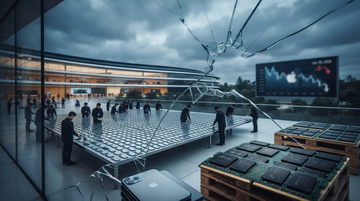
2026-07-31
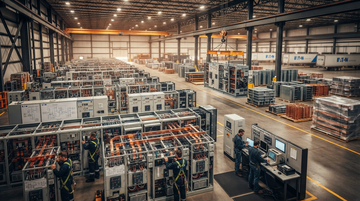
Eaton’s 43% Electrical Backlog Surge Says AI’s Next Constraint Sits Between the Grid and the Chip
Eaton’s July 31 print showed that AI infrastructure demand is broadening from processors and power generation into electrical distribution: second-quarter sales reached $8.53 billion, while electrical backlog rose 43%. The opportunity is real, but so is the price of capturing it—Eaton spent $11.08 billion on acquisitions in the first half and nearly doubled net debt, leaving investors with a high-growth switchgear thesis carrying acquisition and valuation risk.
Novo's ZEUS Heart-Drug Flop Doesn't Kill the GLP-1 Trade — It Redraws the Obesity Stack's Power Lines
Novo Nordisk lost ~$30B in market cap Friday after ziltivekimab — an anti-IL-6 antibody, not a GLP-1 — flunked its 6,300-patient ZEUS cardiovascular outcomes trial with a hazard ratio of 0.99. The bigger story is what the failure reveals: the cardiovascular label is going to be won by GLP-1 mechanism drugs (where Eli Lilly already owns the SUMMIT HFpEF data), not by anti-inflammatory add-ons. With HERMES and ARTEMIS still reading out in H1 2027, the GLP-1 trade pivots from TAM to indication-by-indication — and the supply chain that picks up the slack is concentrated in three US wholesalers and a few CDMO champions.
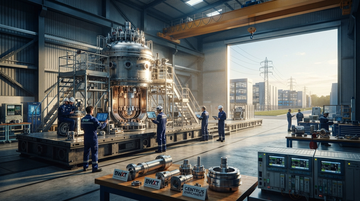
Rolls-Royce's 'Imminent' Hyperscaler Deal Pulls a UK Nuclear Supplier Into the US AI Power Trade
Rolls-Royce Holdings CEO Tufan Erginbilgic said on the H1 2026 call that a hyperscaler nuclear deal will go to investment committee the week of August 3, lifting the group's 2026 profit guidance to £4.7–4.9B and confirming it is taking data-center orders for 2028. With a 470MW SMR design, four contracted European fleets and Yokogawa now locked in for control systems, Rolls-Royce is the first non-US supplier to convert the AI-power thesis into funded backlog. The transmission for US-listed equities runs through BWXT (SMR components), Centrus (enrichment), and the merchant generators whose carbon-free capacity hyperscalers now need to bridge the gap to nuclear-first build-out.

Westinghouse’s IPO Has a $30 Billion Shadow Price — but the Services Base Must Justify It
Westinghouse’s confidential filing is more than an IPO: it tests whether public investors will pay a premium for a reactor OEM that services roughly 63% of the operating fleet while retaining upside to a proposed 10-reactor U.S. buildout. The strongest valuation support comes from recurring fuel and outage work, not unbuilt reactors; the biggest complication is a government participation right that becomes economically relevant above a $17.5 billion threshold. For investors, the filing could reprice Cameco and Brookfield Renewable Partners first, then suppliers such as BWX Technologies if conditional projects become funded orders.
2026-07-30
What to expect
Evidence-first notes with a visible point of view.
This section collects sharp takes on earnings, shareholder meetings, and market structure. Each new piece should make the thesis, the facts, and the implications obvious within the first few screens.
Expect direct analysis, not generic commentary.
Expect the data to be explicit and the argument to be easy to follow.