Power & Grid
Load growth, and who gets to build for it
Interconnection queues, rate cases, turbines and transmission — what data-center demand is doing to utilities and the equipment makers behind them.
2026-08-17

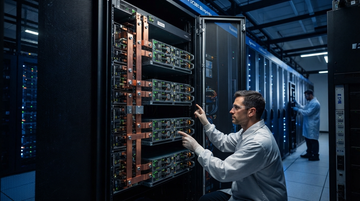
The 48V rack bus is the new price bottleneck in AI data centers—SiC/GaN power silicon may capture the “dollars-per-watt” upside that electrical OEMs can’t
As AI racks scale toward hundreds of kilowatts, the in-rack power-delivery chain (PSU → 48V bus → VRMs → SiC/GaN switching) is getting harder to build, cool, and qualify as one stack. Primary disclosures show that the Vera Rubin NVL72 rack design already concentrates power demand into multiple 110kW shelves, while grid-side electrical backlogs (Eaton) and 800V HVDC guidance (onsemi) point to a multi-year build-out. Investors should expect silicon vendors supplying SiC/GaN efficiency and density to monetize the “per-watt” upgrade cycle faster than the grid/electrical OEM layer.
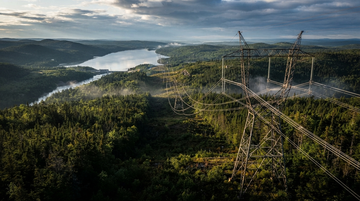
Hydro-Québec and Newfoundland lock in firm hydro for the U.S. Northeast—at a price that forces utilities to model higher “AI firm-power” costs
A new Hydro-Québec–Newfoundland and Labrador Churchill Falls framework would replace the old 1969 economics with a much higher long-term effective purchase price and a defined path to deliver up to 985 MW of firm transmission capacity through Quebec to U.S. markets. For power buyers chasing AI-driven reliability, the deal matters less as headlines about volume and more as a supply-side pricing signal that can tighten what “firm” gets priced like.
2026-08-16
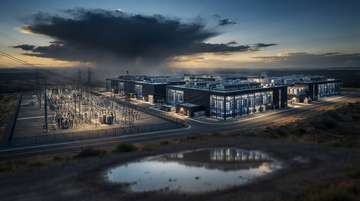
The unpriced line item in AI data-center finance: insurers/reinsurers are underwriting grid-interruption and residual-value “tails” that lenders can’t see
Insuring a $20B+ data-center build is not just a property issue—it’s a business-interruption and residual-value “tail-risk” problem shaped by grid strain and catastrophic concentrations. Swiss Re’s AI data-center risk research ties construction limits and BI severity directly to how insurers ration capacity, which can change project finance math even when property damage itself looks insurable.
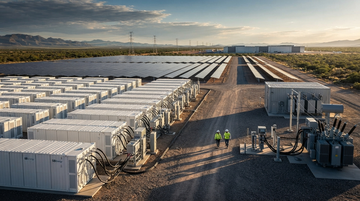
Nvidia’s $3B SB Energy bet highlights the missing “grid-firming” link in AI power
Nvidia’s reported move to invest up to $3B into SB Energy underscores that AI data-center growth is constrained less by chips than by 24/7 power availability. The real supply-chain margin sits in grid-scale storage, power-electronics, and fast interconnection—areas where equipment and energy-storage firms can see order-flow spillover once projects lock fuel (or storage) and transmission timelines.
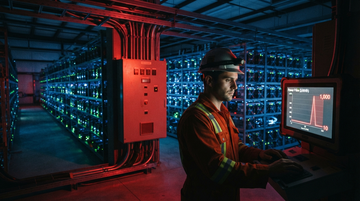
Bitcoin miners just got a brutal new margin line: power that can jump ~100x in an hour
A reported Aug 16, 2026 spike in wholesale power prices—from roughly $10 to about $1,000/MWh in ~60 minutes—turns electricity volatility into the binding variable for crypto miners’ margins. For IREN, CLSK, CIFR, and WULF, the investor takeaway is simple: even with BTC upside, unhedged power exposure can overwhelm operating models on the very time scale miners can’t fully manage.

The Ice-Cream Brand That Hit Chapter 11 After Losing a Trademark Fight Shows How “Freezer Aisle” Power Has Shifted
Rebel Creamery LLC filed for Chapter 11 in the District of Utah on Aug. 14, 2026, after a trademark/trade-dress ruling from Van Leeuwen Ice Cream required it to redesign packaging and pay $23.785 million in disgorged profits (Jul. 16, 2026). For investors, the key takeaway is not the legal loss—it’s how quickly a packaging/label injunction plus margin pressure can break brands that don’t have scale, pricing power, or cost flexibility against private-label and retailer deal cycles.
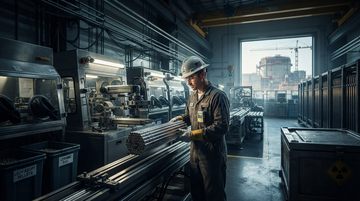
AI data-center power demand isn’t choking reactor builds—fuel-cycle bottlenecks are tightening uranium-to-fabrication capacity
The hyperscaler PPA wave is being stress-tested by the slowest part of the nuclear supply chain: the front-end fuel cycle. ConverDyn-scale conversion, enrichment capacity, and downstream fuel fabrication are the binding constraints on when new megawatts can actually produce—turning uranium, enrichment, and fuel makers into the margin hinge for AI-linked deployments.
2026-08-15
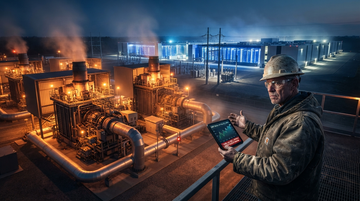
Gas-fired AI power is starting to look like a financing trick: a new forecast argues gas prices could soar above $10/MMBtu—hurting the turbine owners first
A new forecast highlighted in Aug 14, 2026 reporting argues natural gas prices could “soar above $10” per MMBtu in key U.S. hubs as hyperscaler-driven demand meets slower supply growth and higher LNG exports. If that happens, the first margin squeeze likely hits the companies that monetize gas-to-power hardware and contracted availability—while hyperscalers face higher power fuel costs and earlier pushback on expansion timelines.
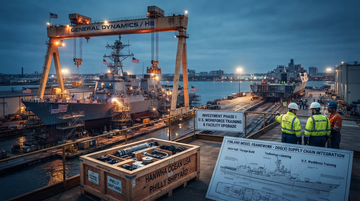
Trump’s “Finland Model” opens a limited route for foreign-built U.S. Navy hulls—Hanwha Ocean and Fincantieri gain optionality while GD/HII lose their “U.S.-only yard” pricing power
A White House memorandum signed Aug. 13, 2026 lets qualifying foreign shipbuilders build initial Navy hulls abroad while requiring major U.S. yard investment, U.S. workforce training, U.S. supply-chain sourcing, and technology licensing. The near-term demand signal is most supportive for Hanwha Ocean and Fincantieri, because they already have large U.S. shipyard footprints, while the traditional U.S. prime shipyard duopoly faces a structurally wider builder base and more competitive capacity.
2026-08-13

Ackman’s Netflix re-entry is a value signal: the streaming winner now looks priced like a cash utility
Bill Ackman’s Pershing Square has disclosed a fresh Netflix stake alongside new positions in Visa and Mastercard, reframing the mega-cap growth crowd back toward cash-flow durability. With Netflix running at an annualized revenue base near $48.4B and free cash flow of ~$11.0B on the latest trailing window, this looks like a bet that “streaming wars” have ended and the market is over-discounting the remaining cash engine.
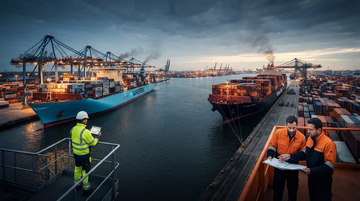
A.P. Møller-Mærsk A/S captures reroute pricing power while Hapag-Lloyd AG absorbs the Middle East cost shock
Maersk’s Q2 2026 results helped it lift full-year guidance for 2026 for a second time, framing Middle East disruption as a pricing and demand tailwind. By contrast, Hapag-Lloyd disclosed a Middle East cost shock in its 2026 results messaging—without showing the same offsetting uplift—making container liners an “earnings divergence” trade tied to contract exposure, not a uniform sector story.
2026-08-12

Apple's Sept. 1 handoff to John Ternus reframes the next power test: will hardware engineering steer the services flywheel—or risk it?
Apple will transition CEO power to [John Ternus] on Sept. 1, while Tim Cook becomes Executive Chairman. That leadership split forces investors to re-check Apple’s services-led narrative through a hardware lens—because the CEO’s job now likely starts with product-cycle timing, silicon/UX integration, and supply-chain execution rather than just monetization and ecosystems.

Made by Google 2026: Pixel’s Gemini on-device push turns every new phone into a distribution channel—potentially compressing app-store bargaining power
Google’s Made by Google 2026 lineup puts Gemini “Intelligence” directly into Pixel 11, Pixel Watch 5, and a new Pixel Tag experience, with explicit on-device compute claims tied to a new TPU. If this improves response speed and lowers friction for everyday actions, it can shift user time from third-party apps toward Google-first workflows, pressuring platforms built around app discovery and extensions.
2026-08-11
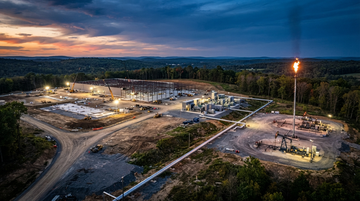
Alpha Compute’s Pennsylvania play reframes the AI data-center bottleneck: buying gas rights to beat the power queue
Alpha Compute ALP reportedly plans to buy Pennsylvania land plus gas rights to anchor a 55MW AI data-center campus—an unusually fuel-first approach to a project pipeline dominated by utility interconnect timelines. If the gas-rights control is real and bankable, it shifts “site control” from the grid side to the upstream fuel side, tightening the link between midstream gas operators and data-center power buildouts.

RBC [ry], BMO [bmo] cash out of Moneris for $1.44B—and the Canadian acquirer gap shifts bargaining power toward US-scale acquirers and processors
RBC [ry] and BMO [bmo] are selling Moneris to Francisco Partners in a $1.44B deal, taking a major Canadian merchant-acquiring platform out of a captive bank model. The practical risk isn’t just ownership—it’s how acquiring capacity, routing strategy, and merchant pricing negotiate with Visa [v] / Mastercard [ma] and global processors once the local acquirer playbook is run by US PE-backed operators.
2026-08-10

Appaloosa’s Q2 pivot bets the AI capex chain is still mispriced—and its “walk-away-from-banks” move tightens the signal
Appaloosa Management (David Tepper) reportedly rotated its Q2 2026 13F exposure toward AI infrastructure—highlighting a sharp add to Micron and a larger position in Amazon, with Taiwan Semi also pushed into core territory—while exiting bank holdings entirely. The investable takeaway isn’t “AI good, banks bad”; it’s that memory + foundry + hyperscaler demand signals can re-rate margins and capex intensity even when financials look safer on paper.
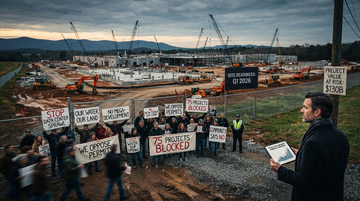
Community opposition is becoming a credit risk—so lenders are shifting data-center financing toward “permit-friendly” states
A Reuters report says lenders are now explicitly folding community opposition into project readiness and drawdown risk. That turns NIMBY/permitting friction into an underwriting variable, which can reorder which markets and operators get built first—and who pays the higher cost of delay.
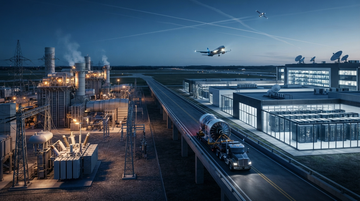
Fisher’s AI-Infrastructure Crowding Trade Is Real—But It’s the “Grid-to-Aircraft-to-Network” Link That Should Matter for Investors
Fisher Asset Management’s latest 13F (quarter ended June 30, 2026) shows aggressive positioning across AI’s “real economy” buildout—power and electrification via GE Vernova, aerospace platforms via GE Aerospace, and enterprise/data-center connectivity via Cisco Systems, alongside the usual AI compute core. The investable takeaway is not that AI exists—it’s that Fisher is paying up for the bottlenecks and replacement cycles that sit between AI demand and the supply chain that fulfills it.
2026-08-09
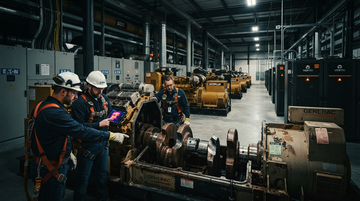
AI Power Spikes Are Forcing First-Order Capex Into UPS, Switchgear, and Generators—Turning Grid Reliability Into an OEM Supply-Line Shock
A new wave of AI power volatility is not just straining the grid; it is shortening the life and pushing the replacement cycles of batteries, generators, and cooling/power electronics inside data centers. That shifts the 2026–27 capex bottleneck from “build power lines” to “rebuild mission-critical power chains,” which can tighten supply and raise downtime-cost risk for operators and volume-forced production for OEMs like Eaton, Vertiv, and Generac.
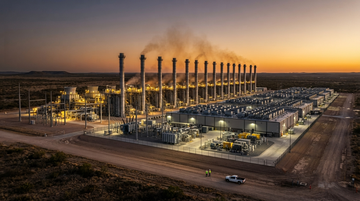
Amazon's Pecos County gas plant permit implies ~33M tons CO2/year—so AI data-center siting is starting to behave like a carbon-forward power project
A planned Amazon-powered AI data-center campus in Pecos County, Texas is tied to an on-site natural-gas power plant permitted to emit up to 33 million tons of CO2 per year. That shifts the hyperscaler AI-capex trade from “compute demand vs. electricity availability” toward a carbon-cost and regulatory-liability problem that can change project economics well before the campus starts full operations.
What to expect
Evidence-first notes with a visible point of view.
This section collects sharp takes on earnings, shareholder meetings, and market structure. Each new piece should make the thesis, the facts, and the implications obvious within the first few screens.
Expect direct analysis, not generic commentary.
Expect the data to be explicit and the argument to be easy to follow.