Power & Grid
Load growth, and who gets to build for it
Interconnection queues, rate cases, turbines and transmission — what data-center demand is doing to utilities and the equipment makers behind them.
2026-08-25


2026-08-24
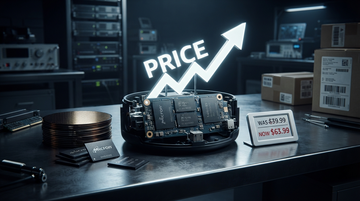
Amazon's 60% device price hikes confirm memory pricing power is moving into consumer hardware
Amazon raised prices on multiple first-party devices—including the Echo Dot base model—by as much as 60%, explicitly citing “significant increases” in memory and storage component costs. The move is a retail-grade proof point that DRAM/NAND tightness can translate into end-demand pricing, sharpening 2H26 contract-price narratives for Micron, SK Hynix, and Samsung Electronics while increasing the near-term risk that Amazon’s device ecosystem growth depends on a tighter—or costlier—hardware attachment loop.

IREN’s Aug. 27 earnings are the first real “miner-to-AI landlord” stress test after power volatility—and the 10‑Q already shows why margins can’t be treated as fixed
IREN IREN is set to report on Aug. 27, and the pivot story lives or dies on how quickly electricity cost shocks flow through to profitability. In its latest filed results, the company reports electricity as a major cost driver for both bitcoin mining and AI Cloud Services, including earlier history of switching electricity procurement terms at its Childress site—exactly the kind of mechanism that can turn short-term power volatility into margin volatility.
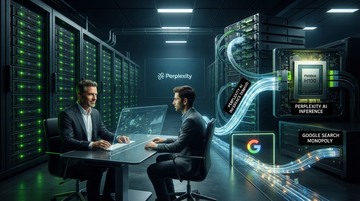
Nvidia’s “equity seat” bid in Perplexity would make $30B+ AI search a compute-powered toll road to Google’s ad machine
Recent reporting says Nvidia is in discussions to invest in a Perplexity funding round that would value the answer-search startup at more than $30B, potentially turning Nvidia’s existing inference relationship into an equity-and-platform lever. If that happens, investors should watch not just Perplexity’s growth, but the first-order supply-chain economics: higher inference demand, faster iteration of model-serving stacks, and a tougher monetization path for Google’s search monopoly as “answer” turns into the default entry point.
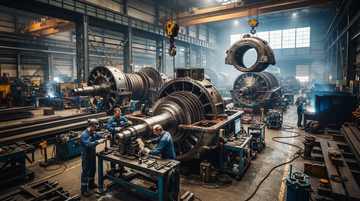
GE Vernova should get a rerating if “steam capacity” stays the next AI power choke point
Reuters reported Siemens Energy is weighing a spin-off (or IPO) and a stepwise stake sale for its “Transformation of Industry” unit, which includes industrial steam turbines. That matters because hyperscaler-driven power buildouts increasingly hinge on steam-side equipment lead times as much as on gas turbine delivery—setting up a valuation read-through to GE Vernova’s power-and-steam franchise.
2026-08-23
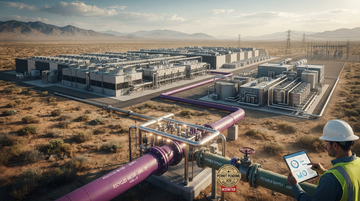
AI Data Centers Are Entering a “Second Constraint” Era—Water Permits, Not Just Power, Decide Who Can Scale
Water scarcity and permitting are moving from background risk to a primary scheduling constraint for AI data centers in drought-prone regions. The practical battleground is cooling choice (water-withdrawing vs. closed-loop) and whether hyperscalers can route cooling demand through recycled-water systems—shifting capex from plant construction into treatment, monitoring, and recycling infrastructure.

Canada’s retaliation pressure is skipping cars and aluminum—because the tariff “holes” are concentrated in oil, uranium, potash, and Quebec power
The Aug. 21–23 escalation under the Section 338 tariff snap-back framework explicitly exempts energy and potash from the U.S. action, shifting the real economic stress to the segments the U.S. cannot replace quickly. For investors, that means the first repricing is likely to show up in Cameco, Nutrien, and Canadian oil producers’ U.S.-listed peers—while U.S. utilities and power merchants face second-order stress from Quebec’s cross-border electricity exposure.
2026-08-22

Apple trims Siri and Vision Pro headcount—then pays for the interface shift with distribution power
Apple is cutting more than 200 roles across Siri and Vision Pro teams as it realigns toward “new devices and artificial intelligence,” according to reporting. For investors, the more important signal isn’t cost control—it’s that Apple is backing away from owning the consumer voice-and-AR interface while competitors can move faster on model-led interaction loops.

Boeing’s cash-flow rebound just met a contract wall: a SPEEA strike vote adds a real probability of MAX delivery slippage
Boeing BA faces a new labor risk after SPEEA engineers and technical workers rejected the company’s contract offer and authorized strike action, with the earliest work stoppage possible in early October 2026. That matters because Boeing’s near-term cash-flow path depends on executing the 737 MAX/737-7/737-10 and 777X delivery ramps—and Boeing itself flags labor work stoppages as a direct driver of production, delivery, and cash-flow disruption.
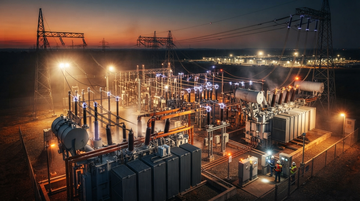
PJM congestion hit $6B in six months—AI load growth is turning transmission limits into a recurring, priced toll
PJM’s transmission congestion costs jumped 43% to $6B in the first half of 2026, driven by binding high-voltage constraints and overload periods. The market implication isn’t just “more congestion”: it’s a shift in who effectively pays for expansion—ratepayers via settlement and capacity economics—while also tightening the demand signal for transformers and high-voltage equipment.

TikTok’s $400M COPPA settlement effectively sets a new “price per platform enforcement” — and it should sharpen the risk math for Meta, Snap, and Alphabet (YouTube)
The U.S. Department of Justice announced a $400M children’s privacy settlement tied to COPPA enforcement against TikTok and ByteDance, including $300M paid immediately and a further $100M contingent on vacating a prior consent decree. Unlike teen-liability cases that live in the “platform immunity” universe, this is a direct compliance-liability datapoint that helps regulators and investors think in enforcement-cost terms for youth-facing product design.
2026-08-21
2026-08-20
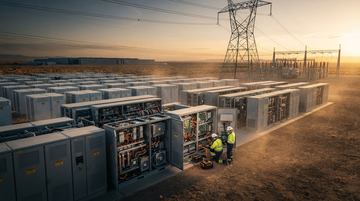
AI’s grid firming bottleneck isn’t batteries—it’s the grid-scale storage “power electronics” that let queues turn into revenue
Grid-scale battery projects are increasingly pulled forward by AI-driven interconnection demand, but economics are still governed by what can actually connect and operate: cells, then PCS/power electronics, then integrator execution. Tesla and Enphase both show how tariff and policy mechanics flow through the storage value chain—strong deployments can coexist with margin pressure when the PCS/inverter leg costs rise faster than pricing.
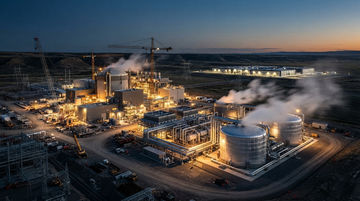
TerraPower’s Natrium turns nuclear into a data-center “load-following battery,” not just baseload
Natrium pairs a 345 MWe sodium fast reactor with a molten-salt energy storage system that can boost output to 500 MWe, giving nuclear dispatchability that hyperscalers need for AI-driven peak demand. TerraPower is already moving Kemmerer Unit 1 through the 10 CFR Part 50 construction-permit milestone and building a HALEU fuel path—suggesting the next bottleneck is less “baseload availability” and more flexible, contractable output.
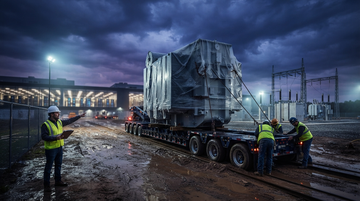
Utility-scale power transformers are the AI grid’s multi‑year choke point—and today’s ~5.2% long-rate turns every delay into a financing problem
High-capacity transformer lead times have stretched to years, shifting “grid connection readiness” from a construction issue to a procurement-and-capital-access issue. With 30-year Treasuries recently around ~5.2%, the present value of AI-driven grid buildouts falls just as transformer delivery schedules slip—rewarding vendors and projects that can win connection queues first.

Regulated utilities at ~5.2% 30-year: why “allowed ROEs” don’t protect equity investors when the cost of capital moves faster
On Aug. 19, 2026, the U.S. Treasury increased the size of long-end liquidity-support buybacks to rein in the 20–30 year funding window, after the 30-year yield pushed higher. Even with that intervention, a ~5.2% 30-year reference rate implies a duration-sensitive equity math problem for regulated utilities: allowed returns (often ~9–10%) sit well below market-implied equity costs that rise when long yields stay elevated, forcing rate-case timing, issuance, or dividend trade-offs.
Wolfspeed’s outlook break shows the SiC trade is splitting: AI power could stay tight, but EV/industrial SiC demand is no longer a one-way bet
Wolfspeed’s Aug. 19 guidance reset (and the stock’s -7.5% pre-market move into Aug. 20) is the first “hard” datapoint that AI datacenter power silicon and EV/industrial SiC are moving out of lockstep. The message for investors: the market may reward the SiC supply chain differently by end-market—tight 48V-to-rack power needs versus a cooling EV/industrial ramp—creating winners in adjacent power silicon and control platforms while pressuring wafer/device oversupply.
2026-08-19
2026-08-18
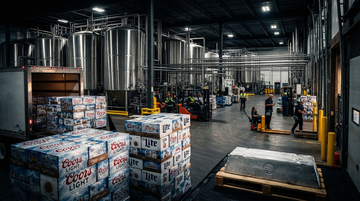
Molson Coors’ Q2 test shows beer’s pricing power is still positive—but cost pressure is now dominating the earnings story
In Molson Coors, Q2 2026 net sales fell 3.3% as volumes slid 5.4%, partially offset by favorable pricing and mix of +1.8%. The key investor takeaway is that cost headwinds are the swing factor: underlying income before taxes dropped 27.8% (constant currency) as COGS pressures included an estimated ~$40M Midwest Premium drag in the quarter and a forecast of >$130M for full-year 2026.
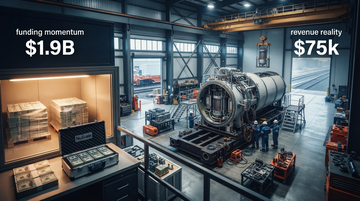
NuScale Power revenue barely exists—while liquidity swells, and the timing matters more than the narrative
In NuScale Power’s Q2 2026 results, revenue totaled just $75k for the quarter while cash, cash equivalents, and investments rose to $1.9B—an extreme mismatch that forces investors to separate “funding momentum” from “revenue reality.” The filing ties the year-over-year revenue plunge to completed Fluor FEED Phase 2 work in late 2025 and the absence of comparable 2026 activity, not a broken business model at every moment; but it still shows that the SMR economics are pacing far behind the AI power-demand storyline.
What to expect
Evidence-first notes with a visible point of view.
This section collects sharp takes on earnings, shareholder meetings, and market structure. Each new piece should make the thesis, the facts, and the implications obvious within the first few screens.
Expect direct analysis, not generic commentary.
Expect the data to be explicit and the argument to be easy to follow.