Power & Grid
Load growth, and who gets to build for it
Interconnection queues, rate cases, turbines and transmission — what data-center demand is doing to utilities and the equipment makers behind them.
2026-09-14


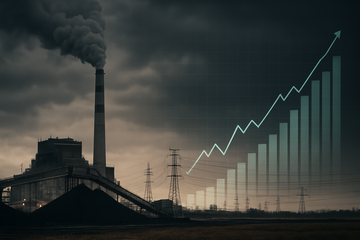
Samsung and SK Hynix Just Said 'No' to KEPCO's $19B Power Deal — and Korea's AI Chip Dream Is Now Hitting a Wall It Can't Code Its Way Around
Korea Electric Power Corporation wanted Samsung Electronics and SK Hynix to prepay 25 trillion won (~$18.7B) for five years of electricity to fund the transmission grid feeding Yongin and Honam. Both chipmakers refused on September 13-14, 2026, citing memory-cycle uncertainty, not affordability. The refusal exposes a structural mismatch: Korea is on track to build roughly 1.3 quadrillion won of fabs roughly a decade faster than the grid that must power them, while KEPCO carries 210.7 trillion won of debt and burns11.5 billion won a day in interest. Investors who priced the Korean AI story as a chip race now have to price it as a power-and-grid race, with Korean grid-equipment names — not the chipmakers themselves — the cleanest beneficiaries.

Apple's App-Store Power Survived Unscathed — Musk Dropped the Antitrust Suit on the Same Day iOS 27 Killed the Theory Behind It
X Corp and SpaceXAI quietly filed to dismiss their August 2025 antitrust lawsuit against Apple in a Texas federal court on September 14, 2026 — the very day Apple shipped iOS 27 with a Gemini-powered Siri and a third-party AI Extensions framework that, by design, demotes ChatGPT to one of several options. The dismissal leaves Apple's curation defense and App-Store economics intact, pushes the chatbot-monopoly theory onto OpenAI alone, and gives Alphabet a cleaner runway on both the Gemini integration and the parallel Google-Search antitrust overhang. For investors, the read-through is that platform-gatekeeper risk is now bounded by regulation, not private suits — Apple gained clarity on its most valuable asset while paying nothing in precedent.
2026-09-13
2026-09-12

2026-09-11
2026-09-10
2026-09-09

CVC Capital Partners hands power to co-CEOs—so watch how quickly its underwriting tightens (or loosens) in the US
CVC Capital Partners says Todd Sisitsky and Peter Rutland will become co-CEOs by Q1 2028, with Rob Lucas stepping back as CEO. The near-term investor question is not the résumé swap—it’s whether the new structure changes how CVC funds US mid-market deals, prices leverage risk, and times exits as record realisations and strong fundraising collide.
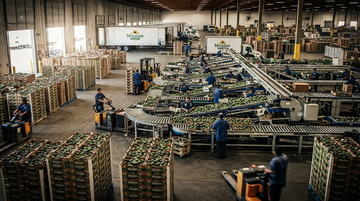
Mission Produce’s margin swing is explaining less “pricing power” than “fruit math”: a tape move built on timing can unwind fast
In Mission Produce’s recent results, the same margin line can swing while per-pound avocado pricing moves sharply—meaning the market’s focus on “good margins” risks over-crediting sustainable pricing power. The filings show gross margin changing alongside per-unit price and volume (and with industry supply conditions explicitly driving results), so investors should stress-test margins under a normalization of both fruit prices and customer/order timing.
2026-09-07
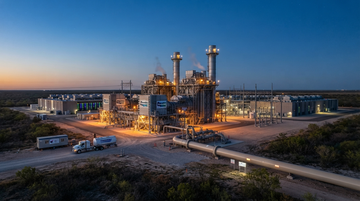
Korea's $22.3B Encinal Gas Plant: The $350B Trade Deal's First Anchor — And Why It Doesn't Power SK Hynix's Fab
South Korea and the U.S. have agreed on a $22.3 billion, 6.3 GW combined-cycle gas plant in Encinal, Texas as the first concrete deployment under their $350 billion Strategic Trade and Investment Deal — though Seoul's Industry Ministry called the headline inaccurate. The plant is sized to feed Texas AI data centers, not SK Hynix's separate Indiana HBM fab, and sits inside a $100B LNG offtake that routes Korean capital toward Cheniere Energy and Energy Transfer while opening a U.S. EPC pipeline for Doosan Enerbility. Cash commitment, gas-turbine orders, and Korean-tied LNG volumes are the three numbers investors should track first.

Tata Consultancy Services plants a 1GW hyperscale flag in Hyderabad—forcing a power-and-capex price fight across India’s AI data-center buildout
Tata Consultancy Services’s HyperVault is committing up to ₹70,000 crore (about $7.41B) for a purpose-built up to 1GW AI data-center campus in Hyderabad, backed by TPG—an inflection for India’s hyperscale build map. The move matters less for near-term IT services revenue and more for who controls “AI availability” in India: power, cooling, and capacity scheduling—where NVIDIA NVDA racks and Vertiv VRT infrastructure pricing flow downstream to hyperscale and colocation competitors.
2026-09-05
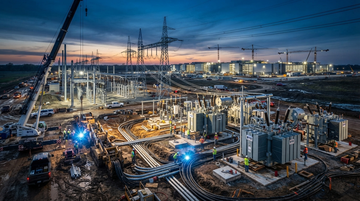
DTE's 13-Year Director Steps Down at the Center of a $36.5B AI-Grid Bet
DTE Energy filed an 8-K on Sept. 4, 2026 disclosing that long-serving director David A. Thomas will retire from the board effective Sept. 3, vacating seats on the Audit and Organization & Compensation committees that oversee the utility's $36.5B five-year capex plan and the 8.4 GW of data-center load it is wiring up for Oracle and Alphabet. The headline is a routine Item 5.02; the substance is that DTE enters the AI-grid build with negative 2026 free cash flow, a 6.5x net-debt-to-EBITDA stack, and a two-year electric rate freeze contingent on the Oracle campus coming online by end-2027. Investors should read this less as a personnel story and more as a governance reminder that the bottleneck on the trade sits in transformer queues, rate-base math, and a board seat — not in any single executive's biography.

Three joins, one thesis: S&P 500's September rebalance makes AI's power and storage constraints index-eligible
Bloom Energy, Illumina, and Everpure—the rebranded Pure Storage—join the S&P 500 on Sept. 21, 2026, replacing Molson Coors, Trade Desk, and Builders FirstSource. The mix is a forced-buyer bet on AI's downstream bottlenecks: fuel cells for hyperscaler power, flash storage for AI workloads, plus a return for genomics after a two-year exile. Combined passive demand runs into the tens of billions, with the clearest supply-chain spillovers at NAND suppliers and power utilities.
2026-09-04
2026-09-02
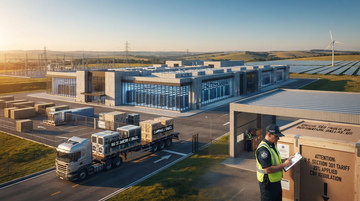
Brazil just made data-center capex cheaper—turning the US power bottleneck into a potential LatAm “second queue” for AI builds
Brazil’s Congress approved a special tax regime (REDATA) that suspends key federal taxes on data-center IT capex starting in 2026, reducing the cost and friction of deploying new capacity in-country. That timing matters because several US states are tightening approvals and interconnection timelines for new data centers, leaving AI demand to find the next buildable power queue. The twist for investors: the same Brazil-for-AI push is occurring alongside a new 25% US Section 301 tariff on Brazilian goods, which can raise cross-border equipment costs and complicate the economics of any Brazil-to-US supply chain.
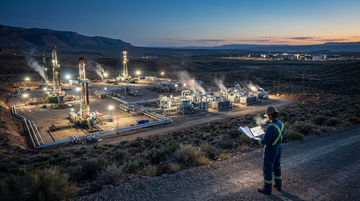
Fervo’s 396 MW Google PPA turns geothermal into an AI-grade “24/7” contract test—without proving the margin math yet
Fervo FRVO spiked on Sept. 1 after announcing a 396 MW enhanced-geothermal power purchase agreement with GOOG for its Cape Station GeoCluster, targeted to come online in 2028 and expandable to nearly 1 GW by June 2030. The market is treating that contract as a commercialization signal for the drill-to-ORC-to-PPA supply chain—yet Fervo’s latest financials still show revenue at the hundreds of thousands and negative operating cash flow, so any “AI multiple” is being priced ahead of repeatable cost and margin delivery.
2026-09-01
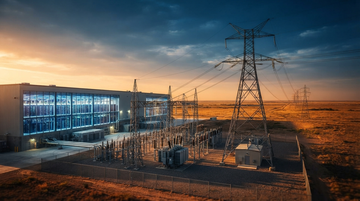
CME’s ERCOT Power Futures Go Live: The AI-Load Hedge Finally Has a Texas Price Signal
CME started trading ERCOT power futures and options on Aug. 31, 2026, bringing exchange-listed hedging to the exact node-to-bill signal that drives Texas scarcity economics. For investors, the new contract surface turns a previously “opaque” risk channel into something easier to price, trade, and compare—raising the odds that AI-driven load demand (and its scarcity episodes) shows up in market-implied hedging costs before it shows up in generator stocks.
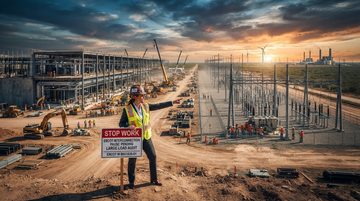
Texas freezes AI data-center “ghost demand” — and the scarcity-rent power trade just lost its clean story
Texas regulators moved to pause new ERCOT data-center grid connections pending an audit of large-load requests, challenging load forecasts built on speculative interconnection queues. That forces a re-check of the “AI power scarcity” thesis: the scarcity rent may still exist, but its timing and magnitude now hinge on how many of those requests actually energize and how quickly generators and wires can follow.
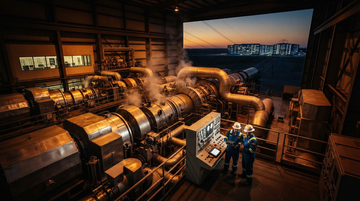
Texas’s AI “scarcity rent” is being earned inside merchant P&Ls — not paid for by customers that think they’re buying power
In ERCOT, the AI/data-center load wave doesn’t just raise prices—it shifts upside into the merchant stack with high hedge coverage. Vistra shows the core mechanic: when it hedges ~100% of 2026 volumes but only ~94% of 2027, the timing and roll risk of scarcity rent can dominate results even if generation economics look strong on the surface.
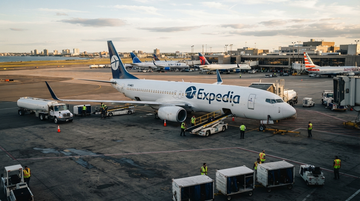
The “shoulder season” discount is evaporating—turning airfare savings into a year-round pricing-power test for Expedia, Booking Holdings, and airlines
New consumer pricing data show the gap between peak-season and shoulder-season fares is shrinking—so the market is moving from seasonal deal-making to sustained “peak-like” pricing. That shift matters because airlines and online travel agencies monetize pricing power through booking mix and yield, not just high-demand quarters.
2026-08-31
What to expect
Evidence-first notes with a visible point of view.
This section collects sharp takes on earnings, shareholder meetings, and market structure. Each new piece should make the thesis, the facts, and the implications obvious within the first few screens.
Expect direct analysis, not generic commentary.
Expect the data to be explicit and the argument to be easy to follow.