Energy
Crude, refining and the price at the pump
Supply, inventories, crack spreads and OPEC decisions, followed down to the producers, refiners and buyers who book the difference.
2026-11-08

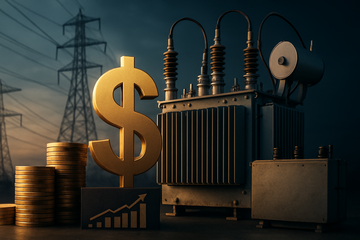
The 2.5 Cent AI-Power Premium Is a Policy Choice — and China's $945 Billion Is the Proof
China will spend $945 billion on energy in 2026, 1.5 times the United States, and the marginal dollar is going into grid hardware the West cannot make fast enough. That build-out is why transformers got scarce without becoming unaffordable — until Executive Order 14420 closed the factory door in August 2026. We size the US data-centre capacity premium at roughly 1.5 to 3.7 cents per kWh, about 2.5 cents at the midpoint, and show where the rents land: Western backlogs and US power sellers near term, Chinese exporter volume without profit in the long run.
The Democratic Ceiling on Oil Broke on Nov 7 — and Only $3.70 of the $17.65 War Premium Has Come Back
The market sold $17.65 of Brent after the Nov 3 midterms, betting a Democratic House and Senate would force Trump to end the Iran war. On Nov 7 he confirmed fresh US strikes on Qeshm island, Iran reported five tankers and a tugboat ablaze in Hormuz on Nov 5 and two more tankers struck by mines on Nov 6, and an Iranian lawmaker warned that missiles reaching Europe would push oil past $150 — so the premium was always a bet on presidential restraint, not on congressional control. Only $3.70 has been rebuilt, and the money now sits with the hull owners such as Frontline and the crack owners such as Valero Energy, not with crude beta.

A Strike on Riyadh's Financial District Moved Aramco 0.31% — Saudi Risk Is Still Priced in Barrels, Not Buildings
On Nov 8, 2026, Houthi missiles hit an Aramco tower in the King Abdullah Financial District: shrapnel damage, no casualties, and a Saudi all-share index down 0.78% in the session that followed. The market read it as another supply event, because the war premium is paid in barrels — Brent at $98.32, marine war risk at 0.75% of hull value — and because Saudi credit has not needed to move, with hard-currency spreads sitting roughly 20bp off their 2025 tights. What is unpriced is the address: KAFD hosts over 140 corporate tenants and 20 regional headquarters, and it is where the Kingdom books its diversification away from oil. The AI buildout now runs through Aramco's balance sheet after the PIF-Aramco Humain deal, which makes physical security, not capital, the binding constraint on Saudi's non-oil future.
2026-11-07
Solar Rallied 8.4% on a Bill Nobody Can Pass; Nuclear Fell 15.4% on a Credit Nobody Needs to Revive
Democrats took both chambers on Nov. 3, 2026, and the first trading day in power stocks bought clean-energy credits that cannot be signed and sold the contracted firm power that actually fills the AI queue. The credit nobody priced is Section 45U, and it is worth less than the rally assumes: it phases out as gross receipts rise from $26.00 to $44.75 per MWh, so Constellation Energy booked $15 million of nuclear credits in the second quarter of 2026 against $45 million a year earlier. The tradeable consequence of a Democratic House is permitting and oversight rather than new subsidies, which points at grid hardware and transmission construction, where backlog is already growing faster than revenue.
Brent Fell 16% on Election Night While Refining Cracks Held $47: The War Premium Now Has a December Clock
The Nov. 6 U.S. strikes on Iran's Qeshm Island were real, and President Trump confirmed them as \"minor strikes\" that disabled an air-defense site \"in about 15 minutes.\" Yet Brent rose only 26 cents to $98.32 on the day, because the market had already repriced the war from a military risk into a legislative one: the barrel's war premium, worth roughly $19 a barrel on the March consensus survey, mostly evaporated in the week after the midterms, while the 3-2-1 refining crack held at $47.84. Democrats now hold 254 called House seats and 54 Senate seats, which moves the binding constraint from the House floor to a Senate that needs 60 votes to end debate, and puts a December continuing resolution and the $1.15 trillion 2027 defense bill on the calendar. The split is clean: Marathon Petroleum at a $45.70-a-barrel refining margin, Frontline on doubled tanker revenue, Cheniere Energy on raised LNG guidance and Marsh & McLennan on war-risk brokerage have converted escalation into cash, while Delta Air Lines at $1.15 of quarterly earnings and Dow Inc on a $897 million trailing loss still carry the bill.
Vistra's $1.14 Billion Quarter Is 37% Paper — and the AI-Power Payday Doesn't Arrive Until 2029
Vistra booked third-quarter GAAP net income of $1,140 million and Ongoing Operations Adjusted EBITDA of $2,378 million, but $559 million of that net income was an unrealized gain on hedges expected to settle in future years — roughly $426 million after tax, or about 37% of the bottom line. The gain exists because the ERCOT forward curve fell, not because AI demand rose, and Vistra has already sold 98% of its 2027 power. So the AI-load option management describes does not land in cash until 2029-2030, the same window in which the hedges behind the mark mature. The investable AI-power trade sits elsewhere: contracted floors at Constellation and Talen, equipment backlog at GE Vernova, Baker Hughes and Doosan Enerbility, and cargoes at Cheniere.
2026-11-06

2026-11-05
2026-11-04
2026-11-03

Qeshm Holds No LNG: The $104 Barrel Is Pricing a Settlement That Cannot Fix Qatar's 12.8 Million Missing Tonnes
The US strike on Iran's Qeshm Island cannot cost the market a single LNG molecule, because Iran has never had liquefaction capacity and the island's planned 3.45 mtpa terminal was cancelled years ago. The gas premium on this tape is Qatar's 12.8 million tonnes of destroyed trains plus a European storage hole near a 2011 low, which is why Brent at $104.70 and TTF at €94.78/MWh are now pricing two different shocks. The investable expression is the molecules that do not need the Strait — Cheniere Energy, Venture Global and the equipment chain behind them — while a negotiated settlement unwinds the crude premium long before it repairs the gas market.
Ryanair's €2bn Fuel Bill Works Out to €9.35 a Passenger — So the 20% Fare Hike Is a Floor, Not a Ceiling
Ryanair guided on Nov 2 to a roughly €2bn increase in its fuel bill for the year beginning April 2027, and chief executive Michael O'Leary has said European fares may need to rise as much as 20% to absorb it. Spread across the 214m passengers the airline plans to fly, €2bn is €9.35 each — 16.8% of the €55.70 average fare — so the 20% is the fuel-only breakeven, and because fuel is a per-passenger cost it inflates the cheapest seat fastest. The United States has already run the demand test Europe has not: Frontier Group raised base fares 71% to $67.82 and flew 18% more passengers, though fuel still outran fares and the airline lost $104m. Meanwhile the profit pool moved upstream to the refinery, where Valero Energy nearly tripled its refining margin per barrel to $39.24 — and every part of the thesis is conditional on a war that moved Brent 7.63% in a single session.
2026-11-02

Less Than a Dollar a Barrel: ADNOC's OpenAI Pact Is a Capital Story, Not a Cost-Curve Story
Abu Dhabi signed four agreements with OpenAI on Nov. 2, 2026 — energy (ADNOC), government (machine-readable rules), investment (Mubadala) and a five-year enterprise-and-education framework through G42's Inception42. The energy agreement, which makes ADNOC the first energy company to deploy OpenAI's Frontier platform on in-country inference, changes ADNOC's own unit economics by cents rather than dollars: the $500 million of AI value ADNOC disclosed for 2023 works out to roughly 28 cents a barrel against Permian full-cycle breakevens of $62–64 a barrel. What it does change is the buyer — a state oil company with a $150 billion capex program and a sovereign balance sheet can sign for gigawatts of compute, which is why Gulf capital is now competing with hyperscalers for accelerators sold by NVIDIA and hosted by Oracle. For investors, the money sits in the power, silicon and oilfield-services chain, not in a re-rating of US shale.
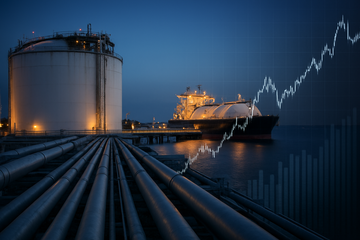
Shell's $10–15 Billion LNG Canada Stake Is Unsold, and $111 Oil Is the Wrong Reason to Buy It
Shell has been trying to sell its 40% operating stake in LNG Canada to a single buyer; Apollo, Blackstone and KKR reached the final round on a price reported at well north of $10 billion and possibly $15 billion, and as of Nov 2, 2026 nothing has been signed. The tempting explanation, a Brent print of $111 after crude crossed $100 on Sept 9, is the wrong one, because LNG Canada's volumes sit under long-term Asian supply agreements and the toll does not float with crude. What actually made the asset scarce is Hormuz: JKM printed $32.84/MMBtu on Oct 30, chokepoint-free Atlantic supply now carries a strategic premium, and that is what pulled a sovereign investment arm into a process that began as a financial one. The investable consequence is that owners of contracted LNG cash flow reprice first, with Cheniere raising 2026 adjusted EBITDA guidance to $8.75–9.25 billion and trading at 11.0x trailing EV/EBITDA against Shell's 4.5x, while whoever wins the auction inherits roughly C$13 billion of Phase 2 equity for revenue that starts in the early 2030s.
Crude Slid 6% as the Gulf Came Back — Vitol's 3 Million Barrel-a-Day Demand Call Is the Number That Actually Breaks the Bull Case
Brent's January contract fell $7.13, or 6.3%, to $106.30 on Nov. 2 after US-Iran talks in Doha unwound a war premium — and the barrels behind that premium had already come back, with Middle East shipments averaging 24.6 million barrels a day against 23.3 million before the war. The bull case does not break on supply; it breaks on demand. Vitol's Russell Hardy told ADIPEC that global demand could sit roughly 3 million barrels a day below 2025 levels by year-end, close to the IEA's 2.6 million barrel average decline, and that changes who captures the cheap barrel: refiners running negative Saudi selling prices with utilization still below pre-war win, US shale plateaus rather than breaks, and the AI power buildout gets a cheaper fuel floor.
2026-11-01
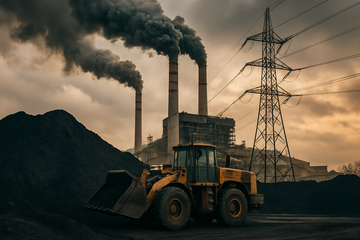
India's Coal Burn Is Back at a Three-Year High — and Almost None of It Is Imported Coal
India's coal-fired generation rose 13.3% year on year in September 2026 and the power deficit hit 560 million kWh, the largest since August 2023, yet the coal was domestic: the government is cutting power-sector thermal coal imports by at least 15 Mt this year while national output heads for a record 1,095 Mt. That matters for the sovereign-compute build-out, because the 26.3 GW of data-centre load India has projected for 2031-32 will be served by coal plants running on three days of fuel and by gas at a tripled $33/MMBtu benchmark, not by clean firm power. The money sits in power equipment, turbines, cooling and compute — not in the seaborne coal trade the headlines imply.
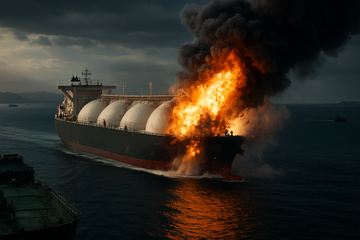
Iran Cleared the Cargo, Then Hit the Ship: Hormuz's Premium Has Moved From Barrels to Permission
On October 30, 2026 the LNG carrier Al Mayeda — owned by Qatar Gas Transport Company, flagged in the Marshall Islands, loaded with Qatari gas for Pakistan — was cleared by Iran to enter the Strait of Hormuz and struck by unidentified objects hours later. The episode exposes a feature of the blockade that crude traders have priced and molecule traders have not: Tehran's clearance is permission, not protection, so a second layer of risk now sits on the cargo itself. That layer prices at the origin rather than in the freight, with Asian spot LNG at $30.50/MMBtu against record-low Atlantic LNG carrier rates. The trade is origin arbitrage, and it pays Cheniere and Venture Global rather than the tanker owners.
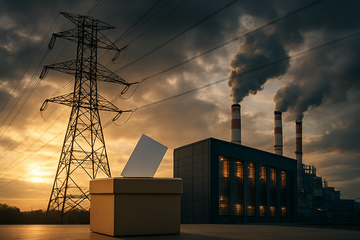
The Ballot Won't Cancel the Build — It Will Decide Who Pays: Georgia Power's $16.3 Billion Test Case Before Nov. 3
Utilities are no longer asking regulators for permission to build for AI; after Nov. 3 they will be asking voters. The cost of that shift is not slower construction but a political cap on who pays for it: 25 states now have an approved large-load tariff, and Virginia's commission just cut Dominion Energy's residential transmission charge by two-thirds by assigning the cost to the data centers that caused it. The result is a barbell — utilities holding binding, collateralized data-center contracts grow rate base without a rate fight, utilities without that book absorb the heat, and the equipment layer, led by GE Vernova at a 116 GW gas-turbine backlog, is insulated from the vote entirely.
2026-10-31

2026-10-30
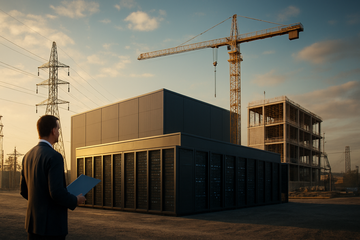
Alliant Energy Wants 1 GW of Data-Center Contracts in Six Months — but the Bottleneck Is a Rate Docket, Not a Turbine
Alliant Energy's chief financial officer said on October 30, 2026 that the company expects to sign roughly one additional gigawatt of contracted data-center load within six months, on top of the 3.4 GW already under contract with Alphabet, Meta and QTS. That headline is a capital decision dressed as a sales win: at the CFO's own $2–3 billion of capital per gigawatt, one more gigawatt is about 13% of a five-year program now worth $18.8 billion and requires roughly $800 million to $1.2 billion of new equity. The revenue clock does not start at the signature — Alliant's own process runs from electric service agreement to individual customer rate approval to construction, and management expects the Wisconsin decisions that unlock the new load in the first half of 2027. The equipment chain is paid at order and delivery in 2028–2029 while the utility waits for rate cases that push earnings into 2030 and beyond, which is why the AI load trade is cleaner expressed through the supply chain than through the utility's balance sheet.
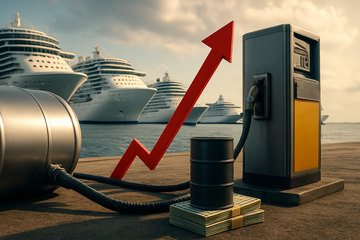
Royal Caribbean Locked 2027 Fuel at $405 a Ton. Carnival Pays $896 — and the Hedge Book Decides Who Owns 2027
Brent closed at $112.21 on Oct 30, 2026, up 73% from a year earlier, and the three big cruise operators are now running three different fuel books. Royal Caribbean has already bought 53% of its 2027 consumption at roughly $405 a metric ton and will book a $159 million unrealized hedge gain within twelve months of Sep 30, 2026; Carnival hedges nothing, paid $826 a ton in its fiscal third quarter and $896 a ton guided for its fourth, and declined to guide 2027 at all; Norwegian Cruise Line bought protection late and dear at $559 a ton on the thinnest earnings base in the group. Run each company's own 10% fuel test across 2027 and earnings at risk range from about $68 million at Royal Caribbean to roughly $243 million at Carnival — so the 2027 margin race is fought in the hedge book, not at the booking window.
What to expect
Evidence-first notes with a visible point of view.
This section collects sharp takes on earnings, shareholder meetings, and market structure. Each new piece should make the thesis, the facts, and the implications obvious within the first few screens.
Expect direct analysis, not generic commentary.
Expect the data to be explicit and the argument to be easy to follow.