Macro & Policy
Rates, inflation and the policy that moves them
Central bank decisions, jobs prints and fiscal policy, read the way a portfolio reads them: what reprices, by how much, and what would change the call.
2026-11-09


China's 5.7% Producer Inflation Is an Import Bill, Not a Recovery — the Deflation Trade Is Delayed, Not Dead
China's factory-gate prices rose 5.7% year on year in October, the fastest since June 2022 and above the 5.3% consensus, while headline CPI slipped to 0.7% and core CPI to 0.8%. The surge is an imported energy bill, not a demand cycle: mining prices jumped 27.9%, consumer-goods producer prices still fell 0.1%, and capped retail fuel prices kept the shock out of the checkout basket. That transferred profit upstream — CNOOC and Sinopec earnings jumped while Baoshan Iron & Steel net profit fell 29.7% — and left the demand-driven deflation story intact. With Brent down 7.63% on Iran peace-talk headlines and monthly producer-price momentum already cooling from +1.2% to +0.7%, the actionable move is to fade the energy complex now and re-own Chinese deflation in 2027.
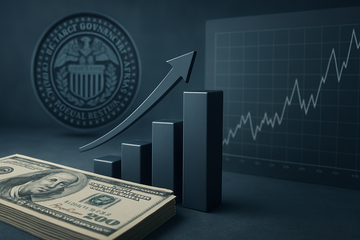
The Blue Sweep Closed Trump's Fed Path for 2027 — and Futures Already Paid for Two Hikes the Committee's Dots Don't Show
Democrats took both chambers on Nov. 3, and the first thing that changes is not fiscal policy but the Federal Reserve: a Senate that starts Jan. 3 can block every replacement Trump wants on the seven-member Board, so the 2027 rate path belongs to the sitting committee. Futures have already paid for that outcome — the two-year closed at 4.51% on Nov. 6, implying roughly two more increases in 2027, while the Fed's September median dot stops at 4.1% and holds there through the year. So the trade is no longer the Dec. 9 decision, which looks close to a formality; it is the projection round attached to it, and the roughly 50 basis points of 2027 tightening the dots must now validate. Bank earnings are already collecting the hiking cycle — JPMorgan Chase's net interest income rose 12.8% to $27.0 billion in Q3 2026 — while housing and long-duration assets are still paying for it at a 7.18% mortgage rate.
2026-11-08

2026-11-07

Sentiment Hit 51.0 and Households Named the 'AI Bubble': the November Print Prices the Capex, Not the Jobs
The University of Michigan's preliminary November read put sentiment at 51.0, up 6.3% from October, and in the same release households voiced anxiety about an AI bubble — while about 57% named living standards eroded by high prices, the highest share since May. The gain was not a wealth effect: sentiment fell 5% for the households with the largest stock portfolios, and interviews closed Nov. 2, before both the strong payrolls and the midterm sweep. Households are pricing the buildout's cost — memory in the device, megawatts on the bill — so the capex, not the labor market, is the variable that matters for the AI trade and for a Fed that has no room to look through a labor-driven hike.

165,000 Jobs Put a December Fed Hike at 80% — and the Margin That Justifies It Is 42,000 People
October payrolls came in at 165,000 against a 59,000 consensus, and San Francisco Fed President Mary Daly said the report put a \"definitive tick in the yes column\" on further tightening, pushing December odds to roughly 80%. The household survey tells a thinner story: unemployment fell to 4.1% only because employment grew 463,000 against a 421,000 labor force gain, a 42,000-person margin, even as U-6 jumped to 7.9% and long-term unemployment reached 27.1 weeks. That matters because the AI buildout has quietly shifted from cash flow to credit: Amazon issued $124.6 billion of net new debt in the trailing twelve months while CoreWeave carries $45.2 billion of net debt against $5.0 billion of equity. Banks love the hike — JPMorgan Chase grew net interest income 12.8% year over year in Q3 2026 — but the same policy move reprices the AI lending that sits on their own balance sheets.
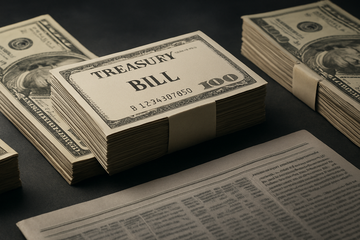
The February Squeeze Lands in Bills: $800 Billion of Borrowing, a $7.4 Trillion Bill Market, and a Fed That Stopped Buying
Wall Street's February call is arithmetic, not alarmism: roughly $754 billion of room under the $41.104 trillion debt cap against the $800 billion of privately-held borrowing Treasury expects between January and March. The first squeeze lands in Treasury bills, because coupon sizes are flat to smaller at the long end, buybacks are running, and the entire January cash rebuild has to be sold as bills into a market whose aggregate supply already reaches $7.4 trillion. The cushion that used to absorb it has thinned: the Fed's reserve-management bill purchases fell from $40 billion a month to $10 billion by mid-2026 and were reported paused in October, leaving dealers, banks and money funds to warehouse the risk. That points investors at JPMorgan Chase's dealer and custody economics and at the fee-waiver arithmetic inside BlackRock and Franklin Resources, not at the 30-year.

Vistra's $1.14 Billion Quarter Is 37% Paper — and the AI-Power Payday Doesn't Arrive Until 2029
Vistra booked third-quarter GAAP net income of $1,140 million and Ongoing Operations Adjusted EBITDA of $2,378 million, but $559 million of that net income was an unrealized gain on hedges expected to settle in future years — roughly $426 million after tax, or about 37% of the bottom line. The gain exists because the ERCOT forward curve fell, not because AI demand rose, and Vistra has already sold 98% of its 2027 power. So the AI-load option management describes does not land in cash until 2029-2030, the same window in which the hedges behind the mark mature. The investable AI-power trade sits elsewhere: contracted floors at Constellation and Talen, equipment backlog at GE Vernova, Baker Hughes and Doosan Enerbility, and cargoes at Cheniere.
2026-11-06
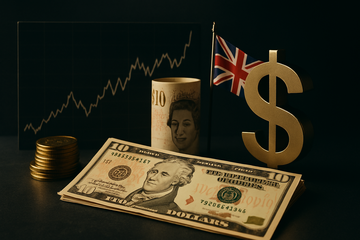
Gilts Now Yield More Than Treasuries at Every Maturity: Britain's First Hike in Three Years Hands the Funding Advantage to the Dollar — and to JPMorgan Chase
The Bank of England's first hike in three years — 25 basis points to 4.00% on November 5, 2026, carried 8–1 — matters less for the move than for what it reveals: the Bank's own projections assume Bank Rate of 4.9% through 2028 while inflation peaks near 5% in mid-2027, so sterling is on course to be the most expensive major funding currency in the world. On November 5, ten-year gilts yielded 5.15% against 4.84% on ten-year Treasuries, and two-year gilts 4.78% against 4.07%, while the Debt Management Office cut long-dated issuance to under 7% of the remit and the Bank unwinds its own gilt holdings to zero by 2034. With the Fed still on ample reserves and Japanese investors back in foreign duration after six weeks of selling, global funding demand converges on the dollar: JPMorgan Chase and BlackRock monetise that, HSBC faces the 2027 UK credit bill, and SK Innovation sits on the oil shock that caused it all.
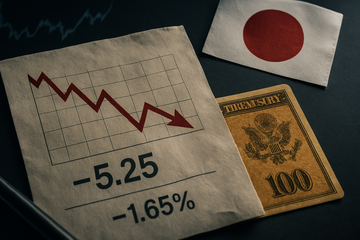
GPIF's First Loss in Six Quarters Was a Rates Shock, Not a Yen Shock — and It Puts a Price on Japan's $232 Billion Treasury Stake
Japan's sovereign savings fund lost ¥5.25 trillion, a −1.65% return, in the July–September 2026 quarter — its first loss in six quarters — and the cause was neither an AI-driven equity unwind nor a weak yen. Global sovereign yields rose across the curve after the Bank of Japan, the Federal Reserve and the ECB all hiked in September, while the yen actually strengthened about 3% on coordinated intervention and erased the translation gain on foreign equities. What matters for US duration is arithmetic: at a 5.29% 10-year Treasury yield and a 1.25% Tokyo policy rate, the yen return on a hedged Treasury is roughly 1.6%, about 140 basis points below the 3.055% yield on a 10-year JGB. That gap makes the world's largest foreign holder of Treasuries a price-sensitive marginal buyer, while the fund's own mandate caps how much it could even sell.

2027 Tax Brackets: A 17-Point Gap Between AI Pay and AI Sales, and a Permanent $40,800 Cap Nobody Priced
The Nov. 5 release (Rev. Proc. 2026-35) changed no rate and indexed every threshold by roughly 3.2% while September inflation ran 3.7%, so the first fully permanent US rate schedule now indexes below the price level. That fixes the after-tax schedule for the AI complex: 40.8% on equity compensation as it vests, 23.8% federally on a long-term sale, a $51,050 zero-rate window, and a state tax deduction capped near $40,800 and rising 1% a year. The tradeable consequence is not the AI equities — it is that the only new federal money in the 2027 code, the Saver's Match plus higher contribution limits, routes household savings into retirement platforms, recordkeepers, payroll software and tax software.

77% Hike Odds, a 16% Drop in Brent: December's Fed Is an Energy Story, While the Blue Sweep Breaks the AI Capex Chain
October payrolls beat by about 95,000 jobs and pushed market-implied odds of a December rate hike to 77%, but the print only removed the option of pausing — it did not decide the meeting. What decides it is energy: Brent has dropped 16% in a week to $98.55 on hopes that a Democratic Congress ends the Iran war, pulling out the inflation impulse that produced the September hike. The sweep's real damage landed in equities, not bonds: about $2.3 trillion came off the Nasdaq100 on Nov. 5, data-center developers fell 10% to 14%, and the 10-year yield actually fell to about 4.83%. The investable result is a higher-for-longer path that banks and insurers collect on while long-duration AI capex names pay for it.
2026-11-05

Dow +3%, 10-Year Down 7bp, Semis at a 6-Month Low: November 4 Was a Rotation Out of AI, Not a Risk-On Call
November 4, 2026 was three trades stacked on one morning, not a risk-on call. Crude fell about 8% to $88.55 a barrel as the Iran war moved toward diplomacy, the 10-year Treasury yield fell 6.6 basis points to 4.88% even with futures pricing roughly an 83% chance of a December Fed hike, and the equity rally ran through banks and self-funded mega-caps while the Philadelphia Semiconductor Index closed at a six-month low. The mechanism was a repricing of the AI buildout's funding and permitting risk, not of the demand for it: the hyperscalers have committed $510.9 billion of capital expenditure over the trailing four quarters and issued about $221 billion of net debt, so cheaper funding and a new wave of state-level data-centre restrictions hit the same trade from opposite ends. The investable book is a barbell — lenders and cash-generative mega-caps on one side, levered AI builders and peak-cycle memory on the other.

Eurozone Inflation Just Printed 4% With Energy Doing All the Work — the ECB Will Hike in December Anyway, and Friday's Payrolls Show the Rest of the World Isn't Following
Euro area inflation hit 4.0% in October, a three-year high, but the acceleration was entirely energy: energy prices rose 20.8% year on year while the rate excluding energy was unchanged at 2.3%. The ECB will lift its deposit rate to 2.75% on 17 December and then pause, because its own staff estimates say the rise in bond yields already subtracts a full percentage point from cumulative 2027-28 growth. The United States is the leg that is not turning hawkish — ISM services missed at 54.5% and September payrolls printed just 29,000 — so the tradable expression is the energy pass-through rather than a synchronized global hike: upstream cash flow at ConocoPhillips and CNOOC, peak-margin caution at Marathon Petroleum and ENEOS Holdings, and long duration as the payrolls hedge via iShares 20+ Year Treasury Bond ETF.

Banks Swung 19 Points From Easing to Tightening in One Quarter: The Credit Cycle Turned Before the Fed's December Hike
The Fed's October Senior Loan Officer Opinion Survey, released Nov 2, 2026 and covering the third quarter, shows domestic banks reversing their spring easing: net tightening in CRE construction standards jumped to 15.5% from -3.7% a quarter earlier, nonfarm nonresidential swung 20.1 points to 8.8%, and subprime mortgage standards hit 20.0%. The reversal was demand-led — banks reported weaker C&I, CRE and mortgage demand — and it landed in the same window as the Sept. 16 hike to 3.75%-4.00%, with a December hike priced. The sharpest signal sits in the special questions: banks are cutting credit to the private credit funds that are supposed to absorb the borrowers they are losing, so middle-market credit supply is contracting rather than rotating. Read it as slower bank loan growth into 2027, while nonbank lenders such as Ares Capital and consumer specialists such as OneMain Holdings pick up borrowers at the cost of funding they also depend on banks to provide.

California Just Made Wealth Untaxable and Florida Just Cut $45.8 Billion From Property Taxes: Both Votes Bill the Next Arrival
Two days apart, California voters passed a constitutional ban on taxing wealth while making the top income tax permanent, and Florida voters approved the largest property-tax cut in the country. The mechanism is identical: protect the incumbent holder of the asset and shift the cost onto whoever arrives next. Florida's version arrives as millage-driven property taxes on rental housing, roughly 15% higher by 2031; California's arrives as a July 1, 2027 Medi-Cal eligibility cliff. The tradable consequences run through Florida property insurance pricing, rental landlords, homebuilder incentive loads and California managed care.
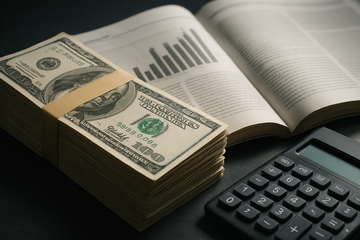
$15.48 Million, Indexed: The Estate Exemption Is the Only Federal Break That Grows Without a Vote
The IRS's tax year 2027 release, published Nov. 5, 2026, re-indexed every bracket by 3.2% and changed no tax rate — but it also lifted the estate and gift exclusion from $15.00 million to $15.48 million, and that number now rises automatically every year. With the fiscal 2026 deficit at $2.0 trillion and Democrats holding both chambers, the one federal concession written to keep widening is the one Washington's new majority will have to defend. Meanwhile voters in Washington preserved a 9.9% rate on income above $1 million starting in 2028, which gives the wealth-transfer calendar a new, dated deadline and shifts where that money is monetized: trust banks and custodians upstream, private credit and evergreen vehicles downstream.

Crude's War Premium Just Gained a Ceiling: 242 House Seats, a $15 Two-Week Drop, and a Market $10 Below Goldman Sachs
WTI's 8.3% plunge to $88.12 on Nov. 4 was not a demand story — it was the market repricing the odds that the Iran war survives a Democratic House, with 242 Democrats and a Senate that flipped seven seats. About $15 a barrel of prompt premium left the December Brent contract in two weeks while the 2027 strip already carried none, leaving a two-speed market: airlines collect immediate fuel relief, refiners lose a $45.70-per-barrel margin, and the freight and war-risk insurance where most of the premium actually sat begin to normalize behind the crude curve. The floor is OPEC+'s Nov. 29 quota call and a projected 2027 surplus of roughly 3.9 million barrels a day, and Marathon Petroleum and Delta Air Lines sit on opposite sides of it.

Record Imports, a 0.7% Smaller Deficit, and a 3% Wider Real Gap: The Trade Number Stopped Measuring Trade
September's $105.0 billion goods-and-services deficit looked like a narrow improvement, and that is precisely the problem. In the same release the inflation-adjusted goods gap widened 3.0% to $119.5 billion, because US export prices ran 11.6% above a year earlier while import prices rose 8.1% — and the customs accounts showed $19.4 billion of tariff refunds paid back to importers against $25.3 billion of new collections. The headline now blends export-price inflation, a refund line booked straight into retailer cost of sales, and an AI capital-goods boom that turned computers into the largest import category on record. For investors, the deficit has stopped being a scorecard for the tariff wall and become a gauge of hyperscaler spending, a fiscal transfer, and — with Democrats controlling Congress from November 3 — the binding constraint on what Washington can afford to pass.
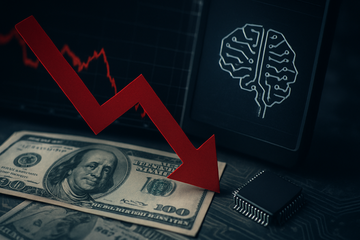
No Fed Put: November 5's 5.5% Nasdaq Rout Prices What Warsh's October Hold Does to AI Capex
On October 28 the FOMC held at 3.75%–4.00% on a 10–2 vote, upgraded the economy to 'expanding at a strong pace', left inflation 'elevated', and Chair Warsh told reporters that interest rates 'get in the cracks' and that AI investment is not insulated from monetary policy. Six days later Democrats took both chambers, and on November 5 the AI complex cracked: the Nasdaq Composite closed 5.5% lower, the Philadelphia Semiconductor Index fell 9%, the VIX jumped 71% to 28.3, and the 10-year Treasury rallied to 4.84%. Because roughly a third of hyperscaler capex is now debt-financed and heading to 35% in 2027, the marginal AI dollar must clear a credit market rather than a central bank — which sorts the trade into balance sheets that can fund the boom and balance sheets that need it to continue.
2026-11-04

What to expect
Evidence-first notes with a visible point of view.
This section collects sharp takes on earnings, shareholder meetings, and market structure. Each new piece should make the thesis, the facts, and the implications obvious within the first few screens.
Expect direct analysis, not generic commentary.
Expect the data to be explicit and the argument to be easy to follow.