Macro & Policy
Rates, inflation and the policy that moves them
Central bank decisions, jobs prints and fiscal policy, read the way a portfolio reads them: what reprices, by how much, and what would change the call.
2026-10-13

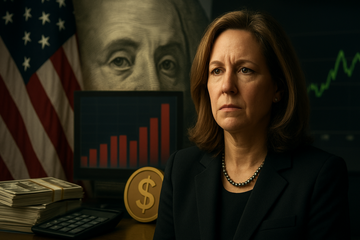
Hammack Just Tipped the Fed Toward a December Hike — The 5.36% 10-Year Is Already Pricing Both the Bank NII Trade and the AI Capex Funding Test
Cleveland Fed President Beth Hammack told the Inflation Conference on Oct. 12 that 'a restrictive monetary policy stance is appropriate' and that even higher rates could come if inflation stays sticky. With the September SEP dot already implying one more 25 bp hike in 2026, Hammack's freshly on-the-record hawkishness makes December the base case. The 5.36% 10-Year Treasury — a 24-year high touched Oct. 7 — is now pricing both sides of that decision: banks harvest the steepest deposit-repricing benefit in three years while the $725 billion hyperscaler capex machine faces the most expensive AI funding window of the cycle.
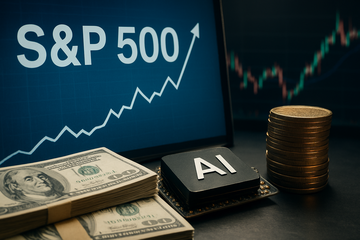
Q3 S&P 500 EPS Is Tracking 30% — But Half of That Came From AI Capex You'll Keep Paying For
The Q3 2026 setup looks like a banner print: FactSet sees 29.5% S&P 500 earnings growth and Reuters cites a 30.6% consensus, with JPMorgan results kicking off on Oct 13. Goldman Sachs estimates that almost half of 2026 S&P 500 EPS growth traces to AI investment, and that the four biggest hyperscalers are on pace for $800B in 2026 capex — a 94% jump. The cushion between those two numbers is what's getting thin: Q2 cash-flow statements already show Alphabet and Amazon printing negative free cash flow and Meta FCF down roughly 80% year over year. This Q3 reporting cycle is the last chance for clean AI tailwind before D&A and interest expense start compounding into 2027 and 2028 prints.

JPMorgan's Trading Boom Is the Only Floor Under the Banks This Print — Provisions Just Confirmed the Trade
With JPMorgan Chase, Goldman Sachs, Wells Fargo and Citigroup all reporting before the bell on Oct. 13, the print-day setup looks like a record $47B Q2 trading haul fading into a ~19% sequential drop — but still up ~13% YoY — while Wells Fargo's consumer charge-off rate keeps drifting lower. The real signal is whether the 'trading saves the day, provisions stay benign' trade keeps working as the 10-year sits at its highest yield since 2002 and the KBW Bank Index enters prints down 9.7%.
2026-10-12

2026-10-11
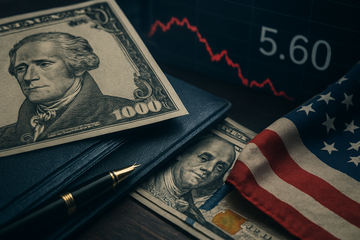
Bessent's Oct 10 reply to Warren turned the 10-year into a midterm referendum — and the bond market has already voted against him
Treasury Secretary Bessent's public reply on October 10 mocking Senator Warren's October 7 letter over the 10-year Treasury yield marks the moment Treasury long-end suppression stopped being a technocratic exercise and became a political contract. The market has already cast its verdict: the 10-year sat at 5.22% on October 8 and the 30-year at 5.60%, with the 30-year mortgage above 7.57%, despite the 'Bessent Twist' buyback expansion, a looming November 4 refunding auction cut, and a quarter-point Fed hike in September. If Bessent wins the public narrative, the term premium can stay compressed and AI capex duration holds; if Warren converts the rise into a midterm story, term premium re-widens and every long-dated AI and infrastructure multiple re-rates lower.

Goldman Just Put Italy on the Contagion Map — Why the Rome Call Reprices US Bank Capital, Not Just European Sovereigns
Goldman Sachs projects Italy's debt-to-GDP will hit 137% by 2028 — the highest in Europe — after Rome raised deficit targets to 3.4%/3.2% in 2027/2028 and approved €28B in defense and energy borrowing. Italy is now firmly the next sovereign risk after France, with the 10-year BTP-Bund spread at ~108bps on Oct. 11. The US equity read-through runs through Italian banks' ~€350B domestic sovereign holdings, the European IG credit channel — Euro IG widened 16bps to 100bps last week — and US money-center banks with European operations.

Humana Just Made Medicare Advantage the Live Tape — A 20%-to-95% 4-Star Flip While UNH and ELV Slide
Humana's share of Medicare Advantage members in 4-star+ plans jumped from 20% in 2026 to 95% for 2027, unlocking an estimated $4.8B in 2028 CMS quality-bonus payments — even as UnitedHealth slid to 67% (from 81%) and Elevance slipped to 45% (from 53%). The Oct 9 ratings release re-priced HUM's tape: the stock closed up 11.6% at $431.87 with after-hours at $435.00, Baird lifted its price target to $596 from $390, and the BCBSA's Sep 23–24 AI-upcoding study now frames commercial peers — not HUM — as the exposed side of the cost equation.
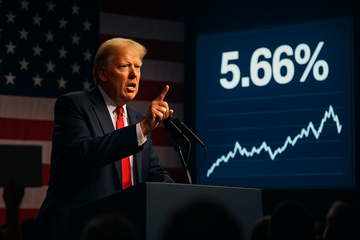
The $5,000 Dividend Is Now a Campaign Promise — That's Why the 30-Year Yield Just Hit 5.66%
At a Clarksville rally on Oct. 10, 2026, President Trump re-promised a $5,000 annual payment to every U.S. adult if Republicans keep Congress, framing it as a tariff-funded dividend. Three independent scorekeepers now put the cost at $1.2–$1.25 trillion against net tariff revenue of roughly $125 billion in 2027 — a 10:1 shortfall that is large enough to force either new borrowing or a new tax. Long-end Treasury yields have already absorbed that signal: the 30-year cleared a 24-year high of 5.66% and the 10-year touched 5.35% within days. For investors, the Tennessee relaunch reframes a dismissed campaign line as a Treasury-durability event — repricing long-duration debt, lifting the equity-over-bond case, and reframing dividend-payer exposure as a yield-substitute trade.
2026-10-10

Bessent Skipped Bangkok. The 30-Year Yield Is Telling You Why.
Bond markets spent October repricing U.S. sovereign risk — the 30-year yield near a 24-year peak, federal debt past $40 trillion, Bessent doubling Treasury buybacks and signaling a cut to long-bond auctions. His absence from the IMF/World Bank annual meetings reads less like a scheduling conflict and more like the latest signal that Washington is prioritizing domestic intervention over multilateral credibility.

The Forced Seller Above 5%: Inside the Treasury-Futures Deleveraging Now Driving Long-End Yields
Asset managers cut roughly 100,000 long-duration Treasury futures contracts in a single week, the largest such move since the 2025 tariff shock. With a CTD switch ready to turn 18-year futures into 23-year paper if the 30-year clears 6%, every additional basis point now forces its own round of selling — locking 30-year mortgages above 7.4% and squeezing the long-duration AI trade.

U.S. Household Debt Stress Just Hit a 2010 High — And the Fed Hiked Rates Into It
Friday's Federal Reserve Survey of Consumer Finances showed nearly one in five American families behind on loan payments — the worst reading since the post-crisis 2010 survey — and 8.6% now devote more than 40% of income to debt service. The New York Fed's Q2 data had already pushed credit-card 90+ delinquencies to 12.8%, just 94 basis points below the 13.74% Great Recession peak, while auto-loan 90+ delinquencies now exceed the 2010 high. With the FOMC having just raised rates 25 bps in September and minutes showing officials still see \"more work to do,\" Q3 bank earnings starting October 13 will tell investors whether charge-offs finally crack or whether — as Capital One and JPMorgan data already suggest — the cycle is more bifurcated than the household survey makes it look.
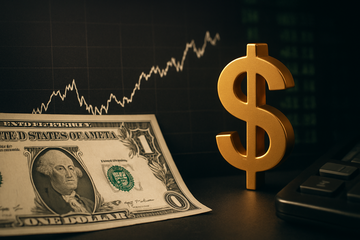
The Dollar Just Walked Back into April 2025 Highs — Every 'Weak-Dollar' Trade Faces Its First Real Test
The U.S. Dollar Index closed at 102.21 on Oct. 9, 2026 — its first print above 102 since April 2025 and an 18-month high. A Fed that pivoted from easing to hiking in September, a 10-year yield that touched 5.29% (the highest since 2002), and euro weakness (the euro is 57.6% of DXY) flipped the script on a year built on dollar weakness. Procter & Gamble has already guided to an 8-percentage-point EPS drag from FX in fiscal 2027 — and that is just the first canary. Every FX-translation tailwind booked by U.S. multinationals in the first half is at risk of unwinding through Q4 earnings.
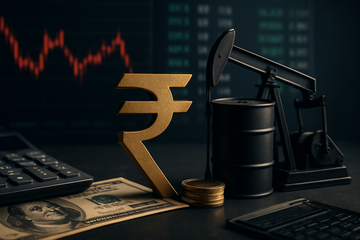
RBI rewrites the rupee rule book: dollar window for state oil firms, derivatives clampdown as $51B defense meets a record-low currency
On October 10, 2026, the Reserve Bank of India opened a direct dollar window for IOC, HPCL and BPCL, banned the rebooking of cancelled rupee derivatives, and cut the exposure cap on uncovered FX bets from ₹100M to ₹5M — the most aggressive rule change since 2013. The trigger is a perfect storm: the rupee at 96.73/USD against its all-time low of 96.96, $51B of forex reserves burnt in four weeks, a $200B net forward short, Brent at $102, India's 10Y at 7.21%, and the first $26.3B monthly EM outflow since June. For HDFC Bank and ICICI Bank, the read-through cuts through net interest margins and the value of the FCNR-B swaps that artificially inflated Q2 loan growth — making the rupee defense the dominant fundamental story of the October2026 earnings cycle.

JPMorgan's Buy-Side Calls 6.5% IG 'Once-in-a-Generation' While Dimon Still Won't Touch the Long End
Inside JPMorgan Chase & Co., portfolio manager Priya Misra frames 6.5% investment-grade corporate yields — lockable inside a BBB+ portfolio — as the best risk-adjusted entry in decades. CEO Jamie Dimon, speaking in July 2026, still won't buy long-dated Treasuries. The trade between those two views is being intermediated by every major U.S. fixed-income desk, where Q2 2026 revenue ran 6% to 32% higher year over year.

SCOTUS Signals the 401(k) Pleading Bar Will Hold — and the $51T Retirement Pool Just Got a New Map
The Supreme Court heard Anderson v. Intel on October 6 with both Democratic and Republican-appointed justices leaning toward keeping the Ninth Circuit's \"meaningful benchmark\" requirement for ERISA underperformance claims. A pro-Intel ruling stacks on top of Executive Order 14330 and the DOL's pending alternatives safe harbor to clear the path for private equity and private credit into target-date funds run by BlackRock, State Street, T. Rowe Price, and the $1.8 trillion Vanguard franchise. The next decision is the single biggest asset-allocation signal for $51.2 trillion of US retirement savings in years.
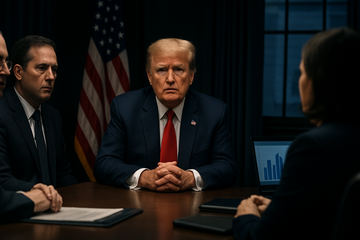
Trump's Cook Mortgage-Fraud Committee Sets a Nov. 5 Removal Showdown — And the 7.4% Mortgage Market Has to Price It
President Trump convened a three-person inquiry committee to examine Federal Reserve Governor Lisa Cook's 2021 mortgage statements, with a closed-door White House hearing set for Nov. 5, 2026 — converting a yearlong legal fight over Fed independence into a procedural countdown that the Freddie Mac PMMS 7.40% mortgage market, large-cap bank stocks, and the 5.24% 10-year Treasury have to price. The mechanism runs through two channels: a higher term premium on Fed-removal risk, and the prospect of a Trump-aligned Federal Reserve majority voting for cuts the Federal Reserve Open Market Committee just rejected 12–0.
2026-10-09

Bessent Recruits Shelton — And the Treasury Now Has the Fed's Most Hawkish Shadow
Treasury Secretary Scott Bessent has hired economist Judy Shelton — the 2020 Fed board nominee who lost a47–50 Senate vote over gold-standard advocacy — as Counselor in the Office of the Secretary, advising on currency policy with a China focus. Combined with Kevin Warsh's September25 bp hike and a December move now near-certain, the move embeds a harder-money voice directly inside Treasury while the10-year still trades near a 24-year high of 5.36% and gold holds above $4,100. Investors should read this as a higher bar for any 2027 cut, a more durable term-premium floor, and a Treasury willing to use radical supply-side tools if the long bond keeps misbehaving.

$8 Trillion in Money Funds Won't Move Until the Fed Cuts. That's the AI-Capex Funding Test.
Bank of America's Michael Hartnett wrote on Oct. 9, 2026 that the cash parked in money-market funds has stopped being a tactical waiting room and become a structural position — one that exits only when the Federal Reserve delivers sustained easing. The bond market has priced the opposite: the 10-year yield sits near a 24-year high of 5.36% and 'short Treasuries' is back as a top crowded trade, with fund managers citing a disorderly rise in yields as their biggest tail risk. That gap is the AI-capex funding test, because hyperscalers have already issued nearly $500 billion of AI-related debt in 2026 while competing with a Treasury that crossed $40 trillion in August.
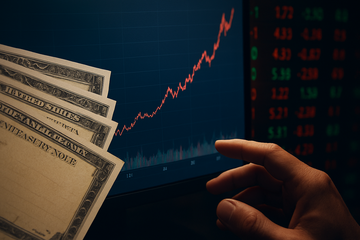
Rapid Yield Moves Have Preceded Every Major Blowup Since 1970 — and Q3 Just Delivered 87 Basis Points in 90 Days
Treasury yields are rising at the fastest pace since 1994, the 10-year touched a 24-year high above 5.35% this week, and the MOVE index has pushed through 100 — the threshold that historically marks the moment something breaks. Stocks are refusing to fall, which is itself the danger signal: every prior blowup since 1970 was preceded by rapid yields plus an eventual equity re-pricing. Bessent's \"I am the house\" trade has already been called. The question now is which asset class absorbs the next leg.

Microsoft and Adobe Just Lost Their Green-Card Pipeline — and So Did the AI Frontier-Lab Hiring Math
On October 8, 2026, the U.S. Labor Department suspended Microsoft, Adobe and six IT outsourcers from the PERM program while the administration opened J-1 fraud investigations at nine universities including Harvard, Stanford and MIT. The action is not a quota on individual visas — it is a program-wide shutdown of the permanent-labor channel that turns H-1B talent into U.S.-based AI researchers and engineers. With Microsoft already certified as the country's #1 PERM filer (1,504 in nine months), Indian IT firms cutting H-1B use 40% year-over-year, and OpenAI/Anthropic filings up 215% and 490% respectively, investors should price a measurable talent-cost step-up across Microsoft, Alphabet, Meta and NVIDIA — and treat the university probe as a parallel R&D-funding risk.
What to expect
Evidence-first notes with a visible point of view.
This section collects sharp takes on earnings, shareholder meetings, and market structure. Each new piece should make the thesis, the facts, and the implications obvious within the first few screens.
Expect direct analysis, not generic commentary.
Expect the data to be explicit and the argument to be easy to follow.