Macro & Policy
Rates, inflation and the policy that moves them
Central bank decisions, jobs prints and fiscal policy, read the way a portfolio reads them: what reprices, by how much, and what would change the call.
2026-10-18

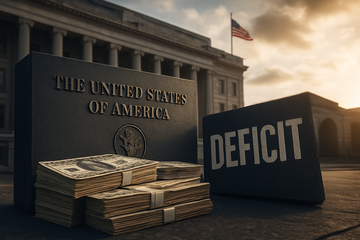
US Closes FY2026 at a $1.99T Deficit and a $1.36T Interest Bill — The $3B/Day Fixed Cost the AI Capex Cycle Now Sits On
Treasury's Oct 17, 2026 print closed fiscal 2026 at a $1.992 trillion deficit — up 12% year-over-year — with a record $1.36 trillion in gross interest ($2.9 billion net per day), as the average cost of federal debt sits at 3.53% even while new issuance clears 5.10% on the 10-year. Hyperscalers funding a projected ~$1.2 trillion of 2027 AI capex through investment-grade debt now compete with the Treasury for the same marginal buyer at the same yields, turning record federal interest into the floor of the AI cost of capital rather than a tail risk. The Goldman and JPMorgan dealer franchises sit on the issuance flood; the hyperscalers with the thinnest free-cash-flow coverage sit on the cost.
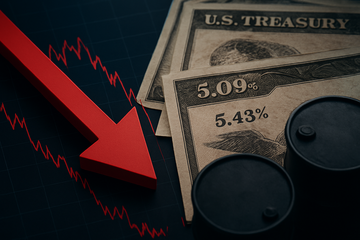
5.10% Yields Plus Brent at $110 Just Named the Bond Market's Sector Pain List — AI Infra, Small-Caps, and Long-Duration Tech Take the First Hit
Friday Oct 16, 2026 delivered a single-session cascade: S&P 500 -1.09%, Nasdaq -2.14%, VIX +21% to 19.99, 10Y at 5.09%, 30Y at 5.43%, and Brent +3.7% to $109.86 on renewed Iran–Hormuz attacks. The bond market's verdict was already visible in the AI-debt complex — CoreWeave -12% in a day and 25% in five, Broadcom -3.6%, Oracle -4.7% — even as the AI enablers like Nvidia held up. Investors positioning into the Nov 10 CPI and Dec 9 FOMC now face a defined pain list: AI infrastructure debt, small-caps, and long-duration growth first; REITs, regional banks, and energy derivatives downstream.
2026-10-17
Treasuries Just Did Their Oldest Job for the First Time in Months — Skiba Names the Bond-Equity Divorce the Tape Has Been Hiding
On October 16, RBC Global Asset Management's Andrzej Skiba told CNBC that bonds had finally performed their safe-haven function — rallying into a weaker tape for the first time in months. The move came only after a $2 trillion chip rout finally did what BlackRock CEO Scott Bessent's $4 billion Treasury buyback couldn't: pull 10-year yields back from 5.36% to 5.08%. With the SPDR S&P 500 ETF Trust +14% YTD but four in ten names in the red, the equity risk premium below zero, and the bond-equity correlation plumbing a 15-year trough, the long-promised rotation from passive equity into Treasuries just got its first real print — and the listed names most exposed to it sit on both sides of the trade.
October NY Fed Survey Locks In The 'Stagflation Lite' Setup — And Citi's December Hike Is Now Consensus
The Federal Reserve Bank of New York's October Business Leaders Survey, released October 16, 2026, is the first hard regional print to confirm both halves of the September inflation story: service-sector activity collapsed to -20.7 while the prices-paid index held near 70 and prices-received hit the fastest pace since 2022. The combination validates Citigroup's October 14 flip from no-change to a 25bps December rate hike, and pushes the bar for the Federal Reserve to stay restrictive higher. For investors, that pressures rate-sensitive REITs like Realty Income and Simon Property Group, pressures services-exposed names like Marriott, Hilton and Booking, while favoring net interest margin plays like JPMorgan Chase, Bank of America and Citigroup.

Trump Waived His Own Russia Sanctions Bill. The Bond Market Hasn't Blinked.
Twenty-eight days after signing the Lindsey O. Graham Sanctioning Russia and Iran Act of 2026 into law, President Trump used Section 115 to suspend its 500% tariff on Russian goods and the 100% secondary tariffs on India and China two days before they took effect. The Russian 10-year OFZ yield sat at 16.63% on Oct. 17 — barely moved; the U.S. 10-year Treasury drifted lower; Brent crude printed a five-month high near $110. Markets are treating the waiver as reversible political theater, not a regime change. The trade implication: fade any \"Russia relief\" theme until the EU's parallel tightening — 1,569 new listings adopted Oct. 12 and a unanimous Oct. 15–16 summit rejection of a U.S. proposal to unfreeze €260 billion in Russian sovereign assets — gets fully priced.

U.S. Import Prices Just Printed an 8.1% Annual Climb — And That's Before Tariffs
The BLS Import Price Index rose 1.1% MoM and 8.1% YoY in September 2026, the largest 12-month gain since July 2022. But the BLS series excludes tariffs — and with an effective U.S. tariff rate of 7–10%, the all-in landed-cost inflation running into retail shelves is closer to 15–19% YoY. Q2/Q3 corporate margins were padded by Supreme Court-ordered IEEPA refunds; Q4 guidance will not be.
2026-10-16
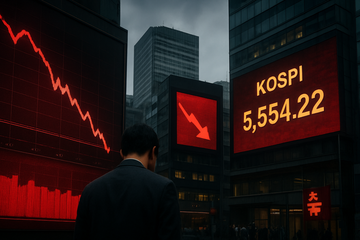
Nikkei -4.9%, KOSPI Crashes Through Circuit Breakers: How US AI Debt Fears Repriced Asia's Memory Complex
Asia's October 15 sell-off wasn't a Japan story — it was a US debt transmission event. A hot September CPI print pushed 10-year Treasury yields to 5.32% intraday, while CoreWeave's junk bonds traded near 15% yields, exposing the debt-financed scaffolding under AI capex. Kioxia, SK Hynix, Samsung, and SoftBank absorbed 9-11% declines as Tokyo, Seoul, and Taipei absorbed the risk repricing; equipment leaders Tokyo Electron and Advantest held up because AI capex visibility keeps their order books full. With the IMF warning that an AI equity shock would ripple through Asia first, the cross-border mechanism is now the story, not the price action.
Bessent's Twist Failed. Wall Street Is Already Pricing in Intervention #2.
Treasury Secretary Scott Bessent's August buyback 'twist' did nothing to tame long-end yields — the 30-year touched 5.69% on Oct. 7 and sat near 5.43% on Oct. 15. Citi now expects 20- and 30-year auction sizes to be cut by $3 billion each at the Nov. 4 refunding, likely offset by more T-bills or a new one-year SOFR-linked FRN. The trade runs straight through JPMorgan Chase and Bank of America net interest income — and the $725 billion hyperscaler AI capex math now being financed by Microsoft, Alphabet, Amazon, Meta Platforms, and Oracle.

Gasoline Drove September PPI to a 4½-Year High — the Disinflation Trade Just Hit a Wall
Producer prices jumped 1.3% month-over-month in September — the biggest monthly gain since March 2022 — with gasoline alone up 20.3% and more than 80% of the move attributable to processed energy goods. Combined with a 3.7% year-over-year CPI print the day before and gasoline-station receipts carrying the September retail-sales beat, the shock has turned the soft-landing-priced rate path into a December FOMC test: fed-funds futures now price an 87% chance of a hike, even as the 10-year yield has eased to 5.06% on the day. Refiners and fuel retailers are the rare equity pockets still printing windfall quarters on this.
Warsh Tied the AI Boom to a 'Shock' in Bangkok. The Bond Market Can't Easily Unwind What the Fed Just Named
On Oct 16 in Bangkok, Federal Reserve Chair Kevin Warsh called AI 'the most consequential change' to the global economy and framed it as an inflation 'shock' alongside a 'synchronous tightening' by central banks. Six weeks earlier, the September FOMC had already named AI-related investment as a contributor to inflation; the minutes cited 'competition for capital to finance AI infrastructure' as a force on the long end of the curve. The bond market is now pricing a term premium that short-rate hikes alone cannot offset — and the sector the Fed has been funding is the same sector it is now fighting.
The White House Crypto Bench Just Emptied — Coinbase, Circle, and ICE's Polymarket Bet Just Inherited a New Delay Variable
Patrick Witt's Oct. 14 exit was the third and final departure from the White House crypto council in 2026, leaving no in-house advocate for the failed CLARITY Act, GENIUS Act bank-custody rules, and pending spot ETF approvals. Without political cover, every rule now carries an invisible delay cost that compresses the growth of Coinbase's $20B USDC custody franchise, Circle's reserve-income engine, and Intercontinental Exchange's $1.6B Polymarket bet — three of the largest digital-asset positions in U.S. public markets.
2026-10-15
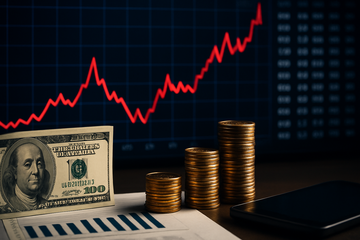
Bloomberg's Top Forecaster Just Doubled the December Hike to 50bp — and the Curve Hasn't Caught Up
Joseph Brusuelas — Bloomberg's top forecaster of 2025 — said the Federal Reserve may deliver a 50-basis-point December rate hike if the September move fails to break inflation's back, a magnitude that markets are still pricing as a 79% chance of just 25bp. A 50bp move would push the policy rate to 4.25–4.50%, lift the 10-year Treasury yield toward a 20-year high, and force a wholesale repricing of duration-sensitive sectors — long-duration Treasuries, mortgage-backed securities, regional-bank net interest income, and small-cap equity multiples.

IEA Names Diesel as the Lever — and the $107 Crack Spread Just Hit $111 Anyway
On Oct. 7 the IEA agreed to accelerate its record 400-million-barrel release and explicitly prioritize diesel; on Oct. 11 Executive Director Fatih Birol wrote to members urging further diesel-specific draws ahead of the Oct. 15 Governing Board meeting. The coordinated stack — IEA stockpile releases, the G7's Oct. 2 100-million-barrel pledge (≈20 million barrels of diesel), and Trump's Russia-diesel arrangement — is the first real test of whether record crack spreads can survive a government-led dump. Through Oct. 14, the US diesel crack spread actually widened to roughly $111/bbl against WTI as Houthi strikes on Saudi Aramco pushed crude back above $108, leaving the refiner trade on its highest wire of the year going into Wednesday's IEA verdict.
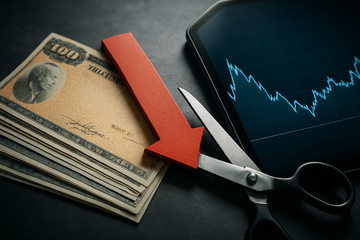
Treasury's $3B Cut at 20Y/30Y Won't Fix a 5.62% Long End — It Buys Bessent Time Until CPI Does
A Citi note reported by Bloomberg on Oct 14 sees Bessent cutting $3B each from the 20Y and 30Y auctions at the Nov 4 quarterly refunding — but with the 30Y bond clearing at 5.618% on Oct 8 and Sept CPI printing 3.7% on Oct 14, the move is at most a 12% trim on the long end. The stock-market verdict was brutal: Nasdaq -1.88%, long-duration tech like Oracle down 8.83%, and Realty Income sliding as rate-hike odds jumped to 46%. The trade is bond relief, not a fiscal reset — and the durability of any long-end rally depends on whether the Oct 29 CPI softens the path to the Oct 28 Fed.

UBS's $16 billion Swiss capital bill just turned Basel endgame into a relocation auction — and eight foreign banks are already in the room
Switzerland's upper house voted 29–16 on Sept 23 to make UBS back 90% of its foreign units with common equity, adding $16B of CET1 at the parent and $33B in total since the Credit Suisse deal. UBS has replied with the loudest lever a global systemically important bank can pull: an open threat to redomicile via US acquisition, European merger, or holding-company move. With at least eight foreign banks — Morgan Stanley, Deutsche Bank and JPMorgan Chase among the named suitors — already in the room and US Basel III requirements heading the opposite direction, the question for investors is no longer how much capital a G-SIB has to hold, but where the world's largest wealth manager will park its $1.7 trillion balance sheet.
2026-10-14
Citi's 90-Day Pivot: From 'June 2027' Dove to December Hawk on One Hot Core Print
Citi's October 14 reversal to expect a 25bps December Fed hike — after spending September forecasting mid-2027 cuts — closes the last Wall Street gap on the year-end rate path. With core CPI running at +0.3% m/m versus +0.2% consensus, Cleveland Fed hawk Hammack clearing the runway 24 hours earlier at NABE, and the 10-year Treasury already at 5.27%, the real signal is that even the most dovish sell-side desk now expects the Fed to remain restrictive into 2027. Banks win on net interest margin; long-duration tech, homebuilders, REITs and the long bond lose.
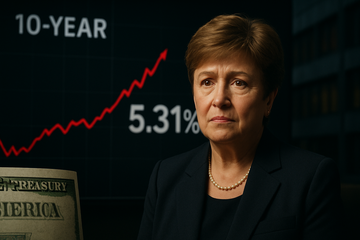
IMF's 'Growth Won't Be Enough' Warning Lands On A 5.31% 10-Year — And Bessent Just Admitted He Can't Control The Curve
Kristalina Georgieva used the Singapore annual meetings to tell governments that record debt loads cannot be shrunk by growth alone — and that policy chiefs can't keep delaying. The message lands on a 10-year yield that closed at 5.31% on October 5, its highest since May 2002, on a curve the Treasury Secretary has publicly conceded he cannot steer. With the Fed at 3.75–4.00%, $40T of debt, hyperscalers issuing $500B of AI-linked paper, and roughly $8T still parked in money funds, the next move in U.S. long rates has to choose between a Trump-engineered rate-cut \"refund\" and a fiscal-funding blowout — and the trade for the next several quarters sits in banks, homebuilders, and mortgage REITs, not in the hyperscalers themselves.
The NY Fed Just Killed the 2027 Hike Story. PIMCO Says the 10-Year Can Hit 6%. The 60-Basis-Point Gap Between Them Is the Only Number to Watch.
Within 24 hours, John Williams argued the Fed won't need to hike in 2027 — a view the September SEP median backs. Dan Ivascyn of Allianz-owned PIMCO told markets the long bond still has 60–80 bp to run and the Fed will likely need to tighten once more. Fed funds futures sit closer to PIMCO than to Williams. The split isn't really between two men — it's between the Fed's median dot and the curve itself, and the divergence maps cleanly onto rate-sensitive equities from homebuilders to long-duration ETFs.
Hot CPI Just Flipped December Into the Fed's Base Case — and the Nasdaq's 1.9% Selloff Is Only the Opening Trade
September CPI reaccelerated to 3.7% year-over-year (from 3.4% in August) and core to 2.6% (from 2.4%), with both prints running 0.1 percentage point above consensus and a 5.2% energy surge supplying the bulk of the headline. Markets responded by lifting the 10-year Treasury yield to 5.30%, jumping the December 9 FOMC hike probability to 76-87%, and sending the Nasdaq Composite down 1.9% with semis and AI infrastructure bearing the brunt. The Fed's own September dot plot already projects 4.1% by year-end 2026, and today's data pushes that path toward the high end — meaning the Apple/Microsoft/NVIDIA cohort is now repricing not for one more 25bp, but for a terminal rate the market had largely written off six weeks ago.
2026-10-13

What to expect
Evidence-first notes with a visible point of view.
This section collects sharp takes on earnings, shareholder meetings, and market structure. Each new piece should make the thesis, the facts, and the implications obvious within the first few screens.
Expect direct analysis, not generic commentary.
Expect the data to be explicit and the argument to be easy to follow.