Macro & Policy
Rates, inflation and the policy that moves them
Central bank decisions, jobs prints and fiscal policy, read the way a portfolio reads them: what reprices, by how much, and what would change the call.
2026-09-13

Cook and Musk's joint 'crisis' warning landed Sep 12 — and the 10-year yield was already at 4.85%
Two CEOs of mega-cap consumer companies publicly calling a 'US crisis' on the same week is unusual and historically precedes equity-tape turns by 60–90 days. But the macro tape isn't listening: a hot August CPI print, Bessent's failed Treasury-buyback intervention, and the highest 10-year yield since October 2023 argue that Apple's memory-cost squeeze and Tesla's compute bind are real economic signals, not narrative noise — and the September FOMC will have to walk straight into them.
August CPI at 3.4% Hands [Kevin Warsh] a 90%-Priced Hike and a Curve That Already Broke
Headline Consumer Price Index (CPI) matched consensus at 3.4% year-on-year, but a 0.3% core print — the largest monthly gain since April — and energy up 16.3% year-on-year pushed CME Group's FedWatch to roughly 90% odds of a quarter-point hike at the September 16–17 FOMC. The 2-year Treasury jumped7.8 bps to 4.628%, the highest since July 2024, and 30-year fixed mortgages are already near 7%. For Chair [Kevin Warsh] — confirmed in May after [Jerome Powell] — the call is whether to validate a market that has already moved, or hold for an economist consensus that expects no move at all.
VIX Crashed 11% the Day Three 'Biggest Bubble' Warnings Fired at Once. That's the Bullish Case — and the Bear Trap.
On Friday, September 11, 2026, Apple closed within 2% of its all-time high while CEO emeritus Tim Cook's July '100-year flood' memory warning still echoed, Bank of America's Bull & Bear gauge sat at 9.7 (highest since 2021), the S&P 500's monthly CAPE held above 40 for a third consecutive month — a level last seen once before, during the dot-com era — and the VIX collapsed 11.21% to 15.84. Michael Burry logged his second portfolio reshuffle in three days. The bears aren't wrong that the warnings cluster; they're wrong to assume the cluster means an imminent crash. Dealer gamma, a still-divided [Federal Reserve], and real AI cash flows are why this market shrugs off signals that historically preceded 30%+ drawdowns.

Warsh's 'Work to Do' Breaks the 2018 Playbook: Why This Rate-Hike Cycle Has No Fed Put
Jim Cramer's Sept. 11 column drew 'eerie parallels' between today's tape and Q4 2018, when a hawkish Fed into a slowing economy drove the S&P 500 down 19.8% from Sept. 20 through Christmas Eve before Powell's January 2019 dovish pivot triggered a relief rally. The setup rhymes — 10-year yields at 4.98%, Brent touching $109.97, a 90%-priced September rate hike, and a strong second year of the Trump presidency — but the variable the 2018 tape never faced is Kevin Warsh. His Jackson Hole stance that the Fed has 'work to do' with PCE inflation still 3.7% above target, paired with Trump's open pressure for cuts, leaves the Fed unable to pivot dovish easily because inflation is structurally higher than 2018, even as political pressure eventually forces action. For financials, JPMorgan's net interest income has climbed from $23.97B in Q3 2025 to $25.51B in Q2 2026 — the steepener trade is real — but if Warsh holds the line on inflation through year-end, the second-half relief rally that defined the 2018 playbook will not repeat.
Bipartisan Cap-Lift Puts ~$3T of New Payroll Tax on the Table — Bond Yields Have Moved the Wrong Way
Senators Warren and Moreno's plan to scrap the $184,500 Social Security payroll tax ceiling picked up public GOP support from Reps. Tom Cole and Lloyd Smucker this week, but the 10-year Treasury still closed at 4.97% on Sept. 11 and the 30-year hit 5.27% in July. With the 2026 Trustees Report projecting Q4 2032 OASI depletion and a 4.42%-of-payroll 75-year shortfall, even a full cap removal — Tax Foundation scoring puts it at $3.2T conventional / $1.5T after economic feedback — covers roughly two-thirds of the gap. The market hasn't priced the deficit math yet; that's the trade.

Trump's 'Very Negative Forces' Line Just Cleared the Path to OpenAI's 2027 IPO and Anthropic's $2T Listing
In Doonbeg on Sunday, the President cast AI safety critics as 'very negative forces' — a one-sentence pivot that aligns the White House behind faster AI deployment and reframes the political battlefield from agency rulemaking to public discourse. The read-throughs are immediate: OpenAI's already-delayed $1T IPO target slides to 2027, Anthropic's confidential S-1 still targets a fall-2026 listing near $2T, the AI safety stack loses its regulatory tailwind, and chip demand from NVIDIA, TSMC and Micron stays locked in.

VIX Crashed 11% to 15.84 — Into a 90%-Priced Fed Hike and Brent Above $100
On Sept. 11, 2026 the Cboe Volatility Index closed at 15.84, down 11.21% on the day, even as August CPI printed a hotter-than-expected +0.4% MoM, CME FedWatch lifted Sept. 16 hike odds from ~70% to ~90%, and Brent held above $100. With 30-day realized vol near 9.2%, the S&P 500 actually rose 0.86% that session, an overshoot that signals hedgers are cutting insurance into the regime where it has historically paid off most. The Volmageddon-style short-vol trade is back, and the listed ways to play both sides sit at Virtu Financial, Cboe Global Markets, Flow Traders and Man Group.
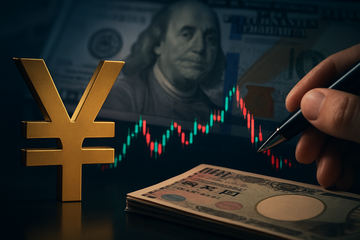
CFTC Yen Positions Just Flipped Net Long—A 103,000-Contract Reversal That Hands the AI Carry Trade a Two-Way Tail
Speculators flipped to a net long yen position of +10,796 contracts in the week to September 8, reversing the prior week's -92,227 and ending a seven-month run of bearish bets. The shift signals the carry trade is no longer one-way—but a crowded long position is its own risk, leaving both NVIDIA-led AI equities and Mitsubishi UFJ Financial Group's megabank peers exposed to renewed yen volatility into the Bank of Japan's December rate decision.
2026-09-12
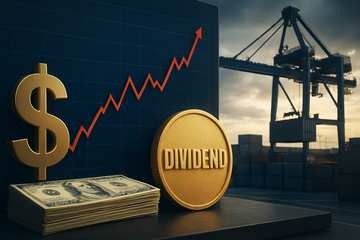
$166B Tariff Refund Reflux Has Peaked — Quietly Voids Trump's $5,000 Dividend Math And Forces a Treasury Re-Price
Tariff refunds under the post-IEEPA Supreme Court order have crossed from net-negative to net-positive in August 2026, the first time since the refund portal opened. Roughly $115B has already gone back to importers, with ~$100B still owed — a sum larger than every realistic2026 tariff-revenue forecast. Trump's floated $5,000-per-adult 'dividend' would cost ~$1.3T against ~$300B in current-law customs receipts, and the refund taper means those receipts will fall further as the year closes. The implication for equities: front-loaded cash beneficiaries (Nike, Apple, Walmart) have already booked most of their gains, while importers still holding large IEEPA receivables — and the entire fiscal baseline the dividend pitch rests on — face a re-price.
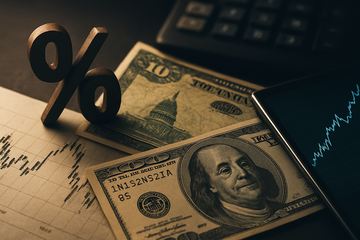
The 5% Wall Held: How a 4.98% Touch, a Hot CPI, and a Priced-In Fed Hike Gave Bessent His Biggest Reprieve Yet
On September 11, 2026, the 10-year Treasury yield touched 4.98% after a +3.4% YoY August CPI print — and pulled back to 4.93% without ever printing 5%. The intraday ceiling held even as Polymarket priced an 80% probability of a 25 bp Fed hike at the September 16–17 meeting. That combination — hot data, a hawkish Fed, and a bond market that refused to break — is the new regime boundary, and it changes the math on AI-capex discount rates, mortgage-REIT book values, and bank net-interest margins all at once.
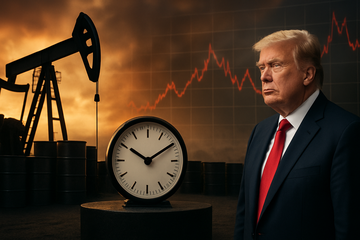
Trump Tied Oil's Clock to November 3 — The Term Curve Already Priced a Different One
On September 9, 2026, President Trump said the Iran war will end \"immediately after\" the November 3 midterms and that oil prices will \"tumble\" the day after voters decide. But the WTI futures strip is still priced for a disruption that ends in months, not weeks, with December 2026 contracts trading roughly $40 below mid-2026 delivery — a backwardation that implies traders expect a Hormuz exit, not a midterm detonation. For the listed names with the most exposure to a six-month-versus-six-week divergence — Exxon Mobil, Chevron, the oilfield services trio of SLB, Halliburton and Baker Hughes, and the refiners Marathon Petroleum and Phillips 66 — the trade is not which side wins the war but whether November actually collapses the geopolitical risk premium the way the calendar suggests it should.
2026-09-11
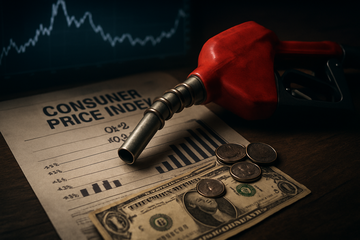
Hotter Core CPI Just Sealed the September Hike — and the Tape Stopped Pricing the Soft Landing
The August CPI landed with core 0.1pp above forecast at +0.3% MoM, shelter reaccelerating to +0.3% and gasoline driving a +0.4% headline print. Combined with the +162K August jobs beat and the +5.4% YoY PPI jump a day earlier, this is the third hawkish data point in eight days — markets now price roughly 89% odds of a 25bp hike at the September 16 Federal Reserve meeting. JPMorgan Chase, Bank of America, and Exxon Mobil screen as the cleanest beneficiaries; D.R. Horton, American Tower, and NextEra Energy are the cleanest losers.
Trump's H-1B Grace-Period Axe Turns 60-Day Cushion Into a Firing Notice — And AI Labs, Not Big Tech, Pay the Talent Bill
DHS published a proposed rule in the Federal Register on September 10, 2026, eliminating the 60-day grace period for H-1B, L-1, O-1, E and TN workers who lose their jobs — the third strike on the H-1B cycle after the $100,000 fee proclamation (September 2025) and the $103,265 cap-subject fee (August 2026). Frontier AI labs absorb the talent-cycling friction immediately because more than 80% of their new H-1B petitions are AI and software roles; Indian IT services (Tata Consultancy Services, Infosys, Wipro, HCL Technologies, LTIMindtree) take the larger structural hit, since roughly half of their revenue is on-site US work that the old grace period quietly underwrote. Cognizant is the most exposed US-listed name; global capability centers in India and pure-play AI infrastructure like Nvidia sit on the other side.
2026-09-10

August PPI Hit 'As Expected' — But the 4.6% Core YoY and +11.3% Stage1 Pipeline Just Tilted September's Fed to a Longer Hold
The August PPI headline landed at +0.4% M/M, in line with consensus, masking a sharp reacceleration in year-over-year terms: 5.4% headline (highest 12-month this year), 4.6% core (highest since June 2026), and +11.3% YoY for stage 1 intermediate demand. Services components that feed directly into PCE — transportation and warehousing +2.3% M/M and portfolio management +18.8% YoY — refuse to disinflate. With Chair Warsh already signaling 'work to do' at Jackson Hole and a 9-3 hold vote in July, the September 16 FOMC meeting is now a toss-up between a hike and a hold. Markets have repriced: Polymarket's hike odds jumped from 54% to 61% on the print, CME FedWatch is near 66%, and the 10-year yield closed at 4.93%, up 8 bps. The trade is rate-sensitive duration over rate-sensitive yield: banks outperform, REITs, homebuilders and long-duration tech take the hit.
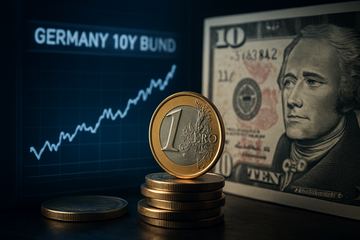
ECB's 'All but Certain' Hike Doesn't Re-Anchor the US 10-Year: Why the Long End Reads a Different Story
The ECB is set to lift its deposit rate 25 bps to 2.50% on Sept. 10 — priced at ~100% by LSEG, unanimous among 65 Reuters-polled economists, and labelled 'all but certain' by Christine Lagarde's watchers. The eurozone's 10-year Bund has already climbed to a 15-year high near 3.44%, and global borrowing costs are up 50–65 bps year-to-date. Yet the US 10-year sits at 4.85% on its own anchor: a 0.52% term premium, $1.8T+ of fiscal supply, and a Fed where the September cut has flipped to a 56–65% probability of a hike. The takeaway for investors: ECB tightening now moves EUR funding, not the US long end — and the long end is the trade that matters for duration.

Trump's $5,000 Dividend Would Cost ~$1.3T Against ~$350B in Tariff Revenue — A Math Gap Markets Aren't Pricing
President Trump's $5,000 per-adult pledge from Dallas — contingent on a GOP House-and-Senate sweep in November — would inject roughly $1.3 trillion into consumer pockets against an annualized tariff take near $350 billion. Markets have treated it as campaign rhetoric in the 24 hours since the speech, but the size, the conditional trigger, and the precedent of the still-unpaid $2,000 version argue for a different trade: re-rate consumer-discretionary multiples to the GOP-sweep probability while hedging the funding gap.
2026-09-09
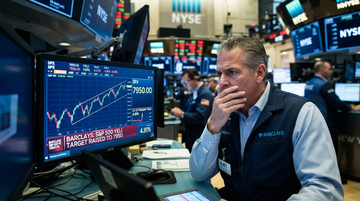
Barclays' 7,950 S&P 500 Call Is Wall Street's Most Honest Number—If the 10-Year Doesn't Wreck It
Barclays raised its year-end S&P 500 target to 7,950 from 7,800 on a technology-led Q2 earnings beat, but the 8.3% EPS upgrade (to $365) does more work than the 1.9% price upgrade. At 21.8x forward earnings, Barclays's call is cheaper than Goldman Sachs's 8,000 or HSBC's 8,100, yet it sits against a 10-year yield already 16 bps above HSBC's own end-2026 forecast and a Federal Reserve chaired by hawk Kevin Warsh while Treasury Secretary Scott Bessent doubles bond buybacks to suppress them. A projected $1.55 trillion in 2026 buybacks and an 86% Q2 beat rate hold the bid; the September 11 CPI print and the September 15-16 FOMC decision decide whether 7,950 is a stair or a ceiling.

As Japanese yen firms and oil sprints toward $100, the “carry-to-energy” repricing starts with bank hedging, not equities
In late August/early September 2026, the yen strengthened while crude moved up on renewed Middle East supply-risk, tightening the FX-rate-oil triangle and pushing markets to price a more hawkish Japan path. The key for US investors: the first-order trade-through is likely via hedging and funding costs inside large dealers and banks, before it shows up as a clean rotation across equity factors. Exxon XOM and Chevron CVX offer the clearest direct linkage through oil pricing, while Toyota is the pressure-test for how FX translation swings can flow into earnings expectations.

Oil near $100 is noisy—what matters for US earnings is the shipping “war-risk premium” that keeps diesel expensive
As Middle East tensions flare, the first earnings transmission often shows up not in crude, but in the cost of moving and insuring barrels—via a higher war-risk premium tied to shipping routes. The latest Red Sea re-escalation pushed indicative war-risk premiums to about 0.75% of vessel value (from about 0.3%), a mechanical input into bunker and distillate logistics that can tighten US distillate balances faster than crude headlines.
2026-09-08

What to expect
Evidence-first notes with a visible point of view.
This section collects sharp takes on earnings, shareholder meetings, and market structure. Each new piece should make the thesis, the facts, and the implications obvious within the first few screens.
Expect direct analysis, not generic commentary.
Expect the data to be explicit and the argument to be easy to follow.