Macro & Policy
Rates, inflation and the policy that moves them
Central bank decisions, jobs prints and fiscal policy, read the way a portfolio reads them: what reprices, by how much, and what would change the call.
2026-09-26

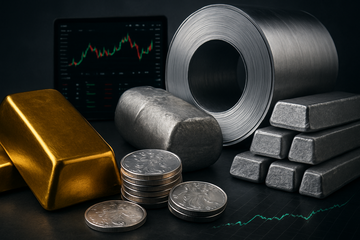
Gold Lost Its Halo. Aluminum Picks Up the Trade.
Morgan Stanley strategist Amy Gower publicly questioned gold's safe-haven role after the Iran war, then pointed investors to silver and aluminum. Silver has already done its job — up ~150% in12 months and now pulling back as solar demand falls 19%. Aluminum is the asymmetric successor: 4% of global supply is gone, China's cap holds, and AI data centers are bidding for the same electricity that smelters need, Alcoa, Constellium, and Boeing sit on the right side of that arithmetic.

The 32 bps Mortgage Spike Was the Bond Market, Not the Fed
Mortgage rates jumped roughly 32 bps in three days even though the Fed already delivered its expected 25 bps hike on Sep 16. The fingerprint on rates, the 10-year Treasury up 25 bps since Jackson Hole, and a10-year term premium near 0.96% all point to a duration/fiscal-supply shock rather than a fresh hawkish impulse. That changes who gets hit first: mortgage originators and MBS holders absorb the primary squeeze, while builders and titles feel it on a lag.
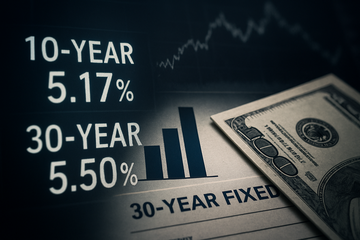
The 10-Year at 6% Isn't a Forecast—It's Already Priced In
The Federal Reserve just delivered its first rate hike since 2023, yet the CNBC narrative still frames the bond rout as a 'Fed-watch' question. Term premium is the real mover: at roughly 0.96% per the NY Fed's ACM model, it is doing most of the work, the forward curve already implies 6%, and the 30-year mortgage at 7.03% means housing has already broken. Investors hedging 'Fed pivots lower' are positioned against plumbing, not policy.
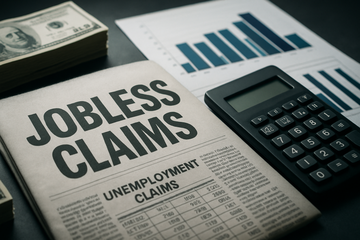
197K Jobless Claims Lock In the Fed's October Hike — Staffing Wins, Restaurants Lose
The September 25 print of 197,000 initial claims — near a 57-year low — with a four-week moving average of 202,250 hands Chair Warsh the cleanest pre-FOMC signal in weeks: the labor market is fragmenting into scarcity without layoffs. The September SEP's 4.1% median unemployment through 2029 and4.10% year-end fed funds projection put the October 28 meeting at the center of a 'hiring scarcity, not slowdown' trade. ManpowerGroup and Robert Half collect the cleanest read on contract demand; low-wage operators from McDonald's to Walmart absorb the wage stickiness on margins.
2026-09-25

2026-09-24

The Basis Trade Has Shrunk 28% This Year—and the 30-Year Auction Just Discovered What Demand Looks Like Without the Carry Crowd
Hedge funds have cut the Treasury cash-futures basis trade from $1.26 trillion at the start of 2026 to roughly $900 billion by mid-September, per Morgan Stanley strategist Eli P. Carter—the smallest in over two years. The unwind is concentrated in 2- and 5-year notes, yet the 25- to 30-year part of the curve has actually grown as 30-year yields push5.42%, the highest since 2007. With the Treasury having doubled its liquidity-support buyback sizes and the Fed's QT run finished, the Goldman Sachs- and Morgan Stanley-led prime brokerage franchise that monetized the trade faces shrinking commissions, while long-end auctions discover who their marginal buyer really is.

Nvidia and Apple Now Hold More of the S&P 500 Than Any Two Stocks in History — and the Index Has No Hedge Left
The S&P 500 has never been this concentrated in just two stocks. Nvidia and Apple together sit above 15% of the index by weight — comfortably past the prior 9.1% record that Microsoft and General Electric held at the 2000 tech peak. With passive products at BlackRock and State Street now mechanically amplifying that exposure, Fed Chair Kevin Warsh's first rate hike since 2023 has taken the easy-money backstop away just as the cap-weighted benchmark narrows toward a binary bet on two AI-cycle names.
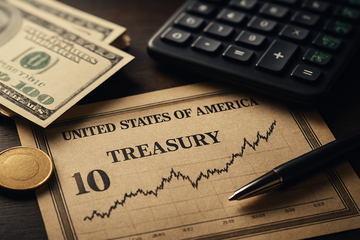
The Fed hiked with the five-hawk bench — now 5% is the floor and 6% is the base case for Treasuries
The FOMC lifted rates 25 bps to 3.75–4% on Sept. 16 and the dot plot kept the median at 4.1% through 2027, while Governor Barr confirmed on Sept. 23 that 'further policy adjustments are likely' — pushing the 10-year above 5.12% and the 30-year to 5.40%. JPMorgan Chase, Wells Fargo and Bank of America just printed net-interest-income growth of 5–10% on that rate path, while Oracle is selling 2040 paper at 7.48% to fund the AI capex that Barr says is itself keeping inflation sticky.
2026-09-23

Barkin's 'Broader Than Tariffs' Inflation Call Hands Banks, Energy and Value the Wheel—and Steers It Away From Big Tech
On Sep 22, 2026, Richmond Fed President Tom Barkin rejected the 'just tariffs and energy' framing, noting more than 60% of the PCE basket is rising above 3% year-over-year. With 16 of 18 FOMC officials backing at least one more hike and Fed funds futures at 85–90% odds of another 25bp move this year, the rate path extends into 2027. The resulting rotation funnels capital into banks, insurers and energy, and pulls it out of high-multiple growth, rate-sensitive homebuilders and long-duration REITs.
Barkin's 'Broader-Than-Tariffs' Inflation Call Joins Goolsbee to Reprice a Second Fed Hike
Two regional Fed presidents — Richmond's Tom Barkin (Sept 22) and Chicago's Austan Goolsbee (Sept 21) — broke with the prevailing 'energy/tariff shock' narrative and argued inflation is broader and demand-led, days after the FOMC's first hike in three years (Sept 16, to 3.75-4.00%). With the SEP still pointing to 4.00-4.25% by year-end and Fed funds futures pricing 53% odds of a second hike on October 28, the hawkish bar has moved higher. Banks with rate-sensitive loan books are the clearest winners; homebuilders face another leg of mortgage-rate pressure.
Bessent Floats a Bigger China Deal — and Quietly Leaves the Chip Export Ceiling Exactly Where It Is
Treasury Secretary Scott Bessent's Sept 21 signal that the US is open to extending the Nov 10 trade truce or pursuing a bigger reciprocal deal opens a genuine re-engagement path, but the carve-out keeping advanced AI chip and semiconductor-equipment controls explicitly out of the new US-China AI dialogue means the export ceiling does not move. Rare-earth magnet shipments to the US ran at 512 tons in August, a fifth below the pre-curb monthly average, sharpening the cross-industry split: US foundry, memory, and AI design leaders consolidate share while equipment vendors with China exposure and Chinese foundries like SMIC stay capped.

CFOs Lifted Their Inflation Outlook Today — And the Fed's 'One and Done' Is Actually One and One More
The Duke/Richmond Fed/Atlanta Fed Q3 2026 CFO Survey, released this morning, has U.S. finance chiefs raising their 2026 price-growth forecast to 5.3% from 4.6% in June and pegging monetary policy as a top concern at roughly 20% of firms — up from under 15% three months ago. The release lands seven days after the FOMC's 12-0 vote to raise the federal funds rate to 3.75-4.00% for the first time since 2023, and the confirmation flows in the wrong direction: 16 of 19 FOMC members in the new dot plot see at least one more 25bp move, with the median end-2026 funds rate now 4.1%, up from 3.8% in June. For investors, the implication is that rate-sensitive equity channels — homebuilders, tower and industrial REITs, regional banks, mortgage REITs — are no longer pricing a 'hold vs cut' choice but a 'pause vs second hike' base case.

US Business Activity Just Hit a 62-Month High — and the Bond Market Is Now Pricing the Second Warsh Hike
The September S&P Global flash PMI printed 58.4 on the composite, 58.7 on services and 57.0 on manufacturing — all multi-year highs — while input prices surged to their fastest in four years. Just seven days after Kevin Warsh's Fed delivered an unanimous 25bp hike to3.75–4.00% and the median dot plot pointed to 4.1% by year-end, the10-year yield has pushed to 5.08% and OIS is back to pricing another25bp move. The trade is no longer 'when do we cut' but 'is October28 the second hike' — and the sector re-rank flows through to JPMorgan Chase, ExxonMobil, and duration victims like Realty Income.
2026-09-22

Europe's Pharma Chiefs Beg Governments for FDA-Speed Trials — Confirming a Permanent Moat for US Drug Stocks
On September 22, 2026, the chairs of nine European drugmakers — AstraZeneca, GSK, Novo Nordisk, Novartis, Roche, Sanofi, plus Boehringer Ingelheim, Chiesi and Ipsen — went public with an open letter demanding faster trials, bigger R&D budgets, and stronger IP protection to keep pace with the US and China. The first-of-its-kind lobby admission puts hard numbers behind the FDA's structural speed advantage: 356 days to approve a new drug versus 430 in the EU, with the EU's share of global clinical-trial starts collapsing from 22% to 12% over a decade. Three European pipeline setbacks this summer — AstraZeneca's Wainua Phase III miss, BioNTech's cancer-vaccine halt and Novartis's del-desiran failure that wiped ~$30B of market cap — turned the abstract competitiveness gap into a balance-sheet event. For US-listed pharma, the message is unambiguous: the FDA's speed edge is now a self-confessed EU policy failure, and investors should price it as a permanent moat.

Nasdaq Set a Record Six Days Into the Most Hawkish Fed in Three Years — And Chip Stocks Did All the Heavy Lifting
The Nasdaq Composite closed at a record 27,122.09 on September 21, just six trading sessions after Chair Kevin Warsh' first25bp rate increase since 2023 lifted the funds rate to 3.75–4.00% with a unanimous 12-0 vote and a hawkish dot plot. Chips carried the tape: Meta' September 8 launch of its Muse personal AI agent triggered a 4.3% surge in the Philadelphia Semiconductor Index, a12% jump in Intel, a 17% surge in Arm Holdings, and pushed Advanced Micro Devices past $1 trillion in market value for the first time. Meanwhile, a four-day slide in Brent crude to $100.40 — driven by signals that Donald Trump will meet Iran's president at this week's UN General Assembly — drained the inflation impulse Warsh was trying to contain. The message is that the market is pricing structural forces ($1 trillion in global AI investment, hyperscaler capex running at 93% of operating cash flow) more heavily than the policy rate, leaving duration, oil, and select chip names mispriced versus the Fed's own path.

Trump's Diesel Export Ban Floats In. The $12.6B Refiner Trade Just Met Its First Real Policy Risk.
President Trump said on Sept 22 that he would support banning US diesel exports as pump prices hit a record $6.52/gal. The threat lands directly on Marathon Petroleum, Valero and Phillips 66 — whose combined Q2 net income of $12.6B was built on distillate cracks that are already near all-time records. A ban would not lower US pump prices because diesel is globally priced off Europe and Russia (where exports are already banned), but it would force refiners to cut runs and spill gasoline and jet. The investable pivot sits elsewhere: Union Pacific, CSX and Norfolk Southern already see truck freight converting to rail as diesel tops $5/gal — and a ban only accelerates that modal shift.

The AI Trade Is Already Splitting — Two Days Before Trump and Xi Sit Down
President Trump's Sep 24 summit with Xi Jinping hasn't happened yet, but the bifurcation is live: the Sep 20 Bessent–He Lifeng talks in New York locked in a US-China AI safety dialogue while explicitly carving chip export controls out of it, leaving the H200 pipeline to NVIDIA stuck at zero deliveries. NVIDIA itself guided Sep-quarter revenue of $108B with zero China data center compute baked in, while Chinese/HK investors crossed $750B in US equity holdings and US banks underwrote $17.2B of Chinese AI listings — investors are hedging both sides rather than picking one.
2026-09-21

Bessent's AI 'Red Phone' Is the First Concrete He-Bessent Deliverable — and the Real Question Is Who Decides What Counts as an Incident
Treasury Secretary Scott Bessent used his Sept 20 New York meeting with Vice Premier He Lifeng to propose a bilateral US-China AI safety incident notification mechanism — the first trackable deliverable from the May AI dialogue and the first time frontier-AI rivalry has been forced into a bilateral protocol rather than a pure export-control race. With the CISA distillation advisory and Anthropic's 151 million–exchange report against Alibaba already on the table, and chip export controls explicitly off the AI agenda, the mechanism's arbitration rights — not its wording — decide whether US frontier labs (Alphabet, Microsoft, Meta) or Chinese systems (Alibaba, Baidu) get to define 'national security AI incident' first.
The Fed Just Hiked. China Held LPRs for a 16th Month. The 330bp Bond Spread Tells You Who's Wrong.
The People's Bank of China kept both LPRs unchanged for the 16th straight month on Sept. 20, while the Federal Reserve raised rates 25bp to 3.75%-4.00% five days earlier. The China-US 10-year yield spread has blown out to a record ~332bp, the offshore yuan is the strongest against the dollar since July 2022, and Apollo's Torsten Slok is calling a 'China Shock 2.0' as high-tech exports surge 41%. For investors, the divergence trade is no longer a tactical bet — it is a structural carry regime that punishes anyone short yuan credit and rewards anyone short US duration.

Goolsbee's \"No Ambiguity\" Is the Demand-Side Hawkish Anchor the Fed Was Missing
Chicago Fed President Austan Goolsbee told OMFIF in London on September 21, 2026 that strong demand is now adding to inflation alongside supply shocks, and that \"if demand overheats, there is no ambiguity about how the Fed needs to respond\" — explicitly flagging AI data-center capex as a spillover risk. Five days after the Fed's first rate hike since 2023, a unanimous 12-0 vote and a dot plot pointing to a 4.1% median funds rate through 2027, Goolsbee's framing hardens the bar to an October cut and shifts the hawkish anchor toward demand. Banks and gold-linked assets gain ground; rate-sensitive REITs, homebuilders and AI-capex-exposed semis face a higher hurdle.
What to expect
Evidence-first notes with a visible point of view.
This section collects sharp takes on earnings, shareholder meetings, and market structure. Each new piece should make the thesis, the facts, and the implications obvious within the first few screens.
Expect direct analysis, not generic commentary.
Expect the data to be explicit and the argument to be easy to follow.