Energy
Crude, refining and the price at the pump
Supply, inventories, crack spreads and OPEC decisions, followed down to the producers, refiners and buyers who book the difference.
2026-09-13

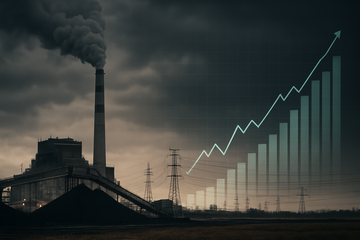
Court Killed the Federal Coal Lifeline — and It Just Reset the AI-Grid Stack
A unanimous D.C. Circuit ruling on September 11 vacated the Department of Energy emergency order that had kept Consumers Energy's 1,420 MW J.H. Campbell coal plant running past its planned May 2025 retirement, after $259M in sunk costs and five successive Section 202(c) extensions. The decision closes the only federal escape hatch that late-life coal owners could still price as a tail-risk hedge, tightens MISO and PJM capacity math, and forces the entire AI-driven data-center power story — from DTE Energy's $36.5B Michigan capex plan to the NextEra Energy/Brookfield $100B Paducah campus — to clear without it.
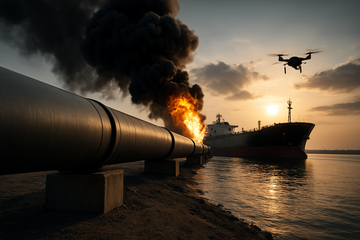
Saudi Shut Its Hormuz Bypass After Iraq-Launched Drones — The $104 Brent Tape Is Missing the Real Risk Channel
Saudi Arabia closed its 5 million-barrel-per-day East-West pipeline on Sept. 11 after drones launched from Iraq struck pumping stations near Medina and Riyadh — the same corridor that has carried 64% of Saudi crude exports since the Strait of Hormuz shut during the Iran war. Brent settled Friday at $104.61, down 2.8%, with traders pointing to 10 million bpd still transiting Hormuz and ship-to-ship transfers off Fujairah. That frame is wrong: Iraq-launched drones penetrating Saudi airspace hit internal infrastructure no Red Sea reroute can replace, and any incremental Hormuz risk now has no domestic fallback. Valero Energy, Marathon Petroleum, Phillips 66 and PBF Energy carry the cleanest heavy-sour margin upside, while Frontline, International Seaways and DHT Holdings ride the war-risk premium.
2026-09-12

Trump Tied Oil's Clock to November 3 — The Term Curve Already Priced a Different One
On September 9, 2026, President Trump said the Iran war will end \"immediately after\" the November 3 midterms and that oil prices will \"tumble\" the day after voters decide. But the WTI futures strip is still priced for a disruption that ends in months, not weeks, with December 2026 contracts trading roughly $40 below mid-2026 delivery — a backwardation that implies traders expect a Hormuz exit, not a midterm detonation. For the listed names with the most exposure to a six-month-versus-six-week divergence — Exxon Mobil, Chevron, the oilfield services trio of SLB, Halliburton and Baker Hughes, and the refiners Marathon Petroleum and Phillips 66 — the trade is not which side wins the war but whether November actually collapses the geopolitical risk premium the way the calendar suggests it should.
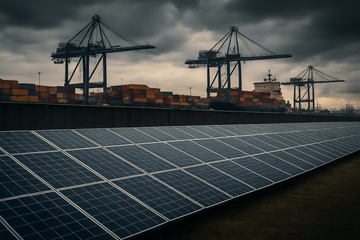
U.S. Just Put a ~250% Tariff Wall Around Indian Solar — Project IRRs, Not Polysilicon, Are the Story
On September 11, 2026, the U.S. Department of Commerce finalized AD/CVD duties stacking up to 249% on Indian solar cells, 268% on Indonesian, and 219% on Lao — combined with Section 232 minimum import prices taking effect December 4. The decisive channel is downstream: U.S. utility-scale project IRRs re-rate on module cost, domestic manufacturers like First Solar pull forward a $14.4B backlog, and Indian cell makers — already operating at 160 GW of capacity against 45-50 GW of domestic demand — face a hard pivot away from the U.S. market.
2026-09-11

The Defense Production Act Just Entered the Refining Business — Refiners Want the Money for Retrofits, Not New Plants
The White House is weighing a wartime industrial statute to expand US oil refining — the same Defense Production Act (DPA) that already authorized $1.5 billion of Venezuelan crude and overrode California to restart a pipeline. The mechanism would shift refining capex from market returns to defense-procurement logic, with loans, loan guarantees, and purchase commitments under Title III, allocation orders under Title I, and antitrust-immune coordination under Title VII. Refiners told the White House to skip the new build: at 98% utilization and a $30 billion Brownsville project on the table, federal money is more useful retrofitting existing plants than financing greenfield. The supply-chain beneficiaries sit upstream of the refiners — engineering, process licensing, and rotating equipment vendors — rather than the refiners themselves.

Mokha falls, Brent tops $109: the Red Sea shipping premium just got its own chapter
Yemen's Houthi rebels seized the strategic port of Mokha on September 9–10, 2026 — pushing hostile fire within 75 km of the Bab el-Mandeb Strait — and markets repriced in real time: Brent crude spiked12% to an intraday $109.62 a barrel, VLCC day-rates held above $100,000 (with the Middle East-to-China benchmark near $800,000), and southern Red Sea war-risk insurance jumped from 0.3% to 1–2% of hull value. The transmission runs through US-listed VLCC operators (Frontline, DHT Holdings, International Seaways) on the revenue side and global brokers (Aon, Arthur J. Gallagher, Marsh & McLennan) on the pricing side, while Saudi exports fall to a 10-year low of 3.2 million barrels a day.

QatarEnergy's 2031 US LNG Hunt Locks In a Multi-Year Capacity Floor for Cheniere, Venture Global, Woodside and Sempra
QatarEnergy Trading is negotiating 2–3 million tons a year of long-term US LNG through 2031 to backfill 12.8 mtpa of Ras Laffan capacity damaged by Iranian strikes in March 2026. The contracts would absorb roughly a tenth of the 25 mtpa of uncontracted US supply now on the table — concentrated at Venture Global, Cheniere Energy, Woodside Energy and Sempra — and effectively underwrite the next leg of US Gulf Coast capacity additions just as Cheniere and Venture Global both report record quarterly earnings.
2026-09-10
2026-09-09

Oil near $100 is noisy—what matters for US earnings is the shipping “war-risk premium” that keeps diesel expensive
As Middle East tensions flare, the first earnings transmission often shows up not in crude, but in the cost of moving and insuring barrels—via a higher war-risk premium tied to shipping routes. The latest Red Sea re-escalation pushed indicative war-risk premiums to about 0.75% of vessel value (from about 0.3%), a mechanical input into bunker and distillate logistics that can tighten US distillate balances faster than crude headlines.

Trump's Disclosed Energy Stocks Are Up $15.5M Since the Iran War Started — The Disclosure the Market Hasn't Priced
As President Trump escalated the U.S. war with Iran through 2026, his disclosed oil and gas portfolio climbed about 39% from the start of the year, paper-gaining as much as $15.5M by Aug. 17. The same nine companies he disclosed holding reported a combined $47.6B in Q2 profit — roughly triple the year-earlier quarter — while Trump himself controlled every major lever that moved crude: SPR releases, sanctions waivers, and Strait of Hormuz blockades. The transparency gap is the governance story equity investors must now underwrite, with periodic disclosure rules that allow 45 days of trading between reportable events.
2026-09-08
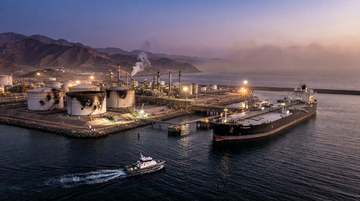
Saudi Infrastructure, Not Hormuz: Why Brent's Six-Week High Reframes the Oil Trade
Iran-aligned Houthis struck Saudi Aramco's southern facilities on Sept 7-8, 2026, and Brent pushed through $97.31 to settle at a six-week high. With the East-West pipeline already maxed at 7M bpd and the 400,000-bpd Jizan refinery shut since July 27, the trade is no longer about Hormuz risk premium — it's about Saudi infrastructure resilience, Red Sea tanker re-routing, and the oil-services names embedded in Aramco's capex. Tankers and Middle-East-tied service companies are the cleanest expression; Saudi Aramco itself barely moved.

Brent Won't Break $100 as Iran Declares a Gulf 'Exclusion Zone' — The War-Risk Premium Has Quietly Migrated to Tankers and Diesel
Iran's Sept. 7–8 announcement of a new Persian Gulf 'exclusion zone' has not pushed Brent above $100 — and the Sept. 8 Reuters explainer asked exactly why. The answer is structural: a 5–7 million bpd supply loss is being absorbed by Saudi and UAE spare capacity, US pipeline bypass, and a Strategic Petroleum Reserve now at a four-decade low, while the war-risk premium is showing up in VLCC day-rates and a diesel crack spread that has already printed above $100/bbl. The trade is no longer in the front-month — it sits in crude tanker operators and US independent refiners, with Frontline, International Seaways, Valero, and Phillips 66 the cleanest exposures.
2026-09-07
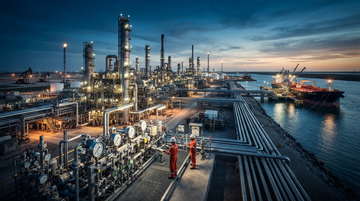
OPEC's October Hold Looks Like Discipline. It's the 2027 Quota War — and Refiners Just Won Q4
OPEC+'s September 6 decision to keep October output unchanged was framed as a supply pause, but it actually signals the start of the 2027 quota fight that will redraw every member's production baseline around audited maximum sustainable capacity. With US diesel cracks at a record $102/bbl, distillate inventories at the lowest August level since 1951, and 5 mbpd of global refinery throughput still offline from the Iran war, refiners and US shale are the cleanest beneficiaries — and any service company whose order book still depends on OPEC+ volume growth is now structurally exposed.
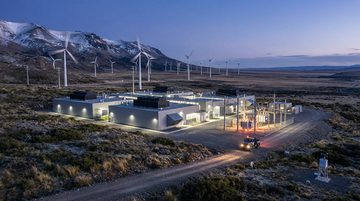
Why Patagonia’s Cold + Wind Can Break the Next AI Data-Center Siting Trade-Off—and Who Benefits
A Sept. 7 Reuters report says hyperscalers are probing Argentina’s Patagonia for mega data centers, attracted by wind-powered power economics and a cold climate that can lower cooling costs. The market signal isn’t just “cheaper kWh”—it’s that AI siting economics may shift toward places with both dispatchable-like renewable pricing dynamics and long runway for grid and generation buildout, reshaping who wins interconnect, power contracts, and capacity. Public investors should watch the listed power and data-center-adjacent names most exposed to these contract and buildout cycles.

Singapore VLSFO up 76% while Brent lags: the bunker-fuel squeeze hiding inside the Iran war
Marine fuel oil is rising faster than crude because Gulf and US refiners — Marathon Petroleum, Valero, Phillips 66 — are rerouting crude into diesel and jet fuel where margins more than doubled. Singapore VLSFO has climbed 76% since the Iran war began versus 40% for Brent, and Energy Aspects projects a 218,000 bpd Q3 fuel-oil deficit. Tanker operators Frontline, DHT Holdings and International Seaways are printing record VLCC earnings, but the cost lands on container carriers already absorbing €340 million per day in extra bunker fuel. The market is still trading the crude headline; the squeeze is in the residual barrel that powers the fleet.
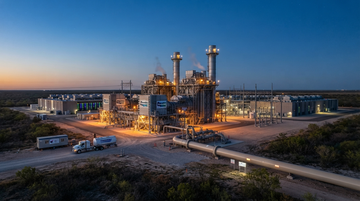
Korea's $22.3B Encinal Gas Plant: The $350B Trade Deal's First Anchor — And Why It Doesn't Power SK Hynix's Fab
South Korea and the U.S. have agreed on a $22.3 billion, 6.3 GW combined-cycle gas plant in Encinal, Texas as the first concrete deployment under their $350 billion Strategic Trade and Investment Deal — though Seoul's Industry Ministry called the headline inaccurate. The plant is sized to feed Texas AI data centers, not SK Hynix's separate Indiana HBM fab, and sits inside a $100B LNG offtake that routes Korean capital toward Cheniere Energy and Energy Transfer while opening a U.S. EPC pipeline for Doosan Enerbility. Cash commitment, gas-turbine orders, and Korean-tied LNG volumes are the three numbers investors should track first.
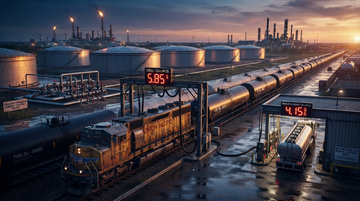
Trump's 'Biggest Oil Deal' Promised Lower Gas Prices—Three Weeks In, Diesel Just Hit $5.85 a Gallon
The White House's Sept. 2 Venezuela deal hands a Pentagon-linked entity 100-year rights over 17 fields containing 65 billion barrels of reserves, with Chevron pledging another $7 billion to double output. Three weeks later, diesel hit a record $5.85 a gallon and gasoline sits at $4.15—not because of the deal, but because the Iran war and a six-week Strait of Hormuz blockade have ripped 10 million barrels a day out of the global market. The deal is a long-dated infrastructure play, not a near-term price fix: Marathon Petroleum, Valero and Phillips 66 are pocketing historic crack spreads while American Airlines and United Airlines absorb roughly $6 billion each in extra fuel costs.
2026-09-06
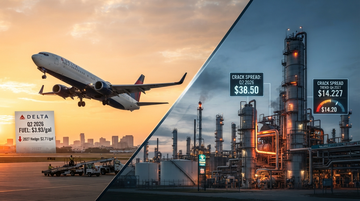
Bessent's $40 oil call breaks the airline–refiner trade in two
Treasury Secretary Scott Bessent's Friday projection of $40–$50 crude once the Iran war ends turns the post-Iran trade into a mirror image: airlines that bled through a $4/gal fuel quarter get a 2027 margin tailwind, while refiners like Marathon Petroleum, Valero Energy and Phillips 66 — whose Q2 2026 refining margins doubled — face the unwind of the record crack spread that drove their 80%+ year-to-date run.
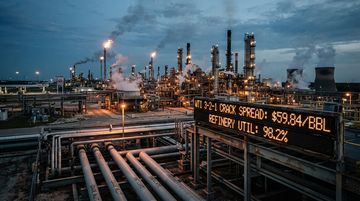
The Pump Hit $4.14 on Labor Day — and Trump Can't Make It Drop Before November
AAA logged a $4.14 national average over Labor Day weekend, beating the 2012 holiday record of $3.82 by 32 cents. With U.S. refineries running at 98% of capacity, distillate inventories 14% below the five-year average, and ExxonMobil and Chevron capturing record Energy Products earnings, the squeeze is structural: independent refiners like Marathon Petroleum, Valero and Phillips 66 are pocketing WTI 3-2-1 crack spreads near $60/bbl — and a White House appeal is not a price-cut mechanism.
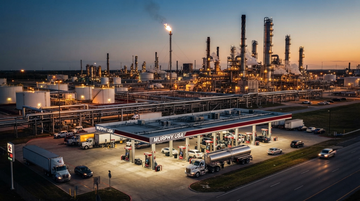
Refiners Doubled Margins, Stocks Surged — Murphy USA's 35.1-Cent Pump Beat Says the Retail Layer Got Its Cut Too
Murphy USA posted record Q2 2026 net income of $209.1M on a 35.1-cents-per-gallon retail fuel margin and 40.6 cpg total fuel contribution — the pump-level counterpart to the refiner windfall the tape has been celebrating. Unlike refiners whose margins roughly doubled-to-tripled in $91 crude, retail fuel's20% margin gain is a steadier, less cyclical trade, and management responded with a 28% dividend hike. Here's who else across the supply chain is collecting a piece, and what the next two quarters could bring into Labor Day 2027.
What to expect
Evidence-first notes with a visible point of view.
This section collects sharp takes on earnings, shareholder meetings, and market structure. Each new piece should make the thesis, the facts, and the implications obvious within the first few screens.
Expect direct analysis, not generic commentary.
Expect the data to be explicit and the argument to be easy to follow.