Energy
Crude, refining and the price at the pump
Supply, inventories, crack spreads and OPEC decisions, followed down to the producers, refiners and buyers who book the difference.
2026-10-07


2026-10-06
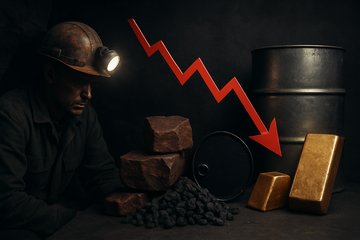
$264 Billion Wiped Off Mining Stocks in September. Here's Which Metals Actually Caught the Bid.
An Iran-driven oil and diesel surge — amplified by 10-year Treasury yields hitting a 24-year high — erased $264 billion from the world's 50 most valuable miners in September 2026, the second-largest monthly drop on record. Bulk iron-ore and coal miners absorbed the worst cost shock; high-grade copper producers held the line. Lithium, the AI-metal hedge that wasn't, was the biggest casualty instead — while gold miners' Q3 still ranks as the best-performing S&P 500 sector.
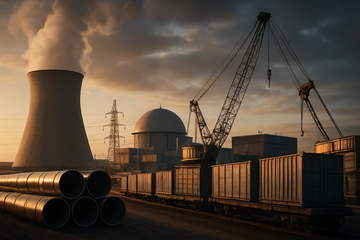
Vistra Lit the Fuse on the AI-Nuclear Trade With a $4.2B DOE Loan — the Real Winners Live Down-Chain
The DOE's $4.2B conditional loan to Vistra Corp for nuclear uprates — layered on 20-year Meta PPAs covering 2.6 GW — turns political rhetoric into a bankable capital structure for the existing US nuclear fleet. The AI-nuclear thesis now rewires from slogan to allocation, repricing every upstream choke point: GE Vernova's record $176B backlog, Centrus Energy's $3.0B contingent HALEU pipeline, and BWX Technologies's sole-source fuel-fabrication position. The actual trade is the supply chain.
2026-10-05

The CPI Just Told You Where Inflation Is Hiding — and the Sector Trade Already Moved
Beneath the headline, the August 2026 CPI shows core rent already rolling over while gasoline drives a 16% energy jump. Leading indicators (Apartment List, Zillow) confirm rent has tipped negative year-over-year for the first time, while Brent at $103 has pushed refining margins to record highs. The market has split accordingly: the Energy Select Sector SPDR ETF is up roughly 44% year-to-date against a 3.8% total return for the Real Estate Select Sector SPDR ETF — a 40-point spread that maps directly onto the new inflation regime. Refiners like Marathon Petroleum, Valero and Phillips 66 carry the highest leverage; apartment landlords Avalonbay, Mid-America Apartments and Camden Property Trust face the opposite.
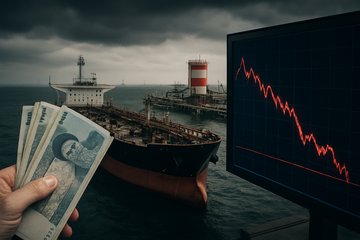
Iran's Rial Has Become Unspendable — The Sanctions War Just Cut the Wires Between Iran's Oil and Its Money
The rial broke 2.69 million per dollar on Oct. 5 with Iran loading zero crude in September — and Tehran's own president admits the proceeds it does have are locked in China. With Treasury's Oct. 1 designation of the A7 shadow-banking network and Iran's automotive and rail sectors, the bottleneck has migrated from tankers to payment rails. Brent at $101 means war risk is already priced; the trade now is whether Gulf producers and US shale can capture the ~1.4 million bpd Iran used to ship to China on a sustained basis, or whether sanctions evasion re-routes the barrels again.
2026-10-03

CME Walks Away From 24/7 Oil Trading — Kalshi Now Owns the WTI Weekend
CME Group abandoned its 10-Barrel round-the-clock crude oil contract on October 2, 2026, ending a 113-day push that the CFTC had blocked and the exchange's own customers refused to support. With the world's most liquid crude venue sidelined, the regulated US path to 24-hour WTI exposure now runs through Kalshi's pending perpetual filing — a structural shift with margin, liquidity, and competitive implications for Intercontinental Exchange, Marathon Petroleum, Valero Energy, Phillips 66, Robinhood Markets, and Coinbase Global.

The 100M-Barrel G7 Diesel Dump Ends the Refiner Trade — and Trump Pulled the Trigger
G7 leaders agreed Friday to release 100 million barrels of crude and diesel over four months — frontloading the diesel component inside 20 days — after Washington threatened a US diesel export ban. The headline number is modest (~830K bpd), but the signal is what kills 2026's best equity trade: US pure-play refiners are up 80–140% YTD on diesel cracks above $100/bbl, and the same government that let those cracks blow out just coordinated the supply that closes them. Refining margins set to compress from triple-digit records to historical norms of $30–40/bbl. The US Strategic Petroleum Reserve, meanwhile, sits at a 44-year low — meaning this is a one-shot policy tool that cannot be repeated.
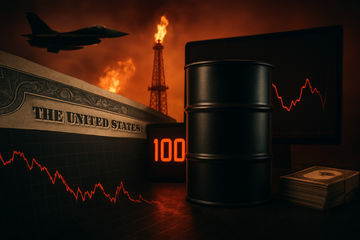
Q3 2026: How War, $100 Oil, and a Hawkish Fed Stacked the Worst Bond Quarter Since 1994
In ninety trading days, three crises hit at once: a bond rout the worst since 1994, an Iran war that pushed Brent back above $100, and the Fed's first rate hike since 2023. ExxonMobil and Chevron reported combined Q2 net income of $26.6 billion; Lockheed Martin and RTX rode wartime contracts and a $20.7 billion Pentagon missile award; D.R. Horton, Lennar, and rate-sensitive cyclicals absorbed a 7%-plus mortgage tape. The trades that survive Q3 are the ones investors will defend when 2026 closes.

$350B Korea Deal Splinters: Trump's $8.4B Alaska Oil-Recovery Claim Is Now the Loudest Number Nobody at the Table Has Confirmed
On Oct 2, 2026, Trump tacked an $8.4 billion Alaska enhanced-oil-recovery project onto the US-Korea trade framework via Truth Social — three days after a $54 billion Alaska LNG headline that Seoul also publicly disowned. Korea's industry ministry says both numbers 'go far beyond what was agreed' in the Nov 13, 2025 joint fact sheet, leaving investors to separate the confirmed $350B backbone (nuclear, Texas power, shipbuilding, Boeing) from the aspirational add-ons that the Alaska LNG economics can't yet underwrite.
2026-10-01

Iran's 1.5 million barrels a day vanished in eight months — and the math is now everyone else's problem
Iran's crude exports collapsed from 1.68M bpd in 2025 to 210,000 bpd by August 2026 as US sanctions, naval enforcement, and the OFAC blacklist of five Chinese teapot refiners rewrote the buyer side of the market. The disappearance didn't sit on a balance sheet; it cascaded into VLCC rates (record $1.2M/day), refining cracks (Chinese teapot margins squeezed), and the crude-spread math (Brent-Dubai premium for medium-sour barrels). Frontline and Scorpio Tankers printed record quarters, Saudi Aramco added $10B of quarterly profit, and OFAC-sanctioned Hengli Petrochemical and shadow-fleet owners absorbed the cost. For investors, this is the rare supply-chain shock where the supply AND the buyers vanish on the same schedule.

Trump's red-dye pump plan saves 60 cents — the $108/bbl crack is the real problem
The White House is weighing a plan to open tax-exempt red-dyed diesel to consumer and retail use, just as U.S. pump diesel hit a record $6.53 a gallon on Sep 23, 2026. Federal and state excise taxes together total roughly $0.60/gal — about 9% of the pump price — so the proposal shaves at most 9% off the bill. The actual driver is a diesel crack spread that closed at a record $103.29/bbl on Sep 1, 2026 and traded as high as $108.02/bbl intraday the next day, a margin that puts roughly $2.57 of every gallon in the refiner's pocket and will not move one cent under red-dye relief. Truckers and farmers collect the largest real benefit; the Highway Trust Fund loses the ~$11B a year it currently collects from the diesel tax.
2026-09-29
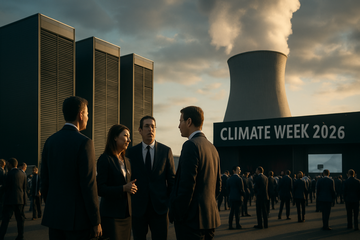
Hyperscalers Walked Into Climate Week 2026 With $700B of AI Capex, a 16% Emissions Spike, and a 22-Year Nuclear Deal — All at Once
Climate Week NYC 2026 became an AI forum by accident, and the four hyperscalers arrived arguing both sides: Amazon disclosed a 16% jump in emissions driven by data centers, while announcing1,920 MW of new nuclear PPAs from Talen Energy; Microsoft brought its $41 billion Q4 buildout into a week where the UNECE warned that AI capacity is growing faster than the grids that must power it; Alphabet inked a $15 billion Finland nuclear deal two weeks earlier; and Meta quietly sits on three plant extensions. The policy fork no one priced is whether regulators treat AI as a clean-energy buyer or as the next industrial polluter — and that framing will decide who pays for the grid, who sells the power, and how much margin the AI capex actually clears.
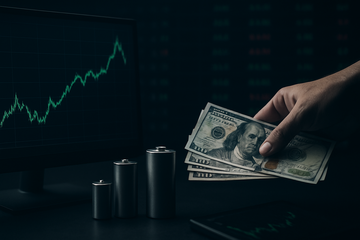
Oracle Reaffirmation Bought Fuel Cells One Day; Monday Already Erased Half of It
After Oracle Corp publicly confirmed its 2.4 GW Project Jupiter contract with Bloom Energy Corp on Sept. 25, Bloom Energy Corp closed up 8.3%, Plug Power gained 6.5%, and FuelCell Energy crept up 0.6% — the brief intraday spike for Bloom Energy Corp hit roughly 13% before fading. The bounce lasted one session: Bloom Energy Corp fell 7.8% on Monday as S&P 500 index demand faded and insiders kept selling. The three stocks share a green-data-center narrative but not a balance sheet — Bloom Energy Corp trades at 25x sales and 337 trailing earnings on a record quarter, FuelCell Energy just posted a 29% revenue decline, and Plug Power is a dilution-heavy turnaround with break-even gross margin. Investors asking whether the fuel-cell selloff is over have to first decide which of these three businesses they actually believe.
2026-09-28

When Old Supertankers Trade Above New Builds, the Tanker Trade Stops Being a Hormuz Bet
Secondhand VLCCs just cleared $150 million while newbuilds sit near $135 million — the first inversion of the modern tanker asset cycle, because shipyard slots are full to 2028 and Middle Eastern and Korean buyers want tonnage now. Listened tanker operators (Frontline, DHT Holdings, CMB.TECH, International Seaways) printed record Q2 2026 results on the back of $100K-plus daily VLCC rates against a $23K breakeven, and the asset values they monetized haven't been fully repriced in equity multiples.
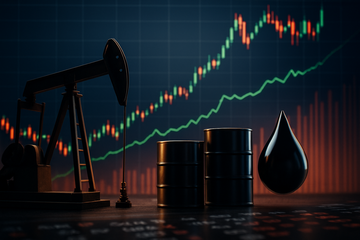
Refiners Beat Big Oil as Trump's Iran Rejection Locks War Premium Through November
Trump publicly rejected Iran's seven-day Strait of Hormuz plan over the Sep 26–27 weekend and confirmed he expects renewed strikes after the November 3 midterm. Brent rebounded 3.4% to ~$106.60 on Monday Sep 28, but the bigger story was the equity-vs-oil split: Valero and Marathon Petroleum rose on record crack spreads while ExxonMobil, Chevron, and ConocoPhillips sold off on demand-destruction fears. Tanker stocks lagged even as VLCC rates hit records, and natural gas barely moved — a hard-expiry geopolitical premium is now booked into energy markets for36 days.
2026-09-27
2026-09-26
Crusoe's $1.25B Boom Turbine Pullback Hands GE Vernova and Siemens Energy the Hyperscaler Power Keys
Crusoe abandoned its $1.25 billion order for 29 Boom Supersonic turbines on Sep 25, 2026 — nine months before the first unit was due to ship — because the modified jet-engine platform no longer fits its near-term power mix. With heavy-duty gas turbine lead times at the established OEMs already booked out to 2031, the freed-up 1.21 GW of demand — and likely every Crusoe campus that follows — flows back to GE Vernova and Siemens Energy. Baker Hughes takes the collateral hit on 1.3 GW of generator orders that were sized for a customer that may not exist.
BP's AGM Revolt Didn't Just Kill Two Climate Votes — It Put a Buyback Gap on the Tape That Refining Can't Close
On23 April 2026 BP shareholders defeated two board resolutions and gave their highest-ever support (25.85%) to a capital-discipline proposal — then watched the chair get ousted 33 days later. The integrated peer set kept returning cash at the same time BP froze buybacks to repair the balance sheet, leaving BP trading at the cheapest EV/EBITDA among the majors (3.92x) yet visibly behind on cash returns. The investment question is whether the new CEO and chair use the Q2 2026 recovery (refining margins $29.6/bbl vs $11.9 a year earlier, net debt down to $22.3B) to close that gap or keep capex ahead of buybacks.

China Just Pledged 20 Million Tons of US Coal. The Tariff Wall — and CNR's Export Terminals — Decide What Happens Next.
The Trump-Xi summit on Sept 25-26 produced a concrete, dated coal-purchase pledge: ≥10 Mt each in 2027 and 2028. But the 28-31% Chinese tariff on US coal was untouched by either the November 2025 truce or this week's $30B carve-out, so the deal is a volume commitment, not a margin unlock. The highest-beta read is Core Natural Resources, which owns the only east-coast thermal export terminals integrated from mine to ship — and the 10 Mt a year China wants is roughly a third of CNR's 2026 high-CV thermal sales guidance.
2026-09-25

What to expect
Evidence-first notes with a visible point of view.
This section collects sharp takes on earnings, shareholder meetings, and market structure. Each new piece should make the thesis, the facts, and the implications obvious within the first few screens.
Expect direct analysis, not generic commentary.
Expect the data to be explicit and the argument to be easy to follow.