Energy
Crude, refining and the price at the pump
Supply, inventories, crack spreads and OPEC decisions, followed down to the producers, refiners and buyers who book the difference.
2026-08-27


2026-08-26

Gunvor’s >$1B Haynesville bid flags a gas-trading power shift: feedgas control is the scarce margin
Gunvor is reportedly in talks to buy Haynesville shale assets for more than $1B, a sign that LNG-era economics are pulling trading-house capital into US gas basins. The deal’s implied wager is that the export margin increasingly depends on securing feedgas access (and bottleneck capacity) rather than simply owning more production barrels of hydrocarbons.

WTI under $80 flips the trade: an Iran–Oman Hormuz framework plus a U.S. sanctions ‘hold’ turns the summer’s geopolitical hedge into an oversupply bet
A reported Aug. 26 framework between Iran and Oman aims to set up a temporary navigational corridor and mine-clearing pathway for the Strait of Hormuz, while the U.S. reportedly held off on extending major secondary sanctions. That combination repriced oil from a geopolitics premium toward a reopening/flow-normalization scenario—exactly the pathway the IEA frames as moving the market from risk scarcity to oversupply-driven price pressure.

NuScale's TVA deal would be a utility-scale SMR procurement step—if it turns into binding PPAs
TVA and ENTRA1 Energy disclosed an agreement to enable up to 6 GW of NuScale SMR capacity across TVA’s seven-state territory, with ENTRA1 targeting development and ownership and selling electricity to TVA under future power purchase agreements. For investors, the inflection is not the “up to” headline scale—it’s whether this moves from planning to bankable contract terms that translate into revenue and backlog for NuScale while shifting cash-flow economics toward the asset owner and EPC ecosystem.

SLB’s Venezuela “data seat” signals sanctions-era value shifting from barrels to subsurface intel
A new PDVSA arrangement gives SLB access to Venezuela’s oilfield data—turning subsurface digitization into the next sanctions-era entry ticket. The market read-through is supply-chain monetization: the first services spend may show up in data management, geoscience workflows, and upgrade work before it shows up as drilling or production equipment.

SolarEdge’s margin jump is telling you “inventory math” first—watch the inverter recovery survive working-capital normalization
SolarEdge’s Q2 2026 results show gross margin rising sharply while working-capital flows stabilize—an earnings optics shift that matters more for the inverter recovery than headline demand. The key question for investors: whether the improvement is sustained after inventory aging, write-down accruals, and trade working-capital settle back to normal.
2026-08-25
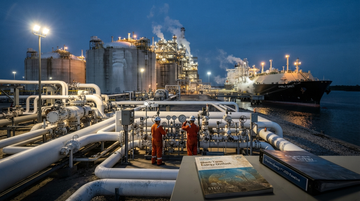
When $10 gas hits, LNG becomes an allocation fight: the marginal molecule shifts toward whoever can buy (or avoid) feedgas best
As domestic Henry Hub pricing tightens, U.S. LNG exports face an economics-and-queue problem: LNG still runs, but profitability depends on who holds the next cheapest gas supply and how quickly they can reroute molecules. EIA’s 2026 outlook still calls for relatively low average Henry Hub, yet the same framework implies a sharply higher “break-even sensitivity” if prices persist near $10/MMBtu—turning exporter margin durability into the core equity question.

Woodside drops its clean-energy target while profit rises—an LNG valuation signal that “transition spend” is being repriced for 2027
Woodside WDS abandoned its longer-term emissions/clean-energy targets and a planned clean-energy spend by 2030 while reporting a 7% rise in first-half profit. The move reframes the LNG investment debate: markets appear to reward “cash-first” project selection now, and treat transition targets as discretionary rather than mandatory—until regulators or counterparties change the rules.
2026-08-24

EPA’s Sept. 1 RFS deadline delay rewires the margin trade between refiners and ethanol—turning late-August SRE decisions into the real price catalyst for RIN-linked cashflows
EPA confirmed it is issuing decisions on small refinery exemption petitions and has maintained a Sept. 1 compliance deadline framework for 2025 RFS obligations—creating a near-term timing window where RIN prices can move sharply on policy certainty. For obligated refiners such as Valero, Marathon Petroleum, PBF Energy, and Phillips 66, that timing directly affects the cost of meeting renewable volume obligations, while for ethanol-linked credit holders it can swing expected cash margins.

Exxon’s reported bid for Shell’s U.S. chemicals assets tests the ethane advantage—against a global oversupply that can turn “margin” into a margin trap
Reportedly bidding for Shell’s U.S. chemicals assets would be a strategic shift: Exxon is effectively paying for more integrated cracking capacity at the very moment global petrochemicals risk staying structurally oversupplied. For investors, the key question is whether Exxon can translate U.S. ethane feedstock advantage into durable cash margins—without inheriting the same downcycle volatility that has repeatedly hit global polyolefins.

Iran sanctions hit—and oil still faded to $92.83: the trade just proved it survives headlines
The latest U.S. Iran sanctions announcement tested the “oil fade” setup and, instead of forcing crude higher, WTI traded down to about $92.83. At the same time, refinery economics strengthened: Ampol’s Lytton refining margin in Q2 jumped to $30.93/bbl (up from $8.71 a year earlier), supporting a cracked-spread divergence that can outlast sanctions-driven headlines.

GE Vernova should get a rerating if “steam capacity” stays the next AI power choke point
Reuters reported Siemens Energy is weighing a spin-off (or IPO) and a stepwise stake sale for its “Transformation of Industry” unit, which includes industrial steam turbines. That matters because hyperscaler-driven power buildouts increasingly hinge on steam-side equipment lead times as much as on gas turbine delivery—setting up a valuation read-through to GE Vernova’s power-and-steam franchise.
2026-08-23

Canada’s retaliation pressure is skipping cars and aluminum—because the tariff “holes” are concentrated in oil, uranium, potash, and Quebec power
The Aug. 21–23 escalation under the Section 338 tariff snap-back framework explicitly exempts energy and potash from the U.S. action, shifting the real economic stress to the segments the U.S. cannot replace quickly. For investors, that means the first repricing is likely to show up in Cameco, Nutrien, and Canadian oil producers’ U.S.-listed peers—while U.S. utilities and power merchants face second-order stress from Quebec’s cross-border electricity exposure.

US oil rigs fell for the first time in months while Brent held near $94 — the market is signaling “capital-return discipline” not “price-driven supply,” which tightens the 2027 supply cushion investors are underwriting
The US oil rig count declined for the week ended Aug 21, 2026 even as Brent held close to $94, reinforcing a shift toward shale activity governed more by shareholder capital allocation than by near-term price signals. For investors, the implication is uncomfortable: if drilling does not scale with prices, the 2027 supply balance likely tightens faster than bull-case models that assume a price-responsive drilling ramp.
2026-08-21

Continental’s FireBird II buy signals Permian “good inventory” is still scarce—while public-deal liquidity tightens into 2027
Continental Resources said it is acquiring FireBird Energy II to add ~54,000 net Permian (Midland) acres and ~32,000 boe/d (69% oil), with ~147,000 net resource acres and 95% operator activity—yet the purchase price was not disclosed. The lack of disclosed price, combined with the size and operating quality of the acquired book, points to a market where top-tier locations still clear at a premium even as the public acquisition window narrows. For listed Permian acreage owners and service names, the immediate takeaway is that scarcity-driven bidding can keep well and completion costs bid higher into the period when supply growth could otherwise surge in 2027.

Inertia’s “minutes not days” fusion-fuel breakthrough doesn’t remove fusion’s choke point—tritium stockpile math already sets the real deadline
Inertia says it cut fusion-fuel target production from “several days” to “just minutes,” targeting 10 shots per second and mass fabrication. But deuterium–tritium fusion still faces a separate, slower treadmill: worldwide tritium stocks are only on the order of tens of kilograms, and accumulating enough tritium for first-of-a-kind commissioning requires multi‑year build-up even if pellet-making becomes fast.

The teapot blockade’s hidden hit: it tightens China’s crude intake first, then forces a utilization reshuffle that changes refining spreads before buyers price it
The U.S. blockade is no longer only a crude-risk premium story: OFAC’s April 28, 2026 sanctions framework shows China’s “teapot” refineries (via specific designated facilities) sit at the center of Iran crude purchases, meaning any cut instantly becomes a demand-side feedstock shock. That shock forces crude substitution and utilization changes, which can reprice global crude differentials and refining margins—setting up a near-term, equity-relevant spread impulse for independent U.S. refiners.
2026-08-20

Brent clearing $94 snaps the “oil fade” setup—and makes September rate math run through the P&L, not the dot plot
Brent pushed above $94 on Aug. 20, ending a multi-session run that had kept traders leaning on the idea of an $85 “fade.” The oil regime break matters for Fed odds because it quickly tightens near-term inflation and risk-premium assumptions, while also feeding directly into fuel-sensitive earnings.
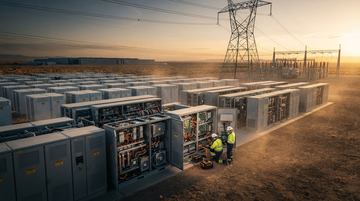
AI’s grid firming bottleneck isn’t batteries—it’s the grid-scale storage “power electronics” that let queues turn into revenue
Grid-scale battery projects are increasingly pulled forward by AI-driven interconnection demand, but economics are still governed by what can actually connect and operate: cells, then PCS/power electronics, then integrator execution. Tesla and Enphase both show how tariff and policy mechanics flow through the storage value chain—strong deployments can coexist with margin pressure when the PCS/inverter leg costs rise faster than pricing.
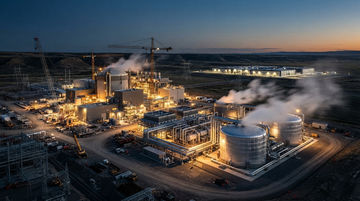
TerraPower’s Natrium turns nuclear into a data-center “load-following battery,” not just baseload
Natrium pairs a 345 MWe sodium fast reactor with a molten-salt energy storage system that can boost output to 500 MWe, giving nuclear dispatchability that hyperscalers need for AI-driven peak demand. TerraPower is already moving Kemmerer Unit 1 through the 10 CFR Part 50 construction-permit milestone and building a HALEU fuel path—suggesting the next bottleneck is less “baseload availability” and more flexible, contractable output.
What to expect
Evidence-first notes with a visible point of view.
This section collects sharp takes on earnings, shareholder meetings, and market structure. Each new piece should make the thesis, the facts, and the implications obvious within the first few screens.
Expect direct analysis, not generic commentary.
Expect the data to be explicit and the argument to be easy to follow.