Semiconductors
Chips, from the fab floor to the income statement
Foundry capacity, HBM supply, packaging bottlenecks and export rules — traced through to the companies whose quarters they decide.
2026-09-26

2026-09-25
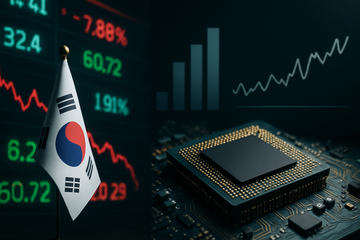
Korea Is Closed for Chuseok. The Memory Tape Crashed Anyway. Monday's Reopen Is Now the Real AI Margin Call
The KOSPI shut down Friday for the Chuseok holiday while the U.S. memory tape absorbed the hit: Arm Holdings fell 7.88%, the Roundhill Memory ETF dropped 1.91%, and the 10-year Treasury closed at 5.20% — its highest since 2007. Samsung Electronics and SK Hynix together make up roughly 45–50% of the KOSPI and trade on U.S. tapes through their ADRs, so Korean retail never got the chance to react. With leveraged single-stock ETFs on SK Hynix still holding roughly $19 billion at up to 60×, and the Sept. 23 KOSPI close at 7,080.92 leaving no room for a soft reopen, Monday's session is now the genuine test of whether the AI trade can hold up against a U.S. bond-yield shock.
PrismML's 1-Bit Bonsai Gives Qualcomm a Free Option on Every Smart Glasses OEM
On Sept 23, 2026, PrismML ran a 2B-parameter 1-bit vision-language model natively on Qualcomm's Snapdragon AR1 Gen 1 chip at 15.36 tokens/sec — 2.06x faster and 74% lighter than its 4-bit equivalent. With global smart-glasses shipments up 213% YoY in H1 2026 and the Meta Ray-Ban program shipping 7 million 2025 units, Qualcomm now controls the bottleneck for a category that doubled in six months. As handset revenue collapsed 20% in Q3 FY2026, the same QCT cash engine shipping AR1 chips is funding the AI200/AI250 data-center roadmap and a 200MW Saudi deployment — making smart glasses the bridge between Qualcomm's legacy handset business and its hyperscaler pivot.
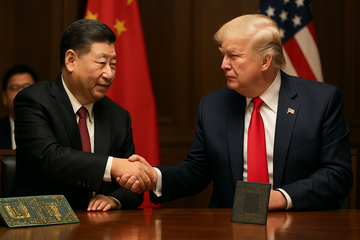
Why the Trump–Xi Tech Dinner Matters for Chips: It Pushes “License-Drama” Into a Near-Term Pricing Window
The guest list signals that U.S.–China semiconductor policy is entering a higher-speed negotiation phase: chip and AI platform CEOs are being treated as summit-level counterparts, not background stakeholders. For investors, the key read-through is not “diplomacy theater,” but how quickly export-control implementation could tighten or loosen—before the next quarterly earnings cycle locks in guidance.
2026-09-24

2026-09-23
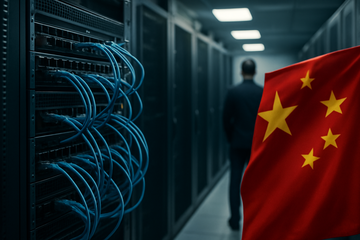
China Audits Broadcom Out of State Data Centers — AVGO's $73B AI Backlog Just Took a Procurement-Law Hit
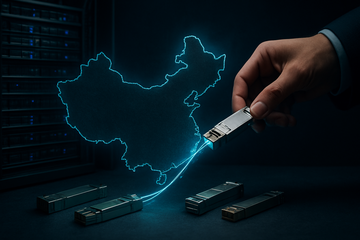
China's SASAC has spent weeks surveying Broadcom switch penetration across state-owned data centers, with preliminary findings of up to 90%, and may issue informal guidance to scale back purchases as part of a 'domestic chips for domestic use' mandate. It is the first US networking-gear decoupling test that runs on procurement law rather than export controls: installed gear stays in place, but new orders tilt toward H3C, Ruijie, and Huawei. For Broadcom's $73B AI backlog the immediate revenue drag is small; the durable read-through is to Marvell's China-exposed pluggable-optics and DSP volumes and to Chinese switch makers now formally preferred in state procurement.
Insiders Dumped 895 Million Quantum Shares With Almost No One Buying — The Cross-Stock Warning Wall Street Can't Unbundle
Insiders across IonQ, Rigetti, D-Wave, and Quantum Computing Inc. have net sold 895.1 million shares since September 2024, with insider buying collapsing to near zero at every name — a synchronized signal no single stock can shake off. Against combined TTM revenue of roughly $282M and a combined market cap near $29B, the cross-stock symmetry shows the pure-play quantum thesis has detached from fundamentals. With D-Wave's operating loss more than doubling year-over-year and IonQ absorbing a $1.87B GAAP hit from a $1.6B warrant write-down in Q2, the cash burn is real even as the macro bid is fading.
2026-09-21

2026-09-20
Cornelis's $205M Round Tests Whether AI-Fabric Stocks Rerate Like Hyperscaler Optics
A private interconnect player just raised a Series C at an implied valuation that, against disclosed revenue, puts it well above public-comps multiples — the same setup that rerated Zhongji Innolight and Credo Technology two years ago. Cornelis Networks' pitch: programmable compute inside the fabric can claw back roughly half the hours GPUs spend idle on data, a $1.68B/year problem per 100,000-GPU cluster by its own model. The thesis matters because the public AI-network layer — NVIDIA networking at ~$70B annualized, Broadcom Tomahawk 6 silicon, Arista Networks just hitting a $3B quarter — is already priced like a winner. Whether Cornelis's fabric-compute angle validates or commoditizes that layer is the read-through.

World models stopped disclosing — and NVIDIA's open Cosmos is the only window investors still get
Frontier world model labs raised more than $3 billion in the first half of 2026, then went quiet on what they're building and when they'll ship. AMI Labs, World Labs investors, Decart, and Odyssey won't disclose product roadmaps; the silence is forcing suppliers like Physicl to fly blind. NVIDIA's counter-strategy — open the Cosmos 3 platform, recruit a closed-cohort Coalition, and ride $89 billion in data-center revenue — turns opacity into a competitive moat. The data-center substrate says demand is intact; the secrecy just rewrites who captures it.
2026-09-18
2026-09-17
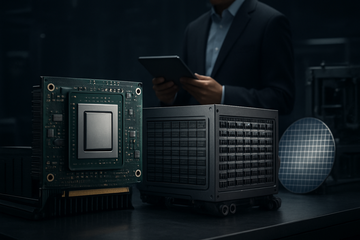
Huawei's 2027 AI Chip Will Trail Nvidia by Three Generations—And Sell to Half of China Anyway
A year after Huawei Vice Chairman Eric Xu unveiled a three-year Ascend roadmap at Huawei Connect 2025, the 2027 target—the Ascend 960 and 15,488-card Atlas 960 SuperPoD—is on track, but on hardware that only matches Nvidia's 2022-era H100. The bigger story is that Huawei has already won the China-market fight: Bernstein puts its 2026 share at 50% versus Nvidia's 8%, even as Nvidia still guides to $108 billion of Q3 FY2027 revenue on the rest of the world. The export ban priced out American silicon, but it built a Chinese supply chain—SMIC at $3 billion of quarterly revenue, Cambricon posting its first annual profit—that is the real story for 2027.
Huang's 'Twice as Many Chips' Call Forces the AI Capex Trade to Pick Between Volume and ASP
Seven days after telling the Goldman Sachs Communacopia conference that fiscal 2028 revenue would grow about 70%, Jensen Huang told Bloomberg in Scotland on Sep 17, 2026 that2027 chip sales will double 2026's. Those two statements do not reconcile cleanly: doubling units against an average selling price that has already lifted from $19K to $27K implies revenue growth well north of 100%, which leaves either an upside surprise or a margin squeeze — and forces a re-rating question for Nvidia, a real ASP-vs-custom-silicon read for Broadcom, and a volume-leverage question for TSMC, Micron and the neocloud cohort.
2026-09-16
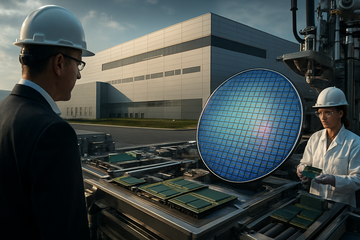
SK Hynix takes Intel's Ohio shell off Intel's hands — the first US memory fab, a counter-cyclical play that re-routes AI memory supply
A September 16, 2026 Reuters exclusive reports SK Hynix is in talks with Intel to lease part of Ohio's stalled $28B One campus, or form a JV with cloud giants, to manufacture DRAM, NAND, and HBM on US soil for the first time. The deal flips the CHIPS Act playbook from logic-first to memory-first, hands a delayed [Intel] asset a paying tenant at a moment when [Intel] Foundry is bleeding $2B a quarter, and gives the lithography, etch, and chemicals complex a new US-anchored memory customer without changing the HBM oligopoly's pricing power in2026–27.

Apple and HP Can Eat the Memory Bill. Xiaomi and Transsion Can't.
Combined Samsung Electronics and SK Hynix memory inventories fell below 10 days as HBM4 absorbs ~3× the wafer capacity of standard DRAM, and the squeeze runs into 2027. Memory now eats ~35% of HP's laptop BOM and over 60% of a sub-$400 smartphone's BOM — a margin shock Apple and HP can pivot around, but smaller OEMs like Xiaomi and Transsion cannot. The trade is the memory oligopoly versus a smaller, more concentrated consumer-hardware market that emerges by 2028.
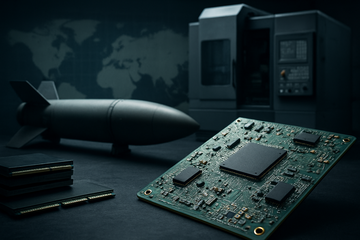
Ukraine's Chip Disclosure Cuts the Other Way: US Memory Dominates Russian Missiles, but Korea's SMEC Just Got Named
Ukraine's Aug. 26, 2026 disclosure undercut the 'Asian chips in Russian missiles' narrative — US semiconductors outnumber Chinese ones, and Beijing's tech was called 'not relevant.' But a quieter Nov. 17, 2025 HUR release specifically named Samsung Machine Engineering Company, a S. Korean CNC maker feeding Russian missile plants, and the US already fined Applied Materials's Korean unit $252M for re-exporting fab gear to a sanctioned Chinese chipmaker. The real exposure for SK Hynix and Samsung Electronics is not memory chips inside warheads — it's the grey-market conveyor that runs through Hong Kong, Shenzhen, and 13 named Japanese suppliers into Russian weapon lines producing 11,000 strike drones a month.
2026-09-15
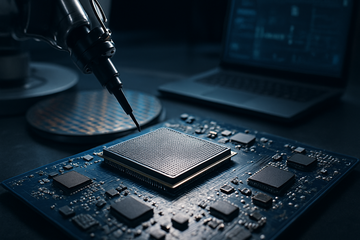
Axelera's Europa Hits EU AI Factories—Not U.S. Hyperscalers. The Foundry and OEM Links Tell the Real Story
Axelera AI shipped its second-generation Europa inference chip and signed 'tens of millions' of dollars in AI-factory contracts on Sept. 15, but the buyers are EU governments, Dell Technologies-led consortia and validated OEMs—not Microsoft, Amazon or Alphabet. The supply chain now has real exposure: TSMC and Samsung Electronics as foundries, Andes Technology for RISC-V control, and Dell and Supermicro as the validated OEM channels. With a $1.5B sales pipeline against 'tens of millions' in signed deals, the question for investors is how much of Europe's €30B AI gigafactory program converts into inference-ASIC orders.
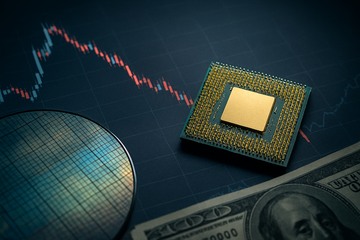
Anthropic just asked the world to slow AI. Its biggest chip supplier says the order book hasn't moved.
On Sept 14 Broadcom CEO Hock Tan told CNBC that AI revenue targets are unchanged after Anthropic CEO Dario Amodei's essay calling to \"slow the pace\" of frontier model development — and that Anthropic is on track to become Broadcom's largest custom-chip customer in 2027. The cross-check matters: the same lab asking for a pause has already committed to roughly $42B of Broadcom silicon for next year, per Mizuho's read of the April compute deal. For the AI infrastructure trade, the Sept 14 selloff priced the PR risk; the order book argues the supply chain is not slowing — and the chip vendor is now the loudest voice saying so.

Delos Data's $100M Round Confirms It: The AI Bottleneck Has Moved from the GPU to the Wire
A former Intel networking team raised $100M on Sep 15, 2026 to build AI fabric chips — and the round's investor list (Pat Gelsinger's Playground, Matrix, Socratic, Capricorn) signals where the next dollar of AI capex is going. With Broadcom posting $16.7B of AI semiconductor revenue in Q3 FY2026 (+221% YoY) and Dell'Oro forecasting ~$1T in AI back-end switch spending through 2030, the bottleneck is no longer the GPU — it's the interconnect. The listed winners are the merchant silicon trio (Broadcom, Marvell, Astera Labs), the system houses (Arista Networks), and the optical component stack (Credo Technology, Lumentum, Coherent).
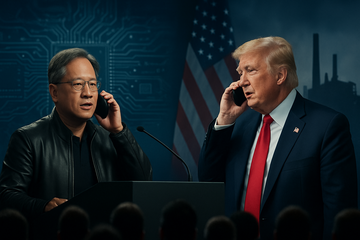
Huang's White House Phone Call Is the AI Capex Coalition's Answer to the Anthropic Slowdown — and It Reshuffles Who Holds the Risk Premium
Onstage at the All-In Summit on Sep 14, 2026, NVIDIA CEO Jensen Huang answered a live call from President Trump and echoed his pledge that the U.S. \"isn't going to let\" an AI slowdown happen — directly rebutting Anthropic CEO Dario Amodei's Sep 12 \"Pace the Frontier\" essay. The exchange turns an internal lab-safety debate into an industrial-policy signal: the chip-and-cloud coalition now has explicit presidential backing to outflank the slowdown narrative, and the upside asymmetry shifts back to NVIDIA, TSMC, SK Hynix and the hyperscaler customers whose 2026 capex runs at $700B+ — while Anthropic's $80B 2029 cloud bill and Broadcom-anchored TPU strategy become the awkward counter-examples.
What to expect
Evidence-first notes with a visible point of view.
This section collects sharp takes on earnings, shareholder meetings, and market structure. Each new piece should make the thesis, the facts, and the implications obvious within the first few screens.
Expect direct analysis, not generic commentary.
Expect the data to be explicit and the argument to be easy to follow.