
The event
CXMT is taking aim at the NAND oligopoly from its new Beijing plant
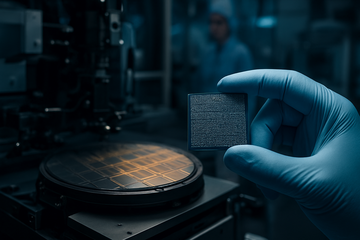
CXMT is preparing to enter the NAND flash memory market with a research-and-development production line at its new Beijing plant, Reuters reported on September 18, citing people familiar with the plans. The Chinese chipmaker — already the world's fourth-largest memory supplier by revenue and the dominant DRAM producer in China — has set up a Beijing research institute running NAND development projects and is in early talks with customers, including a newly established startup that intends to buy CXMT NAND for AI systems and supercomputers.
CXMT IPO (Shanghai STAR)
¥57.92B raised
July 27, 2026; debut +466%, closed ¥49 vs ¥8.66 offer
CXMT DRAM wafer capacity
~290K wpm
End-2024, up from ~100K wpm at start of 2024
CXMT DRAM share
7.7%
Global Q1 2026, per CNBC; #4 worldwide
CXMT 1H 2026 revenue
¥150.3B (~$21B run-rate)
2.4× full-year FY2025; gross margin 84.7%
- NAND target: a third Chinese vendor alongside YMTC (private, parent CCSH filing Shanghai IPO at $4.9B) and the dominant Samsung/SK Hynix/Micron triumvirate.
- Capacity timing is unspecified; Reuters notes it is not clear when the R&D line starts operating or whether CXMT scales to commercial manufacturing.
- CXMT's DRAM franchise is already pricing above Samsung on certain server modules — Reuters reported CXMT charging more than Samsung's ~$1,240 for a comparable 64GB DDR5 server DIMM in mid-2026.
Supply math
Why CXMT won't break the 2026 NAND cycle — and why 2027 looks different
The NAND market is undersupplied by 4–5% through 2026, with TrendForce logging NAND contract prices up 55–60% QoQ in Q1 and another 70–75% in Q2. Samsung, SK Hynix, Micron, Kioxia and SanDisk have every incentive to ride that wave rather than dilute it. CXMT's R&D line won't add commercial bits before late 2027, so today's contract cycle is untouched by Chinese NAND supply until at least the second half of next year.
Global NAND revenue share, Q2 2026
Counterpoint Research, Sep 2, 2026. Top five suppliers plus YMTC. Samsung share slipped one point quarter-on-quarter; SK Hynix gained one.
Unit: % of revenue
Samsung
28%
SK Hynix
19%
Kioxia
14%
YMTC
13%
SanDisk
13%
Micron
13%
Margin math
SanDisk's 80% floor: a contract bet the next cycle will test
SanDisk used its August 13, 2026 Investor Day to anchor an 80%-plus non-GAAP gross margin floor on its NBM (NAND-Based Memory) contracts — a model that converts AI datacenter buyers into long-dated off-takers. Q4 FY2026 (period ended July 3, 2026) delivered the proof point: $8.97B in revenue, up 372% YoY, with non-GAAP gross margin of 84.6% versus 26.4% a year earlier. Datacenter revenue hit $2.98B in the quarter, +103% sequentially, and contracted backlog reached $93.9B across eight customers — covering roughly half of fiscal 2027 bit shipments.
| Company | Latest quarter | Revenue | Gross margin | YoY revenue |
|---|---|---|---|---|
| SanDisk (SNDK) | Q4 FY2026 (Jul 3, 2026) | $8.97B | 84.6% non-GAAP | +372% |
| Micron (MU) | Q3 FY2026 (May 28, 2026) | $41.46B | ~84.6% | n/a |
| SK Hynix (000660.KS) | Q2 FY2026 (Jun 30, 2026) | ₩79.3T (~$58B) | ~83% | n/a |
| Samsung (005930.KS) | Q2 FY2026 (Jun 30, 2026) | ₩171.5T (~$118B) | Memory ~64% NAND | +130% |
| YMTC (private) | Q1 2026 | ¥47B | 76.8% | ~5× |
| CXMT (688825.SS) | 1H FY2026 | ¥150.3B | 84.7% | 2.4× FY2025 |
That is a contract architecture, not a margin a spot market defends. The 80% floor assumes AI datacenter demand outruns incremental supply — exactly the equilibrium CXMT, with state-backed capex tolerance, is now targeting to break. The visible losers are the open-market NAND ASPs YMTC has already taken to 173% above 2025 averages; the visible winners are the AI startups and supercomputer builders Reuters says CXMT is already pitching.
Supply chain
Upstream fabs, downstream AI servers, and the SSD OEMs caught in between
NAND is one of the most concentrated supply chains in semiconductors: the top six producers (Samsung, SK Hynix/Solidigm, Kioxia, SanDisk, Micron, and YMTC) control effectively all merchant bits. CXMT's entry adds a second Chinese node into a network where YMTC already plans a Shanghai IPO to raise $4.9B — with ¥20.8B earmarked for production upgrades and ¥12.2B for next-gen NAND R&D — and where Samsung's all-time high NAND bit sales in Q2 2026 sit alongside SK Hynix returning to talks with Intel for a U.S. memory fab on September 16.
- Upstream — wafer capacity: Samsung Pyeongtaek, SK Hynix M15X/Cheongju, Kioxia Yokkaichi/Kitakami, Micron Hiroshima, SanDisk Yokkaichi (JV with Kioxia); YMTC's Wuhan fab coming online with two more planned through 2027.
- Mid-stream — SSD/contract packaging: SanDisk, Micron, and Western Digital (still Sandisk's former HDD parent and a NAND SSD partner) plus SK Hynix's Solidigm business hold the NAND-to-SSD conversion layer; CXMT would need to onboard there to compete on enterprise SSD, not just raw NAND.
- Downstream — AI demand: Super Micro Computer consumed AI-server revenue of $11.1B in fiscal Q4 2026 (+93% YoY) and is the most direct public-market read on whether AI capex can absorb higher NAND ASPs; hyperscaler storage build-outs (AWS, Azure, Google Cloud, Meta, ByteDance) are the ultimate off-takers.
Horizons
What moves in days–quarters versus what breaks the thesis in 1–3 years
Short-term, the supply gap still rules. Samsung, SK Hynix, Micron and SanDisk are sold out for 2026 and have raised 2027 contract pricing into the 50–70% range; CXMT's R&D line will not deliver commercial bits on that timeline. The first thing that moves is whether Samsung and SK Hynix can hold NAND share against the existing Chinese pair (YMTC up five points to 13% in twelve months) — not whether a third entrant shows up.
Long-term, the architecture flips. By 2028, three things have to be true for SanDisk's 80% margin floor to hold: AI datacenter capex stays above $400B/yr, open-market NAND ASPs stay above the marginal-cost-plus-return line, and CXMT/YMTC combined capacity stays sub-30% of merchant bits. The first two are now consensus; the third is the new variable. YMTC's ¥20.8B production budget, CXMT's $8.6B IPO war chest, and the Beijing R&D line together fund a credible path to that share threshold — and a state-backed entrant does not need to clear an open-market return hurdle to keep pricing aggressively into a downcycle.
Where the trade sits
- Q4 FY2026 datacenter revenue hit $2.98B (+103% QoQ) on a $93.9B backlog covering ~50% of FY27 bits — locks in 80%+ non-GAAP gross margin through fiscal 2027.
- The 84.6% non-GAAP margin in Q4 FY2026 is a contract margin, not a spot-market margin, and the contract wins are already booked.
- Multiple risk: EV/sales TTM of 11.6× and EV/EBITDA TTM of 17.9× already price the boom — a 2028 NAND downcycle driven by Chinese capacity is the obvious de-rating catalyst.
- 1H FY2026 revenue of ¥150.3B already 2.4× full-year FY2025; 84.7% gross margin shows the DRAM franchise can price above Samsung on server modules.
- NAND entry adds a second growth vector into a market trading at $46B in Q1 2026 revenue (Counterpoint) and forecast to reach ~$300B by year-end.
- Beijing R&D line plus ¥7.5B from the IPO earmarked for DRAM upgrades funds both a 2027 NAND prototype and a near-term HBM ramp.
- Q2 FY2026 all-time high NAND bit sales and KRW 171.5T (~$118B) revenue confirm the cycle peak — memory operating margin ran ~80% on DRAM and ~64% on NAND.
- NAND revenue share slipped one point Q1→Q2 2026 (29%→28%, Counterpoint); the slow share erosion is now compounded by a third Chinese entrant.
- Net cash, 3.5× P/S TTM, and a 0.66% dividend yield give downside cushion if the 2026 peak doesn't roll forward into 2027.
- Q2 FY2026 revenue ₩79.3T (~$58B) at ~83% gross margin; NAND share gained one point Q1→Q2 to 19% as Solidigm integration continues to pay off.
- Sold out for 2026; in talks with Intel (Sep 16) to manufacture memory on U.S. soil for the first time — secures HBM/AI mix even as commodity NAND compresses.
- TTM P/E of 8.1× is the cheapest of the four majors despite the strongest 2026 NAND share gain.
- Q3 FY2026 (May 28, 2026) revenue $41.46B with gross margin ~84.6% — the steepest single-quarter step-up of any memory major.
- NAND share held at 13% (Q2 2026, Counterpoint) against five points of share gain by YMTC over twelve months.
- EV/sales TTM 12.0× and forward P/E 6.0× price only one more cycle peak — the Q3 FY2026 result is the cycle's high-water mark unless CXMT's NAND program slips.
- NAND revenue share fell three points over twelve months to 14% (Q2 2026, Counterpoint) — the steepest share donor of the top five.
- Considering a U.S. IPO to raise ~$10B, per market sources; capital raise is a defensive move against the same Chinese capacity wave.
- Tokyo listing (Dec 18, 2024) means the 285A.T float is still thin — liquidity risk into a downcycle is real.
- Sandisk spin-off completed in 2025 leaves WDC as the HDD platform plus an active NAND SSD partnership with SanDisk — direct read-through on AI datacenter storage demand.
- NAND ASP up 173% YoY in Q1 2026 (YMTC disclosure, Reuters) confirms pricing power that WDC's enterprise SSD business captures.
- HDD unit is the swing factor: if AI capex reallocates from storage-class-memory to HDD, WDC absorbs the demand that NAND ASPs can't satisfy at 80% margins.
- Fiscal Q4 2026 revenue $11.1B (+93% YoY); gross margin only 17.5% — NAND cost is the swing factor for SMCI's AI-server margins, not the topline.
- Nine $1B+ customers in FY2026 versus four a year earlier confirms hyperscaler concentration; any NAND supply squeeze hits SMCI faster than the chip makers.
- Hedged if CXMT NAND actually lands in 2027: lower-cost enterprise SSDs from Chinese supply would lift SMCI gross margin by 100–200 bps in a normalized scenario.