Semiconductors
Chips, from the fab floor to the income statement
Foundry capacity, HBM supply, packaging bottlenecks and export rules — traced through to the companies whose quarters they decide.
2026-09-15

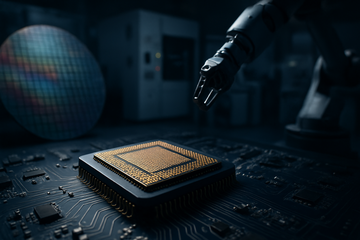
Mobile AI just landed on TSMC's 2nm: MediaTek's Dimensity 9600 Pro makes the advanced-node queue a 2027 on-device bet, not just a hyperscaler story
MediaTek launched the Dimensity 9600 Pro on September 15 — the first Android flagship on TSMC's N2P 2nm node, with Apple's A20 Pro shipping September 9 and Qualcomm's Snapdragon 8 Elite Gen 6 Pro due September 22. The launch locks mobile into the same advanced-node queue as Nvidia-class AI silicon, and the rumored $216/$280/$300+ unit-price gap will decide who funds TSMC's 100K-wafer/month 2nm ramp. Read-throughs: MediaTek's smartphone revenue fell 22% YoY in Q2 even as Smart Edge Platforms rose 26%, TSMC's August monthly revenue hit a record NT$514.8B (+53.3% YoY), and the LPDDR6 cycle at SK Hynix and Micron is now tied to the same 2nm wave.
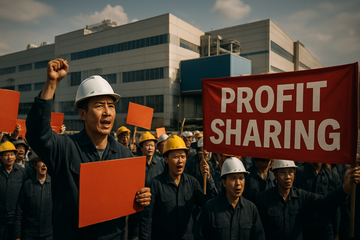
Micron's Taiwan Union Demands 15% of Profit — and the AI Memory Supercycle Just Got Its First Wage Floor
Unions at Micron's Taoyuan and Taichung fabs — 10,000 of the company's 15,000 Taiwan employees — are pressing for a permanent 15% profit-sharing system and an83-month one-off payout after the company's revenue quadrupled and net income hit $28.2B in a single quarter. SK Hynix already conceded 10% of operating profit to its Korean workers; Samsung settled at 10.5%. The dispute reframes the AI memory bottleneck as a labor-driven margin test: if Micron matches the Korean benchmark, it locks in a structural cost that the HBM supercycle was never priced to absorb.
2026-09-14
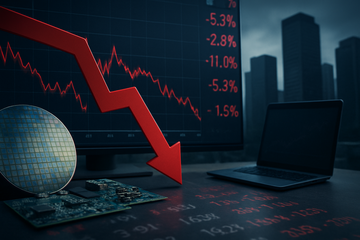
When the AI buyers told the AI builders to slow down, Asian memory stocks fell 5% in a day
Anthropic's Dario Amodei published a solo essay on Sept 12, 2026 asking the frontier labs to 'pace' model development; within 36 hours Sam Altman and Elon Musk had publicly agreed, and on Sept 14 the Kospi's chip duo — SK Hynix and Samsung — fell 5.3% and 2.8% respectively while SoftBank plunged 11%. The trade is no longer 'who can train the next model' but 'who is still allowed to ship the next cluster': already-contracted $41B of annual compute, sold-out HBM4 capacity and a pending Fed decision make the near-term tape messy but the multi-year AI capex cycle structurally intact.

Samsung and SK Hynix Just Said 'No' to KEPCO's $19B Power Deal — and Korea's AI Chip Dream Is Now Hitting a Wall It Can't Code Its Way Around
Korea Electric Power Corporation wanted Samsung Electronics and SK Hynix to prepay 25 trillion won (~$18.7B) for five years of electricity to fund the transmission grid feeding Yongin and Honam. Both chipmakers refused on September 13-14, 2026, citing memory-cycle uncertainty, not affordability. The refusal exposes a structural mismatch: Korea is on track to build roughly 1.3 quadrillion won of fabs roughly a decade faster than the grid that must power them, while KEPCO carries 210.7 trillion won of debt and burns11.5 billion won a day in interest. Investors who priced the Korean AI story as a chip race now have to price it as a power-and-grid race, with Korean grid-equipment names — not the chipmakers themselves — the cleanest beneficiaries.
2026-09-13
2026-09-12

Druckenmiller Dumped Broadcom, Intel, and Micron. The Chip He Bought Instead Says the AI Trade Has Two More Years Left.
Stanley Druckenmiller's Q2 2026 13F cut Broadcom, Intel, and Micron — chips that already printed their 2025–26 melt-up — and opened a new position in AMD and a fresh miner-to-AI cluster in Bitdeer, Riot Platforms, Hut 8, and IREN. The chip he kept (a 19% larger TSMC stake) is the real tell: hyperscaler capex is heading toward $700 billion in 2026, and Druckenmiller is positioning for the picks-and-shovels picks, not the names that already cycled.

TSMC's $16.35B August Print Just Locked In Q3 — and Settled the AI Demand Debate
TSMC's August 2026 revenue of NT$514.81B (US$16.35B) jumped 53.3% year-over-year and 10.1% sequentially — the largest single month in the company's history. With July plus August already covering roughly 68% of TSMC's Q3 guidance midpoint, the September leg only needs to print near the recent run-rate for the beat to land. The unaudited monthly tape — published 36 days before the October 16 Q3 release — is the cleanest signal yet that the AI buildout is still expanding at the leading edge, with direct read-throughs to Nvidia, AMD, ASML, Applied Materials, and HBM suppliers SK Hynix and Micron.
2026-09-11

2026-09-10

Chip Rebound Split on Sept. 9: Korea Held, the U.S. Sank, and the AI Trade Just Got a Higher Bar
On Sept. 9, 2026, the AI-chip rebound split along geographic lines: South Korea's KOSPI rose 1.4% with SK Hynix and Samsung Electronics leading, and the Philadelphia Semiconductor Index closed up 0.37%. The U.S. broad market, by contrast, fell for a third straight session as Brent crossed $100, the 10-year Treasury yield hit 4.85%, and CME FedWatch priced a 60% chance of a September Fed rate hike. The bar for AI stocks just moved from 'great earnings' to 'great earnings and a friendly macro backdrop,' and Asia's leverage overhang explains why the Korea bounce couldn't break7,100.
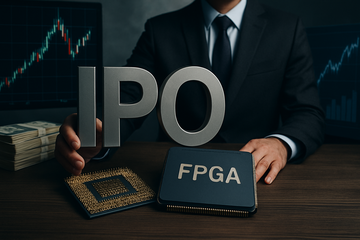
Altera's $2B+ IPO Forces a Hard Question: Is FPGA an AI Compute Asset or a Foundry Side-Show?
Altera, now 51% owned by Silver Lake and 49% by Intel, is preparing an IPO that could raise over $2 billion — a live test of whether programmable logic gets priced as AI edge inference silicon or as a stranded legacy asset. The math cuts both ways: Altera generated $1.54B in FY2024 revenue with non-GAAP operating income of just $35M, while its dominant rival AMD's Xilinx franchise is bundled inside a chipmaker trading at $413B in TTM sales. The carve-out also lets Intel monetize a non-core unit just as its Foundry posted a $2.1B operating loss in Q2 FY2026 and it raised $20B in new equity at $95 a share.
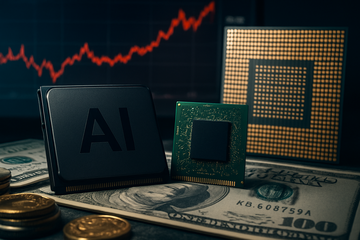
China's AI chipmakers just hiked prices 20–50% — and the HBM rent flows uphill to SK Hynix, Samsung, and Micron
Huawei Technologies pushed the indicated price of its Ascend 950DT accelerator above 250,000 yuan and Cambricon Technologies raised its next-generation 690 chip 20–30% above July quotes, per a Reuters scoop dated Sept 10, 2026 — the first time Chinese AI silicon vendors have captured material scarcity rents. The trigger is an HBM supply squeeze that has driven Chinese chipmakers to grey-market channels paying 'several times' what Western buyers pay, with SK Hynix's CEO already warning of the industry's worst-ever shortage in 2027. The trade is straightforward: price hikes validate Western HBM oligopoly pricing power more than they validate any Chinese substitute.
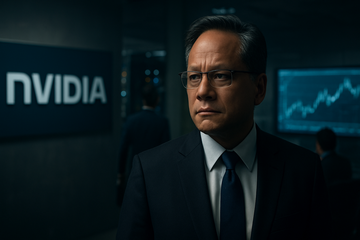
One DOJ Probe Just Put $30 Billion of Nvidia 'Reverse Acquihires' in the Crosshairs
The DOJ's September 9 investigation into NVIDIA's $20 billion Groq licensing deal is not a single-case inquiry — it is a legal test of the entire non-exclusive-license-plus-acquihire playbook that has quietly moved roughly $30 billion of NVIDIA deal-making past HSR review in twelve months. If the structure collapses, the IP moat that anchors NVIDIA's data-center pricing power unwinds faster than bulls assume, and ASIC competitors Broadcom and Marvell re-rate. Investors should also reprice CoreWeave and Nebius, whose circular-financing narratives now rest on a deal architecture Washington is actively trying to dismantle.

Huawei as a 'criminal enterprise': the RICO precedent that pulls every US supplier into the perimeter
DOJ's Brooklyn RICO trial framing turns Huawei from a single defendant into the center of an enforceable US legal perimeter: any operator, carrier, or supplier still touching its stack now sits inside a 'criminal enterprise.' With five named trade-secret targets, a Bosch-sized $36M BIS enforcement precedent for unlicensed shipments, and HP's August Wi-Fi cross-licensing deal done on the eve of trial, the liability test for US-listed names like Cisco Systems, Qualcomm, Intel, Motorola Solutions and T-Mobile US has changed for good.
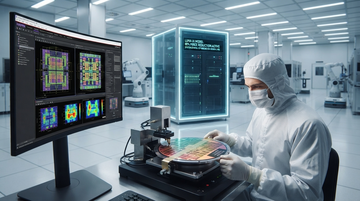
OpenAI just put itself on both sides of the EDA table — and the Luna 80% price cut is the real tell
At Goldman Sachs' Communacopia conference on September 8, 2026, OpenAI CFO Sarah Friar pitched AI for chip design as a specialized-industry vertical, alongside life sciences and financial services — while revealing that OpenAI used its own models to tape out the Broadcom-co-designed Jalapeño chip in under nine months. The pricing tell is sharper than the strategy talk: an 80% cut on the Luna model and a 'cheaper than Chinese open-source' framing put a frontier lab directly into the workflow layer where Synopsys' DSO.ai and Cadence' Cerebrus have been monetizing AI-assisted design. Investors should separate the workflow-wrapper threat (real, near-term) from the core place-and-route threat (limited, long-dated), and price each EDA line accordingly.
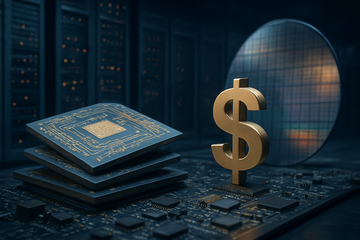
Positron's $5B round prices an AI inference exit queue — Nvidia's first real margin question
Positron AI raised $875M at a $5B post-money valuation on Sep 10, 2026 — quadrupling in seven months and becoming the second inference-chip valuation shock in six weeks after Etched hit $21B. With TSMC N3P capacity shared across the cohort, commodity LPDDR5X sidestepping HBM entirely, and Oracle running 50+ Atlas racks in production, the question is no longer whether Nvidia is defensible but which slice of the inference stack gets repriced first.
2026-09-09
2026-09-08
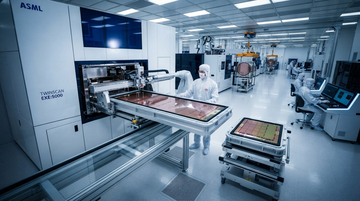
ASML and TSMC's 12-Inch Photomask Reset Ends a 30% High-NA Throughput Penalty—Who Refits, Who Loses
On September 8, 2026, ASML and TSMC launched a 'Large Mask Consortium' with Samsung and Intel to move EUV photomask format from 6×6 inches to 6×12 inches, with a pilot line by 2031 and advanced-node production by 2033. The shift eliminates the reticle-stitching penalty that costs High-NA scanners ~30% of wafer output on large AI dies—taking wafer throughput from roughly 125 wph back to 175 wph on a single shot. Every mask-blank, pellicle, writer, and inspection tool not redesigned for the new format loses access to a fab-spending cycle anchored on AI accelerators; the established Japanese duopoly that already dominates EUV blanks and pellicles emerges with the strongest moat.
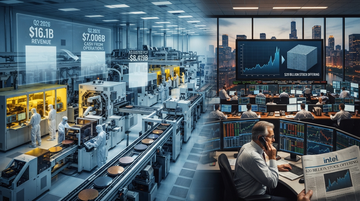
Intel’s momentum spike is being “bought” twice: with capex now and dilution later—can free cash flow catch up?
Intel’s turnaround narrative is strengthening on revenue growth and execution, but the company is also reshaping its equity base through a large common-stock offering sized to fund the AI build-out. The investable question is whether improvements translate into near-term free cash flow offsets, rather than getting swallowed by capex and share-structure math.
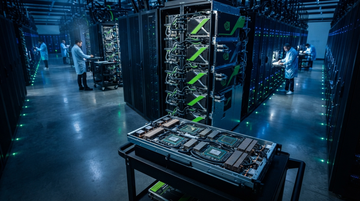
Nvidia insiders sold $410M five days after a record quarter — and Burry already filed the AI short
NVIDIA director Mark Stevens offloaded 1.85 million shares for $410.8M on Aug. 31, 2026 — five trading days after the company printed $96.2B in Q2 FY27 revenue and guided gross margin down to 71%. The same week, Bloomberg reported Nvidia is hiking Vera Rubin and Grace Blackwell server prices by more than 15% for systems shipping in early 2027, citing memory-cost inflation that even hyperscaler capex may not absorb cleanly. Michael Burry's last13F, filed before Scion deregistered in November 2025, had already made the AI basket the most concentrated short in his portfolio — $912M of Palantir puts and $187M of NVIDIA puts. The insider timing, the company's own pricing/margin signals, and a public short thesis filed a year ago now line up at the AI capex peak.
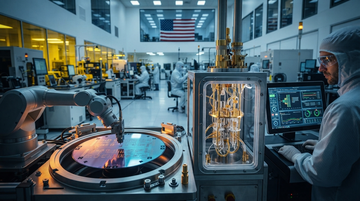
PsiQuantum's $100M CHIPS Award Just Made Photonic Quantum a US Defense Schedule — GlobalFoundries, Lumentum, Coherent Are the Real Trade
Commerce finalized $100M for PsiQuantum on Sept 8 — the same morning it finalized $100M each for Quantinuum, D-Wave and Rigetti, $375M for GlobalFoundries, and $1B for IBM's Anderon foundry. Photonic quantum now has a domestic manufacturing schedule, not a research grant. The listed names that already build its BTO optical switches, 300mm silicon photonic wafers, single-photon detectors, and cryogenic stack — GlobalFoundries, Lumentum, Coherent, Marvell, Applied Materials — become the investable read on a market that didn't exist as a factory line a year ago.
What to expect
Evidence-first notes with a visible point of view.
This section collects sharp takes on earnings, shareholder meetings, and market structure. Each new piece should make the thesis, the facts, and the implications obvious within the first few screens.
Expect direct analysis, not generic commentary.
Expect the data to be explicit and the argument to be easy to follow.