Financials
Banks, credit, and where the risk is sitting
Net interest margins, credit quality, capital rules and deal flow — what the numbers say about the banks, insurers and asset managers reporting them.
2026-11-03


Fannie and Freddie Rally on Ackman's Exit Call — but the Rulebook Doesn't Exist and the Capital Gap Is $205 Billion
Bill Ackman's Oct. 22 call for a fast end to conservatorship, and the housing executive order President Trump signed the same day, lit up Fannie Mae and Freddie Mac — yet the Q3 2026 filings show both enterprises with negative common equity, a $238.0 billion senior preferred claim and regulatory capital shortfalls of $205 billion and $158 billion. The exit is gated by a capital rule that has never been written, at an agency that just cut its fraud investigator's budget 64%, and the order Trump signed pushes the GSEs to absorb private mortgage insurance and title risk that widens the very same gap. The tradeable gap therefore sits outside the GSEs, in the credit-scoring, mortgage insurance, title and origination chain that is already being repriced by rules that do exist.

Bankers Report Business Loan Demand Swung 28 Points Negative as AI Capex Pulls Credit to Nonbanks
On Nov. 2 the Fed's senior loan officers reported that business loan demand weakened for the first time in more than a year: the net share of banks seeing stronger C&I demand swung from +16.1% to -11.7% in one survey round, and banks blamed borrowers walking to more attractive bank or nonbank funding. The money did not disappear — it changed hands, because the same survey shows banks expanding lending to nondepository finance intermediaries and private equity funds while AI-adjacent commitments have grown from 9% to 13% of bank C&I commitments and now run near a quarter of tier-1 capital at large banks. With the Fed on hold at 3.75%–4.00% and markets pricing a 76% chance of a Dec. 8–9 hike, the squeeze on everyone who is not building AI data centers arrives just as the price of money goes up.

Thomson Reuters' Raise Was Mostly a Print Deal — and the AI Toll Is Landing as Cost
Thomson Reuters grew organic revenue 10% in the third quarter of 2026 and raised full-year organic guidance to 8.5%–9.0%, yet most of that raise traces to the KKR print joint venture rather than to AI pricing, and the guidance for the three businesses that actually sell AI was left untouched. The AI toll is real and it is being collected — Reuters content licensing to AI platforms grew 12% organically and CoCounsel Legal now reaches a million professionals — but it is landing on the cost line at the same time: Legal Professionals margin fell 240 basis points to 46.6%, free cash flow fell 23% to $408 million, and the fourth-quarter guide now hinges on a 650 basis point sequential margin recovery. Investors should read this as evidence that professional research survived AI but changed hands and shape, and should own the vendors already collecting the toll rather than the ones still waiting for it.
2026-11-02

The Agent Fee Is the Prize, Blocking Is the Defense — and JPMorgan Chase's New Terms Send the Fraud Bill to Shared Passwords
Retail and banking have split into two camps on AI shopping agents: platforms that charge for the transaction, and platforms that refuse it. OpenAI already takes 4% of ChatGPT checkout sales on top of Shopify's fees, while Amazon and JPMorgan Chase shut the door and push the risk onto the customer who shared a password. Detection is the weak link — third-party tools catch only 3.1% to 14.8% of disguised agents — so whoever owns the consent layer will own the transaction. For investors the near-term money is in the rails and in the platforms building gates; the near-term risk sits with anyone whose revenue depends on a checkout they did not build.

Apollo's $11.2 Billion European Credit Launch Backs the Only Part of Private Credit That Isn't Being Marked Down
On November 2, 2026, Apollo launched European Credit Company, a €10 billion ($11.2 billion) pan-European platform for performing corporate and asset-backed credit, backed by the Abu Dhabi Investment Council, Athora, Norinchukin, Standard Chartered and Aranda Principal Strategies. It is not a fix for the market's live problem: Apollo's own credit outlook puts more than $100 billion of US software and services loans maturing between 2027 and 2029, more than half of them already trading below 90 cents, while business development companies wrote down 81% of software loans in 2026 against 40% of loans elsewhere. The signal is the shareholder register rather than the size — €10 billion is roughly 1% of Apollo's $1.047 trillion of assets, but Apollo separately committed $5 billion to take a minority stake in Mubadala Capital, giving it two Abu Dhabi channels in eight days. For investors the read-through is that sovereign and Japanese bank money is being routed to the cleanest collateral in private credit, squeezing European fee growth at Ares, Blue Owl and Blackstone while the retail vehicles funding the marked US books keep redemptions gated.

The IRS Sets the Withdrawal Amount at 75 — and the Biggest Savers Are Converting It Away
A November 1, 2026 explainer made a tax mechanic visible: once a 401(k) holder turns 75, the IRS — not the owner — sets the size of every annual withdrawal, and missing it costs a 25% excise tax. The same rule that forces the withdrawal creates the incentive to route around it, and the savers with the largest balances are converting to Roth before the first distribution rather than drawing one down, splitting America's $51.2 trillion retirement market into two opposite flows. The consequence for investors is specific: custodians collect the relocated assets, annuity writers collect the forced withdrawals, and the negative equity-fund flow tape is mostly a wrapper rotation rather than retirees fleeing stocks.
2026-11-01

FHFA Cut Its Own Watchdog by 80% — and the Capital Rules That Price Mortgage Credit Still Have No Date
The FHFA's own inspector general says, in a report covered by Reuters on Oct 30, 2026, that the agency refused to provide records during at least three congressionally mandated oversight reviews, calling the obstruction \"unprecedented\"; FHFA says it completed 56 document requests and held 16 hour-long meetings, and disputes the findings. The regulator that sets GSE capital floors, approves their counterparties and administers Ginnie Mae has had roughly 80% of its watchdog staff cut, and by its own account can no longer develop the evidence needed to prosecute multifamily fraud. That matters because the rule that actually prices mortgage credit has no date: the Mar 19, 2026 capital proposals closed comments on Jun 18, 2026 with no implementation timeline, while FHFA's own 2025 Report to Congress says both Enterprises fail the minimums it set. The trade is in the fee pools an unsupervised regulator re-prices — private mortgage insurance such as MGIC Investment and NMI Holdings, nonbank origination franchises, and the score toll — not in the mortgage rate, and PulteGroup sits on both sides of the table because its founder runs FHFA.
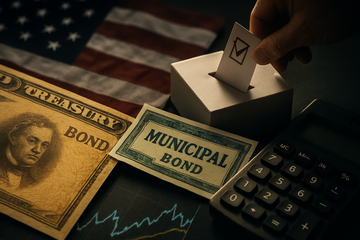
Too Tight to Tighten: Muni Spreads at 76bp Can't Carry Nov. 3, So the Vote Lands on Tax Rates and a $84 Billion Supply Wave
Municipal credit spreads cannot carry the Nov. 3 election: BBB munis ended September at 76bp and high yield at 143bp, both inside their five-year averages, so there is no spread cushion left for a vote to work on. What the election reprices is the tax arithmetic and the supply calendar — California's wealth and income-tax measures raise what tax-exempt income is worth to blue-state buyers, Florida's $150,000-to-$250,000 homestead exemption shifts local tax burden, and at least $84 billion of voter-approved bonds land in 2027 on top of a $473.8 billion nine-month issuance pace. The tradeable edges are narrower than they look: Assured Guaranty is the one listed guarantor whose premiums are compounding with that supply, while the leveraged municipal funds, where an 8.49% distribution becomes a 12.5% taxable equivalent for a 32% taxpayer, are levered to a 4.98% 10-year rather than to the ballot.

Bessent Blesses the Hike While Treasury Buys Back the Long End: The Curve, Not the Rate, Is the Trade
Treasury Secretary Scott Bessent's Oct. 28 comment that further Fed hikes would be \"not necessarily\" a policy mistake, followed by St. Louis Fed President Alberto Musalem's Oct. 30 call for additional firming \"and soon,\" puts the executive branch behind a December rate increase. The real change is not the 25 basis points but the division of labor it creates: the Fed raises the front end to defend 2% inflation while Treasury, running a $1.99 trillion deficit with more than $1 trillion of interest outlays, buys back 10- to 30-year paper to cap the long end. That pairing steepens the curve on purpose — lifting bank net interest income while raising the discount rate and the coupon on an AI buildout being financed with $300 billion to $570 billion of new debt.
2026-10-31

Arini's $800 Million Fire Sale Is the First Real Clearing Price for AI-Disruption Credit Risk
Arini Capital Management's flagship hedge fund is down roughly 26% this year and has sold about $800 million of debt in recent weeks, partly to meet bank margin calls, and on Oct. 30, 2026, Pimco and Oaktree bid for the high-yield paper it wants to unload. The paper on offer is the liquid, performing kind: the distressed positions driving the losses have no bid, so the only exit for a margin call is the bonds that actually trade, which makes this the first observable clearing price for credit priced on AI-disruption fear. That price matters more than the headline loss, because it resets what every other holder of stressed paper must accept. Arini's own answer to the squeeze — $1.5 billion of new credit commitments and a direct lending fund closed above $4 billion — moves the same risk into private credit, where marks are set by appraisal instead of trade.

A 10% Credit Card Cap Cuts About a Third of $146B in Issuer Card Revenue — and It Lands in 2028, Not 2027
Credit card rates have become the rare affordability issue both parties can name, and the 10% cap bill in Congress would remove 55 cents of every dollar of interest earned on a card book priced at 22.36% — on our arithmetic roughly $48 billion a year, about a third of the $146 billion major issuers collect from cards. The damage is asymmetric in time: the price reset only lands as balances reprice, so November is a political-premium event while the earnings hit is a 2028–2029 event. It lands hardest on Synchrony Financial and Bread Financial, whose entire earnings base is a spread on card balances, and barely touches JPMorgan Chase, where half of revenue comes from non-interest sources. With prediction markets pricing a 2026 cap at roughly 4%, the setup is relative rather than directional: underweight the single-sector card lenders into the vote, own the scale shelters, and wait for the repricing wave rather than the campaign.

Car-Mart's 82% Collapse Is a Credit Migration, Not a Credit Crunch: Subprime Credit Moved, and $30,000 New Cars Are Now the Tightest Thing on the Lot
America's Car-Mart sold 2,450 retail vehicles in the quarter ended July 31, 2026, down 81.9% year over year, and its Form 10-Q carries a liquidity and going-concern note. In the overlapping quarter, Credit Acceptance originated $3.46 billion of subprime loans, up 51.0%, and wrote business for 12,093 dealers. Subprime lending did not shrink; it moved off dealer balance sheets that reserved 24.74% of net receivables against losses onto lender balance sheets that reserve 3.07%. Because a lender rather than a dealer now holds the paper, a deep-subprime buyer can be financed into a $25,000 new car instead of a $19,000 used one, which is why cars priced at $30,000 or less carry just 63 days of supply against 82 days for the market. The bill arrives in 2027 as gross profit per unit, not as unit sales.
2026-10-30

2026-10-28

Insurers Are Now the Risk-Sink for AI Compute: Barclays Is Buying Credit Protection on More Than $10 Billion of Data-Center Debt
Barclays is buying default protection from insurers on more than $10 billion of AI data-center debt, and has asked them to carry more than 50% of the credit risk on some facilities. The bank keeps the loan, the fee and the client; the loss-given-default moves to insurer balance sheets, where capital is thinner, disclosure is thinner and shareholders are mostly retirement savers. The ask is roughly twice the size of the entire 2025 global synthetic risk-transfer market for bank credit, and it lands while about $37 billion of the $80 billion in data-center bonds issued in 2026 is junk rated and CoreWeave's five-year credit default swaps have topped 1,140 basis points. This is the mechanism investors should track: the AI credit tail is migrating out of bank capital into the least-supervised layer of the financial system.

Boston's Office Tower Sold Itself Back for 68% Less — and the Cheapest Mark on the Building Is the Only One Backed by Cash
On October 20, 2026, Rockpoint Group won the foreclosure auction of its own 32-story, 1.1 million square foot Boston tower with the only bid on the table: $260 million against the $806 million it paid in 2019. That 68% discount is real, but it is not a market price — the sole bidder was the defaulted owner, and the auction's $10 million deposit, W-9 requirement and 35-day closing were built to deliver the asset rather than to discover a price. The credit math is sharper than the headline: $260 million recovers roughly 55 cents on each dollar of the original $470 million mortgage, sitting right at the fat tail of single-borrower office loss severity, while Boston's own assessment still carries the tower at $425 million. For investors the sequence matters more than the auction: extensions are expiring, private credit and insurer balance sheets are absorbing the paper at 40 to 60 cents, and the public office landlords holding the assets — BXP, Vornado Realty Trust, SL Green Realty — are the ones left carrying marks built on the old numbers.

25% of Europe's Corporate Debt Refis Within Two Years: The Corporate Layer, Not the Sovereign Curve, Is the Transmission Belt
Goldman Sachs's 23 October note, reported on 28 October, concludes that higher sovereign yields and heavy new issuance are pushing up European corporate borrowing costs — and it is the corporate layer, not the sovereign curve, that now carries Europe's stress. European investment-grade yields have risen about 30 basis points since 1 September to 4.4%, while high-yield costs jumped roughly 90 basis points to 7%, so the weak tail is repricing three to four times faster than the index. Six of Europe's ten weakest borrowers face 2027–2028 maturities with senior debt yielding 20% to 60%, which closes public-market refinancing arithmetically rather than economically. For US investors the transmission runs through a contest for capital, not a default wave: a forecast $420 billion of hyperscaler bond issuance in 2027 competes for the same insurance and pension money European issuers need, which favours arrangers such as Goldman Sachs and JPMorgan Chase while the same arithmetic already runs at CoreWeave.

The Apartment Refi Wall Hides in a 14-Fold Gap: Multifamily CMBS Delinquency Hit 8.04% in September While Freddie Mac's Multifamily Rate Fell to 0.58%
The warning label Fannie Mae and Freddie Mac put on $1.8 trillion of apartment debt on Oct. 28, 2026 rests on the calmest slice of their own market: Freddie Mac's multifamily delinquency rate was 0.58% in September, while multifamily CMBS ran 8.04% the same month. The wall is a treadmill — $1.8 trillion of the $2.3 trillion multifamily mortgage stock rolls within a decade — and the binding constraint is a $6.8 billion equity gap that widens by roughly $1 billion for every 25 basis points of SOFR. Banks and thrifts hold $668 billion, or 29%, of that debt; private credit funds hold the first-loss equity; and national renewal rent growth of 1.7% means rent inflation defends only the coastal book. The listed apartment landlords are the insulated cohort, and their consolidation is the tell.
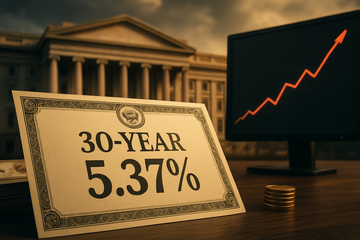
Warsh Cut the Fed's Rate Votes From Eight to Six and Refused to Explain — the 30-Year Bond Added 150 Basis Points for the Silence
Kevin Warsh's Fed held rates at 3.75%–4.00% on October 28 with two dissents for a hike, then announced it will vote on rates seven times in 2027 and six in 2028, will give forward guidance only in a crisis, and will publish no path for investors to lean on. That converts policy from an information service into a market-priced distribution, and it is already showing up in prices: the 30-year Treasury closed at 5.37%, roughly 150 basis points above the policy midpoint, while the December hike is priced near 76% in futures and prediction markets. The money moves to whoever can price or fund the uncertainty — dealers, Treasury buyers and deposit-rich banks — and away from anyone running duration on borrowed money.

Guidewire Paid About Twice Its Own ARR Multiple for Hyperexponential — and Bought Away a 750-Basis-Point Organic Slowdown
Guidewire agreed on October 27, 2026 to buy London-based hyperexponential for $1.7 billion in cash, plus up to $400 million tied to recurring-revenue targets, funded with a $1.0 billion term loan and cash on hand. On the company's own metric the deal contributes at least 650 basis points of fiscal 2027 ARR growth, which implies roughly $80 million to $95 million of ARR — so the price is 18 to 21 times ARR against Guidewire's own 9.5 to 11.2 times, and far above the 4.6 times revenue private equity paid for Sapiens, a much larger P&C software platform. The arithmetic matters because the bought 650 basis points mask an organic ARR slowdown from 19% to roughly 11.5%, and the shares fell 8.05% on the news. The market is not refusing to pay for insurance AI; it is refusing to pay for growth that has to be bought.

Sixteen Korean Firms, Then Three More: The Second Breach Wave Bypassed Bank Cores and Landed on Opex, Insurance and Ratings
Regulators confirmed breaches at 16 Korean financial firms and about 100,000 leaked records by Oct. 14, and three more firms disclosed leaks on Oct. 28 — yet every intrusion stopped at peripheral systems like loan-agent inquiry portals and employee mobile tools. That distinction is the investment case: with no core-platform breach, no trading disruption and no rating action so far, cyber lands in operating expense, insurance renewal pricing and rating methodology rather than in bank earnings. The cost of attacking has collapsed — one operator running an open-source agentic pen-testing tool with commercial LLMs — while the cost of defending is only now being reset, with KB Kookmin lifting 2027 security spend above ₩100B and Shinhan cutting its 2026 budget 10.4% in the year it was breached. For US banks the read-through runs through third-party referral guidance, exam scrutiny of highly sensitive data, and a cyber-insurance market where prices keep falling while loss ratios deteriorate.
What to expect
Evidence-first notes with a visible point of view.
This section collects sharp takes on earnings, shareholder meetings, and market structure. Each new piece should make the thesis, the facts, and the implications obvious within the first few screens.
Expect direct analysis, not generic commentary.
Expect the data to be explicit and the argument to be easy to follow.