Financials
Banks, credit, and where the risk is sitting
Net interest margins, credit quality, capital rules and deal flow — what the numbers say about the banks, insurers and asset managers reporting them.
2026-10-27


American Airlines Repriced Its Card Portfolio Twice in Twelve Weeks: With Fuel Guided to $4.70 a Gallon, Loyalty Pricing Is Doing the Work Fares Can't
American Airlines and Citi lifted the AAdvantage Platinum Select and Business card fees from $99 to $150 effective January 24, 2027, twelve weeks after the Executive card moved from $595 to $695 on August 23 — the first across-the-line reset of the AAdvantage fee schedule since Barclays last moved it in 2019. The trigger is arithmetic: third-quarter revenue rose 19.3% to $16.3 billion and the company still lost $269 million, because nine-month fuel expense jumped 55.2% and management guides fourth-quarter jet fuel to roughly $4.70 a gallon with no hedges outstanding. The fare table cannot absorb that, so the airline is repricing the one product its most engaged customers buy — loyalty currency — and the higher fee funds richer rewards that pull bookings through AAdvantage Hotels and Cars. The cash lands with the issuer: Citi books the fee, Mastercard earns on the volume, and American Airlines's growing loyalty float now does real work funding a balance sheet carrying $35.2 billion of net debt and negative book equity.

Apollo's near-10% stake in Mubadala Capital makes Abu Dhabi the cheapest funder of AI data centers
Apollo's Oct. 26, 2026 agreement to take a minority stake in Mubadala Capital — with Apollo and other strategic investors committing a combined $5 billion to Mubadala's strategies at initial close — is a plumbing deal, not an acquisition: it converts a sovereign balance sheet with $385 billion of assets into permanent, fee-paying capital for the private-credit funds that now finance AI data centers. The timing is the story. Apollo led a $40 billion GPU master lease for SpaceX the same day, hyperscalers have lifted debt-funded capex from 9% of spending in fiscal 2024 to 32% on a trailing basis, and Carlyle estimates private credit alone could finance about $1 trillion of AI compute. Sovereign money lowers the cost of that credit at exactly the moment public markets are repricing it — CoreWeave bonds yielded 15% to 16% in mid-October with credit-default swaps near 1,200 basis points — so the risk does not disappear; it migrates into books that mark far less often than a bond does.

FICO Meets the $10 Ceiling—and Loses Its Mortgage Tollbooth
The mortgage-score market is moving from a protected tollbooth to a regulated price comparison. FICO is holding its wholesale bundle at $10 for committed lenders while VantageScore 4.0 gains a route into loans guaranteed by Fannie Mae and Freddie Mac. The near-term cost is pricing power; the longer-term question is whether broader score adoption expands mortgage volume enough to offset the lower toll.

Half the Market Is in a Bear Market, the Index Is 2.5% Off Its Record, and Avoiding AI Pays 40 Basis Points
The S&P 500 closed Oct. 23 at 7,623.68, about 2.5% below its Oct. 6 record of 7,819, while 51.5% of the more than 5,100 U.S. stocks tracked by Navellier sat at least 20% below their highs. The market's answer has been a rotation, not a sell-off: a Goldman Sachs S&P 500 ex-AI index returned 12.4% year to date through Oct. 22 against 12.0% for the benchmark, a 40-basis-point edge that is noise rather than an allocation. The real dispersion sits inside the AI complex, where the market has stopped paying for growth — Micron now trades at 7.0x forward earnings on an 86.8% gross margin and SK hynix at 5.9x trailing — and the binding constraint has moved from demand to financing. For investors, that argues for sizing JPMorgan Chase and the software, health-care and staples cohort against a nominal record print, not for buying non-AI as a factor.

Ripple's Trust Bank Is a Permission Slip, Not a Moat: $2.5B of Reserves, $11.7M of Capital, and a Crowded Template
The OCC gave Ripple final approval for Ripple National Trust Bank on October 26, 2026, converting a December 2025 conditional charter into a live federal license: the bank administers RLUSD's segregated reserves, serves as collateral trustee for RLUSD holders, and can offer fiduciary digital-asset custody. What it cannot do is the part banks fight over - take deposits, lend, or issue the stablecoin, which stays with a New York state trust company. The value is in what Ripple keeps: because it already owns its distribution rails, it retains roughly the whole reserve yield, an implied $88 million a year at Circle's own disclosed 3.5% reserve return rate, instead of paying partners the59 cents of every revenue dollar Circle handed out in the second quarter of 2026. But the template is now cheap and common - the OCC has cleared at least a dozen national trust charters since December 2025, one of which will move its own stablecoin issuance inside the bank - so the charter is table stakes and the money sits with whoever owns custody, settlement and distribution.
2026-10-26

Record Deals, Shrinking Premiums: Ageing Moved Pensions to Insurers — and a 6% Long End Now Sets the Price
UK risk transfer to insurers and reinsurers is forecast at £70bn in 2026, up 15%, and US pension risk transfer assets have reached $339.8bn, up 9% year on year — the ageing liability really is moving onto insurer balance sheets. Yet US premiums fell 26% in the second quarter even as contract counts rose 21%, because with the 20-year gilt near 6.0% and annuity purchase rates at 5.88% to 5.99%, duration is the binding constraint rather than demand. Insurers capture the liabilities and the fee pool, reinsurers capture the capital, and asset managers are left paid on a flat £880bn of hedged liabilities. The unpriced risk is circular: insurers fund 30-year longevity with private credit whose tight yields are what make the buy-in price work.

Agentic Commerce Will Not Be Settled on Oct. 29 — Mastercard's Growth Mix Will, and the Market Already Paid $93 Billion for It
Mastercard reports third-quarter 2026 results before the open on Thursday, Oct. 29, and the print cannot settle whether agentic commerce adds volume: neither network discloses agent-initiated transaction counts, and Mastercard's own research puts routine agent buying at roughly one in ten shoppers only by 2030. What Oct. 29 can settle is the growth mix — currency-neutral value-added services revenue grew 18% in the June quarter against 8% for the payment network — and the stock has already re-rated from roughly 28 times to roughly 34 times trailing earnings since June 30 even as Brent closed at $116.72 and the 10-year sits near 5% with every economist polled expecting a December hike. Visa prints on Oct. 27 and American Express already said on Oct. 23 that the premium consumer is still spending, so a soft mix on Oct. 29 lands on an expensive stock with no macro excuse left.

Nu Holdings Lost $16.4 Billion in One Pre-Market Session — and the Rate Everyone Blamed Is Not the Risk
Luiz Inácio Lula da Silva's 51.8% runoff victory on Oct. 25, 2026 sent Nu Holdings down about 22.5% in pre-market trading on Oct. 26, erasing roughly $16.4 billion of market value and pushing the stock below its pre-first-round level. The sell-off was mostly a repricing of Brazilian sovereign risk — the broad Brazil ETF fell about 19.6% and Brazilian banks 17%-18% — but the transmission into Nu runs through three channels: dollar translation of a real-denominated earnings stream, a credit book whose 90-plus-day delinquency already rose to 6.9% in the second quarter, and a valuation that had priced a fiscal adjustment Brazil has now abandoned. Nu's own second-quarter numbers show the margin was built on credit growth and falling cost of credit, not on rate cuts, so a 13.75% Selic that stays put is not what investors sold.
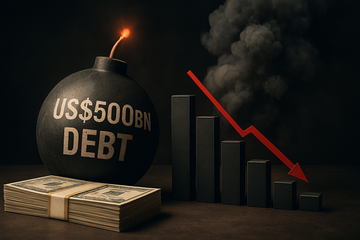
Private Credit's $265 Billion Value Erasure Didn't Stop AI's $500 Billion Debt Boom — It Relocated the Risk
Blackstone took in $63.3 billion of inflows in the quarter ended September 30, 2026 while its private credit book returned 1.8% net, and more than $265 billion of value was erased across the largest listed private credit managers. That reckoning was a liquidity and confidence event in retail-facing vehicles, not a credit event — which is precisely why the AI buildout is still being financed with debt rather than delayed. With nearly $500 billion of AI-related debt issued in 2026 so far and roughly a third of hyperscaler capital spending debt-financed, the risk is moving out of visible semi-liquid funds into bank balance sheets, insurer books and project-level structures. Read the redemption headlines as a map of where the credit now sits, not as evidence that the cycle has stopped.
2026-10-25

October 24, 2026: A $5 Quote Cap and a Mandatory Failover Reprice the Top of the Book
Two hard deadlines landed on the same Saturday, and neither is a new SEC rule. Cboe Global Markets's tiered maximum market-maker quote differential became operative on Oct. 24, 2026, while Regulation SCI Rule 1004 put the largest venues, clearing houses and their designated members through a coordinated business-continuity failover. Both raise the fixed cost of staying in the market, which taxes the marginal participant and pushes flow toward the biggest venues and the biggest wholesalers. For investors the trade is a scale premium: Nasdaq and CME Group monetise the volume wave while absorbing a trivial compliance bill, while Robinhood Markets carries retail-transaction revenue that depends on the spread capture these rules compress. The pending proposal to rescind Rule 611 remains the catalyst that decides how wide that gap gets.

350 Homes Is the New Wall: Treasury's January 7, 2027 Ban Forces Single-Family REITs to Build, Not Buy
Treasury's proposed rule, published Oct. 23, 2026, would bar any entity controlling 350 or more single-family homes from buying existing houses from Jan. 7, 2027, while exempting build-to-rent, renovate-to-rent and transfers between large institutional investors — a ban on one exit, not on ownership. The bid for housing does not disappear; it moves to builders and construction lenders, which turns single-family rental into a development and financing business and makes capital, not rents, the thing that re-prices. The two largest landlords were already net sellers, and their own filings flag the real risk: reduced access to capital markets. Own the exempt channel and the lenders who finance it; be cautious on the landlords whose growth depended on buying houses someone else can no longer buy.
2026-10-24

American Express Won on Credit, Lost 3.7% on Earnings Quality, and the Agentic Toll Is Still Not in the Billings
American Express reported third-quarter 2026 net income of $3.71 billion on Oct. 23, beat the $4.51 adjusted EPS consensus with $4.68, and still closed 3.68% lower at $313.22 while Visa slipped 0.6% and Mastercard fell 0.5%. The market was not selling credit: AmEx wrote off 1.8% of consumer balances, held total delinquencies in a 1.2%-1.3% band for a fifteenth quarter, and grew net card fees by more than $400 million — it was selling earnings quality, with reported EPS up 31% on a $982 million travel-stake gain and an 18.1% tax rate against adjusted EPS up 13% on revenue that missed by about $54 million. The agentic-payments leg investors keep pricing is real in standards and absent in numbers: the only published agentic rails have settled roughly $15.0 million across 109.6 million transactions, so the investable expression sits in fee-and-credit compounders and the trust layer, not in an agentic revenue line that no network yet reports.

JPMorgan Chase Deposits Grew 8% and Wells Fargo 11% in the Quarter AI Agents Got Blocked — Wall Street Sold the Wrong Half
JPMorgan Chase, Wells Fargo, Citigroup, Bank of America and Morgan Stanley restricted third-party AI agents inside customer accounts between Oct. 13 and Oct. 23, and the market read it as a deposit flight. Average deposits instead grew 8% at JPMorgan Chase and 11% at Wells Fargo in the same quarter, and no bank has disclosed an agent-caused loss. What actually repriced was permission: by redefining consent around the credential, banks kept the balances while the card networks and identity vendors became the parties that say yes to a payment — and collect for saying yes.

France's Riots Now Set the Spread — and the US Pass-Through Runs Through the Dollar, Not French Bank Capital
French civil unrest has moved the price of French sovereign risk: the 10-year OAT-Bund spread hit 177.7bp on Oct 22, the widest since November 2011, and Moody's held the country at Aa3 with a negative outlook on Oct 23 even though a downgrade had been priced. The deficit arithmetic barely moved — the 2027 budget still targets 5% of GDP against 5.4% this year — so what changed is the risk being paid for, and it is political durability rather than solvency. That matters for US investors because France is not Italy: the largest French banks hold OATs worth only 15-30% of CET1 capital, versus more than 100% at Italian banks, and much of it is held at amortised cost, so the pass-through runs through euro translation, dollar funding costs and rating headroom rather than through a domestic mark-to-market spiral.

The OCC's Stablecoin Rule Turns $300 Billion of Crypto Float Into a Rule-Bound T-Bill Buyer — the 30-Year Auction Gets Nothing
The OCC's final GENIUS Act rule, issued October 21, 2026 and effective January 18, 2027, fixes what a dollar stablecoin must hold: cash-like Federal assets, overwhelmingly Treasury bills with no more than 93 days of remaining maturity. That converts roughly $300.5 billion of stablecoin float into a regulated, price-insensitive bid for bills at the exact moment the Federal Reserve has stepped out of that market, with scheduled reserve-management purchases at zero since mid-August. The demand is real but narrow. The float is about 4% of the $7.12 trillion bill market, and because reserve maturity is capped at 93 days, none of it can touch the long end, where the August 13, 2026 30-year auction drew a 2.39 bid-to-cover at the highest auction yield in 25 years. The money instead accrues to whoever owns and distributes the regulated float: Circle earns 95.2% of its revenue from reserves and paid $324.6 million of distribution costs to Coinbase in the second quarter, which makes the OCC's reversal on affiliate rewards, not its reserve mandate, the decision that decides who wins.

Trump's Mortgage Order Cuts Paperwork, Not the 7.32% Rate — and Insurers Capture None of the Savings
President Trump's Oct. 22, 2026 order on housing costs starts a pilot to cancel mortgage insurance proactively and turns FHFA's title-acceptance pilot into a nationwide program, but the signed text limits the insurance pilot to loans written after it is established — a draft version industry estimates would have reached roughly 40% of borrowers with mark-to-market loan-to-value below 80%. The cash is therefore capped at $500 to $1,500 of closing costs per refinance and one insurance premium on a new vintage, while a 7.32% 30-year fixed rate costs a $400,000 borrower about $272 a month more than last year's 6.30%. Private mortgage insurers keep the premium on their legacy books, refinances are roughly 7% of title premiums, and refinances are 10% of MGIC's new insurance written, so the order is close to a non-event for the mortgage-insurance and title groups. What actually decides those balance sheets is the long end and the capital regime now in force, with PMIERs risk-based required-asset tables fully effective since Sept. 30, 2026.
2026-10-23

Blackstone Raised a Record $63.3 Billion and Sold Almost Nothing: AI Infrastructure Is Now a Fee Engine, Not an Equity Trade
Blackstone split its third quarter in two: record inflows of $63.3 billion and fee-related earnings up 6% to $1.572 billion on record assets of $1.368 trillion, against net realizations down 34% to $331.5 million and distributable earnings down 13% per share. Management says AI infrastructure is about 7% of assets — roughly $96 billion — and the highest-return area of the firm, financed through Google-backed Crux AI, a $9 billion junior tranche inside an $18 billion Anthropic package, and a data center portfolio heading to about 6 gigawatts. The mechanism is capital migration: with Meta running negative free cash flow and NVIDIA organizing more than $500 billion of third-party compute financing, the marginal AI capital expenditure dollar now clears through private credit and contracted leases rather than public equity. The market paid for the fee engine — the shares rose 6.2% on Oct. 22 — but they are still down nearly 30% in 2026, and the wealth channel that funds the buildout is rationed.

Citigroup's Banamex Roadshow: The US$9 Billion Charge Is Certain, the US$3 Billion Proceeds Are Not
Citigroup is taking Grupo Financiero Banamex public in Mexico, and the analysts who flew into Mexico City in the week of Oct. 19 were building the pricing work for a January 2027 listing. The question for Citi's shareholders is not what Banamex is worth but what the exit converts into: roughly US$9 billion of currency translation losses that run through earnings in early 2027 while risk-weighted assets leave the balance sheet and the capital ratio edges up. With more than US$3 billion of proceeds targeted, the sale funds about one quarter of Citigroup's current buyback pace, which is why the January print — not the earnings — decides whether this exit creates capital or merely books a write-down.

The AI Rout Paid the Toll Booths: CME +3.4% and Nasdaq +7.5% While the Composite Fell 2.6%
On Oct 22, 2026 the Nasdaq Composite fell 2.58% and the Philadelphia Semiconductor Index 6.72% as megacap AI spending plans came under fire — and CME Group rose 3.45% while Nasdaq rose 7.47%, because a venue is paid for risk transfer and recurring licences, not for capital spending. The mechanism is in the filings: CME's third-quarter average daily volume of 29.4 million contracts was the highest third quarter in its history, and JPMorgan Chase's analyst double-upgraded the stock to Overweight with a $367 target on a \"constructive\" rates-and-energy regime. But the re-rating is uneven and partly borrowed from the future — Nasdaq's headline 39% index-revenue growth is a claim on equity assets under management, so the same drawdown that pays CME is a fourth-quarter headwind for index fees, while CME's \"record\" third-quarter revenue still sat 7.6% below its own first-quarter peak. Own the toll booth as a rotation out of the AI capex chain, not as a hedge against it.
2026-10-22

What to expect
Evidence-first notes with a visible point of view.
This section collects sharp takes on earnings, shareholder meetings, and market structure. Each new piece should make the thesis, the facts, and the implications obvious within the first few screens.
Expect direct analysis, not generic commentary.
Expect the data to be explicit and the argument to be easy to follow.