Financials
Banks, credit, and where the risk is sitting
Net interest margins, credit quality, capital rules and deal flow — what the numbers say about the banks, insurers and asset managers reporting them.
2026-10-02


SEC's $10T Private-Markets Hand-Out: Who Wins the Distribution Race
The SEC's Sept 30, 2026 'responsible retailization' package lets registered funds charge hedge-fund-style performance fees, modernizes interval-fund wrappers, and adds professional certifications to the accredited path — together pulling Blackstone, Apollo Global Management, KKR, and Blue Owl and the wealth distributors (Morgan Stanley, Charles Schwab, LPL Financial) into a contest for trillions of household balance sheets. Retail appetite for interval funds already hit $247B at a 25–30% growth clip, and the proposal removes the structural reason private markets stayed gated. The same liquidity mismatch that triggered Blue Owl's February redemption halt is now the headline risk in non-accredited hands.
UK Banks Are the Leverage Point in a Global Long-End Break
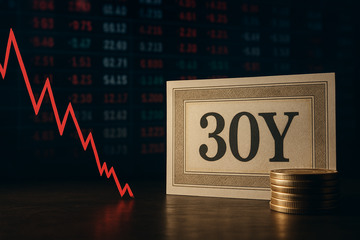
Britain's 30-year gilt printed 6.029% on October 1 — the highest since January 1998 — and pulled the FTSE 350 banks index down 4.1% in its worst session since May. The move is not UK-domestic alone: US 30-year Treasuries hit a 24-year high the same day and France's 10-year cleared 5%, with hedge-fund leverage in long-dated gilts now flagged by the Bank of England as a spillover risk. The deeper read is that UK banks — with the largest direct mortgage-and-gilt book exposure and an Autumn Budget on October 28 dangling sector tax risk — are the highest-beta way to play a structural long-end repricing that US money-centers will not escape, only attenuate.

Vol-Control Funds Are Sitting at a 98th-Percentile Equity Bet — That Owns the Next 5% Drawdown
Volatility-control strategies have pushed equity allocations to the 98th percentile of their post-2010 range, leaving $300B-$500B in systematic books with almost no buffer if realized volatility rises. Barclays estimates a mild uptick could force more than $100B in equity selling — five times the ~$25B that would be deployed if vol kept compressing — with the air pocket now queued for early 2027 as midterms, a debt-ceiling standoff and Fed-transition echoes converge. The exposure isn't hidden in opaque CTAs; it sits on the shelves at BlackRock, Invesco and SEI Investments.
2026-10-01

Bank of America's $39M cash-sweep settlement is rounding error — the parallel cases at JPMorgan, Wells Fargo and Morgan Stanley aren't
Bank of America's Merrill Lynch unit agreed on Sept. 30, 2026 to pay $39 million to settle claims it paid brokerage customers 0.05%–0.14% on swept idle cash while peers paid about 2%. The settlement is a rounding error against Bank of America's $1.4 billion Q2 2026 wealth-management net income — but the same legal theory has survived motions to dismiss at JPMorgan, Wells Fargo, Morgan Stanley, UBS, Charles Schwab, Ameriprise, LPL and Raymond James, and the underlying revenue at stake is measured in billions, not millions. For investors, the read-through is not the headline dollar amount: it is that every large brokerage and wealth franchise with a bank-deposit sweep program is now exposed to a fiduciary-duty theory courts are letting proceed, and the resolution band will likely be set by Bank of America's modest check rather than the much larger retail-deposit precedent set by Capital One's $425 million 360 Savings deal.
JPMorgan Says the Mag-7's Worst De-Rating in a Decade Is Done — That's a Setup, Not a Buy
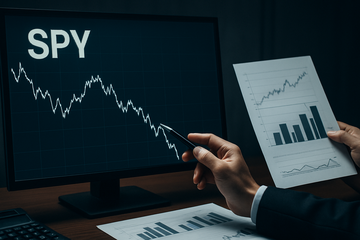
Two JPMorgan signals landed within 24 hours in late September: a Mislav Matejka equity-strategy note on Sept. 30 arguing the Mag-7's valuation reset is 'largely complete,' and the bank's Market Intel Desk flip to tactically bullish on Sept. 29. Both arrived days before JPMorgan's own Q3 print on Oct. 13 and the Mag-7 gauntlet that opens with Tesla on Oct. 21 and closes with Nvidia on Nov. 17 — turning a sell-side view into the next three weeks' dominant trading catalyst. The de-rating drag is over, but the capex/FCF overhang that justified the compression has not gone away, so the call removes one headwind while elevating earnings delivery into the only remaining one.
Watchdog Cleared Powell, Trump Demanded His Head — The 30-Year Yield Just Priced It In
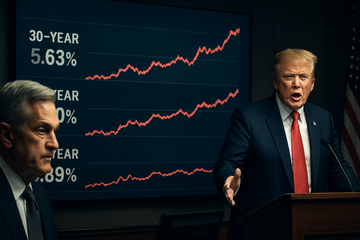
On September 30, 2026, the Federal Reserve's Inspector General cleared Jerome Powell of criminal wrongdoing in the $2.4 billion headquarters renovation but flagged serious project mismanagement. Within hours, President Donald Trump demanded Powell resign from the Board of Governors and directed Attorney General Todd Blanche to consider a lawsuit. The market verdict was unusually precise: the 30-year yield closed at 5.63% — its highest since June 2002 — while the 2-year held almost still. The long bond sold off on Fed-independence risk, the short end stayed anchored by Kevin Warsh's still-hawkish Fed. Banks, long-duration Treasuries, real estate, and the dollar each carry a different exposure to that split.
2026-09-30

AI Borrowers Now Need 9–10% Yields to Get a BB Done — The Spread Story Behind the $725B Capex Cycle
AI-related debt issued by low-rated US firms has hit $88 billion year-to-date in 2026, and credit buyers are walking away: BB-rated AI borrowers are paying 9–10% yields, weaker credits up to 14–15%, and project-deal bonds like Zenith Arc's have already lost seven points below issue. With hyperscalers forecast to issue $420B of debt in 2027 and BDCs holding $115B of software exposure, the spread reset — not the headline capex number — now decides who funds the next leg of AI.

Treasury Just Auto-Enrolled 60M Kids Into 100% Equity Accounts — State Street Holds the Default, and the $1T Headline Is Wrong
Treasury's Sept 29, 2026 temporary regulations will auto-enroll more than 60M additional children into Trump Accounts starting Oct 1, 2026, with every dollar flowing into the State Street SPDR Portfolio S&P 500 ETF (SPYM) by default. The forced demand is real but smaller than the trillion-dollar framing: Wells Fargo pegs near-term inflows at ~$20B, while McKinsey's long-term ceiling tops $900B over a decade. The actionable trade is the asset-management and custody stack — State Street as default beneficiary, BlackRock and Vanguard for alternate slots, BNY Mellon as financial agent, Robinhood as initial trustee — operating against the awkward backdrop of a Fed that just hiked, not cut.
2026-09-29

Goldman's Board Just Pre-Wired a Waldron Handoff for 2027 — Why the Stock Slipped Anyway
Goldman Sachs' board has discussed a plan for David Solomon to step down and President and COO John Waldron to take over around the end of 2027 or 2028, according to a Sept. 29, 2026 WSJ scoop, even as Q2 2026 delivered record net revenues of $20.34 billion (+39% YoY) and EPS of $20.98 that beat consensus by 45%. Goldman Sachs shares fell 1.8% on Sept. 28 to $918, suggesting investors read the timeline as uncertainty, not continuity — and putting the bank in step with an industry-wide succession clock now ticking at JPMorgan Chase and Morgan Stanley.

Shopify Hands Its Checkout to Browser-Based AI Agents — Now Visa, Mastercard, and Stripe Are Fighting Over Who Vouches for the Bot
On September 28, 2026, Shopify opened WebMCP-based checkout — including Shop Pay — to browser-based AI agents across all eligible merchants, making its $115.6B Q2 2026 GMV the rail that Visa's Trusted Agent Protocol, Mastercard's Agent Pay, and Stripe/OpenAI's Agentic Commerce Protocol are all racing to integrate with. AI-driven traffic to Shopify merchants grew 8x year over year in Q1 2026, and three competing protocol camps are now contesting who owns the agent's identity — and therefore who eats the dispute when an AI mischarges a card. The side that wins that identity layer locks in chargeback economics for the next decade of agent-led commerce.
2026-09-28

2026-09-27

Goldman's $300 Billion Reality Check: Hyperscalers Are Spending AI Money They Haven't Earned Yet
Goldman Sachs strategist Ryan Hammond says the five largest U.S. hyperscalers need roughly $300 billion in annual AI revenue to break even on their AI capex — yet Q2 2026 cloud revenue is running only ~$70 billion above the pre-AI trend, leaving a ~$230 billion gap. With the group's free cash flow projected to turn negative through 2026-2027 and more than a third of next year's AI investment funded by debt, the AI trade splits: upstream beneficiaries like [NVIDIA], [TSMC], [SK Hynix] and [ASML] keep winning on volume, while Microsoft, Amazon, Alphabet, Meta and Oracle face a cash-conversion test that earnings season — not capex announcements — now decides.

Wall Street reclaims the wheel from retail — and the S&P's marginal buyer just changed
Institutional capital has replaced retail as the dominant force in US equity flows, per Vanda Research and Goldman Sachs data cited by CNBC on Sept 27, 2026. With the 10-year Treasury yield stuck above 5%, AI trade fatigue setting in, and corporate buybacks going dark, the market's marginal buyer is now far more rates-sensitive than the 2021-era retail-flow models assumed. The flip is already showing up in record equities trading at Goldman Sachs, JPMorgan, and Morgan Stanley, while pure-play retail platforms face the steepest comp drag.
2026-09-26

Blackstone's Rainmaker Era Ends — But the $1.35T Franchise Already Told You What Comes Next
Joe Baratta, the face of [Blackstone]'s $450B private-equity unit, is leaving by year-end — the third senior exit this year, with a Form 4 sale seven days earlier that did the talking. The Q2 2026 numbers already reveal the post-rainmaker playbook: record $1.35T AUM, $228B of dry powder, BCP IX and BCP Asia III closed, and a Medline secondary that is testing the public-market exit window right now. For [KKR], [Apollo Global Management] and [Carlyle Group], the question isn't whether the star dealmaker is gone — it's whether their own diversified franchises can monetize the $50B+ exit queue ([Medline], [athenahealth], Mimecast) faster than [Blackstone] can.

MOVE Just Crossed 96 While VIX Stayed Below 15 — The Bond-Equity Volatility Gap Is Now Naming the Real Winners and Losers
The ICE BofA MOVE Index has surged 27% in September to 96 while the VIX closed Friday at 14.87 — a divergence Bloomberg's Credit Weekly flags as the moment corporate-bond resilience finally cracks. With the 10-year back above 5.18% (highest since July 2007), mortgage rates jumping 32 bps in three days, and Oracle's 5-year CDS sitting near record highs, the rotation now running the tape is a sector story: long-duration rate-stable value (banks, insurers, utilities) absorbs the carry while AI-levered tech absorbs the credit mark.

From $700B to $960B: The Fed's Quiet Threshold Lift Hands U.S. Bancorp a Compliance Windfall—and Depositors a New Trade-Off
The Fed is preparing to lift the asset thresholds that trigger stricter oversight from $700B to roughly $960B and the lower step-ups from $100B/$250B to roughly $150B/$350B, per a Reuters report on Sept. 25, 2026. The change would pull U.S. Bancorp out of the second-tightest supervisory tier, give Capital One, PNC and Truist room to grow without tripping the cliff, and let smaller banks like Western Alliance and Zions operate below $100B indefinitely. The trade is concrete: less bespoke supervision, more M&A capacity, and a thinner early-warning system for the banks that already failed once in 2023.

A €95M AI voice scam hit Italy's biggest bank — and US banks' KYC bill just got bigger
Fraudsters posing as Intesa Sanpaolo's CEO on WhatsApp and cloning a partner's voice with AI tricked Fideuram's chairman into wiring roughly €95M in February 2026, with €36M still unaccounted for. The heist hit a bank posting record profits and exposed the same 'no system breached' blind spot US banks are paying tens of billions in tech spend to close. The vendor picks — NICE, FICO, TransUnion, RELX — and the regulatory clock under the EU AI Act and OCC's April 2026 model-risk guidance turn this from an Italy story into a US-bank compliance catalyst.
2026-09-25

2026-09-24

The 21-Bank Stablecoin Consortium Just Made the Fed's CIP Rule Irrelevant — And It's Already Eating Circle's Float
On September 1, 2026, 21 global banks — Goldman Sachs, Citi, Bank of America, Wells Fargo, PNC, UBS, Santander — formally committed to launch a joint USD stablecoin in the first half of 2027, six months before the GENIUS Act's January 18, 2027 effective date. Combined with the Fed's June 18, 2026 proposed Customer Identification Program rule for payment stablecoin issuers, the framework now forces crypto-native players like Circle Internet Group and Coinbase to compete against a single regulated token backed by the largest correspondent banking network in the world — and USDC's $74.6 billion float is the prize.

The Basis Trade Has Shrunk 28% This Year—and the 30-Year Auction Just Discovered What Demand Looks Like Without the Carry Crowd
Hedge funds have cut the Treasury cash-futures basis trade from $1.26 trillion at the start of 2026 to roughly $900 billion by mid-September, per Morgan Stanley strategist Eli P. Carter—the smallest in over two years. The unwind is concentrated in 2- and 5-year notes, yet the 25- to 30-year part of the curve has actually grown as 30-year yields push5.42%, the highest since 2007. With the Treasury having doubled its liquidity-support buyback sizes and the Fed's QT run finished, the Goldman Sachs- and Morgan Stanley-led prime brokerage franchise that monetized the trade faces shrinking commissions, while long-end auctions discover who their marginal buyer really is.
What to expect
Evidence-first notes with a visible point of view.
This section collects sharp takes on earnings, shareholder meetings, and market structure. Each new piece should make the thesis, the facts, and the implications obvious within the first few screens.
Expect direct analysis, not generic commentary.
Expect the data to be explicit and the argument to be easy to follow.