Financials
Banks, credit, and where the risk is sitting
Net interest margins, credit quality, capital rules and deal flow — what the numbers say about the banks, insurers and asset managers reporting them.
2026-09-10

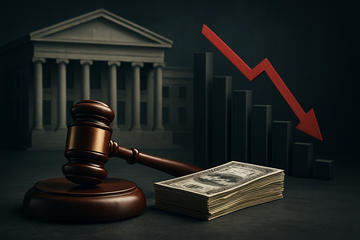
A Lawsuit Aimed at $42 Billion of Bank Capital Relief That Hasn't Arrived Yet — While JPMorgan and Citigroup Already Spent the Money
Better Markets sued the Federal Reserve and Vice Chair for Supervision Michelle Bowman on September 10, 2026, alleging the rulemaking record behind the March 2026 capital proposals was corrupted. But the four largest US banks have already repurchased $91.8 billion of stock in the twelve months through June 30, 2026 — funded by earnings and a stress-buffer freeze the suit does not touch. What is actually at risk is roughly $42.1 billion of forward capital relief scheduled to land in 2027–28, and the banks most exposed are the ones with the thinnest stress buffers, not the biggest buyback headlines.

Nubank's 3.50% US savings rate forces a deposit-pricing fight Nu Holdings can already fund from $45B of LatAm deposits
Nu Holdings launched a US digital bank on Sep 10, 2026 offering 3.50% APY savings, a 1.50% cashback Mastercard, and free remittances to Brazil/Mexico/Colombia through Lead Bank — backed by a federal charter application already conditionally approved by the OCC. With $45.3B of deposits and 33% ROE from Latin America, Nu enters with a cost-of-funds profile and an operating playbook (zero branches, USDC yield on the multi-currency side) that US regional banks like KeyCorp and PNC, paying 1.88%–1.91% on interest-bearing deposits, cannot replicate without compressing their own net interest margins.

Visa and Mastercard Just Made AI Agents a Card-Network Problem — and Stripe and PayPal Are Already Inside the Tent
Ant International's Antom became the launch partner for both Visa's Intelligent Commerce and Mastercard's Agent Pay on the same day in September 2025, then Visa and Mastercard both joined the new Agentic Payments Alliance as founders. The card networks are writing a new authentication layer — verifiable intent, Web Bot Auth signatures, agent identity — that sits above the existing card rail, and processors like Stripe and PayPal must adopt it or be sidelined. The race to own the trust layer for agentic commerce is the most consequential plumbing shift in payments since the rise of mobile wallets.
2026-09-09

Amazon’s pregnancy-discrimination case reframes “HR risk” as a recurring cost line—so budgets, not reserves, decide the outcome
A proposed nationwide pregnancy-discrimination lawsuit against Amazon (plus a parallel New Jersey pattern-or-practice complaint) alleges failures in accommodation handling, documentation gating, and retaliation timing. The investor takeaway is less about any single settlement: it’s that platform-scale HR operations can convert compliance failures into ongoing, budgetable spend—training, investigations, policy redesign, and slower workforce throughput—showing up in how management plans for labor-cost “overhang.”

Chime's $590M Stride Bank Buy Ends the BaaS Era — and Block Just Showed the Other Path
Chime Financial is paying $590M in cash — roughly 1.5x tangible book — for its seven-year sponsor bank Stride Bank, N.A., converting a fee-laden BaaS dependency into a $4.96B deposit balance sheet that anchors $100M+ in net synergies and pushes 2026 revenue guidance to $2.76–2.77B. Hours later, Block filed for an OCC national trust bank — uninsured, no deposits, custody-only — proving the 2026 charter wave is bifurcating into deposit-rich acquirers and lean custody shells, with SoFi, Upstart and Nu Holdings all already mid-flight on the same playbook.

CLARITY Act Lobby War: Crypto's $190M vs Banks' $4.9T Deposit Wall — Who Wins the Next Decade of Payments
The fight over the CLARITY Act has moved from Washington hearing rooms to senators' home states during the August recess, with Coinbase-backed Stand With Crypto and the Independent Community Bankers of America spending through September 14 to lock the 60 cloture votes needed for the September 15 procedural vote. If the stablecoin-rewards guardrail survives, Circle and Coinbase keep a USDC yield flywheel that now drives 44% of Coinbase's revenue; if the bank-favored language wins, JPMorgan, Bank of America, Wells Fargo and Citigroup preserve a $4.9T community-bank deposit base at risk of losing $1.3T. The fight is binary — and Polymarket has2026 enactment at just 15%.

CVC Capital Partners hands power to co-CEOs—so watch how quickly its underwriting tightens (or loosens) in the US
CVC Capital Partners says Todd Sisitsky and Peter Rutland will become co-CEOs by Q1 2028, with Rob Lucas stepping back as CEO. The near-term investor question is not the résumé swap—it’s whether the new structure changes how CVC funds US mid-market deals, prices leverage risk, and times exits as record realisations and strong fundraising collide.

As Japanese yen firms and oil sprints toward $100, the “carry-to-energy” repricing starts with bank hedging, not equities
In late August/early September 2026, the yen strengthened while crude moved up on renewed Middle East supply-risk, tightening the FX-rate-oil triangle and pushing markets to price a more hawkish Japan path. The key for US investors: the first-order trade-through is likely via hedging and funding costs inside large dealers and banks, before it shows up as a clean rotation across equity factors. Exxon XOM and Chevron CVX offer the clearest direct linkage through oil pricing, while Toyota is the pressure-test for how FX translation swings can flow into earnings expectations.

Meta Turns “AI Chat” Into “AI Permissions” — and that shifts value toward the companies that price access, monitor actions, and prove audit trails
Meta’s new Muse “AI agent” goes beyond answering by connecting to other apps and executing actions after permission/approval. That changes the economics of AI from model quality alone to who controls cross-app permissions, action logging, and misuse prevention—raising demand for identity, security, and monitoring while pressuring ad/payout players exposed to higher compliance and fraud risk.
2026-09-08

Ackman Sold Alphabet for Netflix. The Real Rotation Is From AI Capex to Cash Flow
Pershing Square exited Alphabet and initiated Netflix during the first half of 2026, while Berkshire Hathaway committed another $10 billion to Alphabet. The split is less a referendum on artificial intelligence than a disagreement over when investors get paid: Alphabet is converting cash into infrastructure, while Netflix is converting scale into margins, advertising revenue, and buybacks. The trade favors cash-flow visibility over maximum AI optionality, but the price is greater exposure to content commitments and streaming execution.

WaFd at 0.98x tangible book just sold majority control to a private bank at 1.79x — the new regional-bank M&A playbook
On Sept. 7, 2026, WaFd and EverBank announced a $3.9B all-stock reverse merger in which EverBank's private-equity-backed shareholders will own 59.2% of the $75B-asset combined bank, even though WaFd is the surviving public entity. The deal prices WaFd's book at 1.79x tangible equity versus WaFd's standalone 0.98x — a re-rating that already explains why mid-cap regionals from KeyCorp to Webster Financial are now read-through targets, with $135M of cost synergies and 29% EPS accretion underwriting the premium.

Goldman’s Bellevue AI engineering office turns “frontier talent” into a recurring cost line — and it reframes the GPU debate
Goldman GS opening a dedicated Bellevue AI/cloud engineering office signals that the scarcest input for frontier-style systems is not only compute, but also the teams that can ship and maintain production-grade models. For investors, the key read-through is that software engineering talent is becoming a structural cost driver for bank and big-tech AI platforms — which can tighten margins even as revenues scale.

DOJ’s “private liquidity” fraud theory could quickly re-rate secondary-market carry—because it attacks price discovery, not just paperwork
A DOJ case involving Linqto frames pre-IPO “liquidity” as criminal pricing conduct in markets where buyers cannot verify prices. The core investor shock is that secondary carry now depends on trust in secondary pricing models, so discounts can widen faster than fundamentals change.

SEC’s transfer-agent modernization targets settlement risk—but the real trade is compliance overhead vs. operational resilience
The SEC’s Sept. 4, 2026 proposal would modernize registered transfer-agent rules around recordkeeping, restrictive legend controls, and outcomes-based safeguarding that explicitly covers custody, operational, and cybersecurity risks. For investors, the punchline is that the biggest near-term effects are likely to land in issuer servicing and regulated back-office systems—potentially improving real settlement reliability while also creating new “paper-to-system” workflow bottlenecks.

Social Security tax updates can reshape retirement cash flow—because the tax bill follows when income is realized
A new $6,000 “senior” deduction for tax years 2025–2028 changes how much taxable income high-income retirees realize each year. Separately, Social Security benefit taxation is set to shift starting in 2027, meaning the marginal tax cost will increasingly depend on realized (not reported) income timing. For investors, the tradable angle is a cash-flow-timing event that can pull forward or delay household demand for tax-planning, brokerage, and tax-prep services.
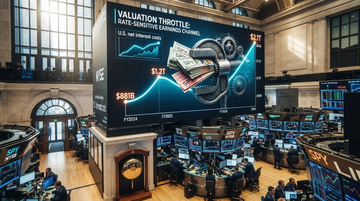
US debt’s interest bill is tightening equity multiples through a “rate-sensitive” earnings channel
Recent fiscal projections put US net interest on a steep upward track, with annual interest costs topping $1T in 2026 and rising toward $2T+ later this decade. That shift matters to equity markets less as a deficit storyline and more because it transmits directly into bank funding costs, spread dynamics, and—via the discount rate—valuation “throttle” effects.
2026-09-07

Citi’s China Brokerage License Re-Entry Is a “Fee Wallet” Event—But the Stock May Still Be Underpricing the Friction Risk
Reuters reports Citigroup. expects approval for a wholly-owned mainland China brokerage business as soon as September 2026, enabling onshore A-share brokerage, underwriting, research, and principal trading. The move directly upgrades Citi’s China fee pipeline, but the same re-entry faces policy and execution frictions that can delay monetization, which helps explain why the market may not fully re-rate Citigroup yet.

Citi Has 36 Days to Defend 13% RoTCE — Here's What 'Good Enough' Looks Like on October 13
Citigroup reports Q3 2026 on Tuesday, October 13 — and the bar it set for itself in Q2 is now the only line that matters: $24.8B in revenue, $3.15 EPS, 13.0% RoTCE, plus a fresh $30B buyback and a 12% dividend hike. With Fed Governor Waller signaling a conditional hold into the September 15–16 FOMC, Chair Warsh tilting hawkish at Jackson Hole, and JPMorgan Chase, Wells Fargo, Goldman Sachs, and Bank of America already printing double-digit revenue growth, this pre-print lays out the five line-items Citi has to match — and the three that could break the trade.

DXY's 80%-Complete Bear Flag Hands Gold and S&P Multinationals a September Verdict — If It Breaks
The Dollar Index is clinging to 98.888 support with a bear-flag breakdown setup 80% complete, opening downside to 97.80 if it cracks. A confirmed break would extend gold's push past $4,500 and amplify the S&P 500's foreign-revenue tailwind, where companies earning more than half their sales abroad grew earnings 74.7% in Q2 2026 versus 35.5% for domestic peers. The pivot is the September 16 FOMC, where Fed Chair Warsh's hawkish lean collides with Treasury Secretary Bessent's doubled debt-buyback playbook — making the final 20% of the flag asymmetric for Newmont, Barrick Mining, Agnico Eagle, and the Invesco DB USD Bearish ETF.

Italy's \"Voluntary\" Bank and Energy Ask Hides a €1.5–2B Extraction — and US ADR Investors Should Care
Italy's deputy prime minister Antonio Tajani asked banks and energy firms on Sept. 4 to \"bring forward\" tax payments for the 2027 budget, framing it as a negotiated, voluntary extension of two prior sector accords. Underneath the label sits a third round of cash from a banking system that has already paid €1.2B more tax in H1 2026 versus H1 2025, an energy sector that funded the August fuel-excise extension on the same model, and a coalition split where Deputy PM Salvini is publicly pushing a harder 5%-of-profits levy. The trade for US-based holders of UniCredit and Intesa Sanpaolo ADRs is not whether Italy hits the sector again — it already has — but whether Rome's template migrates to Spain or France and turns a managed extraction into a peripheral-Europe spread event.
What to expect
Evidence-first notes with a visible point of view.
This section collects sharp takes on earnings, shareholder meetings, and market structure. Each new piece should make the thesis, the facts, and the implications obvious within the first few screens.
Expect direct analysis, not generic commentary.
Expect the data to be explicit and the argument to be easy to follow.