Capital Markets
Deals, listings and the cost of money
IPOs, mergers, buybacks and credit issuance — what the terms of a deal say about what this market is willing to fund right now.
2026-11-06


China's AI-Unwind Safe Harbour Has a State-Sponsored Buyer; India's Refuge Runs on Oil, Not Chips
Goldman Sachs is right that China and India are where money goes as the AI hardware trade unwinds — but the mechanism matters more than the call. China's marginal buyer is no longer a foreign institution: state funds bought an estimated RMB 170 billion of onshore ETFs in October, on top of a stock of Chinese equities Goldman puts at roughly RMB 6 trillion, about 6% of the mainland market's capitalisation. That price-insensitive bid is what lets China internet names such as Tencent trade on 9.7x enterprise value to EBITDA with a beta of 0.73 while NVIDIA trades on 18.8x with a beta of 2.22. India's refuge runs on a different engine — a sliding oil import bill and the largest one-day foreign purchase since February 2021 — and it reverses faster than Beijing's bid does. The catch is that the state buys blue chips, not the AI complex, so Alibaba is still spending RMB 155 billion of capex a year with negative free cash flow, and the same national team sold at least US$123 billion of ETFs in January 2026.

Firefly's $1.3 Billion AST Order Puts an $83 Million Floor Under the Cost of a Launch
AST SpaceMobile is building its own rocket because it cannot get enough rides on other people's rockets, and on Nov. 6, 2026 it bought the engines from Firefly Aerospace instead: 36 engines, a perpetual manufacturing license and three years of engineering support worth more than $1.3 billion. The arithmetic underneath is awkward — $250 million of engine hardware for three vehicles works out to about $83 million per rocket, more than a dedicated Falcon 9 lists for in 2026 — so Blacklift only makes sense at a flight rate that does not exist yet. Only $400 million of the headline is cash at signing, the balance is 10 to 14 million AST Class A shares, and Firefly Aerospace's stock added roughly $947 million of market value in a single session, so the market has already paid for most of this order.
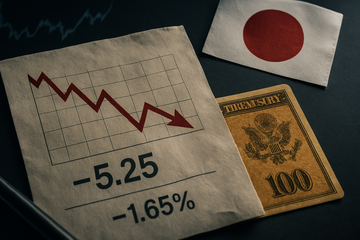
GPIF's First Loss in Six Quarters Was a Rates Shock, Not a Yen Shock — and It Puts a Price on Japan's $232 Billion Treasury Stake
Japan's sovereign savings fund lost ¥5.25 trillion, a −1.65% return, in the July–September 2026 quarter — its first loss in six quarters — and the cause was neither an AI-driven equity unwind nor a weak yen. Global sovereign yields rose across the curve after the Bank of Japan, the Federal Reserve and the ECB all hiked in September, while the yen actually strengthened about 3% on coordinated intervention and erased the translation gain on foreign equities. What matters for US duration is arithmetic: at a 5.29% 10-year Treasury yield and a 1.25% Tokyo policy rate, the yen return on a hedged Treasury is roughly 1.6%, about 140 basis points below the 3.055% yield on a 10-year JGB. That gap makes the world's largest foreign holder of Treasuries a price-sensitive marginal buyer, while the fund's own mandate caps how much it could even sell.
Banks Are All That's Left Standing: Hedge Funds Dumped the Rest After a 19-Month-Worst Day
The Nov 5 crash — the S&P 500's worst day since April 2025 — and Nov 6's Seoul circuit breaker left hedge funds holding one crowded long, financials, and an AI basket with no marginal buyer. Prime-brokerage data show gross equity exposure 7.8% below peak, the largest cut in the series since 2016, five straight October sessions of AI selling that erased every dollar of net buying since early 2025, and funds now underweight the AI trade for the first time since 2023. Banks are where the money went, from Samlyn Capital's restructuring to Citrini's paid-to-wait basket, but the Q3 2026 beat was paid by the crowd now liquidating, with equities revenue up 72% at Goldman Sachs and 41% at Morgan Stanley while JPMorgan and Bank of America missed. The result is a rate-sensitive, increasingly crowded long in the one sector nobody can afford to sell.

ING Groep's $500 Million Data-Center Loan Auction Shows Who Actually Holds AI Credit Risk
ING Groep put 12 data-center loans worth about $500 million up for bid on Nov. 5, 2026, including the first openly priced slice of Stargate-linked construction debt. The auction is worth less than a tenth of one percent of ING's €903.8 billion loan book, which is exactly why it matters: it puts a market-clearing price on AI construction credit at the moment banks, hedge funds and insurers are all changing hands on the same paper. For Oracle and CoreWeave, which run the same asset class at very different leverage, one winning bid on Nov. 19 sets the cost of capital for both.

1-for-200, Then 1-for-40: Nasdaq's $1 Bid Rule Is Where the AI Selloff Reaches the Retail Account
Between Oct. 27 and Nov. 5, 2026, six Nasdaq-listed issuers put reverse splits and compliance extensions on the calendar: Solowin Holdings at 1-for-200, Accuray at 1-for-40, Jasper Therapeutics at 1-for-30, Robo.ai at 1-for-25, C3is at 1-for-5 after a 1-for-40 in August, and Intrusion with a second 180-day grace period running to May 3, 2027. None of them sells AI, and that is the point: what they share is a quote that fell below Nasdaq's $1.00 minimum bid and the compliance clock that follows, while the Nov. 5 AI unwind erased roughly $2.5 trillion of index value and repriced AI credit. The splits create no enterprise value, but they are the only mechanism that restores a quotable price without new capital, and they settle in the accounts of retail holders as odd lots and fractional cash, against roughly $315 billion of client margin loans at Robinhood, Charles Schwab and Interactive Brokers.

Private AI Prints41x–55x Sales, the Public Tape Prints 6x–16x: Anthropic's IPO Is the Arbitrage Test
On Nov. 5, NEPC's Q3 2026 report put AI at 82.7% of US venture deal value — $426.7 billion of a pie that shrank from $253.5 billion in Q1 to $98.4 billion in Q3 — while the same session took5.5% off the Nasdaq Composite and roughly $5 trillion off AI and chip stocks since Oct. 6. The divergence is not a quirk to be arbitraged; it is a funding-arbitrage mechanism, and it has already raised the price of the marginal AI dollar, with AI infrastructure debt trading at 15% to 16% yields. The public tape is repricing Alphabet and Meta for cash burn and depreciation, not the margins of the suppliers who still get paid — which is why Micron sits at roughly 4.9x forward earnings and SK hynix at 4.3x trailing after losing half and58% of their value, respectively. Anthropic's IPO pricing, with a reported range of $1.5 trillion to $2.0 trillion, decides which mark survives.
Spend Flatlined, Tokens Surged 37%: Ramp's Card Data Is the Brake the AI Capex Chain Isn't Pricing
Ramp's transaction data shows AI token volume up 37.1% in the week ending October 23, 2026 while token spend rose only 8.9%, because the blended price per million tokens fell 26.8% to $0.56. That is price deflation, not demand collapse — adoption still widened to 55.9% of businesses — but it means the dollars funding GPUs now come from bond issues and equity raises rather than from enterprise token budgets. Alphabet's third-quarter free cash flow was -$9.1B, Amazon's -$34.8B and CoreWeave's trailing twelve months -$13.7B, while the layers paid in cash — Nvidia, Micron and SK hynix — run 75% to 87% gross margins. Model 2027 compute revenue off price per token and depreciation, not off application-layer spend growth.
2026-11-05

Dow +3%, 10-Year Down 7bp, Semis at a 6-Month Low: November 4 Was a Rotation Out of AI, Not a Risk-On Call
November 4, 2026 was three trades stacked on one morning, not a risk-on call. Crude fell about 8% to $88.55 a barrel as the Iran war moved toward diplomacy, the 10-year Treasury yield fell 6.6 basis points to 4.88% even with futures pricing roughly an 83% chance of a December Fed hike, and the equity rally ran through banks and self-funded mega-caps while the Philadelphia Semiconductor Index closed at a six-month low. The mechanism was a repricing of the AI buildout's funding and permitting risk, not of the demand for it: the hyperscalers have committed $510.9 billion of capital expenditure over the trailing four quarters and issued about $221 billion of net debt, so cheaper funding and a new wave of state-level data-centre restrictions hit the same trade from opposite ends. The investable book is a barbell — lenders and cash-generative mega-caps on one side, levered AI builders and peak-cycle memory on the other.

Banks Swung 19 Points From Easing to Tightening in One Quarter: The Credit Cycle Turned Before the Fed's December Hike
The Fed's October Senior Loan Officer Opinion Survey, released Nov 2, 2026 and covering the third quarter, shows domestic banks reversing their spring easing: net tightening in CRE construction standards jumped to 15.5% from -3.7% a quarter earlier, nonfarm nonresidential swung 20.1 points to 8.8%, and subprime mortgage standards hit 20.0%. The reversal was demand-led — banks reported weaker C&I, CRE and mortgage demand — and it landed in the same window as the Sept. 16 hike to 3.75%-4.00%, with a December hike priced. The sharpest signal sits in the special questions: banks are cutting credit to the private credit funds that are supposed to absorb the borrowers they are losing, so middle-market credit supply is contracting rather than rotating. Read it as slower bank loan growth into 2027, while nonbank lenders such as Ares Capital and consumer specialists such as OneMain Holdings pick up borrowers at the cost of funding they also depend on banks to provide.

Goodman and Digital Realty Paid a 45% Premium for NextDC: Data Centers Now Price as Contested Control Assets
A trust vehicle owned 50/50 by Goodman Group and Digital Realty book built up to 9.9% of NextDC at A$9.50 on November 4, 2026 — 45.5% above the previous close and 78% above the price NextDC closed at after its October 21 guidance cut. Roughly US$500 million of buying re-added A$3.15 billion of market value in a single session, because the buyers underwrote 740.1MW of contracted capacity rather than the FY27 guidance that had just been cut by 36%. The investment lesson is narrower than the headlines: listed data center capacity is now a contested control asset, priced by strategic operators with balance sheets, and the binding constraint has moved from capital to grid and council consent.
No Fed Put: November 5's 5.5% Nasdaq Rout Prices What Warsh's October Hold Does to AI Capex
On October 28 the FOMC held at 3.75%–4.00% on a 10–2 vote, upgraded the economy to 'expanding at a strong pace', left inflation 'elevated', and Chair Warsh told reporters that interest rates 'get in the cracks' and that AI investment is not insulated from monetary policy. Six days later Democrats took both chambers, and on November 5 the AI complex cracked: the Nasdaq Composite closed 5.5% lower, the Philadelphia Semiconductor Index fell 9%, the VIX jumped 71% to 28.3, and the 10-year Treasury rallied to 4.84%. Because roughly a third of hyperscaler capex is now debt-financed and heading to 35% in 2027, the marginal AI dollar must clear a credit market rather than a central bank — which sorts the trade into balance sheets that can fund the boom and balance sheets that need it to continue.
2026-11-04

Garry Tan's $200,000 Token Bill Prices an AI Employee Like a Utility — and It Breaks Seat Pricing
Y Combinator CEO Garry Tan said he spends $100,000 to $200,000 a year on model tokens to run AI agents, which is the first operating line anyone has put on the record for what vendors call an AI employee. At Anthropic's published prices that bill buys roughly 167 premium seats, about 225,000 finished agent jobs, or 1.47 times the median software developer's salary — so the unit of AI labor is consumption, not a licence. The pricing industry is already repricing to match: Microsoft switches new Microsoft365 Copilot Business licences to usage-based billing by default from December 1, 2026, and Salesforce sells the same agent by conversation or by Flex Credit. Margin migrates with it, from seat vendors to meters, memory and compute, while Chinese open-weight models deflate the price of a token faster than seat prices can fall.

$490 Million and Zero Sold: Ballistic's AI-Security Fund Is a Bet on Exit Math, Not a New Category
On November 2, 2026, Ballistic Ventures filed to raise $490 million across two vehicles — a $360 million third flagship and a $130 million Fund B — and both SEC notices report $0 sold with no first sale. The filings show a specialist crossing from seed into growth, not a generalist widening its mandate, and they expose the real constraint: the exit. Private AI-security marks are set by two listed comparables, with Island's $6.4 billion valuation implying about 32x revenue against CrowdStrike's 45.7x, while the rest of the listed security complex clears at 7x to 11.5x. For public shareholders, that gap decides who ends up buying Ballistic's winners — and who gets left holding the fund.

HP Inc Hired a GSK Cost-Cutter Into a Memory Cost Crisis: $1.8 Billion of New PC Revenue, Zero New Profit
HP Inc named Emma Walmsley chief executive on Nov 4, 2026, effective Jan 4, 2027, handing a restructuring veteran a problem she cannot restructure away: DRAM and NAND inflation has migrated the industry's margin upstream. In the September quarter, Personal Systems revenue rose about $1.8 billion year over year to $11.77 billion while segment operating profit was flat at $537 million, because unit shipments fell 16% and every dollar of growth was price and mix. Printing, a quarter of revenue at an 18.1% margin, now produces 57% of HP's segment operating profit, so the company the market buys as an AI-PC story is really a printing business with a shrinking PC attached. The shares rose 8.0% to $30.53 on the hire, 11% above the $27.52 consensus target, before the incoming chief executive has said a word about fiscal 2027.

CME Never Became Versant: The Nov. 3 Print Puts Pricing Power in Data, Not Volume
CME Group did not rebrand. Its third-quarter results were released on Oct. 21 under its own name, and the Nov. 3 print that has been mistaken for it belongs to Versant Media Group, the cable and news networks Comcast spun off on Jan. 5, 2026. Read together, the two prints describe the same mechanism: volume-linked tolls are cyclical cash machines — clearing and transaction fees still supply 79% of CME's revenue, and 16% more contracts converted into only 13% more revenue because the rate per contract fell — while everything sold as data or subscription compounded, from CME's record $243.1 million market data line (+20%) to ICE's record $336 million of fixed income data and analytics, Nasdaq's $3.365 billion recurring revenue base, and Versant's $245 million platforms line (+9.6%). Positioning follows the attach rate, not the volatility premium: the near-term test is a January print season in which Versant Media Group must clear an implied fourth-quarter revenue bar of $1.275 billion to $1.525 billion against $1.610 billion a year earlier.
2026-11-03

19 Midterms, 19 Wins: Election Day 2026 Tests the Record With a Hiking Fed, $104 Oil and Debt-Funded AI Capex
The S&P 500 has been higher 12 months after the October close in all 19 midterms since 1950, averaging 16.6%. That record survived four midterms where the Fed hiked into the vote, but not cheaply: October-to-December returned exactly 0.0% on average across 1978, 1982, 2018 and 2022, against +3.6% for all 19. Election Day 2026 arrives with a Fed that raised rates in September, held on 10-2 with two governors dissenting for another hike, Brent at $104.66, and AI capex that is now 32% debt-funded, so the marginal AI dollar is priced off the same policy rate being raised. The tradable question is not whether the index ends the year higher but who collects the cash: suppliers paid on volume (NVIDIA, TSMC, SK hynix) versus buyers funding a buildout on borrowed money (Alphabet), and producers versus fuel consumers (ExxonMobil, Delta Air Lines).

Bankers Report Business Loan Demand Swung 28 Points Negative as AI Capex Pulls Credit to Nonbanks
On Nov. 2 the Fed's senior loan officers reported that business loan demand weakened for the first time in more than a year: the net share of banks seeing stronger C&I demand swung from +16.1% to -11.7% in one survey round, and banks blamed borrowers walking to more attractive bank or nonbank funding. The money did not disappear — it changed hands, because the same survey shows banks expanding lending to nondepository finance intermediaries and private equity funds while AI-adjacent commitments have grown from 9% to 13% of bank C&I commitments and now run near a quarter of tier-1 capital at large banks. With the Fed on hold at 3.75%–4.00% and markets pricing a 76% chance of a Dec. 8–9 hike, the squeeze on everyone who is not building AI data centers arrives just as the price of money goes up.

Hong Kong Licensed 13 Crypto Venues and Just 2 Stablecoin Issuers: The Tokenization Push Is Really a Settlement Play
On Nov 2, 2026, Hong Kong's Financial Secretary Christopher Hui used the phrase \"similar risk, similar regulation\" to describe a bill heading to the Legislative Council before the end of the year, covering virtual-asset advisory, dealing, custody and management. The licence numbers tell you where the value sits: 13 virtual-asset trading platforms licensed against exactly two stablecoin issuers, HSBC and Anchorpoint Financial. Meanwhile Hong Kong Exchanges and Clearing is building the rails - tokenised deposits settling a HK$20 billion multi-currency digital green bond, an interbank tokenised gold project priced off the HAU reference, and a 2027 warehouse-receipt pilot - while DTCC put a rival tokenization service live on Oct 28, 2026 for US-domiciled assets. The honest caveat: Hong Kong's tokenized fund market was HK$10.7 billion as of March 2026, roughly 0.03% of the HK$42.2 trillion the city already manages, so the rails are being built ahead of the traffic.
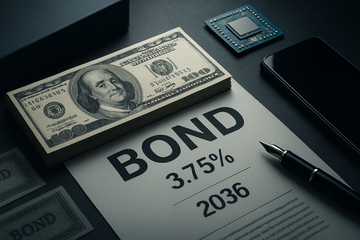
Meta's $20 Billion Bond Is the AI Buildout's Honest Price Tag — and Its Own Project Debt Trades at 92 Cents
On November 2 and 3, 2026, Meta marketed at least $20 billion of investment-grade bonds — its first euro-denominated issue — and sold $15 billion of the dollar leg only after paying up with richer yields to win demand. That came six months after a $25 billion bond deal and a week after a $95 billion equity plan, and the reason for all of it is a cash-flow turn: third-quarter free cash flow was negative $2.12 billion on 26% revenue growth, and nine-month capital spending consumed 89% of operating cash flow. Meta's corporate credit is not what is at risk — what is repricing is the asset underneath it, where the project bonds backing Meta's Louisiana and Texas campuses trade just under 92 cents on the dollar. With AI issuance now roughly 18% of US investment-grade supply, fixed-income buyers have become the marginal price-setter for the entire AI buildout.
What to expect
Evidence-first notes with a visible point of view.
This section collects sharp takes on earnings, shareholder meetings, and market structure. Each new piece should make the thesis, the facts, and the implications obvious within the first few screens.
Expect direct analysis, not generic commentary.
Expect the data to be explicit and the argument to be easy to follow.