Latest
The day's market news, with the argument attached
New notes every trading day on earnings, policy and market structure. Each one opens with the conclusion, then the evidence, then the companies it hits.
2026-11-07


Airbnb Spent $7 Million on Capex and Authorized $12 Billion of Buybacks While the AI Complex Spent $615 Billion
On Nov. 5, 2026, the Nasdaq 100 fell 6.36% — its worst session since March 2020 — and roughly $2.5 trillion of market value evaporated as investors pressed the case that a $900 billion AI capex wave is running ahead of returns. That night, Airbnb reported revenue up 19% to $4.87 billion, a 39% net margin, and a new $12 billion repurchase authorization. The divergence is structural rather than lucky: Airbnb spent $7 million on capital expenditure over the trailing year because the AI it buys is operating expense rented from hyperscalers that spent $615 billion on the same balance sheets. Capital allocation has become the AI factor, and on the test of who turns AI into cash without capitalizing it, Airbnb behaves like an annuity trading at 21 times trailing free cash flow.
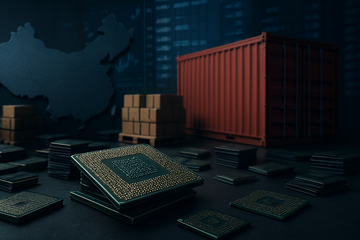
600,000 NVIDIA Chips, a $0.4 Billion Charge and a November 10 Deadline: China's Retaliation Menu Is Not Mainly About Rare Earths
On November 7, 2026 China's Commerce Ministry answered reporters' questions on the newest US sanctions against Chinese companies and confirmed a video call between Vice Premier He Lifeng and Treasury Secretary Bessent — one day after Washington demanded Beijing deliver rare earths and farm purchases "fully and immediately." The rare-earth suspension expires on November 10 while the Busan truce runs to January 10, 2027, so Beijing can tighten without breaking the deal. The levers that already cost money are administrative: NVIDIA booked a $0.4 billion H200 charge and says it is "effectively foreclosed" from China's data center market, roughly 600,000 chips sit idle in Hong Kong, and Beijing has named MP Materials and USA Rare Earth on its export-control list. Investors should price the licensing and entity-status dials, not the rare-earth headline.
Berkshire Hathaway Doubled Its Buyback to $9.6 Billion — and Became AI Capex's Buyer of Last Resort
Berkshire Hathaway more than doubled its share repurchases in the third quarter of 2026, buying $9.65 billion of stock — roughly 76% of the quarter's operating earnings — and then added about $2 billion more in October, after buying nothing at all in 2025. That bid is not a passive cash pile: headline cash and Treasury bills of $377.4 billion are flat year over year, deployable cash outside rail and utilities fell 1.9% in the quarter, insurance underwriting profit dropped 43%, and the same balance sheet wrote a $10 billion check for Alphabet's June equity raise that is roughly $1.9 billion underwater today. So the \"anti-capex refuge\" is really two positions in one: a price-insensitive bid for its own shares while AI duration unwound, and a private backstop for the AI capex cycle — which, at 14.4 times trailing earnings, leaves Berkshire far more expensive than the memory and test equipment names selling off at four to six times earnings.
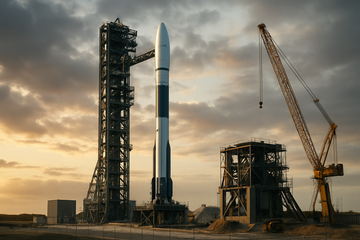
Blue Origin's January 2027 Delay Is a Pad Story, Not a Rocket Story: Zero Flights Since April 19
Blue Origin told staff on Nov. 4 that New Glenn will not return to flight until January 2027, roughly 10 days later than the December target, because reconstruction of Launch Complex 36A after the May 28 static-fire explosion ran long. The failure analysis is finished — the root cause is a faulty liquid-oxygen main valve in a BE-4 engine — while the ground system built to fly dozens of vehicles a year is still being rebuilt, so the binding constraint on cadence has moved from the vehicle to the pad and the federal license that caps New Glenn at 12 flights a year. The cost lands downstream: Amazon's Leo constellation and AST SpaceMobile are waiting on launch slots, Karman Holdings sees launch-hardware demand without near-term revenue, and Rocket Lab has slipped its own flagship into the same 2027 window.
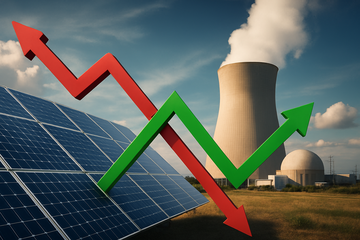
Solar Rallied 8.4% on a Bill Nobody Can Pass; Nuclear Fell 15.4% on a Credit Nobody Needs to Revive
Democrats took both chambers on Nov. 3, 2026, and the first trading day in power stocks bought clean-energy credits that cannot be signed and sold the contracted firm power that actually fills the AI queue. The credit nobody priced is Section 45U, and it is worth less than the rally assumes: it phases out as gross receipts rise from $26.00 to $44.75 per MWh, so Constellation Energy booked $15 million of nuclear credits in the second quarter of 2026 against $45 million a year earlier. The tradeable consequence of a Democratic House is permitting and oversight rather than new subsidies, which points at grid hardware and transmission construction, where backlog is already growing faster than revenue.

The Equity Window Has Two Doors: Anthropic's $1.5 Trillion Test and a $91 Million Bank That Already Cleared
The Renaissance IPO Index fell 6.8% year to date through Nov 5, 2026 against an S&P 500 up 8.2%, and only 121 IPOs priced all year — yet those raised $148.6 billion, so the window is narrower rather than shut. Anthropic's roadshow from the week of Nov 9 is the only door wide enough to matter at the top, and investors are already marking it down from about $2 trillion toward $1.5 trillion. The small-deal door that is actually working belongs to banks: Narragansett Bancorp sold 9,098,800 shares at $10.00 on Nov 2 for $91 million, at 1.31 times June's tangible book, with its mutual holding company retaining 55% of the company. That door exists because of regulators, not markets — the FDIC's September 2026 proposal would clear the smallest bank mergers in five days, leaving acquirers paying 141% of tangible book while sellers want 175%.

Five9's AI Revenue Grew 91%, Its Legacy Seat Business Grew 7.5%, and the Stock Fell 17.6%
Five9 beat on revenue ($323.3 million, up 13%) and raised full-year revenue guidance by $6 million on Nov. 5, yet the stock fell 17.6% the next trading day because the non-GAAP profit guide was cut from $3.26 to $3.19 per share at the midpoint while gross margin slipped 110 basis points. Strip out the $45 million of AI revenue and the subscription business that still licenses human agents grew about 7.5%, less than half the AI line's pace. The $325 million cash purchase of Level AI (Ujwal, Inc.), at roughly 16 times its $20 million of ARR, marks agent revenue at a price about nine times what the public market now pays for all of Five9's revenue.

Goldman Sachs Is Asking the Supreme Court to Save an Arbitration Clause in a Card Book It Is Handing to JPMorgan Chase
On Nov. 6, 2026 the Supreme Court agreed to hear Goldman Sachs Bank USA v. Brown, No. 25-1408, on whether a bankruptcy court may override a valid arbitration agreement when the claim is a debtor's Section 362(k) claim for willful violation of the automatic stay. The clause at issue sits in the Apple Customer Agreement covering Apple Card accounts issued by Goldman, and the portfolio behind it — more than $20 billion — is being transitioned to Chase over roughly 24 months. For investors this is a precedent about who pays when a card issuer keeps collecting from a customer who has already filed for bankruptcy, not an earnings event: Goldman reported $18.68 billion of third-quarter net revenues while consumer bankruptcy filings rose 11.4% year over year to 594,057.

Alphabet’s SpaceX Governance Link Just Broke—Don Harrison’s Exit Forces a Reprice of How Investors Should Think About “AI in Orbit” vs. a $94B Stake
SpaceX disclosed that Google executive Don Harrison resigned from its board effective immediately on Nov. 4, 2026, removing a long-running related-party governance bridge between Alphabet’s SpaceX holding and Google’s competing push to put AI compute into orbit. The next market test is whether shareholders still underwrite Alphabet’s “orbital AI” story on the assumption that board-level alignment reduces execution risk—or whether the loss of that bridge raises the probability-weighted cost of capital.

Stablecoin Rails' Single Point of Failure Is a Compliance Screen: One Vendor's Breach Froze Crypto Transfers in Three Countries
On Nov. 6, 2026, Nu Holdings, MercadoLibre and Japan's Coincheck Group all stopped moving customer crypto within hours of each other, and none named the provider responsible. The closest fit for the common cause is Chainalysis, the blockchain-analytics vendor that took its transaction-monitoring and address-screening products offline from Nov. 2 and only began a phased restore on Nov. 6, with every customer first having to reset credentials, rotate API keys and submit an IP allowlist. Address screening is a legal obligation, so a vendor failure cannot degrade into a slower service — it becomes a legal halt, and recovery runs institution by institution rather than vendor by vendor. For Circle, Coinbase and the 21 banks assembling a dollar stablecoin for the first half of 2027, distribution plumbing, not issuance or reserves, is where the stablecoin thesis now carries its risk.

Sentiment Hit 51.0 and Households Named the 'AI Bubble': the November Print Prices the Capex, Not the Jobs
The University of Michigan's preliminary November read put sentiment at 51.0, up 6.3% from October, and in the same release households voiced anxiety about an AI bubble — while about 57% named living standards eroded by high prices, the highest share since May. The gain was not a wealth effect: sentiment fell 5% for the households with the largest stock portfolios, and interviews closed Nov. 2, before both the strong payrolls and the midterm sweep. Households are pricing the buildout's cost — memory in the device, megawatts on the bill — so the capex, not the labor market, is the variable that matters for the AI trade and for a Fed that has no room to look through a labor-driven hike.

165,000 Jobs Put a December Fed Hike at 80% — and the Margin That Justifies It Is 42,000 People
October payrolls came in at 165,000 against a 59,000 consensus, and San Francisco Fed President Mary Daly said the report put a \"definitive tick in the yes column\" on further tightening, pushing December odds to roughly 80%. The household survey tells a thinner story: unemployment fell to 4.1% only because employment grew 463,000 against a 421,000 labor force gain, a 42,000-person margin, even as U-6 jumped to 7.9% and long-term unemployment reached 27.1 weeks. That matters because the AI buildout has quietly shifted from cash flow to credit: Amazon issued $124.6 billion of net new debt in the trailing twelve months while CoreWeave carries $45.2 billion of net debt against $5.0 billion of equity. Banks love the hike — JPMorgan Chase grew net interest income 12.8% year over year in Q3 2026 — but the same policy move reprices the AI lending that sits on their own balance sheets.

Oklo Rose 22.7% on $1.86 Million of Services Revenue: The AI-Power Trade Now Pays for Milestones, Not Meters
Oklo's third quarter produced $1.86 million of revenue and a $41.7 million net loss, and the stock still closed 22.7% higher at $23.55 on Nov. 6, because the print carried a package of dated milestones: the NRC's final rule letting Department of Energy reactor data feed commercial licenses (effective Nov. 25), a domestic forging-capacity reservation with U.S. Forged Rings (first components 2030), and 900 MW under active consideration in PJM's 2026 interconnection cluster study. The revenue itself was the least important number in the release — it came from two engineering-services firms Oklo bought in June, and depending on whose consensus you use the same $1.86 million was either an 80% beat or a 1.2% miss. What the market paid for was a schedule: fuel from Centrus beginning in 2029, a safety analysis management does not expect until roughly 2028, and an interconnection queue that has already cost Oklo one 750 MW project. For investors, that makes the pre-revenue developers a duration instrument on the license-and-fuel calendar rather than a claim on electrons, which is why the leg now trades at roughly 1,400 times trailing sales with a quarter of dilution each year, and why the fuel and component suppliers are the better-structured way to own the same buildout.
OpenAI Closed $11 Billion at $1.25 Trillion. Anthropic's $1.5 Trillion IPO Is Now the Political One
Private capital funded the buildout; voters set the discount rate. OpenAI closed $11 billion at a $1.25 trillion mark on Nov. 6, three days after voters in 10 states backed restrictions in 40 of 41 local data-center ballot measures, and its CFO said the spending continues regardless. Anthropic, by contrast, must sell its story to the public market at the same moment: its amended S-1 shows $33.2 billion of nine-month revenue against $895.4 billion of mostly non-cancellable compute commitments and a $104 billion net loss driven by fair-value marks on the instruments that paid for that compute. The result is a two-tier frontier stack in which private money carries the buildout without a daily mark while the public market is asked to absorb the political and contractual risk at IPO. For listed suppliers, the read-through is that contracted demand is intact while the equity financing it is losing.

Palo Alto's Second $500 Million Agent-Security Deal Prices a $2.8 Billion Market That Isn't Budgeted Yet
Palo Alto Networks is reported to be paying roughly $500 million in cash, plus milestone payouts, for Clutch Security — the same price it paid for Console in September 2026 — and two days earlier CrowdStrike committed about $495 million to Fiddler AI and Dreadnode. Those two commitments alone equal 53% of Gartner's forecast $2,835 million of worldwide AI-security spending for all of 2026, even though the budget barely exists: Clutch is closing on roughly $10 million of annual recurring revenue, about 50 times sales. The mechanism that matters for shareholders is the currency — Palo Alto's fiscal 2026 Form 10-K shows $24.9 billion of acquisition consideration, 74% of it Palo Alto stock, and fiscal 2027 guidance assumes 844 million to 847 million diluted shares against 764 million a year earlier. Agent security is consolidating ahead of its demand, and Palo Alto shareholders are being asked to fund the gap.
Twelve Leveraged Anthropic ETFs Are Armed Before a Single Share Trades — and the Bid Comes From a Tape That Just Fell 5.5%
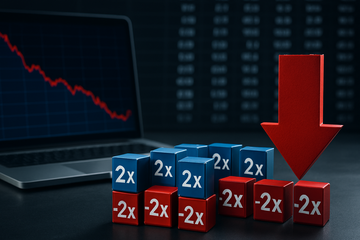
ProShares' Nov. 6 launch of a 2x and a -2x Anthropic ETF completes a 12-fund single-stock complex whose own prospectuses state that ANT has not yet commenced its IPO, so the vehicles are registered but not tradeable. Once Anthropic lists, the complex will not offset itself: on an up day the +2x cohort adds exposure while the -2x cohort covers its short, and on a down day both sell, which makes the debut price a reflexive flow artifact before it is a valuation verdict. That matters now because the AI tape those flows would ride has already broken — the Nasdaq fell more than 5.5% on Nov. 5 and SK hynix dropped 10.44% on Nov. 6 — while the print under discussion is roughly 41x trailing sales.

Cash Buyers Now Set the Price of New Homes — and 28% of First-Time Buyers Are Buying With an Inheritance
NAR's 2026 buyer profile, published Nov. 5, 2026, shows a record 10% of first-time buyers paying all cash, with a median age of 54 versus 38 for buyers who financed and 28% funding the purchase with an inheritance. At a 7.18% 30-year mortgage against a 4.17% three-month bill, the financed entry ticket fails the standard payment-to-income test for the median buyer, so the marginal entrant is now a wealth-transfer buyer rather than a wage earner. Because cash sales carry no appraisal, their recorded prices anchor the comps that force builders to give up 13.8% of home sales revenue in subsidies — which makes a record cash share a builder-margin story rather than a demand story. The 2027 tax reset (401(k) limit to $25,500, catch-up at 60-63 to $11,750, standard deduction to $33,200) expands the cash side of the market while leaving the cost of borrowing untouched.
The $8.8 Billion Middleman: Resonac Raised Profit Guidance 40% and Still Fell 49% From Its High
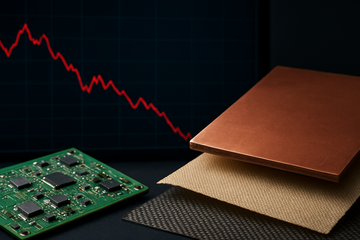
Resonac's roughly US$8.8 billion purchase of Hitachi Chemical placed it in the middle of the AI stack — laminate squeezed between glass cloth and board fab — and in 2026 that position collected a 30% price rise and lifted segment core operating margin from 21.4% to a guided 29.2%. Yet the shares have fallen 48.6% from their ¥20,495 high, and the wider materials chain is down 41% to 72%. The margin is real, but it is rented: priced by a 95%-share film monopoly upstream, competed away by a Chinese laminate maker below, and undercut by substrate capacity that only ships from 2028. Here is where the money actually sits in the AI materials chain, which layers keep it, and what would break the thesis.
Scottish Mortgage Took $6.2 Billion Off Tesla and Bought AI's Bottlenecks: The SpaceX Trim Is a Valuation Call, Not a Midterm One
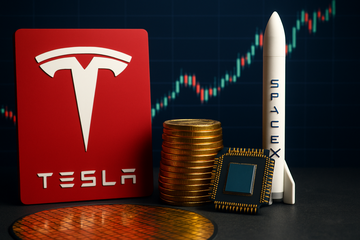
The headline frames this as a Musk discount. The filings say something narrower and more useful: Scottish Mortgage sold its last Tesla shares in April 2026 for roughly $6.2 billion of realised profit on about $470 million invested, and then trimmed SpaceX from 15.0% to 11.1% of assets in the five weeks after its June listing. Neither leg was an election trade — the exit was priced in April and the trim began in October as IPO trading restrictions lifted. Where the money went is the investable part: memory, wafer inspection, dicing, power and gas, plus a 24.9% private-company book that now sits at 53 companies. For investors, the signal is a change in where the AI build-out gets paid, not a change of theme.
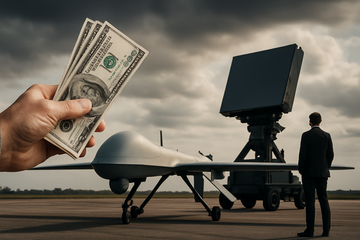
Shield AI Paid $5.3 Billion for Echodyne — Exactly What Shield AI Was Worth 20 Months Ago
Shield AI agreed on Nov 5, 2026 to acquire radar maker Echodyne for up to $5.3 billion, funding it with a $2.5 billion raise that marks Shield at $28.8 billion — roughly 53 times the more than $540 million of revenue it projected for 2026. Twenty months earlier the buyer itself was worth $5.3 billion, so the price tag and the acquirer are the same number. Meanwhile the listed primes that build and integrate counter-drone systems have de-rated: AeroVironment's market value fell to $5.7 billion and Kratos's to $6.6 billion, leaving them on two to three times sales. The mechanism is currency, not demand — private capital with a 53x currency bought the merchant sensing layer, while the first program dollars still flow to the listed integrators that cue and defeat drones.
What to expect
Evidence-first notes with a visible point of view.
This section collects sharp takes on earnings, shareholder meetings, and market structure. Each new piece should make the thesis, the facts, and the implications obvious within the first few screens.
Expect direct analysis, not generic commentary.
Expect the data to be explicit and the argument to be easy to follow.