Latest
The day's market news, with the argument attached
New notes every trading day on earnings, policy and market structure. Each one opens with the conclusion, then the evidence, then the companies it hits.
2026-11-08


California's Dock Deal Can't Reach December's FOMC — The Goods Inflation Is Already in the Print
The Pacific Maritime Association pushed its talks with ILWU Local 26 to Nov. 20, 2026, the fourth move of a strike clock that had been set to collide with importers rushing cargo ahead of the Nov. 10 expiry of Section 301 exclusions covering roughly 200 Chinese product categories. That deadline now sits after the tariff date and after the October CPI and PCE prints the Dec. 8-9 meeting will read, so no dock dispute can rescue December's rate decision — and none was needed, with CME FedWatch pricing an 81.2% chance of a 25 basis point hike and all 100 economists in a Reuters poll expecting one. What the extension changes is 2027: the front-running that has Union Pacific, ZIM, Matson and C.H. Robinson posting record numbers is already inside the price indexes, and its payback now lands on next year's volume estimates. The winners of the front-run are the ones who sold into it; the losers are import-dependent big-ticket retail such as Home Depot and the households paying 4.6% goods inflation.

The 2.5 Cent AI-Power Premium Is a Policy Choice — and China's $945 Billion Is the Proof
China will spend $945 billion on energy in 2026, 1.5 times the United States, and the marginal dollar is going into grid hardware the West cannot make fast enough. That build-out is why transformers got scarce without becoming unaffordable — until Executive Order 14420 closed the factory door in August 2026. We size the US data-centre capacity premium at roughly 1.5 to 3.7 cents per kWh, about 2.5 cents at the midpoint, and show where the rents land: Western backlogs and US power sellers near term, Chinese exporter volume without profit in the long run.

94% of Bitcoin's $1.28 Billion ETF Exit Came From One Fund — in the Same Week the AI Trade Crashed
US spot bitcoin ETFs shed $1.28 billion in the week to Nov. 6, 2026 — the worst week since late June — pushing 2026 net flows to -$914 million, but the \"crypto complex is exiting at once\" story breaks on the fund-level data: BlackRock's IBIT accounted for $1.21 billion, or 94.4%, of the outflow, while Fidelity's FBTC absorbed $93.1 million. Concentration matters mechanically, because IBIT's bitcoin sits with Coinbase Custody Trust Company and its cash redemptions are executed through Coinbase as prime execution agent, so the selling landed on one venue rather than spreading across crypto. The same five sessions saw the Nasdaq Composite fall 5.52% into correction on AI-capex fears, which makes this balance-sheet de-risking rather than a rotation into AI equity — and it puts bitcoin's $73,188 200-day moving average, not the flow print, at the centre of the decision.

Washington's Nov. 7 Permitting Bill Prices a $615 Billion AI Buildout Before Any of It Is Energized
On Nov. 7 two Republicans and two Democrats released the agreed substitute amendment to the Bipartisan American Affordability and Jobs Act, and the American Council on Renewable Energy and Evergreen Action both endorsed the same text on the same day — proof the bill now trades as a settled framework rather than a partisan wish list. What matters is the machinery: FERC gets project-by-project siting authority, utilities can have their return on equity cut for failing to build grid upgrades, and any data center of 20 MW or more must pay the entire incremental cost of the generation, storage and wires built to serve it. That clause is why the bill is investable and why it is not a demand subsidy — an estimated $6 billion a year of grid cost moves off ratepayers and onto large loads. The buildout it unlocks is already funded: Amazon, Alphabet, Microsoft and Meta spent $615.4 billion on property and equipment in the twelve months to Sept. 30, 2026, and $201.9 billion of that in the September quarter alone, while federal tax support for new wind and solar has been withdrawn. With Democrats controlling both chambers from Jan. 3, 2027, the Nov. 9 cloture vote matters less as a passage event than as a deadline for locking in a framework the next Congress must negotiate against.

Fireworks AI's $40 Billion Ask Never Printed — Now Meta's CFO Has to Make $17.5 Billion Work
Fireworks AI's valuation has not been cut; it has stopped moving — $17.5 billion, set on July 15, 2026, while the company was reported on Oct. 20 to be chasing $30 billion to $40 billion, and peers reprinted higher (Fal closed at $16 billion on Nov. 3). Dave Wehner's Nov. 6 arrival as Meta's former chief strategy officer says the binding constraint is capital structure, not product: 95% of Fireworks' 40 trillion daily tokens now run on customer-specialized models, 25,000 GPUs sit inside customer data centers, and the capacity is leased from landlords such as IREN that earn 86% gross margin. At roughly $0.07 of revenue per million tokens against a $0.05 best-in-class cost that Nvidia publishes, the margin in this stack sits upstream of the layer priced at 17.5x revenue. Read the stale mark and the CFO hire together: the layer is becoming infrastructure, and infrastructure does not keep a software multiple.

Fox Closed Roku Without a Court Order: The Antitrust Risk Died on Nov. 6, and an $8.4 Billion Bridge Loan Is the Bigger 2027 Risk
Fox closed its roughly $22 billion acquisition of Roku on Nov. 6, 2026, and the Justice Department's Antitrust Division closed its investigation the same day with four behavioral commitments and no court-filed decree. That killed the $1.2 billion regulatory break fee and every scenario in which a federal enforcer unwinds the deal, leaving state attorneys general, an open-ended enforcement posture and commitments that expire in November 2029. What replaced the regulatory risk is measurable: Fox issued 26% of its equity and borrowed $10.4 billion at floating rates for a business with $728 million of trailing EBITDA and $796 million of trailing free cash flow. The close swaps a blocked-deal risk for a refinancing risk.

Gabon's $2 Billion Rare-Earth Restart: No Offtake, No Financing, No Separation Plant — and No Price Floor
Gabon has told Beijing it wants $2 billion to restart the dormant Mabounié niobium and rare-earth project, presented on Nov 6, 2026 by Emirati-backed New Energy Metals, its Dusk Gabon subsidiary and Chinese engineer ENFI. None of the three ingredients that make a price floor — a signed offtake, a closed financing and separated, magnet-grade output — exists yet, and Gabon's own commitment to the promoter is 35.02 billion CFA francs, roughly 3% of the plan. So a revived Mabounié is more likely to become cheaper feedstock for the Chinese refining chain that already holds 91% of world refined output than to set a price for anyone else. The tradeable consequence is not the mine but the spread: NdPr at roughly $103-106/kg inside China against $125-140/kg outside it makes the scarce assets the contract, the export licence and the toll collectors.
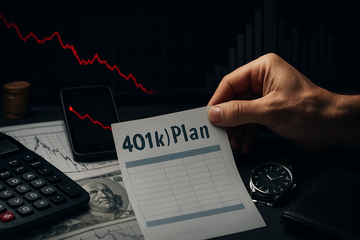
The Household Is Now the Marginal Seller: Record 401(k) Redemptions, a Failed Buy-the-Dip Bid and a December Hike at 76%
Retail investors sold a net $338 million of single stocks on November 5, 2026 — the largest one-day outflow since March 2020 — on the worst second session after a midterm election in 44 years, and the buy-the-dip bid never showed up. That failure sits on a balance sheet that has been thinning for six straight years: 6% of workers in Vanguard-administered 401(k) plans took a hardship withdrawal in 2025, about 3.5 times the 2020 rate, while money market funds reached a record $8.02 trillion before the selloff. With a 25 basis point hike priced at 76% to 77% for December 9 and the 10-year Treasury at 4.86%, the household is the marginal seller of crowded AI beta and levered crypto — and the flow lands on names whose earnings are at records, as AMD showed when data center revenue nearly doubled in the same week its shares fell 17.3%. Own the institutions that catch the flow rather than the beta they fund.

The Democratic Ceiling on Oil Broke on Nov 7 — and Only $3.70 of the $17.65 War Premium Has Come Back
The market sold $17.65 of Brent after the Nov 3 midterms, betting a Democratic House and Senate would force Trump to end the Iran war. On Nov 7 he confirmed fresh US strikes on Qeshm island, Iran reported five tankers and a tugboat ablaze in Hormuz on Nov 5 and two more tankers struck by mines on Nov 6, and an Iranian lawmaker warned that missiles reaching Europe would push oil past $150 — so the premium was always a bet on presidential restraint, not on congressional control. Only $3.70 has been rebuilt, and the money now sits with the hull owners such as Frontline and the crack owners such as Valero Energy, not with crude beta.

A Pill Matched the Injectables in Psoriatic Arthritis — at $102,000 a Year, Sotyktu Is on the Clock, Not Skyrizi
Johnson & Johnson's Nov. 7 Phase 3 readout for oral icotrokinra put a 58% ACR20 response in biologic-naive psoriatic arthritis on the table — cross-trial, in line with the IL-23 and IL-17 biologics. But ICOTYDE did not beat Skyrizi or Cosentyx; it matched them on placebo-controlled data, and its 41% placebo response leaves the smallest treatment delta in its class. Price is the sharper signal: at about $8,505 per 30-day supply, roughly $102,000 a year, the pill sits at parity with Cosentyx and above Skyrizi — so it does not compress the biologics' price umbrella at all, it compresses the case for the cheaper oral tier and the administration burden that justified paying six figures for an injection. Read it as a threat to Bristol Myers Squibb's young psoriatic arthritis launch and Amgen's fading Otezla, not as an imminent hit to AbbVie's $5.8 billion Skyrizi.

5.1 Million Left Medicaid and 4.6 Million Left the Exchanges: The 2026 Coverage Cut Is Federal, and Hospitals Pay for It in Payer Mix
Medicaid's 2026 coverage loss is a federal event, not a state one. The expansion map was unchanged at 41 jurisdictions through Nov. 6, yet Medicaid enrollment fell 5.1 million and the individual market 4.6 million over the past year as enhanced premium tax credits expired. The transmission runs through payer mix and uncompensated care rather than pricing power: HCA Healthcare absorbed roughly $400 million of pre-tax income in Q3 2026 from exchange coverage loss, and guides 2027 Medicaid supplemental payments $550 million to $650 million lower. With Democrats now controlling both chambers, 2027 is locked by statute while 2028 and beyond stay a political option, so Centene has already repriced for a shrinking pool while the operators with the thinnest balance sheets and the heaviest Medicaid mix carry the most risk.

Two Lawsuits Put Medicare's $440 Million Foreign-Price Pilot Before a Court — and the Precedent Is Worth Far More Than the Savings
BIO, Biocom and California Life Sciences sued HHS in the Northern District of California on Nov. 6, joining PhRMA's Oct. 7 challenge in the District of Columbia to the GLOBE model, which ties Medicare Part B rebates to prices paid in 19 foreign countries. The cash is trivial: CMS cut projected seven-year savings from $11.9 billion to $440 million, left roughly four manufacturers in scope, and says 0.3% of Part B beneficiaries would pay less out of pocket. The machinery is not trivial — the benchmark is built from the lowest or volume-weighted foreign net price, so a reimbursement decision in London, Tokyo or Berlin now sets US rebate liability, while the April 2, 2026 tariff-and-MFN arrangement with the UK already trades foreign pricing for tariff relief. For Merck, Bristol-Myers Squibb and Johnson & Johnson, the direct effect is rounding error against revenue bases of $64.9 billion, $48.2 billion and $94.2 billion; for US launch pricing and biosimilar economics, the ruling matters far more than the cash.

Nooks Took $500 Million Without Diluting — AI-App Growth Capital No Longer Comes From Equity Markets
On Nov. 4, 2026, Nooks took a $500 million growth-capital commitment from General Catalyst's Customer Value Fund and launched Node, its first AI personal assistant for sales. The money is non-dilutive, has no maturity date and no covenants, and is repaid only from collections on the customer cohorts it financed — 7.1x everything Nooks has raised as equity in its life. The closest published term sheet, General Catalyst's $1 billion facility with IM8 filed with the SEC, shows the instrument: capped return per cohort, no equity instrument, downside held by the fund. That is why the card rails and banks are the natural next owners of this paper — Visa and Mastercard already credential agents and settle their purchases, and FIS ships a know-your-agent platform to issuing banks — while the equity market is repricing the apps themselves: HubSpot lost 59% of its market value in the year to September 2026 even as trailing revenue grew 20%.

$17 Billion and 86% of Alphabet's Free Cash Flow: OpenAI and Google Just Put a Balance-Sheet Test on the AI Buildout
On November 5, 2026 OpenAI published a compact promising to pay the full cost of electricity and grid infrastructure at every compute campus it owns, dropped non-disclosure agreements with public officials and offered financial assurances if a project is cancelled — the same day Google committed $17 billion to its first Wyoming campus and said it would pay for 100% of the power it uses. The political cost of AI power has stopped being a ratepayer problem and become a corporate capital line, and the buildout is consolidating into the few balance sheets that can carry it. That advantage is not free: Alphabet's trailing free cash flow has fallen to $19.7 billion against $159.8 billion of trailing capital expenditure, so one Wyoming campus absorbs 86% of a year of cash generation. Every supplier on the critical path is now pricing a buildout that UBS estimates could lose 30% of its planned 2028 capacity, and the tell for who wins is a credit spread, not a press release.

Powell's $2.4 Billion Backlog Is One Contract Deep — and the Stock Has Lost 59% of Its Value
Powell Industries reported record September-quarter orders of $934 million on Aug. 3, 2026 and a backlog of $2.4 billion, up 69%, yet the shares have since fallen 59% in market value. The reason is composition: a single data-center award worth more than $400 million for behind-the-meter, on-site generation accounted for about 43% of that quarter's bookings, roughly half of every data-center dollar Powell has booked, and sits inside a $466 million customer-advance liability. Revenue grew 9% while peers grew 28% to 61%, the twelve-month conversion share of backlog slipped from 59% to 54%, and voters in ten states backed data-center restrictions on Nov. 4. The order book is real; the open question is how much of it one customer can still cancel, and the fiscal 2026 annual report answers that in a single sentence.

Zoetis Bought Genomics at 1.8 Times Sales and Merck Paid $647 Million for Hatchery Vision: The Protein Boom's Trade Is Cost Per Pound
Record protein prices are pulling capital into animal health, but not into medicine. Zoetis is paying $160 million for Neogen's genomics business, Merck is paying $647 million for poultry-technology firm TARGAN while advancing an $895 million biologics expansion in Kansas, and venture capital has put a record $470 million into global livestock management in 2026. The reason is cost per pound: feed is 56% of a cattle producer's cost, so the return on health spending shows up in feed conversion and hatchery precision, not in doses sold. That makes the scarce animal the valuable one, so dollars per head rise while head counts fall, and cattle-linked health revenue grows even with the US herd at its smallest since 1951. The exposure sits in animal health, feed additives and nutrition; processor margins are compressing and grocers are absorbing the price shock.

Lincoln National Annuity Sales Jumped 21% Sequentially and the Industry Hit a Record $126.3 Billion: Retirees Are Buying the Floor, Not the Upside
US annuity sales hit a record $126.3 billion in the third quarter of 2026, up 4% year over year, and the composition is the real signal: registered index-linked sales rose 22% while fixed indexed annuity sales fell 8%. Retirees are buying a creditable floor rather than market upside, at a moment when the 10-year Treasury paid 4.86% and the long-horizon forecasts that govern retirement income still point to a 60/40 portfolio earning barely enough to fund a 4% withdrawal rule. Lincoln National sold $4.3 billion of annuities, up 21% sequentially, while a $95 million assumption-review charge landed mostly outside the annuity book, so retirement demand was not the problem. Insurers are the tollbooth: the spread on longevity risk is being harvested now, and the Social Security retirement fund's 2032 depletion date hands the industry a decade of demand, but a fall in long rates, an equity rally or a Social Security fix would each take the floor out from under the story.

A Strike on Riyadh's Financial District Moved Aramco 0.31% — Saudi Risk Is Still Priced in Barrels, Not Buildings
On Nov 8, 2026, Houthi missiles hit an Aramco tower in the King Abdullah Financial District: shrapnel damage, no casualties, and a Saudi all-share index down 0.78% in the session that followed. The market read it as another supply event, because the war premium is paid in barrels — Brent at $98.32, marine war risk at 0.75% of hull value — and because Saudi credit has not needed to move, with hard-currency spreads sitting roughly 20bp off their 2025 tights. What is unpriced is the address: KAFD hosts over 140 corporate tenants and 20 regional headquarters, and it is where the Kingdom books its diversification away from oil. The AI buildout now runs through Aramco's balance sheet after the PIF-Aramco Humain deal, which makes physical security, not capital, the binding constraint on Saudi's non-oil future.
Johnson & Johnson's Rybrevant Faspro Just Left the Infusion Chair. Halozyme Fell 15.7%. The Subcutaneous Wave Is Now a Courtroom Story
The FDA's Nov. 5, 2026 accelerated approval of Rybrevant Faspro for pretreated head-and-neck cancer made it the first dual EGFR/MET therapy available as a five-minute subcutaneous injection, replacing a multi-hour infusion. That is a site-of-care event, not a chemistry event, and the royalty structure around it is where the money sits: Halozyme licenses the enzyme inside the formulation and collects a mid-single-digit cut, on a royalty base now guided to $1.235 billion–$1.255 billion for 2026. Yet Halozyme's shares fell 15.7% the next session, because a 1% guidance-midpoint raise, a valuation-driven downgrade and the absence of any Merck settlement talk mattered far more than a partner approval that adds almost nothing to the toll. The investable question is no longer who wins subcutaneous approvals; it is who can enforce the toll when the biggest player builds its own enzyme.

No Buyer for a $40,000 GPU: Microsoft Winds Down Oracle and Puts a Rental Rate on 'Good Enough' AI Compute
Microsoft's walk-away from Oracle's 2023 AI-cloud lease does not put a single accelerator on an auction block, because the chips stay inside Oracle's data centers, depreciated over six years. What it released is contracted demand, and contracted demand is what a market of compute prices against. The consequence is that the marginal price of 'good enough' AI is being set by a rental rate rather than a hardware print, which is why the damage lands on the layer where depreciation is more than half of revenue:69% at IREN and 53% at CoreWeave, against 15% at Oracle, 12% at Microsoft and 1% at Nvidia. Own the facility layer, where occupancy is now the pricing variable and renewal rents are rising, and treat Oracle's $127.8 billion of property and equipment as the balance-sheet expression of a repricing that has barely started to show up in reported numbers.
What to expect
Evidence-first notes with a visible point of view.
This section collects sharp takes on earnings, shareholder meetings, and market structure. Each new piece should make the thesis, the facts, and the implications obvious within the first few screens.
Expect direct analysis, not generic commentary.
Expect the data to be explicit and the argument to be easy to follow.