Latest
The day's market news, with the argument attached
New notes every trading day on earnings, policy and market structure. Each one opens with the conclusion, then the evidence, then the companies it hits.
2026-10-31

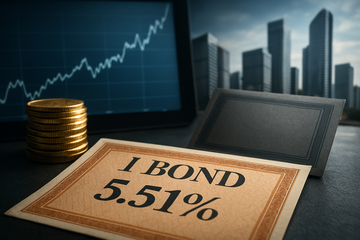
I-Bonds at 5.51% Just Raised the Household's Risk-Free Bar — and the AI Buildout Answered With $228 Billion of Bonds
Treasury's Oct. 30, 2026 announcement set the Series I composite rate at 5.51% for purchases from Nov. 1, 2026 through Apr. 30, 2027 — a 1.40% rate locked in real terms for two decades plus a CPI adjustment, with no mark-to-market and no state or local tax on the interest. That guarantee now sits above the trailing cash yield of most of the AI capital-spending chain: Microsoft, Alphabet, Amazon and Meta Platforms turned $615 billion of trailing capex into $61 billion of trailing free cash flow. The buildout did not slow; it changed sponsors, with Alphabet, Amazon, Meta Platforms and Oracle issuing more than $228 billion of bonds through Oct. 13 — so the marginal risk in the AI trade now sits in credit priced off a 4.98% risk-free rate, not in household equity demand.
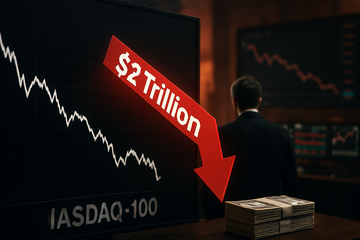
Third Correction, Third Seller: $2 Trillion Wiped From the Nasdaq-100 as Levered AI Credit, Not the Dip Buyer, Did the Selling
The Nasdaq-100's third correction of 2026 was not a valuation event. It turned a valuation correction into a funding event, because roughly a third of AI capital spending is now debt-financed, credit spreads have doubled, and the equity in levered AI structures has become the margin on the loan. CoreWeave's five-year credit default swaps blew past 1,140 basis points, operating cash flow now covers capex 1.47 times at Microsoft but 0.11 times at CoreWeave, and volatility-target funds sit at the 98th percentile of equity exposure with no dry powder left to catch the knife. The dispersion inside the index is the answer: the market punished the AI exposures that were financed and ignored the ones that were paid for out of cash flow.

Hedge Funds' Record Short in US Gas Is Betting on Weather — AI Turbines and Qatar Now Set the Price
Money managers took their net short in US natural gas futures to 223,591 contracts in the week to Oct. 27, the most bearish positioning since the Covid crash, built on a strong El Niño forecast and a mild-winter call the EIA's own base case already assumes. What the short ignores is three demand curves that ignore the weather: Qatar's LNG force majeure has left Europe with its lowest seasonal storage since 2011, US LNG exports are set to reach 18.6 Bcf/d in 2027, and 378 GW of US gas-fired capacity tied to data centres is in development. The equity trade is therefore not long gas but the fee-based tolling and the equipment layer — Cheniere Energy has raised 2026 guidance again, while EQT has hedged roughly four-fifths of 2027 but almost none of 2028.

NVIDIA's $108.5 Billion of Guarantees Covered OpenAI. A West Virginia Neocloud May Be Next
NVIDIA is in talks to guarantee billions of dollars of construction debt for the first 460MW building of Nscale's Monarch campus in Mason County, West Virginia — the site of a six-year, $44.6 billion compute deal with Anthropic — using a residual value guarantee that would let the chip vendor take over the site if the build fails. The instrument is not new: NVIDIA's Q2 fiscal 2027 filing already carries $108.5 billion of off-balance-sheet guarantees, $105 billion of it supporting OpenAI's Ohio lease at SB Energy, alongside $279 billion of supply and capacity commitments. What is new is the counterparty: Nscale's Sept 18, 2026 IPO filing shows $1.48 billion of cash against $27.5 billion of equipment and construction commitments, while Anthropic reported an $80.7 billion first-half net loss of its own. Read the reported guarantee as NVIDIA underwriting a building in a grid-constrained state, not as a sale of more silicon.

New York Halved Its Budget Gap on Wall Street Money — and Its Tax Base Is Now Levered to the AI Trade
New York's Division of the Budget used a record Wall Street year to project roughly $9 billion of surplus for the fiscal year ending March 2027 and cut the state's three-year General Fund gap from $31.7 billion to $17.6 billion. The receipts behind that swing are concentrated: the securities industry generated an estimated $26.3 billion of New York State tax in State Fiscal Year 2025-26, 20.8% of all state tax collections and 88.3% of it personal income tax funded by bonuses and realized gains. That makes the state's balance sheet a derivative of the same equity cycle that pays Wall Street, and the New York City Comptroller's own scenarios show the downside arriving as a $3.4 billion city revenue hit in a single year. Read the update as a cyclical windfall being banked, not a structural fix: the gap re-widens to $8.9 billion by fiscal 2030, and the listed exposure runs from Goldman Sachs and Morgan Stanley through the volume tolls at Intercontinental Exchange and Nasdaq to M&T Bank and SL Green Realty.

OpenAI Cut Its Round to $20 Billion and Its Valuation by $150 Billion — Its Compute Plan Went the Other Way, to $856 Billion
The Oct. 30 report that OpenAI trimmed its funding target from $30 billion to $20 billion has been read as the first downgrade of AI infrastructure demand. It is the opposite: OpenAI's compute budget has been revised upward three times in 2026, to about $856 billion through 2030. What was cut was the revenue investors were told — an annualized run rate of roughly $68 billion became roughly $50 billion — and the equity meant to fund the build. Because the revenue base shrank faster than the price, the implied multiple on run-rate revenue rose from about 20.6 times to 25 times. That migration of risk, from silicon orders onto the balance sheets of Oracle, CoreWeave and Microsoft, is the investable consequence.
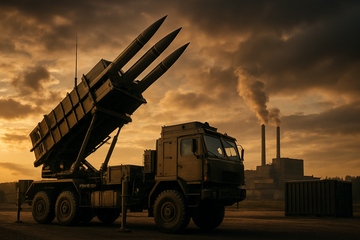
A $2.1 Billion Patriot Sale Buys a Place in Line, Not Missiles — Lockheed Martin Controls the Queue
The State Department approved 500 Patriot PAC-3 MSE interceptors for Ukraine on Oct. 30, 2026 at an estimated $2.1 billion, but published no delivery schedule, and two people briefed on the decision said the rounds are not expected until the early 2030s. Money is not the binding constraint; the sole final-assembly line in Camden, Arkansas is, where Lockheed Martin is scaling output from about 600 to 2,000 interceptors a year by the end of 2030 against a European backlog above 4,300 rounds. Ukraine's order is worth 3.6% of the $58.62 billion multiyear award and buys roughly three months of the target rate, so the real trade is who owns the queue position and who converts it into margin: a flat 14.0% Missiles and Fire Control margin for the prime,190 basis points of expansion at RTX, and volume without a fixed price for upstream suppliers Boeing and L3Harris.

Wages Grew at Their Slowest Pace in Five Years. Benefits Grew Faster.
The Q3 employment cost index, released October 30, shows private-sector compensation up 3.4% over the year, but the composition flipped: wages and salaries added 3.1% while benefit costs added 3.9%, the second consecutive quarter in which benefits outran pay. The engine is employer health insurance, up 6.4% over the year, with single-coverage premiums rising 8.5% and family premiums 7.6% — the largest increases since 2010. That complicates the December hike rather than confirming it, because the Fed's own September minutes show the hawkish case resting on tariffs, energy and AI-linked goods rather than wages. It also reshapes where margin relief lands: Walmart's US operating expenses deleveraged 72 basis points on healthcare and claims costs, HCA Healthcare held salaries and benefits to 43.2% of revenue, and Delta Air Lines saw salaries rise 9% against a 3.1% national wage print.

Self-Storage Just Beat and Raised — and the AI Buildout Is Starving Its Supply
All three major self-storage landlords raised 2026 guidance inside five days, and CubeSmart's Q3 print on Oct. 29 was the cleanest: $0.66 of FFO per share against a $0.65 consensus, same-store NOI up 2.1% and occupancy up 60 basis points. The engine is supply, not consumers —2026 deliveries are the smallest since 2016 while AI campuses bid up the same land, labor and power. The fashionable \"storage land is an AI-campus option\" story turns out to be real but narrow: two Pennsylvania land deals 60 miles apart price the same asset 23x apart, so the trade is the NOI inflection, and at 16.5 times guided FFO the equity has already paid for it.
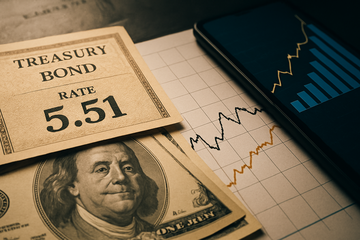
The 5.51% I-Bond Beats the 4.94% 10-Year — and Vanishes in Real Terms
Treasury's Oct. 30 reset hands savers a 5.51% inflation-linked, tax-deferred yield while the 10-year note yields 4.94%, and the headline inversion dissolves once you convert to real terms: the bond's guaranteed 1.40% fixed rate sits 152 basis points below the 2.92% real yield the market demands on 10-year TIPS. What actually survives is the tax treatment — roughly 45 basis points at a 22% federal bracket, closer to 70 for a top-bracket saver in a state that taxes interest — plus a new anchor for deposit pricing. This is not a repricing of federal funding: savings bonds are 0.5% of debt held by the public and each saver can buy only $10,000 a year. The investable consequence is which balance sheets absorb the squeeze: deposit-funded lenders and money-fund sponsors on one side, core-deposit banks and inflation-protected fund vehicles on the other.
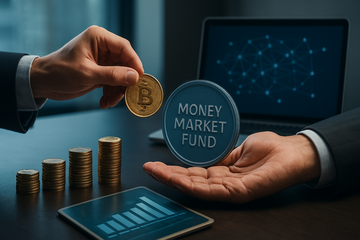
Uber Bought a Tokenized Money Fund on Thursday and Sold It on Sunday: Tokenization's Distribution Channel Is a Treasury Desk, Not a Consumer App
On October 30, 2026, Uber completed a corporate treasury pilot in which it funded a Franklin Templeton tokenized money market fund with HSBC tokenized deposits, executed on Tradeweb and settled delivery-versus-payment on the Canton Network by Fireblocks — buying on a Thursday and redeeming on a Sunday for roughly 1.5 extra days of yield. No consumer product was announced and no rider or driver was involved, so the distribution channel on display is the corporate treasurer, and the economics accrue to the fund manager, the venue and the deposit issuer rather than to any app. The arithmetic says why the pilot matters for reasons other than yield: at full deployment the weekend prize is about $43 million a year, roughly 0.45% of Uber's trailing net income. The investable read-through is that tokenized cash is a wholesale distribution business, and the take-rate risk sits in tokenized equities, where the SEC handed trading platforms a five-year exemption on September 17, 2026.
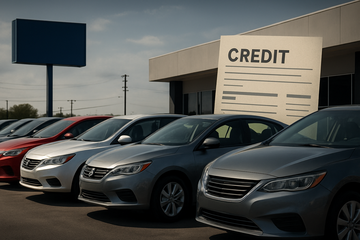
Car-Mart's 82% Collapse Is a Credit Migration, Not a Credit Crunch: Subprime Credit Moved, and $30,000 New Cars Are Now the Tightest Thing on the Lot
America's Car-Mart sold 2,450 retail vehicles in the quarter ended July 31, 2026, down 81.9% year over year, and its Form 10-Q carries a liquidity and going-concern note. In the overlapping quarter, Credit Acceptance originated $3.46 billion of subprime loans, up 51.0%, and wrote business for 12,093 dealers. Subprime lending did not shrink; it moved off dealer balance sheets that reserved 24.74% of net receivables against losses onto lender balance sheets that reserve 3.07%. Because a lender rather than a dealer now holds the paper, a deep-subprime buyer can be financed into a $25,000 new car instead of a $19,000 used one, which is why cars priced at $30,000 or less carry just 63 days of supply against 82 days for the market. The bill arrives in 2027 as gross profit per unit, not as unit sales.
2026-10-30
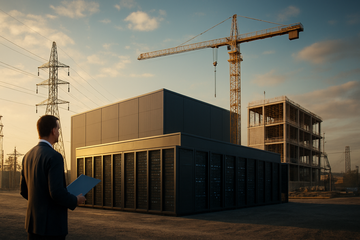
Alliant Energy Wants 1 GW of Data-Center Contracts in Six Months — but the Bottleneck Is a Rate Docket, Not a Turbine
Alliant Energy's chief financial officer said on October 30, 2026 that the company expects to sign roughly one additional gigawatt of contracted data-center load within six months, on top of the 3.4 GW already under contract with Alphabet, Meta and QTS. That headline is a capital decision dressed as a sales win: at the CFO's own $2–3 billion of capital per gigawatt, one more gigawatt is about 13% of a five-year program now worth $18.8 billion and requires roughly $800 million to $1.2 billion of new equity. The revenue clock does not start at the signature — Alliant's own process runs from electric service agreement to individual customer rate approval to construction, and management expects the Wisconsin decisions that unlock the new load in the first half of 2027. The equipment chain is paid at order and delivery in 2028–2029 while the utility waits for rate cases that push earnings into 2030 and beyond, which is why the AI load trade is cleaner expressed through the supply chain than through the utility's balance sheet.
AWS Grew 39% and Amazon Fell 7%: Big Tech's $720 Billion Capex Year Now Trades on Funding, Not Growth
Amazon delivered the cloud acceleration investors asked for — AWS revenue up 39% to $46.0 billion, AWS operating income up 55% to $17.8 billion, a record 13.9% consolidated operating margin — and the stock still fell about 7% after hours on Oct. 29. The reason is arithmetic, not disappointment: Amazon spent $77.3 billion on property and equipment against $42.4 billion of operating cash flow, pushed trailing free cash flow to an outflow of $42.4 billion, and funded the gap with $48.1 billion of new long-term debt in a single quarter while buying back no stock. With the four largest hyperscalers guiding to roughly $720-740 billion of 2026 capital spending against about $677 billion of combined operating cash flow, the market has stopped paying for cloud growth on its own and started paying for how that growth gets financed — a repricing that cuts both ways across memory, power and neocloud credit.

Anthropic's $9.7 Billion Research Bill Is Why the Shorts Are Lined Up for the $2 Trillion Print
Anthropic's first-half research spend of $9.7 billion — up 427% year over year — turns its planned Nov. 16 Nasdaq debut into a collateral event for the whole AI-credit chain rather than a fund-raising event for the model business. With $131.7 billion of cash against $265.6 billion of non-cancelable purchase commitments and $417 billion of future minimum payment obligations, the equity becomes the funding plan that lenders, neoclouds and short sellers have been positioning against. A strong print de-risks that chain and forces the crowded short base in the most-shorted AI names to cover; a soft one re-prices $63 billion of loan collateral built on the assumption that GPU residual values hold. Allocation, not valuation, is where the risk sits over the next three weeks.

Binance's $6.3B Breach Is a Private Credit Event — and the Listed Crypto Proxies Traded It Like a Market Crash
About $6.3 billion left 17 Binance hot wallets across nine chains between 20:04 and 23:56 UTC on Oct. 29, 2026, and roughly $3.1 billion was still sitting in the attacker's wallets the next morning — unsold, and never routed to an exchange, a mixer or a bridge. That is what makes this the first exchange failure large enough to read as a credit question rather than a theft: the loss sits on one private balance sheet while the listed complex sold as if the market had been contaminated. The proxies are not mispriced on level so much as on composition, because the beneficiaries here are venues that capture migrating balances and balances that never reach a market, not the names carrying the most balance-sheet beta. Coinbase, Circle, Galaxy and Strategy each hold a different slice of that risk.

Canada's C$1.6 Billion Bet on Cohere Now Hangs on a Washington Export-Control Decision Nobody Has Made
Ottawa's C$1.6 billion equity purchase in Cohere — announced Oct. 29 alongside a C$7 billion Series E at a C$35.7 billion valuation — buys an implied 4.5% option on Canada's seat at the frontier layer, with the money directed at compute: at least C$1.7 billion of Canadian infrastructure and 1,000 technical jobs by 2030. Four weeks earlier, on Oct. 2, Prime Minister Carney stood up a 13-member National Council on Artificial Intelligence, giving the state an advisory seat next to its equity one. The binding constraint sits in Washington: on June 12, 2026 the Commerce Department required licences before any foreign person could reach Anthropic's Fable 5 and Mythos 5 models, and on June 26 it carved out only 'certain trusted partners' — for one of the two models. Cohere says it will begin frontier-scale training with allied partners, so the investable question is not whether Canada's money moves but whether Washington's list includes a Canadian state-backed lab. For NVIDIA, CoreWeave and BCE the answer sets the price of sovereign demand; for the incumbent model vendors it sets the price of the premium they can charge in regulated industries.

China Now Registers More Clinical Studies Than the U.S. — While Western CROs Write Off $2.7 Billion of Backlog
China's trial engine is now the cheaper, faster option, and Washington's own data says so: HHS found in September 2026 that China registered more clinical studies than the United States for the first time in 2024, and China's slice of industry-sponsored trials rose from 9% in 2018 to roughly 20% in 2023. The service layer is already repricing — Chinese contract research organizations are growing revenue 14% to 46% while their Western peers grow 8% to 9% and have just marked down $2.1 billion of backlog at IQVIA and $558 million at Fortrea. The damage is not to trial volume, which keeps expanding; it is to the Western full-service model, whose contracted backlog is priced off Western sponsor budgets and whose China-origin work now carries Washington-mandated inspection cost and Chinese export-control risk at the same time. The offsets: Beijing's October 2026 export rules protect platforms but exempt licensed products, and firms such as Medpace with little China exposure are still compounding at low-teens growth.

Coinbase Is Turning Profitable While Revenue Falls — and the market is still betting on the wrong line
In Coinbase’s latest quarter, net income turns positive even as total revenue declines, because subscription-and-services revenue holds up better than transaction revenue. The key investor mistake is treating Coinbase like a pure “trading-volume toll booth” instead of a services/stablecoin distribution channel where stablecoin-related revenue and subscription revenue carry the durability.

Royal Caribbean Locked 2027 Fuel at $405 a Ton. Carnival Pays $896 — and the Hedge Book Decides Who Owns 2027
Brent closed at $112.21 on Oct 30, 2026, up 73% from a year earlier, and the three big cruise operators are now running three different fuel books. Royal Caribbean has already bought 53% of its 2027 consumption at roughly $405 a metric ton and will book a $159 million unrealized hedge gain within twelve months of Sep 30, 2026; Carnival hedges nothing, paid $826 a ton in its fiscal third quarter and $896 a ton guided for its fourth, and declined to guide 2027 at all; Norwegian Cruise Line bought protection late and dear at $559 a ton on the thinnest earnings base in the group. Run each company's own 10% fuel test across 2027 and earnings at risk range from about $68 million at Royal Caribbean to roughly $243 million at Carnival — so the 2027 margin race is fought in the hedge book, not at the booking window.
What to expect
Evidence-first notes with a visible point of view.
This section collects sharp takes on earnings, shareholder meetings, and market structure. Each new piece should make the thesis, the facts, and the implications obvious within the first few screens.
Expect direct analysis, not generic commentary.
Expect the data to be explicit and the argument to be easy to follow.