Latest
The day's market news, with the argument attached
New notes every trading day on earnings, policy and market structure. Each one opens with the conclusion, then the evidence, then the companies it hits.
2026-10-30


Deepgram Bought Pipecat's Maker and Left the Code Free — Voice-Agent Margin Is Moving Down the Stack
Deepgram agreed on Oct. 29, 2026 to acquire Daily, the company behind the Pipecat framework, without disclosing a price and while promising Pipecat stays free, BSD-licensed and vendor-neutral under an independent foundation. The framework was never the profit pool: Pipecat already carried more than 200 provider integrations with almost 400 contributors, and Deepgram already shipped as the recommended speech layer inside it. The acquisition buys the default production path — models, a 75-point media network and the new Real-Time Context Standard — and the margin data points the same way, with gross margin compressing at NICE and Five9 as agentic mix grows, holding flat at Twilio, and riding a 117% data-center ramp at NVIDIA.

Dream's $17M Seed Prices a Licence, Not 100M Sq Ft of Data — One Month After AMD Paid $8.2B for World Labs
Two former Palantir executives raised $17M to build world models for construction, and they are selling the idea that the scarce asset is licensed design knowledge rather than model scale. Their training corpus is more than 100 million square feet of US permit archives, which is public record, and NVIDIA already ships an open world-model platform, so neither data nor models are defensible. What is scarce is the right to stamp a drawing that gets built, and one month earlier AMD agreed to pay $8.2B in stock for a horizontal world model sold to every AI developer. For listed investors the read-through is narrow: Autodesk holds the design corpus and the distribution, Procore holds the jobsite record, and Glodon shows what defending a vertical with R&D instead of growth actually earns.

ExxonMobil's Q3 War Premium Is a Refining Story — and That Makes the Buyback a Ballot Issue
ExxonMobil releases third-quarter results before the open on October 30, and its own October 16 filing already shows where the war premium went: $4.5 billion of refining-margin uplift against a $1.3 billion upstream hit from higher crude prices. That mix matters politically, because the profit pool filling up is the one that sets the price at the pump, while the cash funding the buyback is running at 124% of trailing free cash flow. Democrats' Big Oil Windfall Profits Tax Act now names stock repurchases, so ExxonMobil's capital-return pace has become an election-month risk factor rather than a valuation lever.

Intel's 29% Crash Puts $12 Billion of Washington's Chip Stake in Play and Exposes the Flaw in CHIPS-for-Equity
Intel fell about 29% on Oct. 30, 2026 — its worst session since July 1974 — after guiding Q4 revenue to $15 billion–$16 billion against $17.1 billion of consensus, and the 433.3 million shares Washington bought at $20.47 were marked down by roughly $12 billion in one afternoon. The structural finding is sharper than the price move: the CHIPS-for-equity swap left Intel carrying a $13.7 billion escrowed-share derivative liability, so its own share price now writes its GAAP income statement. Meanwhile the margin in this cycle went upstream to Micron, SK hynix and Samsung Electronics, whose price gains pushed PC prices up 17% and shipments down 22.4% — leaving Dell Technologies, HP Inc. and Lenovo to absorb the difference in volume rather than price.

Microsoft's $25 Billion Bond Ends the Net-Cash Myth: At 65 Basis Points, Its Spread Now Governs AI Capex
On October 29, 2026, Microsoft priced $25 billion of senior notes — its first US investment-grade bond sale since 2017 — with the 10-year at 65 basis points over Treasuries and a $115 billion order book. The bond does not add leverage so much as replace it: cash and short-term investments have already fallen $37.5 billion in twelve months while property and equipment rose $121.4 billion, so the $29.0 billion of net cash that headlines the balance sheet becomes $69.4 billion of net debt once $98.5 billion of lease obligations are counted. What changes is the price of money: with Microsoft's AAA rating setting the cheapest long-dated funds in the AI buildout, every marginal data center now clears a published 5.55% hurdle, and the spread — not the annual budget — decides how much capacity gets built. Investors should watch new-issue coupons on AI paper, because credit has not yet been asked the question equity asked on October 29.

Nvidia's China Revenue Doubled to $7.9 Billion — and an Alleged Spy Plot Shows Export Controls Have Moved From Chips to People
An alleged spy plot aimed at Jensen Huang matters less for what it says about the case than for where export control has moved: out of the chip and into the relationship. Nvidia's filings put a number on the stakes. Revenue from China-headquartered customers reached $7.88 billion in the quarter ended July 26, 2026, nearly double the year-ago quarter, and almost the entire increase came in the single quarter Washington cleared roughly ten Chinese firms to buy Hopper 200 chips. Management shipped licensed Hopper 200 into China in that quarter and still guides to zero China data-center compute revenue, so the China book is now licensed, capped at 75,000 chips per buyer and taxed 25% to the US government. Enforcement has followed the value, from the indictment of Super Micro Computer's co-founder to the detention of an Nvidia employee in Taiwan and the November 2026 restart of the rule that licenses foreign workers at advanced fabs. For investors the conclusion is blunt: the margin pool sits upstream in memory and foundry, where neither the licence queue nor the spy plot can reach, while any revenue that depends on one relationship deserves a governance discount that no filing currently prices.

When Everything De-Risks at Once, the “Safe” Front-End Still Pays: What Oct. 30’s Cross-Asset Tape Signals for Funding Costs
Oct. 30’s cross-asset selloff behaved like collateral de-risking, not sector re-allocation: risky stores of value (bitcoin) fell alongside risk assets, while the front-end remained unusually attractive for cash parked in government-linked instruments. The key investor takeaway is directional—pay attention less to “which sector hit” and more to whether funding costs at the front end stay bid into the next buildout cycle.

OpenAI's Governance Stack Is Now the Product: A $70 Billion Run-Rate Just Got an Auditable Paper Trail
On Oct. 29, 2026 OpenAI rewrote its Model Spec around five values, retired most of the style guidance, and published the four-layer monitoring system that catches a model misbehaving in production. The commercial read is not \"safety\" but \"contract\": a written behavioural specification plus monitoring with a 30-minute review cadence and customer-facing webhooks gives a regulated buyer something it can actually diligence. The timing is the tell — Microsoft\u2019s OpenAI licence went non-exclusive in April, OpenAI\u2019s models reached all three hyperscalers by October, and Anthropic filed publicly on Oct. 26. Investors should watch whether the spec is cited by name in enterprise contracts, and whether the monitoring layer ever gets priced as a cost of goods sold rather than buried in inference.

OpenAI Doubled ChatGPT's Usage Limits After a Revolt — and Its $500 Tier Now Gives Back $500 in Free API Credits
OpenAI cancelled the 50% usage cut it had announced for ChatGPT Pro 200 on Sept. 29, 2026, then doubled Work and Codex allowances on every paid Pro tier and on Business Premium effective Oct. 29 — a month-long retreat from a price-discrimination move it never had to test, because it cut quantity rather than price. A day before the reversal it began handing Pro and Business subscribers API credits worth exactly their subscription price ($100, $200 or $500 a month), so the top rung of the ladder now works as a pre-sold block of inference capacity. The money follows the compute: Microsoft booked $10 billion from OpenAI arrangements in a single quarter against a $38 billion cap, Anthropic's Oct. 26 S-1 prices frontier AI on consumption rather than subscriptions, and the compute chain — NVIDIA, SK hynix, Oracle, CoreWeave — is where the margin sits.

90 Days, 500 Bases, No Costed Plan: The Pentagon's FORTRESS Mandate Is a Duration Play for Switchgear, Not Reactors
The Pentagon's FORTRESS initiative, unveiled by Defense Secretary Pete Hegseth on Sept. 30, 2026 and confirmed by chief spokesman Sean Parnell on Oct. 25, would require every major continental U.S. installation to run 90 days with no outside power, water, fuel or communications — with officials assessing roughly 500 bases and costs still unquantified. The investable read is duration, not capacity: autonomy goes from 14 days to 90, a 6.4x jump at unchanged critical load, which pushes incremental dollars into generators, batteries, switchgear and fuel storage rather than turbines or reactors. That points at the same OEM lines already supplying hyperscale, and at their cheaper multiples: Cummins at 15.2x trailing EV/EBITDA and Caterpillar at 17.7x, against Vertiv at 31.2x and Bloom Energy at 97.3x. The catch is timing — a second, appropriations-gated buyer rather than a budget-insensitive one, which makes the first published per-base cost the thing to watch.
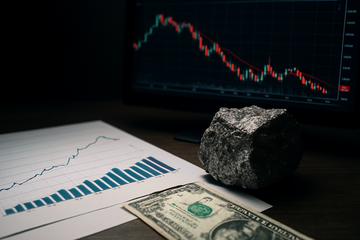
The Rare-Earth Truce Bought Two Months on Paper and 11 Days in Law — and Only Nov. 10 Is Tradable
Washington and Beijing extended the trade truce to Jan. 10, 2027 on Sept. 23, yet as of Oct. 29 neither government had published the notices that would carry China's export-control suspension past Nov. 10 or the U.S. Affiliates Rule suspension past Nov. 9. What is actually being priced is the ex-China heavy-rare-earth premium: dysprosium oxide trades at $2,500–3,500/kg outside China against a $179.48/kg APAC benchmark, a 14–19x spread that exists because April 2025 licensing on seven medium and heavy rare earths was never suspended. MP Materials owns a $110/kg Defense Department floor through 2035 and must hand 30% of its upside back once its 10X plant ramps, while the binding constraint on the whole Western magnet buildout is not Beijing but utilization — General Motors walked away from a magnet contract on July 1, 2026 and U.S. EV sales are down 30.7%.

The Kiwi Fell 1.7% While Its Own Rates Fell Just 13bp: FX Now Prices Board Credibility, Not Rate Paths
On October 28, 2026 the Reserve Bank of New Zealand held its official cash rate at 2.75% on a 4-3 vote against a market that expected a 25bp hike, and the New Zealand dollar fell as much as 1.7% to $0.5583 while the two-year swap rate fell only about 13bp to 3.98%. That gap is the story: the currency repriced roughly thirteen times harder than the rates it was supposed to track. The same pattern ran through the Bank of Japan's hawkish 8-1 pause, the Federal Reserve's 10-2 hold with two members voting to hike, and the Bank of Canada's fully priced 25bp increase - FX is now paying for whether a committee's path is confirmed, not for the expected rate itself. For US investors that means underwriting USD-funded carry and AI-infrastructure debt on committee dispersion, and it leaves the yen as the only positive-carry funding currency in the majors while its own board tightens.
Reddit's Login Gate Is the First Real Price on Human Data — and the Market Just Marked It Down 28%
Reddit will test a logged-in-only experience in select markets outside the US from Q4 2026, and the equity is being repriced for what that costs: shares traded at $93.60 at 11:24 a.m. ET on October 30, a new 52-week low, after an 18% after-hours drop on the company's warning that daily uniques could fall by a double-digit percentage in Q4. The gate itself is cheap for the advertising business — logged-out visitors are 59% of the 130.3 million daily audience but the app and logged-in cohort produce more than 80% of revenue — so the real question is what Reddit can charge for the human data behind the wall. Data licensing grew 35% to $48 million in Q3 2026 on two counterparties, while Getty Images' Chapter 11 filing and Shutterstock's collapsing data business show that only live, attributable conversation earns a premium. At roughly 12.5 times trailing free cash flow with $3.03 billion of cash and marketable securities, the tollbooth option is close to free — if the audience does not melt down first.

No God Required: Two Workers Won Religious Exemptions From Workplace AI in 2026 — and Every Enterprise Rollout Now Needs a Documented Opt-Out
Two US workers have won religious exemptions from mandatory workplace AI, and the second one involves no religious affiliation at all: David Durman, a research administrator at the University of Kentucky, was granted a Title VII accommodation on Sept. 25, 2026 excusing him from personally using ChatGPT and Microsoft Copilot. Because the Supreme Court's Groff standard makes refusal hard to defend and the EEOC elevated religious liberty to a chair-level priority on June 4, 2026, enterprises that mandate AI tools now need a per-user opt-out, a documented business rationale for the mandate, and an audit trail of who was excluded. That requirement is sold by the same vendors selling the tools — ServiceNow, Workday, Microsoft, ADP — and the interesting part is that none of them has built or priced it yet, while the market punished ServiceNow for anything but hard AI monetization.

ServiceNow's Record 27% Drop Priced the App-Software Discount: Its Premium to Salesforce Fell From 2.1x to 1.5x
ServiceNow closed at $109.67 on October 29, down 26.95% and its worst session as a public company, after a Q3 2026 print that beat on revenue, raised full-year guidance and missed only on adjusted EPS. The damage landed on the forward book rather than on the quarter: Q4 current remaining performance obligations were guided to 18.5% constant-currency growth, 250 basis points below the 21% just posted, while GAAP diluted EPS fell 44% year over year once $198 million of Armis purchase amortization and $630 million of stock compensation landed on a company that had paid $7.6 billion in cash for cyber-security assets five months earlier. That is the app-software discount with a number on it — enterprise value to sales fell from 10.4x to 7.7x in a single session, the premium over Salesforce was cut from 2.1x to 1.5x, and the read-through hit every seat-priced application while the layers that capture agent spending, NVIDIA silicon and Accenture implementation, barely moved. The live question for investors is whether 7.7 times sales still pays for a 20% grower whose booked business is decelerating from 21% toward 18.5%.

The 22% Social Security Cut Nobody Prices: $345 Billion a Year With No Buyer, and Who Catches It
The 2026 trustees put a date and a percentage on the trust-fund cliff: the OASI fund empties in the fourth quarter of 2032 and pays 78 cents on the dollar of scheduled benefits, while CBO models a 26% cut by mid-2032. Priced against today's retirees that is roughly $345 billion a year, 1.1% of GDP, and it evaporates — no bondholder, no fund, no offsetting receiver. Households can absorb 0.2% of their financial assets, which is exactly why Washington defers and why the guarantee migrates to private insurers, where retail annuity sales just set a record $464.1 billion. The investable question is therefore not the 2032 date but who is paid to stand behind retirement income in the meantime, with the November 3, 2026 midterms as the first catalyst.

OpenAI's roll-up bought ADT for $10 a share — the house just became an AI agent's execution layer
Thrive Holdings, the OpenAI-backed holding company Joshua Kushner spun out of Thrive Capital, agreed on Oct. 29, 2026 to take ADT private for $10.00 a share in cash — roughly $7.6 billion of equity and $15.3 billion of enterprise value, financed by Apollo-managed funds with no financing condition and expected to close in the first quarter of 2027. The strategic prize is physical: 6.1 million monitored homes, UL-listed monitoring centers, a dealer installation network and a human dispatch chain that an AI agent can act through. But the price tells you what the market thinks of the software story: 5.7x trailing EBITDA against roughly 4.8x before the bid, so about $2.4 billion of enterprise value sits above the pre-deal multiple — the AI option was bought nearly free. That leaves the hard part: recurring monthly revenue of $360 million is shrinking, gross customer revenue attrition has risen to 13.1%, and the announcement promises unchanged data policies and no new data sharing — so the payoff has to come from cheaper monitoring and better retention, not from selling household data.
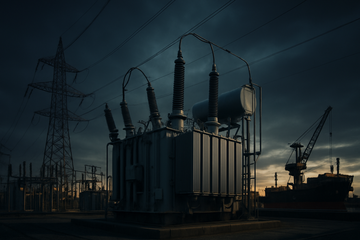
Dnipro Went Dark on October 30. Ukraine's Grid Rebuild Is Being Bought in China, Not Europe
Russian strikes on October 30, 2026 cut power to more than 350,000 consumers in Dnipro and stopped the city's metro, and the deeper cause is a repair bottleneck that turns every destroyed substation into procurement. Ukraine's own customs data shows where that money lands: $1.14 billion of transformers, inductors and reactors imported in the first nine months of 2026, up 47.3% year on year, with 87.8% of the value coming from China while Europe's factories stay booked out for years. GE Vernova exited the third quarter with a $42.2 billion Electrification backlog, up 60% year on year, and is committing $6.0 billion through 2028 to add capacity, so the war's cash flow reaches Western and Korean primes through European and NATO grid-hardening budgets rather than Ukrainian tenders. The binding constraint on the $91 billion energy-sector rebuild is financing and factory allocation, not demand: a €922 million EU package and a €90 million EBRD substation loan against a World Bank estimate of nearly $91 billion.

DTEC's $600M Malaysian Refinery Puts the First Price on 'Process It Abroad' — and the Scarce Asset Is Now the Contract, Not the Plant
A US-majority-owned startup has committed $600M to a Malaysian rare-earth refinery — 5,000 tonnes a year first, 10,000 across two plants within three years — and told Washington it is eligible for Export-Import Bank, Development Finance Corporation and Defense Department money. Because ex-China NdPr oxide has slipped to about $95/kg, below the $110/kg floor Washington pays, the scarce asset in this chain is no longer separating capacity but a floored government contract, and every new refinery competes for the same defense-side demand pool. That directly challenges MP Materials, whose $17.6M of price-protection income in Q2 2026 — 16% of revenue — is the government contract doing the work. The market has already repriced the sector down 26% to 67% from June 30, 2026, paying only for delivered, floored volume.

Wabi's 2.5x re-rating prices a surface, not a business — and Wabi's own privacy notice shows the rent still goes to Meta, Google and Apple
Wabi repriced to $1.25 billion on Oct. 29, 31 days after abandoning its app-builder story for a shared 'personal agent' messenger — with no revenue, no business model and no disclosed user count. The round is not paying for consumer agent economics; it is paying for the right to own the last surface a user opens. But Wabi's own privacy notice shows that layer is rented at both ends: Google, Anthropic and OpenAI supply the intelligence, Meta and TikTok supply the users, and Apple collects the subscription. The investable read-through is the surface owners and the silicon underneath them, not the standalone agents.
What to expect
Evidence-first notes with a visible point of view.
This section collects sharp takes on earnings, shareholder meetings, and market structure. Each new piece should make the thesis, the facts, and the implications obvious within the first few screens.
Expect direct analysis, not generic commentary.
Expect the data to be explicit and the argument to be easy to follow.