Latest
The day's market news, with the argument attached
New notes every trading day on earnings, policy and market structure. Each one opens with the conclusion, then the evidence, then the companies it hits.
2026-10-29


Memory Split in Two: SK hynix's 80% Margin Is an HBM Mix Story, Samsung's Record Profit Is a Volume Story
SK hynix beat the sell-side on Q3 2026 operating profit and rallied 11%, while Samsung printed a larger record profit, missed the higher consensus bar and slid — same shortage, same AI budget, different mix. SK hynix converts a quarter of the DRAM market into half of all HBM, has already locked more than half of 2027-28 capacity under long-term agreements with 14 customers, and is entering2027 with HBM4 pricing fixed; Samsung sells more bits at commodity DRAM prices that are decelerating (contract prices up 10-15% quarter on quarter in 4Q26 against roughly 60% in 2Q26) and is still negotiating its 2027 HBM4 book. The consequence for investors is that memory is no longer one trade: with memory rising from 47% to 68% of cloud capex in 2027, the premium is collected by HBM-weighted suppliers and the HBM4 equipment chain, while server and PC buyers absorb the bill.

Microsoft's $45.2 Billion Quarter: Azure's First Dollar Number, a $10 Billion OpenAI Check, and the Capex Guide That Now Funds the AI Trade
Microsoft's September quarter made the AI build auditable for the first time: Azure revenue of $33.165 billion disclosed in dollars, $10.0 billion of revenue from OpenAI (about 11% of sales), and $45.2 billion of capital spending that came in below the $50.7 billion consensus and still rose 30% year over year. CoreWeave, Nebius and IREN fell 3% to 5% anyway, because in this market Microsoft's own capital plan has become the funding variable for everyone who builds compute on Microsoft's behalf — and the quarter's miss was mostly a shift of leases from finance to operating, with cash capital spending up 103% and December-quarter spending guided above $50 billion. The deeper risk is concentration and cash: trailing free cash flow fell 38% to $60.0 billion while revenue rose 18%, receivables grew 85% year over year, and the revenue-sharing component of the OpenAI relationship is capped at $38 billion through 2030.

Nvidia's Open Speech Model Transcribes Up to 2,238 Hours of Audio Per GPU-Hour — the New Benchmark Every Paid Speech API Must Clear
On October 28, 2026, NVIDIA released Nemotron 3.5 Transcribe, a roughly30-billion-parameter open-weight speech model that transcribes 40 languages, tags up to eight speakers and translates 31 of them for nothing — and on NVIDIA's own serving numbers it turns one GPU-hour of wall clock into 2,238 hours of finished transcript. That arithmetic is the event: it converts a per-minute API bill into a hardware bill, squeezing the margin out of every hosted speech API while pushing demand back toward the silicon NVIDIA sells. NVIDIA's data-center revenue grew 117% year over year to $89.0 billion in the July quarter, and management told investors open-model adoption is skyrocketing — the speech release is the clearest sign yet that AI's profit pool is migrating down the stack.

3.4% GDP, Gasoline Up 34%, Hershey Volume Down 10%: The Consumer Crack Is a Price-Level Problem
The third-quarter advance GDP estimate of 3.4% and September PCE inflation of 3.6% headline and 3.1% core describe an economy whose growth is capital spending, not household consumption: inflation-adjusted consumer spending was unchanged in September and the personal saving rate sits at 3.8%. Hershey's own print showed the same split from the manufacturer's side, with adjusted gross margin up 1,090 basis points on cocoa at $4,317.67 a tonne, organic volume down 10 points, and organic sales guidance cut to about 3% even as earnings guidance rose to $8.58-$8.74 a share. The squeeze is a price-level problem rather than a demand collapse: gasoline is up 34.2% year over year and food away from home 3.5% while food at home runs just 1.8%, so the lowest-income households are cutting small, high-mark-up impulse treats rather than pantry staples, and convenience-store candy sales fell about 5% in September. Own the earnings transfer to branded manufacturers with input leverage, and treat the discounters as the destination of the volume rather than as a consumer-health signal.

Qatar Just Became a Buyer of American Gas: 4 Million Tonnes Contracted Through 2054, and a $25/MMBtu Spread the Oil Trade Never Saw
QatarEnergy, the world's largest LNG producer, is now buying the molecules it used to sell: 33 US spot cargoes worth about $1 billion so far, a 4 mtpa free-on-board contract with Cheniere Energy running through 2054, and at least 3 mtpa in advanced talks with Venture Global. The hedge works because American molecules never transit the Strait of Hormuz, and it costs more than $20 a MMBtu because the same gas sells into Asia at $32.36 while Cheniere realized $7.07 on its legacy long-term volumes in 2025. Brent at $113.88 captures the oil side of the chokepoint; the equity consequences sit in US liquefaction fees, contracted 2030s volumes and freight tonne-miles, which is where the premium actually changes hands.
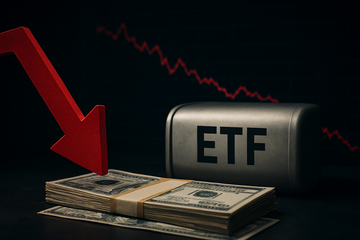
The 2026 ETF Closure Wave Looks Like Passive “Forced Selling”—But It’s a Different Liquidity Test Than Investors Expect
In 2026, US ETF closures are running at an unusually high pace: the ETF.com closure tracker shows 148 listed ETF closures year-to-date, with more still possible as the year ends. While closures do create forced selling of underlying holdings, the bigger risk for market liquidity is whether the closure timing collides with already-thick AI/tech concentration—then compounds execution pressure through redemption-driven asset sales and lower underlying liquidity.

Shell's $10.8 Billion Quarter Came From a $42 Crack Spread, Not From the Wellhead
Shell's third-quarter 2026 adjusted earnings of $10.81 billion were a refining result wearing an oil major's clothes: Chemicals and Products earned $3.86 billion against Upstream's $3.19 billion, nine-month output fell 17% year on year, and Shell's own trading books were flat to lower. The engine was a war-inflated crack spread — Shell's indicative refining margin hit a record $42 a barrel against $24 in the second quarter — and Shell is now distributing that premium as though it were a run rate, with a $5.0 billion buyback and about $2.2 billion of dividends returning roughly two-thirds of quarterly earnings. The mechanism matters for the read-through: the same disruption that created the margin destroyed Shell's own Qatari molecules, so investors buying the distribution are buying a geopolitical premium that both the payer and the recipient can lose.

UnitedHealth Group's 88.4% Medical Care Ratio Is Repricing, Not Cost Relief — and It Doesn't Weaken the December Hike Case
UnitedHealth Group reported a third-quarter medical care ratio of 88.4%, 150 basis points better than a year earlier, with operating earnings up 52% to $6.6 billion and full-year adjusted guidance raised to at least $20.50 a share. But $610 million of that improvement came from favorable prior-period reserve development, the chief financial officer says medical costs remain elevated versus historical norms, and the sector did not confirm the trend: Elevance Health improved 70 basis points, Centene was flat at 92.7% and Molina Healthcare deteriorated 30 basis points to 92.9%, with Humana due to report on Nov 6. The Fed prices provider services and net insurance premiums rather than payer margins, so a better medical care ratio mechanically pushes the PCE health insurance index up rather than down — just as the December 8-9 meeting shapes up as a hike.

Upwind Turned Down Datadog's $4 Billion Bid and Printed $3.8 Billion Instead: AI-Security Now Clears at 42x ARR
Upwind closed a $400 million Series C at a $3.8 billion valuation on Oct 28, nine months after a $1.5 billion Series B, after rejecting a reported Datadog approach worth nearly $4 billion because it carried no premium over the round's own price. The mark values Upwind's roughly $90 million of exit-2026 ARR at about 42x — close to twice the 22.6x forward sales multiple implied by Datadog's own $100.8 billion enterprise value — so private capital, not a strategic buyer, now sets the clearing price for fast-growing cloud security. The read-through for public investors is uncomfortable: takeout optionality in mature observability (Elastic at 6.1x sales, Dynatrace at 8.3x) is effectively dead at private-mark prices, and the buyers rich enough to pay 40-80x ARR are hyperscalers with cheap currency, not the high-multiple software vendors pivoting into the category. Datadog's Q3 guide of $1.135-1.145 billion, or 28-29% growth against 36% in Q2, is the near-term test.
2026-10-28

Robinhood now earns more from prediction-market contracts than from crypto — and the CFTC's Nov. 19 comment deadline, not Election Day, is the line item the midterms actually move
On Oct. 9 the Commodity Futures Trading Commission did what Congress had not: it issued an interim final rule excluding casino-style wagers from the definition of a swap and simultaneously proposed defining sports, politics, cultural and weather event contracts as swaps, with the comment record closing Nov. 19 — sixteen days after the Nov. 3 midterms. The election therefore no longer decides whether the rulebook exists; it decides who writes the record that finalises it and whether a new Congress reopens the file. The AI money is splitting along the same hinge: the pro-deployment camp has put about $8 million into the midterms and the safeguards-first camp about $6.9 million, and their real fight is whether federal rules preempt state law. The investable read-through is narrow and testable: Robinhood Markets has already converted the rulebook into $173 million of quarterly event-contract revenue, while DraftKings is spending $200 million to $300 million a year chasing the same trade against a trailing operating loss.

Frontier's 71% Airfare Jump Is the CPI Signal the Fed's Gauge Is Built to Miss — and 2027 Hedge Expiry Makes It Bigger
Frontier Group Holdings reported a 71% jump in average airfare for the third quarter on Oct. 28, and the market read it as pricing power. It was not: jet fuel and the disappearance of the ultra-low-cost price check did the repricing, and the fuel bill grew faster than the ticket. The shock is now visibly in consumer prices — airline fares are up 22.4% year over year in the September CPI — yet the arithmetic of the index makes it nearly invisible to the gauge the Federal Reserve actually reads. Meanwhile Valero Energy earned $39.24 a barrel of refining margin while American Airlines Group guided to a full-year adjusted loss of $1.00 to $1.60 a share, which is exactly where the money went and why 2027 matters more than the fourth quarter.

BlueChip's 20% Premium Is a Certification Fee, Not a Markup — and the 8-to-16-Month Audit Trail Is the Real Product
Anduril and Qualcomm unveiled BlueChip on October 27, 2026: a rugged laptop designed and assembled in the US, with circuit board assembly at Anduril's Arsenal-1 plant in Ohio and a Snapdragon X chip built at TSMC's Arizona fabs. It is a prototype — orders open in 2027, pricing is undisclosed, and at any plausible first-year volume the revenue rounds to a fraction of one percent of Qualcomm's. The investable content is the procurement regime the product is built for: the Pentagon's proposed PCB rule turns supply-chain provenance into a certification requirement with an 8-to-16-month lead time, and the FY2026 NDAA puts a January 1, 2030 deadline on adversary-sourced computer displays and optical glass. Provenance, not performance, becomes the moat — and the money sits with the tier-one suppliers who can already hold the certificate, not with the private brand that announced it.

Anthropic IPO “shutout” turns AI exposure into a proxy-price trade—start with ADRs, end with the next frontier listing
Bloomberg reports that investors shut out of Anthropic’s IPO allocation are rotating into “proxy” exposure trades across listed AI-linked companies and even crypto/derivatives. The mechanic matters: when direct access is rationed, marginal pricing shifts to the most liquid listed proxies—even when their fundamentals are only indirectly tied to the model’s success. The clearest market test case is how SK hynix’s US ADR listing traded at a large premium to its Seoul share during the early dislocation window.

Insurers Are Now the Risk-Sink for AI Compute: Barclays Is Buying Credit Protection on More Than $10 Billion of Data-Center Debt
Barclays is buying default protection from insurers on more than $10 billion of AI data-center debt, and has asked them to carry more than 50% of the credit risk on some facilities. The bank keeps the loan, the fee and the client; the loss-given-default moves to insurer balance sheets, where capital is thinner, disclosure is thinner and shareholders are mostly retirement savers. The ask is roughly twice the size of the entire 2025 global synthetic risk-transfer market for bank credit, and it lands while about $37 billion of the $80 billion in data-center bonds issued in 2026 is junk rated and CoreWeave's five-year credit default swaps have topped 1,140 basis points. This is the mechanism investors should track: the AI credit tail is migrating out of bank capital into the least-supervised layer of the financial system.

Opera Put Free Inference in the Browser — and Google's Flash Prices Double in January
On October 27, 2026 Opera began shipping WebAI, a proposed web standard that lets any website or extension call AI running on the user's own machine — no API key, no per-request charge, no data center. The capability was not new (Chrome and Edge shipped on-device prompt APIs years earlier), but the billing address was: cloud prices the marginal token by the million, and the cheapest tier is scheduled to get dearer, with Google's Flash list rates doubling on January 1, 2027 while local inference stays free. Run at browser scale, that gap is worth more than most of Opera's adjusted EBITDA, so the real transfer is pricing power — away from token bills and per-seat software licenses, into memory. The read-through is not an NPU unit cycle: IDC expects PC shipments to fall 11.3% in 2026 even as PC revenue rises 1.6% on higher prices.

Boston's Office Tower Sold Itself Back for 68% Less — and the Cheapest Mark on the Building Is the Only One Backed by Cash
On October 20, 2026, Rockpoint Group won the foreclosure auction of its own 32-story, 1.1 million square foot Boston tower with the only bid on the table: $260 million against the $806 million it paid in 2019. That 68% discount is real, but it is not a market price — the sole bidder was the defaulted owner, and the auction's $10 million deposit, W-9 requirement and 35-day closing were built to deliver the asset rather than to discover a price. The credit math is sharper than the headline: $260 million recovers roughly 55 cents on each dollar of the original $470 million mortgage, sitting right at the fat tail of single-borrower office loss severity, while Boston's own assessment still carries the tower at $425 million. For investors the sequence matters more than the auction: extensions are expiring, private credit and insurer balance sheets are absorbing the paper at 40 to 60 cents, and the public office landlords holding the assets — BXP, Vornado Realty Trust, SL Green Realty — are the ones left carrying marks built on the old numbers.

25% of Europe's Corporate Debt Refis Within Two Years: The Corporate Layer, Not the Sovereign Curve, Is the Transmission Belt
Goldman Sachs's 23 October note, reported on 28 October, concludes that higher sovereign yields and heavy new issuance are pushing up European corporate borrowing costs — and it is the corporate layer, not the sovereign curve, that now carries Europe's stress. European investment-grade yields have risen about 30 basis points since 1 September to 4.4%, while high-yield costs jumped roughly 90 basis points to 7%, so the weak tail is repricing three to four times faster than the index. Six of Europe's ten weakest borrowers face 2027–2028 maturities with senior debt yielding 20% to 60%, which closes public-market refinancing arithmetically rather than economically. For US investors the transmission runs through a contest for capital, not a default wave: a forecast $420 billion of hyperscaler bond issuance in 2027 competes for the same insurance and pension money European issuers need, which favours arrangers such as Goldman Sachs and JPMorgan Chase while the same arithmetic already runs at CoreWeave.

F5 Grew Revenue 13% and Adjusted EPS 0.7%, Then Fell 20%: The AI Tollbooth's Margin Now Sets Upstream
F5 beat its own guidance on Oct 27, 2026 — revenue of $917 million, up 13%, and adjusted EPS of $4.42 against a $4.26 consensus — and the stock still closed Oct 28 down 20.4% at $365.53, because the fiscal 2027 guide converts 8%–9% revenue growth into just 2.9%–4.6% adjusted EPS growth and cuts gross margin to 80.5%–82.5% from 84.0% on memory and storage costs. The AI demand F5 monetizes is real: direct AI bookings topped $100 million in fiscal 2026, up nearly 300%, and customers deployed 29.2 terabits of F5-powered AI data delivery capacity in the fourth quarter alone. But two-thirds of that fiscal 2026 growth came from systems hardware, the one layer the AI buildout taxes, and the same three months handed Micron an 86.8% gross margin and SK hynix an 80% operating margin while F5 turned $107 million of incremental revenue into $6 million of incremental operating profit. The traffic F5 carries is funded from enterprise and government security budgets, not from hyperscaler capex — so the toll is genuine and early, and it is priced as a volume story that nobody has yet shown converts into earnings.

The Apartment Refi Wall Hides in a 14-Fold Gap: Multifamily CMBS Delinquency Hit 8.04% in September While Freddie Mac's Multifamily Rate Fell to 0.58%
The warning label Fannie Mae and Freddie Mac put on $1.8 trillion of apartment debt on Oct. 28, 2026 rests on the calmest slice of their own market: Freddie Mac's multifamily delinquency rate was 0.58% in September, while multifamily CMBS ran 8.04% the same month. The wall is a treadmill — $1.8 trillion of the $2.3 trillion multifamily mortgage stock rolls within a decade — and the binding constraint is a $6.8 billion equity gap that widens by roughly $1 billion for every 25 basis points of SOFR. Banks and thrifts hold $668 billion, or 29%, of that debt; private credit funds hold the first-loss equity; and national renewal rent growth of 1.7% means rent inflation defends only the coastal book. The listed apartment landlords are the insulated cohort, and their consolidation is the tell.

Warsh Cut the Fed's Rate Votes From Eight to Six and Refused to Explain — the 30-Year Bond Added 150 Basis Points for the Silence
Kevin Warsh's Fed held rates at 3.75%–4.00% on October 28 with two dissents for a hike, then announced it will vote on rates seven times in 2027 and six in 2028, will give forward guidance only in a crisis, and will publish no path for investors to lean on. That converts policy from an information service into a market-priced distribution, and it is already showing up in prices: the 30-year Treasury closed at 5.37%, roughly 150 basis points above the policy midpoint, while the December hike is priced near 76% in futures and prediction markets. The money moves to whoever can price or fund the uncertainty — dealers, Treasury buyers and deposit-rich banks — and away from anyone running duration on borrowed money.
What to expect
Evidence-first notes with a visible point of view.
This section collects sharp takes on earnings, shareholder meetings, and market structure. Each new piece should make the thesis, the facts, and the implications obvious within the first few screens.
Expect direct analysis, not generic commentary.
Expect the data to be explicit and the argument to be easy to follow.