Latest
The day's market news, with the argument attached
New notes every trading day on earnings, policy and market structure. Each one opens with the conclusion, then the evidence, then the companies it hits.
2026-11-05


DuPont Beat for a Fifth Straight Quarter — and Veralto's Multiple Values DuPont's Water Franchise Above Its Entire Market Cap
DuPont's Nov. 3 print was the first clean look at the company that survived the Qnity separation, and it said three things: adjusted EPS of $2.09 was 62% above the restated prior-year quarter, but roughly a third of that came from interest expense falling from $84 million to $40 million as the balance sheet repaired; Healthcare & Water Technologies earned a 30.4% operating EBITDA margin on strength DuPont attributes to industrial water, semiconductor and specialty markets; and the shares still change hands at 12.2x guided 2026 operating EBITDA. Apply Veralto's 21.6x trailing EV/EBITDA to the $972 million of operating EBITDA DuPont's water and healthcare segment earned in 2025 and you get about $21 billion — more than DuPont's entire $20.4 billion market capitalization — which leaves a $3.6 billion-revenue industrial business valued at close to nothing. What closes that gap is disclosure and portfolio structure, and both are management decisions rather than cycle decisions.

The 47-Point Gap: e.l.f. Beauty's 51% Quarter Leaves L'Oréal's Mass Unit and Coty's Color Brands Behind
e.l.f. Beauty grew net sales 51% to $520.8 million in the September 2026 quarter and lifted fiscal 2027 guidance to $2.00–2.03 billion, but the headline stacks three separate levers: rhode consolidation, roughly $55 million of tariff refunds recycled into $1 price cuts on about 10% of units, and price-and-mix dollars in a US core where unit volume actually fell. The investable signal sits on the other side of the shelf — in the same three months L'Oréal's Consumer Products division grew 4.3% like-for-like while Coty's Consumer Beauty fell 3%, so roughly 47 points of category growth are transferring from incumbent mass portfolios rather than riding a recovering market. And the margin that funded the fight was a June-quarter windfall: the company's own disclosure implies about $50 million of refunds landed in the June quarter, leaving underlying gross margin roughly 200 basis points lower in September. The losers have no comparable answer — Coty carries $3.25 billion of net debt against a shrinking color business, while L'Oréal can only fight with margin it does not have in its slowest-growing division.

Eurozone Inflation Just Printed 4% With Energy Doing All the Work — the ECB Will Hike in December Anyway, and Friday's Payrolls Show the Rest of the World Isn't Following
Euro area inflation hit 4.0% in October, a three-year high, but the acceleration was entirely energy: energy prices rose 20.8% year on year while the rate excluding energy was unchanged at 2.3%. The ECB will lift its deposit rate to 2.75% on 17 December and then pause, because its own staff estimates say the rise in bond yields already subtracts a full percentage point from cumulative 2027-28 growth. The United States is the leg that is not turning hawkish — ISM services missed at 54.5% and September payrolls printed just 29,000 — so the tradable expression is the energy pass-through rather than a synchronized global hike: upstream cash flow at ConocoPhillips and CNOOC, peak-margin caution at Marathon Petroleum and ENEOS Holdings, and long duration as the payrolls hedge via iShares 20+ Year Treasury Bond ETF.

Banks Swung 19 Points From Easing to Tightening in One Quarter: The Credit Cycle Turned Before the Fed's December Hike
The Fed's October Senior Loan Officer Opinion Survey, released Nov 2, 2026 and covering the third quarter, shows domestic banks reversing their spring easing: net tightening in CRE construction standards jumped to 15.5% from -3.7% a quarter earlier, nonfarm nonresidential swung 20.1 points to 8.8%, and subprime mortgage standards hit 20.0%. The reversal was demand-led — banks reported weaker C&I, CRE and mortgage demand — and it landed in the same window as the Sept. 16 hike to 3.75%-4.00%, with a December hike priced. The sharpest signal sits in the special questions: banks are cutting credit to the private credit funds that are supposed to absorb the borrowers they are losing, so middle-market credit supply is contracting rather than rotating. Read it as slower bank loan growth into 2027, while nonbank lenders such as Ares Capital and consumer specialists such as OneMain Holdings pick up borrowers at the cost of funding they also depend on banks to provide.

California Just Made Wealth Untaxable and Florida Just Cut $45.8 Billion From Property Taxes: Both Votes Bill the Next Arrival
Two days apart, California voters passed a constitutional ban on taxing wealth while making the top income tax permanent, and Florida voters approved the largest property-tax cut in the country. The mechanism is identical: protect the incumbent holder of the asset and shift the cost onto whoever arrives next. Florida's version arrives as millage-driven property taxes on rental housing, roughly 15% higher by 2031; California's arrives as a July 1, 2027 Medi-Cal eligibility cliff. The tradable consequences run through Florida property insurance pricing, rental landlords, homebuilder incentive loads and California managed care.

Flutter Entertainment bought 13% more handle and earned $3 million. Kalshi raised $1 billion at $40 billion
Flutter Entertainment's first quarter under new chief executive Dan Taylor shows what defending the US sportsbook market now costs: handle up 13% and average monthly players up 12%, but US segment adjusted EBITDA down 94% to $3 million, because promotional spend rose 60 basis points to 6.0% of handle while category-wide media spending rose more than 60% year-on-year on prediction market entrants. The volume itself went to Kalshi, which raised $1 billion at a $40 billion valuation on October 29 — nearly three times Flutter's market capitalisation and roughly three and a half times DraftKings's. The answer to who pays is that the listed operators funding customer acquisition with promotions carry the cost, while the exchanges and the data vendors serving them collect it.

Goodman and Digital Realty Paid a 45% Premium for NextDC: Data Centers Now Price as Contested Control Assets
A trust vehicle owned 50/50 by Goodman Group and Digital Realty book built up to 9.9% of NextDC at A$9.50 on November 4, 2026 — 45.5% above the previous close and 78% above the price NextDC closed at after its October 21 guidance cut. Roughly US$500 million of buying re-added A$3.15 billion of market value in a single session, because the buyers underwrote 740.1MW of contracted capacity rather than the FY27 guidance that had just been cut by 36%. The investment lesson is narrower than the headlines: listed data center capacity is now a contested control asset, priced by strategic operators with balance sheets, and the binding constraint has moved from capital to grid and council consent.

$15.48 Million, Indexed: The Estate Exemption Is the Only Federal Break That Grows Without a Vote
The IRS's tax year 2027 release, published Nov. 5, 2026, re-indexed every bracket by 3.2% and changed no tax rate — but it also lifted the estate and gift exclusion from $15.00 million to $15.48 million, and that number now rises automatically every year. With the fiscal 2026 deficit at $2.0 trillion and Democrats holding both chambers, the one federal concession written to keep widening is the one Washington's new majority will have to defend. Meanwhile voters in Washington preserved a 9.9% rate on income above $1 million starting in 2028, which gives the wealth-transfer calendar a new, dated deadline and shifts where that money is monetized: trust banks and custodians upstream, private credit and evergreen vehicles downstream.
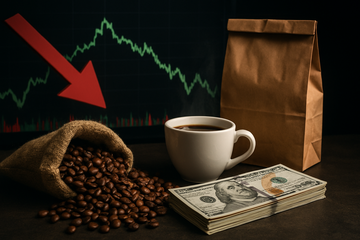
Arabica at $2.79 and Kraft Heinz Is Selling Coffee: The Glut Is a Pricing Problem, Not a Margin Gift
Kraft Heinz agreed on Nov. 4, 2026 to sell its North America coffee business — Maxwell House, Gevalia, Sanka, Yuban, Tassimo, Nabob and Ethical Bean, plus roasting plants in Jacksonville, Florida and Vancouver, British Columbia — to One Rock Capital Partners at a $650 million enterprise value. It keeps a 30% stake, banks about $500 million of net proceeds for debt paydown, and closes in mid-2027, on the same day arabica settled at $2.79 a pound, 32.4% below a year earlier, on a record Brazil crop forecast. The $650 million is not the tell: the buyer is a levered financial sponsor rather than a strategic roaster, and the multiple BNP Paribas called unattractive for the seller prices a category whose problem is shelf pricing, not green beans. Keurig Dr Pepper shows how the deflation actually lands — moderating green coffee costs were reinvested in trade spending instead of margin, net price realization fell 4.2% in U.S. Coffee, private-label share rose, and legacy EPS guidance was cut to 3%-5% from 4%-6%.

Anthropic Just Proved You Can Cryptographically Verify Which Model Wrote What — and Refused to Deploy It. Post-Election, That Gap Is the Compliance Tollbooth Nobody Bought
Anthropic's Nov. 2, 2026 release of FlashProve — an Apache 2.0 zkSNARK system that lets anyone verify a reply came from a specific committed set of model weights — is the first real answer to a question regulators and enterprises have been circling for two years: not \"was this AI-generated\" but \"which model, exactly, produced this.\" The lab itself says it has no plans to deploy the system at Anthropic or any other lab, and the economics explain why: proving a 1,024-token reply costs 70–95x the GPU time of running the model, with an 18.78 MB proof and a 17-second CPU check. With Democrats now holding both chambers after sweeping seven Senate seats and at least 24 House districts, the compliance demand for model-identity attestation is arriving faster than anyone has built the supply chain to meet it. The near-term money lands on the provenance infrastructure vendors — Adobe via C2PA, Digimarc via the verification API — while the long-term prize sits with whoever owns a per-model commitment registry.

Moonshot's 8,000 Blackwell GPUs in Europe Carry a ~$666M-a-Year Price Tag — About Six Times What Oracle's Canceled Tencent Lease Implied
Washington's chip ban is no longer being enforced at the border; it is being enforced in contracts, and the price shows up in the rent. Moonshot AI's reported talks about leasing clusters of 8,000 or more Nvidia Blackwell GPUs from European neoclouds — roughly $666 million a year at published list prices, and 30% to 50% more upfront than a non-Chinese customer would pay — are the clearest measure yet of what the third-country rental channel costs after Nvidia capped Chinese business at 49% and Oracle scrapped a $7 billion lease to Tencent. For investors the channel is immaterial to Nvidia's revenue, punitive for Tencent, and a pricing-power windfall for European capacity owners such as Nebius and CoreWeave, with the real risk sitting in contract language and in the stalled Remote Access Security Act rather than in chips.
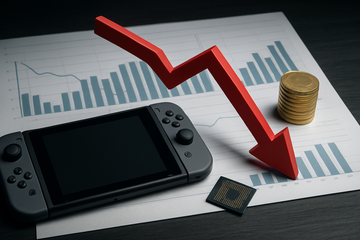
Nintendo's 41% Unit Drop Is a Memory-Cost Event — and the Unchanged 16.5M Forecast Is the Real Risk
Nintendo sold 2.67 million Switch 2 units in the September quarter, down 41%, after lifting prices by $50 in the US and ¥10,000 in Japan to cover a memory and tariff bill the company now sizes at about ¥100 billion. Units broke; profit did not — first-half operating profit rose 49.1% to ¥216.5 billion while software shipments climbed 18.8%. The real problem is the guidance Nintendo refused to touch: 16.50 million units for the year now requires a 5.5% second-half rebound in the most price-elastic purchase in consumer hardware.
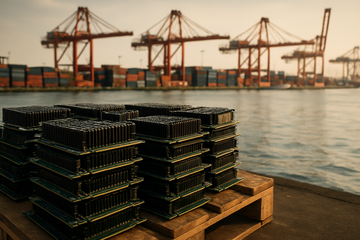
600,000 NVIDIA GPUs Are Stranded in Hong Kong — and Beijing Now Holds a $51 Billion Pricing Option
Reuters reported on Nov 5, 2026 that roughly 600,000 Nvidia AI chips are sitting in Hong Kong waiting for a mainland import approval that Beijing is withholding, even though Washington already cleared the shipments for export. The chokepoint has flipped sides: with Nvidia's own guidance assuming zero China data-center compute revenue, the stranded pile is no longer a US earnings problem but a China pricing and share problem — mainland street quotes for an eight-card H200 server ran past 6 million yuan, roughly four times the official chip price, while IDC data put Nvidia's share of China's data-center AI chip market at 34% in the first half of 2026. Upstream is insulated either way because TSMC redirected capacity and memory is sold out, while downstream buyers are rationed at 5% to 10% fill rates on approved cards and paying multiples of list price to get the rest. The investable question is no longer whether Nvidia can ship to China, but who owns the option to let China buy — and at what price the survivors pay.

Crude's War Premium Just Gained a Ceiling: 242 House Seats, a $15 Two-Week Drop, and a Market $10 Below Goldman Sachs
WTI's 8.3% plunge to $88.12 on Nov. 4 was not a demand story — it was the market repricing the odds that the Iran war survives a Democratic House, with 242 Democrats and a Senate that flipped seven seats. About $15 a barrel of prompt premium left the December Brent contract in two weeks while the 2027 strip already carried none, leaving a two-speed market: airlines collect immediate fuel relief, refiners lose a $45.70-per-barrel margin, and the freight and war-risk insurance where most of the premium actually sat begin to normalize behind the crude curve. The floor is OPEC+'s Nov. 29 quota call and a projected 2027 surplus of roughly 3.9 million barrels a day, and Marathon Petroleum and Delta Air Lines sit on opposite sides of it.

Palantir's U.S. Commercial Revenue Just Passed Government. That Changes Its Risk Profile, Not Its 54x Sales Multiple
Palantir's third-quarter print, reported Nov 2, 2026, put U.S. commercial revenue of $984 million above U.S. government revenue of $953 million for the first time, with total commercial revenue of $1.168 billion passing total government revenue of $1.146 billion. The crossover was won rather than forced: U.S. government revenue still grew 96% year over year, so federal exposure held near 41% of sales for a fourth straight quarter instead of shrinking. What the print changes is the shape of the downside — one quarter of U.S. commercial growth added $587 million of revenue, more than a 30% cut to federal revenue would remove. It does nothing for the multiple: at 53.7x trailing sales, roughly 46x the midpoint of its own fiscal 2026 guidance, Palantir already trades above every software comparable, and the stock fell 1.65% on Nov 3 as Democrats took the Senate and were projected to take the House, because investors were trading a bookings deceleration rather than a political overlay.

Bitcoin Bounced 4% and Trump Media Fell 24.5% in One Session: Political Access, Not AI Capex, Is the Factor Being Priced
On Nov. 4, 2026, the day after Democrats took the House and Senate, bitcoin closed 4.6% higher at $80,653 while Trump-linked tokens fell up to 17% and AI data-center equities dropped just as hard — Cipher Mining -21%, CoreWeave -9.5%, Applied Digital -8.8% — even as First Solar gained 8.4% and Samsung SDI jumped 11.6%. The asset that rallied has no political identity; the assets that fell derive cash flow either from access to one administration or from a permitting regime that just changed hands. That makes political access a measurable exposure: the token economy depends on one family's continued access, and the AI buildout depends on governors, permits and tax credits. The names carrying both betas — bitcoin miners rebranded as AI infrastructure — fell hardest, because they surrendered a political hedge just as permitting risk arrived.

Qnity Electronics Beat, Raised, and Still Got Its Price Target Cut: AI's Interconnect BOM Is Repricing Two Steps Above the Connector
Qnity Electronics reported a 22% organic quarter, beat adjusted EPS by 21%, and raised full-year guidance by $200 million at the sales midpoint — then watched a price target fall from $180 to $165 with consensus slipping to $176.30. The cut blamed semiconductor pressure, but the evidence points elsewhere: AI's interconnect bill of materials is repricing at the conversion layer that owns the scarce inputs, with laminate gross margin up more than 1,200 basis points at Kingboard Laminates and Shengyi Technology against 380 basis points at Qnity's own interconnect business and roughly 120 at Amphenol's connector assembly. The uncomfortable conclusion for the consensus target is that the take is largest where the scarce input is owned, which makes Qnity a second-derivative way to own AI interconnect rather than the first.

Qualcomm's Biggest 5G Order Ever Landed in the Same Week Its Margin Guide Fell to 20%
SpaceX picked Qualcomm's Dragonwing radios and baseband to build the first standalone nationwide US 5G network on Nov. 4, 2026 - hours before Qualcomm guided its own segment margin down to 20%-22% from 24% and reported handsets down 26% to $5.14B. Both events are one trade: Qualcomm is swapping a shrinking handset franchise for network and data-center hardware that carries thinner margins, while the customer's cash goes elsewhere - 83% of SpaceX's nine-month capital spending went to AI compute, not cell sites. The suppliers paid in every branch of the story are the tower landlords and the memory makers, not the chip vendor in the middle.

Rheinmetall's Backlog Grew 38% and Its Shares Fell 13% — Europe's Defence Money Is Stuck at the Signature Line
Rheinmetall cut 2026 sales guidance to about €13.2bn from €13.7–14.2bn on Nov 4, 2026 — the second cut in three months — because Germany's Boxer contract is still unsigned and artillery ammunition is stuck in acceptance testing, not because European budgets shrank. The order book grew 38% to €78.0bn while nine-month operating cash flow fell to -€1.70bn, so money is being ordered faster than it is contracted, accepted and paid for, with a Bundestag vote on Arminius set for Dec 9, 2026. The same three gates — authorisation, acceptance, payment — sit inside US primes' books, from Lockheed Martin's self-funded F-35 Lot 20 to Northrop Grumman's SiAW charge and RTX's undefinitised Tomahawk contracts, which is why Europe's contracting friction now reads across the whole group.

Record Imports, a 0.7% Smaller Deficit, and a 3% Wider Real Gap: The Trade Number Stopped Measuring Trade
September's $105.0 billion goods-and-services deficit looked like a narrow improvement, and that is precisely the problem. In the same release the inflation-adjusted goods gap widened 3.0% to $119.5 billion, because US export prices ran 11.6% above a year earlier while import prices rose 8.1% — and the customs accounts showed $19.4 billion of tariff refunds paid back to importers against $25.3 billion of new collections. The headline now blends export-price inflation, a refund line booked straight into retailer cost of sales, and an AI capital-goods boom that turned computers into the largest import category on record. For investors, the deficit has stopped being a scorecard for the tariff wall and become a gauge of hyperscaler spending, a fiscal transfer, and — with Democrats controlling Congress from November 3 — the binding constraint on what Washington can afford to pass.
What to expect
Evidence-first notes with a visible point of view.
This section collects sharp takes on earnings, shareholder meetings, and market structure. Each new piece should make the thesis, the facts, and the implications obvious within the first few screens.
Expect direct analysis, not generic commentary.
Expect the data to be explicit and the argument to be easy to follow.