
Codename / reveal window
Luna, Meta Connect 2026 (Sept 23–24)
Shipments targeted for October 2026
What it removes
12MP camera; LED privacy light
6 mics, speakers, side AI button retained
Meta smart-glasses unit sales, 2025
~7 million pairs
vs. ~2 million in 2023 and 2024 combined
Meta share of smart-glasses market, Q1 2026
69.2%
IDC; closest rival trails by a wide gap
Reality Labs Q2 2026
$431M revenue / $4.62B operating loss
AI glasses drove +16% YoY revenue growth
Meta29-state children-safety settlement
$16.68B max
Filed Aug 26, 2026; daily-usage limits for teens
Meta 2026 capex range
$125B–$145B
Most earmarked for AI; glasses are the visible front end
The product decision
What 'Luna' Actually Changes
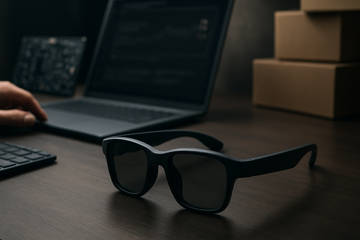
Luna is the first Meta smart-glasses SKU designed around what the glasses cannot do. It keeps the open-ear speakers and a six-microphone array used for voice queries to Meta AI and the newly launched Muse consumer agent, plus a side-mounted button to summon the assistant — and it drops the 12-megapixel camera and its recording LED that have defined every Ray-Ban and Oakley Meta pair since 2023.
The product roadmap reading from The Information, picked up by Reuters and Channel News Asia on September 15, 2026, puts the formal reveal at Meta Connect (Sept 23–24 in Menlo Park) with shipments targeted for October. The Information framed it as a response to mounting privacy pressure; the Reuters summary is closer to the strategic point — Luna is a lower-friction entry product for buyers who won't wear a camera on their face.
Litigation catalyst
Why a Camera-Free SKU, and Why Now
The timing is not random. On March 4, 2026, plaintiffs filed Bartone v. Meta in the Northern District of California, a federal class action accusing Meta of routing smart-glasses footage to overseas contractors for AI training — allegations reinforced by a parallel Swedish investigation. Clarkson Law Firm opened an investigation the same month, and a separate amended complaint on August 31, 2026, named Luxottica of America as a co-defendant.
- Bartone v. Meta filed Mar 4, 2026 — federal class action over AI training pipeline (N.D. Cal.)
- EU Commission preliminary finding Jul 10, 2026 — Meta breached the Digital Services Act with 'addictive design' of Facebook and Instagram
- Meta 29-state settlement, Aug 26, 2026 — up to $16.68B, includes default daily-usage limits and night-time blocks for teens
- EPIC petition Feb 13, 2026 — urged FTC and state AGs to block Meta's planned facial-recognition rollout for glasses
Cumulatively, the regulatory and litigation load has shifted the cost calculus on hardware. A camera-free SKU sidesteps the surveillance narrative, the wiretapping-class exposure, and the EPIC-led facial-recognition fight, while still giving Meta a wearable on the face for Meta AI queries and ad-relevant signal. The $16.68B child-safety settlement on August 26, 2026, in particular, makes any feature that attracts a fresh line of attack cheap to drop.
Distribution moat
The Halo Becomes the Moat
Luna slots into the most aggressive consumer-electronics distribution build-out of the year. In June 2026, Meta launched its own first-party 'Meta Glasses' line with EssilorLuxottica at $299 across 26 prescription-compatible styles (Adventurer, Fury, Starfire/Kylie), followed in July by the EssilorLuxottica H1 release reporting that AI-glasses sales nearly doubled in Q2. The halo products — Ray-Ban Meta ($379 Gen 2, $799 Display) and Oakley Meta HSTN ($479) and Vanguard ($499) — have carried Meta to a 69.2% share of the smart-glasses market in Q1 2026, per IDC.
Meta Glasses (own brand)
from $299
26 Rx styles launched Jun 23, 2026
Ray-Ban Meta Display
$799
On sale Sept 30, 2025; Neural Band included
Oakley Meta HSTN / Vanguard
$479 / $499
Sport-focused; Vanguard has centered 12MP camera
Industry target — H2 2026 wearables
10M units
Meta internal goal cited by The Information
That store footprint is the moat. EssilorLuxottica operates roughly 18,000 retail locations across LensCrafters, Sunglass Hut, Ray-Ban, Oakley and Salmoiraghi & Viganò — a bricks-and-mortar advantage no software platform can replicate. A camera-free Luna SKU pushes that channel into segments that previously refused to walk into a store wearing a 12-megapixel recorder: corporate offices, schools, healthcare, restaurants, and the gym locker room. The capture-rate argument that has capped Meta Glasses at a 'specialty gadget' ceiling (per Reuters' November 2025 framing) gets weaker when the product no longer competes with the surveillance narrative.
Supply chain
What Luna Means for the Component Vendors
Removing the camera simplifies the bill of materials but does not collapse it. Qualcomm's Snapdragon AR1 Gen 1 stays as the system-on-chip for on-glass AI; Luxshare (Shenzhen) supplies speaker modules for every Meta and Oakley frame, and Goertek (Shenzhen) has been Meta's lead manufacturing partner across the Ray-Ban and Orion programs. EssilorLuxottica handles frames, lenses, prescription integration and retail distribution.
| Layer | Lead player | Luna impact |
|---|---|---|
| AI silicon | Qualcomm (Snapdragon AR1 Gen 1) | Retained; Meta AI / Muse run on-device |
| Frame & Rx lens manufacturing | EssilorLuxottica | Doubled AI-glasses Q2 revenue YoY; capacity scaled to 20M by year-end 2026 |
| Speaker modules / acoustics | Luxshare | Volume rises with each new SKU |
| Final assembly / ODM | Goertek | Multi-SKU production line already running |
| AI models on-device | Meta (Muse Spark 1.1) | Voice-only surface area; no visual co-prompt |
For Qualcomm, Luna is incremental volume on the AR1 platform at a time the company is also powering Snap's $2,195 Specs and the Android XR glasses Samsung is shipping with Google this fall. For Luxshare and Goertek, Luna is one more line in a manufacturing calendar that already includes Gen 2 Ray-Ban, the Display model, and Meta's own-branded June launch — every incremental SKU flows through the same Shenzhen acoustic stack.
Competitive window
Meta Buys Itself a Year of Empty Shelves
Luna launches into a category where the most anticipated competitor is still12–18 months out. Apple has pushed its first consumer smart glasses, the 'N50' display-less model, to late 2027 at the earliest, with the LA Times and Cult of Mac both reporting the shift. Snap's Specs AR glasses arrive this fall at $2,195 — a developer-and-creator price point, not a consumer one. Samsung, in partnership with Google and Android XR, ships 'intelligent eyewear' with Gemini this fall, but those frames lean on third-party brands (Gentle Monster, Warby Parker) and start life as an audio-only SKU.
That gap matters because the first consumer smart-glasses platform to clear enterprise security review sets the procurement default. By launching a SKU that compliance officers do not have to argue about, Meta pressures Apple's eventual launch to compete on privacy terms Meta itself will have already established.
Horizons
What Moves First, and What to Watch Through 2028
- Days–quarters: Meta Connect 2026 (Sept 23) confirms Luna specs and pricing; EssilorLuxottica Q3 2026 earnings on Oct 20 will quantify how much AI-glasses mix lifted the gross margin
- Days–quarters: District court rulings on Bartone v. Meta set the disclosure scope on training-data sourcing; Qualcomm Q4 FY26 prints AR1 platform revenue contribution
- 1–3 years: Apple's late-2027 launch has to clear an enterprise bar Meta has spent2026–27 resetting; failure to do so leaves Meta the default procurement pick through 2028
- 1–3 years: Samsung Android XR success hinges on whether Gemini-only audio glasses gain traction before Meta's own-branded $299 line crowds them out of the channel
- 1–3 years: Camera-free designs could become the regulatory template — EU AI Act wearables add-ons may push Snap and Luxshare-assembled challengers toward the same architecture
The deeper bet is that camera-free is not a retreat — it is a segmentation play. Halo cameras stay on Ray-Ban Meta and Oakley for creators; Luna opens the corporate, healthcare and education channels that have so far refused the category. If the $16.68B settlement and the EU's DSA finding push US and EU regulators toward hard rules on always-on capture, Meta has already migrated the most regulated buyer to a product that was built for the rule.
Stocks this actually touches
- Luna widens the wearable funnel into enterprise and education, supporting Meta's 10M-unit H2 2026 wearables target
- Camera-free SKU reduces the litigation surface from Bartone v. Meta and the EU DSA finding, lowering the cost of incremental features
- Sustained AI-glasses volume flow-through keeps Reality Labs' $431M Q2 2026 revenue trajectory intact through 2027
- Luna adds another SKU to a manufacturing calendar that already pushed Q2 2026 AI-glasses sales to nearly double YoY
- Capacity is being scaled to 20M units by year-end 2026, and Luna ships into a privacy-skeptical channel that lenses + frames already serve through 18,000 stores
- Adj. operating profit grew 9.7% in H1 2026; a fifth Meta SKU reinforces the segment-mix premium through 2027
- Snapdragon AR1 Gen 1 powers Meta, Snap Specs and Samsung/Google Android XR — Luna volume stacks on top
- On-device AI pitch (AR1+ Gen 1) gets a new product showcase on a category Meta is positioning as voice-first
- Wearables remain a small but high-margin QTM line that helps offset smartphone-side cyclicality through 2027
- Luna launches12+ months before Apple's first consumer smart glasses, which have slipped to late 2027
- Meta gets to define the privacy-compliant default SKU in the channels enterprise buyers care about first
- Camera-free architecture raises the bar for what 'private by design' means on Apple's eventual launch
- Snap's $2,195 Specs ships the same fall as Luna but at a 7x price premium, targeting creators rather than mainstream consumers
- If Meta's camera-free push pulls privacy-conscious buyers toward Luna, Snap has to defend the developer-and-creator moat or risk share loss in the prosumer tier
- Specs shipments vs. Meta Luna units in Q4 2026 is the cleanest single read on whether AR glasses are a category or a niche
- Android XR glasses with Gemini ship this fall alongside Luna — a credible second entrant but one without Meta's distribution depth
- Samsung gets a non-Galaxy-Phone hardware surface to compete on, supporting its multi-device ecosystem push
- Pricing and battery-life will determine whether Samsung's audio-first frames can match Meta's $299 own-branded SKU on the retail floor
- Luna retains speakers and mics, keeping Luxshare's acoustic module line at full utilisation through2027
- Volume scales linearly with every Meta SKU — Ray-Ban Gen 2, Display, Oakley HSTN/Vanguard, Meta Glasses and now Luna
- The deeper read is that camera-free does not reduce Luxshare's content per frame; it adds a frame to the schedule
- Goertek is Meta's lead ODM across Ray-Ban, Display and Orion — Luna goes through the same final-assembly lines
- An additional SKU from Meta compresses fixed-cost dilution and supports2026 group operating margin
- Luna is also a hedge if consumer smart-glasses attach rates accelerate faster than expected through 2027