
Policy & trade
A US battery brand begins China mass production—right as Trump–Xi diplomacy turns to credibility
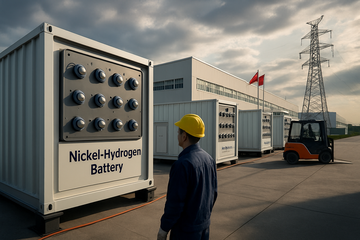
On Sept. 22, 2026, US energy-storage startup EnerVenue began mass production at its battery manufacturing facility in China’s Changzhou, according to Reuters. The plant start was reported as occurring on the same day as the Trump–Xi summit meeting—turning a high-profile “Made-in-USA” industrial-policy push into an immediate, visible credibility test.
Changzhou mass-production start
Sep 22, 2026
EnerVenue Changzhou plant began mass production per Reuters dateline Sept. 22, 2026
Technology type
Nickel-hydrogen
Nickel-hydrogen energy storage batteries built for grid-scale, long-duration use per EnerVenue/Canary descriptions
China manufacturing ramp
250 MWh → 1 GWh
Capacity targets cited for its Changzhou buildout by early Q4 (250 MWh) and 2027 (1 GWh) per Canary Media
What actually changed
EnerVenue abandoned Kentucky, then re-accelerated in China with fresh capital
EnerVenue originally planned a Kentucky factory. A Lane Report story from March 2023 described a $264 million Phase 1 manufacturing investment that was expected to create 450 full-time jobs in Shelby County, with onsite design, process validation, manufacturing, and testing.
But by 2026, the company’s scale-up focus had shifted to Changzhou. Canary Media reported that EnerVenue pulled out of the Kentucky deal in 2024, and later secured a $300 million Series B extension led by Full Vision Capital to fund scaling of manufacturing operations in Changzhou.
| Item | Kentucky plan (disclosed) | Changzhou execution (disclosed) |
|---|---|---|
| Primary build location | Shelby County, Kentucky | Changzhou, China |
| Capital level / phase | $264 million Phase 1 investment | $300 million Series B extension to scale Changzhou manufacturing |
| Jobs (Phase 1) | 450 full-time jobs | About 400 workers targeted by year-end (Reuters); remainder of workforce ramp not fully specified in primary releases |
| Scale-up targets | Not disclosed in the cited 2023 incentive/job announcement beyond Phase 1 facility description | 250 MWh line targeted by early Q4; 1 GWh in 2027 (Canary) |
Full supply chain (where the constraint shows up)
The “credible” question is whether US policy can rebuild industrial depth fast enough
This episode is best understood as a manufacturing-supply-chain problem. EnerVenue is not merely importing cells; it is standing up a battery platform’s production process. Canary Media describes a high-volume Changzhou manufacturing ramp with defined MWh targets, while Reuters frames the startup’s Changzhou decision around skills, supply chain, and execution speed. In practical terms, the supply chain constraint is: can the US reliably compress (1) equipment procurement and commissioning, (2) component sourcing for a non-lithium chemistry, and (3) certification/quality ramp into a bankable schedule?
- US industrial-policy incentives can help demand and capex on paper, but they do not automatically compress qualification-to-yield timelines for new chemistries.
- Nickel-hydrogen’s manufacturing ramp is a different industrial recipe than lithium-ion; industrial depth matters more than headline subsidies.
- A China-first manufacturing schedule can front-load learning curves, cutting cost and delivery risk before US demand policies fully materialize.
Upstream and downstream linkages you can track
Who benefits (and who doesn’t) when a “new battery” chooses China first
EnerVenue’s ecosystem includes both upstream and downstream partners. Reuters notes a partnership/investor context, and EnerVenue’s own earlier disclosures show collaboration with SLB via Schlumberger New Energy to progress deployment of nickel-hydrogen technology for stationary storage.
- Upstream: SLB’s nickel-hydrogen deployment collaboration creates an equipment/services adjacency rather than a battery-cell monopoly—so it can benefit even when production happens outside the US.
- Downstream: EnerVenue’s manufacturing ramp is aimed at stationary energy storage configurations demanded by grid and industrial customers; delivery timing becomes the purchase driver when buyers prioritize outage-risk and safety profiles.
- Policy optics: the downside for “Made-in-USA” credibility is timing mismatch—the first platform-scale manufacturing is happening in China even as US diplomacy and industrial targets intensify.
Fundamentals checkpoint (what the market should ask next)
The investor lens: manufacturing milestones, not press releases
Certified investment thesis
Capacity milestones disclosed
250 MWh targeted by early Q4; 1 GWh in 2027 per Canary Media
Capital scale behind the shift
$300M
EnerVenue Series B extension led by Full Vision Capital (Mar. 31, 2026 press materials referenced by multiple outlets)
Technology safety narrative
Non-lithium, cycle-focused
Canary Media describes EnerVenue’s pressurized nickel-hydrogen approach and long-cycle emphasis
Horizons: what moves first vs. what matters later
Near-term catalyst: manufacturing “proof” beats policy promises; long-term: chemistry diversity pressures the incumbents
- Short term (days–quarters): auditable production milestones in Changzhou (yield, volumes, and customer commissioning) will matter more than any diplomatic timing.
- Short term: if EnerVenue’s ramp creates faster delivery lead times for grid storage, it can pull forward project schedules in the regions where its buyers operate (China first per the disclosed geography).
- Long term (1–3 years): if nickel-hydrogen scales with strong safety and cycle-life economics, it raises the competitive bar for lithium-ion-only storage procurement in certain duty cycles.
What is uncertain: the primary reporting here does not fully disclose cell-level cost, margin, or named long-duration customers for the Changzhou production volumes. Investors should demand those details through commissioning updates, customer procurement disclosures, and procurement announcements as they emerge.
Decision-ready synthesis
Thesis: “Made-in-USA” credibility will be judged by industrial execution, and this case shows the US is losing the first manufacturing race
EnerVenue’s Changzhou mass-production start on Sept. 22, 2026 ties together a clear mechanism and an uncomfortable policy implication. The mechanism is straightforward: manufacturing speed, component supply-chain depth, and qualification-to-yield discipline can outweigh the political narrative of building locally. The implication for investors is equally direct: the earliest adopters and procurement schedules will follow the fastest platform-scale manufacturing, even when the company branding is US-origin.
Listed stocks the supply-chain story most plausibly touches
- EnerVenue collaboration embeds nickel-hydrogen deployment work that can translate into services and engineering adjacency even if production is China-based.
- SLB’s energy-technology margins are supported by its broader cycle; storage-adjacent partnerships can diversify end-market exposure over 1–3 years.
- A faster path to non-lithium long-duration storage can increase competitive pressure on lithium-centric storage narratives over 1–3 years.
- Near term, Tesla’s risk is limited because the event is platform-specific; the first impact should show up in project-level procurement comparisons, not immediate volume shocks.
- If nickel-hydrogen expands in utility-scale duty cycles, it could shift some long-duration storage procurement away from lithium supply chains over 1–3 years.
- Because the report set does not quantify market share impact, investors should watch for customer-level contract mix disclosures rather than headline trading.