
USD notes coupon
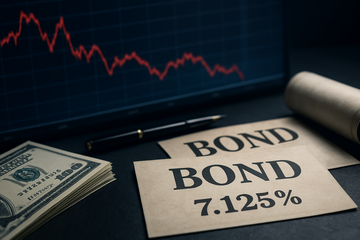
7.125%
$730M senior notes due 2032, priced Oct. 7, 2026; 62.5 bps above the 6.5% paper being retired
EUR notes coupon
6.125%
€600M senior notes due 2032; blended cost ~5.89% after FX swaps
Use of proceeds
Refi 6.5% notes
Redeem in full the $1.2B of 6.5% senior secured notes due May 15, 2027; close Oct. 15, 2026
S&P issuer credit rating
BB-
Negative outlook as of Oct. 8, 2025; issue-level BB+ on senior secured debt
Q2 2026 Concerts AOI
-14% YoY
$310M AOI on $6.44B revenue; timing of stadium shows and venue pre-opening costs cited
Q1 2026 antitrust accrual
$450M
Booked against ongoing Ticketmaster/state antitrust case; drove $371M Q1 operating loss
HY market signal
8.11% yield
U.S. high-yield corporate index yield, Oct. 8, 2026, up from 7.22% one month earlier
The Deal
What Live Nation Just Sold — and What It Cost
On Oct. 7, 2026, Live Nation Entertainment priced $730 million of 7.125% senior notes due 2032 and €600 million of 6.125% senior notes due 2032, both at par. Closing is scheduled for Oct. 15. Net proceeds fund the redemption in full of the company's $1.2 billion of 6.5% senior secured notes due May 15, 2027 — the last major piece of debt the company inherited from its pandemic-era capital raise in May 2020. The deal was upsized in euros (€100M above launch) and downsized in dollars ($110M below launch), a signal that European investors demanded the paper more than U.S. accounts did.
| Tranche | Coupon | Principal | Maturity |
|---|---|---|---|
| Senior Secured Notes | 6.500% | $1,200M | May 15, 2027 |
| Senior Notes | 4.750% | $950M | Oct. 15, 2027 |
| Senior Secured Notes | 3.750% | $500M | Jan. 15, 2028 |
| Convertible Senior Notes | 2.875% | $1,300M | Jan. 15, 2030 |
| New USD Senior Notes (priced Oct 7, 2026) | 7.125% | $730M | Oct. 2032 |
| New EUR Senior Notes (priced Oct 7, 2026) | 6.125% | €600M | Oct. 2032 |
Cash interest on the 6.5% notes ran roughly $78 million a year. Cash interest on the new $730 million USD tranche alone runs $52 million — a smaller absolute bill because the new tranche is smaller than the one it retires. But the rate is higher, and the next refinancing shoe is already on the table: $950 million of 4.75% notes mature Oct. 15, 2027, and Live Nation will face the same HY tape twelve months from now. The 7.125% print is effectively the opening bid for that refi.
The Macro Tape
Junk-Bond 'Yellow Zone' — Why Live Nation Paid What It Paid
The junk-bond market is 'flashing yellow,' CNBC wrote on Oct. 9, 2026, two days after Live Nation priced. ICE BofA's U.S. high-yield option-adjusted spread sat at 3.03–3.24% through the first week of October; the broader HY yield index reached 8.11%, up from 7.22% a month earlier. BB-rated spreads — one notch above Live Nation's S&P issuer rating — widened to 1.89% on Oct. 7, 2026, from 1.78% a year earlier. The yellow flag is supply, not just sentiment: hyperscalers' AI capex is on track to consume roughly $250 billion of direct debt issuance in 2026 — about a third of total hyperscaler capex, per Goldman Sachs Research — crowding the credit channels that historically fed live-entertainment issuers.
U.S. high-yield credit spreads and yields, October 2026
HY OAS levels and index yield around the Live Nation Oct. 7 pricing
Unit: percent
HY index yield (Oct 8)
Up from 7.22% a month earlier
8.1%
HY OAS (Oct. 7)
ICE BofA US HY Index OAS
3%
BB spread (Oct. 7)
ICE BofA BB US HY Index OAS
1.9%
BB yield proxy (iShares HYBB)
iShares BB-rated ETF yield, Oct. 8
6.7%
LYV new USD coupon
Senior notes due 2032
7.1%
S&P Global Ratings confirmed on Oct. 6, 2026 that the new notes share the same BB- issuer credit profile as the existing capital structure, with issue-level BB+ on the senior secured tranche. The negative outlook S&P attached in October 2025 — after the DOJ antitrust suit — has not been lifted. In plain terms, Live Nation is borrowing at the bottom of the speculative-grade investment-grade-adjacent band, and the market is pricing the Live Nation venue margin for stress, not comfort.
The Margin Math
How 62.5 Basis Points Hit Q4 Concerts
The second-quarter 2026 numbers show where the pressure lands. Consolidated revenue reached $7.7 billion, up 9% year-over-year, with 49 million fans attending shows — a record. But Concerts Adjusted Operating Income fell 14% to $310 million on $6.44 billion in segment revenue, with management attributing the decline to timing of stadium shows, pre-opening expenses on new international festivals, and venue ramp costs. Capital expenditures run at a projected $1.1 billion for full-year 2026, $800 million of which is for venue expansion and enhancement. Free cash flow was approximately $2.0 billion as of the second quarter — enough to service the debt comfortably, but only if the 49-million-fans attendance trend and the $10 billion-plus in fee-bearing gross transaction value hold.
Total debt outstanding (Q2 2026)
$9.2B
$2.97B current portion + $6.23B long-term; net debt $2.21B against $9.07B cash
TTM net interest expense
$351M
Up from $316M in FY2025 and $326M in FY2024
Full-year 2026 capex
$1.1B
$800M earmarked for venue expansion and enhancement projects
Free cash flow (Q2 2026)
$516M
Adjusted free cash flow; ~$2.0B on a trailing basis
Concerts AOI margin (Q2 2026)
4.8%
$310M AOI on $6.44B revenue; down from ~6.1% prior year
The mechanics flow from coupons to free cash to the Live Nation venue margin that funds the 2026–2027 capex backlog. Sponsorship & Advertising AOI was up 13% to $257 million, and Ticketing AOI was up 14% to $331 million on $852 million in revenue — the higher-margin businesses are growing, but the largest segment by absolute dollars (Concerts) is the one compressing. Pricing the new 2032 paper 62.5 basis points above the legacy 2027 paper means the spread between what Concerts earns and what the balance sheet costs widens by exactly that amount on every dollar of duration.
The Antitrust Drag
The Other Cost of Capital: A $450 Million Accrual and a 15% Service-Fee Cap
The pricing on the new notes reflects more than just the HY tape. On April 15, 2026, a Manhattan federal jury found Live Nation Entertainment and Ticketmaster liable for illegally monopolizing primary ticketing and the market for large amphitheaters, finding consumers were overcharged by $1.72 per ticket across 22 states and the District of Columbia. A week into the trial, the U.S. Department of Justice reached a settlement that includes a $280 million state damages fund, the divestiture of 13 amphitheater booking agreements, and a 15% cap on Ticketmaster service fees at Live Nation amphitheaters. The penalties phase will stretch into 2027.
Service fees have been the highest-margin component of Live Nation's mix — the FTC's September 2025 complaint alleged Ticketmaster hid mandatory fees that ran as high as 44% of ticket cost in some cases. Capping those fees at 15% of face value at amphitheaters is a structural revenue compression, not a one-time charge. Combined with the $450 million Q1 accrual, the settlement has already moved through the income statement. What it has not yet done is move through the bond pricing — the Oct. 7 print is the first time the Live Nation venue margin story is being marked by institutional buyers after the verdict.
| Date | Event | Financial impact |
|---|---|---|
| Sep. 2025 | FTC lawsuit filed over ticket-resale tactics | Pending |
| Mar. 2026 | DOJ settlement: $280M fund, divestitures, 15% fee cap | $280M cash + 13 amphitheater bookings |
| Apr. 15, 2026 | Jury verdict against Live Nation/Ticketmaster in 22 states + DC | $1.72 per-ticket overcharge finding |
| Q1 2026 | $450M legal accrual booked against ongoing case | $371M Q1 operating loss |
| Oct. 7, 2026 | Bond priced at 7.125% — first institutional mark post-verdict | 62.5 bps wider than 6.5% paper |
| 2027 | Penalties phase scheduled to begin | Pending |
Supply Chain Read-Through
Who Feeds the Live Pipeline — and Who Borrows Alongside
The HY tape treats the whole live-entertainment complex as one credit cluster, and the Oct. 7 print resets the bar for everyone who depends on ticket-driven cash flow. Secondary ticketing competitors StubHub Holdings and Vivid Seats sit downstream — they take margin off prices set by Live Nation and primary competitors like Madison Square Garden Entertainment, the venue owner of Madison Square Garden, Radio City Music Hall, the Hulu Theater, the Beacon Theatre, and the Chicago Theatre. Madison Square Garden Entertainment is a venue landlord, not a 7.125% issuer, but it competes for the same amphitheater booking agreements DOJ forced into divestiture.
- StubHub Holdings (NYSE: STUB) reported Q2 2026 revenue of $573.1 million, up 33% year-over-year, and repaid $100 million of USD term loan; GMS reached $3.1 billion on FIFA World Cup demand.
- Vivid Seats (NASDAQ: SEAT) reported Q2 2026 revenue growth on FIFA demand and raised 2026 guidance; secondary platform margins track primary ticket prices set by Live Nation and peers.
- Madison Square Garden Entertainment (NYSE: MSGE) operates the Live Nation's chief venue competitor in New York; Q2 FY2026 revenue rose 27% to $1.06 billion on a trailing basis with EBITDA of $223 million.
- Anschutz Entertainment Group (AEG) — private — runs the world's second-largest live-music promoter; competes for artist tours and festival inventory but reports no public HY benchmark.
The upstream side of Live Nation's cost stack — artist guarantees, venue rent, sponsorship pricing — is not bond-funded, but the rate at which the company can refinance its own balance sheet determines how aggressively it can outbid AEG and Madison Square Garden Entertainment for tent-pole content. The 62.5-basis-point move on the 6.5% paper is the cost of staying in that auction over the next six years.
Horizons
What Moves First, and What Doesn't
Days to quarters: the close on Oct. 15 locks in the rate. The first cash-interest savings relative to the legacy 6.5% paper shows up in the fourth-quarter 2026 income statement, but absolute interest expense rises on a like-for-like basis because the new tranche is smaller than the 6.5% piece it retires — partial refi. The bigger near-term signal is the next shoe: $950 million of 4.75% notes due Oct. 15, 2027. Whatever rate Live Nation prints on that refinancing will be the second institutional mark on the cost of capital and will likely move the stock the most.
One to three years: the antitrust penalties phase begins in 2027, and the 15% service-fee cap is a structural revenue compression on the highest-margin piece of the Ticketmaster franchise. The 49-million-fan attendance run rate, the $10 billion-plus fee-bearing GTV, and the international stadium-and-arena growth (over 20% YoY) are the offsets. If those volumes hold while the new7.125% paper amortizes, the cost of capital gets absorbed; if they slip, the 62.5-basis-point spread becomes the first of several.
Stocks the [Live Nation](lyv) Refinancing Actually Touches
- 7.125% USD coupon prints 62.5 bps wider than the 6.5% paper being retired — first institutional mark on the post-antitrust cost of capital.
- Q2 2026 Concerts AOI fell 14% YoY to $310M while Ticketing AOI grew 14% and Sponsorship AOI grew 13%, leaving the largest segment by dollars as the margin-pressure carrier for the new coupons.
- $450M Q1 2026 antitrust accrual and 15% Ticketmaster service-fee cap compound the new cash interest; the $950M of 4.75% notes due Oct. 2027 is the next refi to watch.
- Q2 2026 revenue +33% YoY to $573.1M on GMS of $3.1B; secondary platform margin rises with the primary price floor that Live Nation's service-fee cap preserves.
- Repaid $100M USD term loan post-quarter, improving its own HY profile while Live Nation widens its own; secondary competitors sit downstream of the antitrust settlement.
- Forward P/E of 13.6x against Live Nation's forward P/E of ~119x makes STUB the cheaper tactical hedge on the live-event complex.
- Q2 2026 raised 2026 outlook on FIFA World Cup demand; secondary demand signals confirm primary price resilience even as Live Nation absorbs higher cost of capital.
- Smaller-scale competitor at ~$95M market cap; the primary pricing power that Live Nation defends through the 15% fee cap is the same floor that supports SEAT's take rate.
- Watch the Q3 2026 print for confirmation that FIFA lift is durable; a Live Nation Q4 2026 margin slippage is bullish for SEAT mix but bearish for the broader live-event multiple.
- Operates Madison Square Garden, Radio City, Beacon Theatre, and Chicago Theatre — the chief venue competitor to Live Nation and one of the parties most likely to absorb the amphitheater bookings DOJ forced Live Nation to divest.
- Q2 FY2026 revenue rose 27% YoY on a trailing basis to $1.06B; net cash position and EV/EBITDA of ~22.6x give it room to absorb diverted booking inventory.
- Antitrust-driven booking-cap pressure on Live Nation is a venue-availability tailwind for Madison Square Garden Entertainment through the 2027 penalties phase.