
Statutory damages per intentional biometric violation
$5,000
Per person, per violation; $1,000 if negligent (740 ILCS 14)
Illinois class actions against Grok
2 in 5 days
Filed Oct 7 and Oct 12, 2026 in the Northern District of Illinois
Apple's certified Illinois class ceiling
$32.5B
About 6.5 million class members, certification granted June 2026
SpaceX trailing free cash flow
-$35.0B
Trailing twelve months through Sept 30, 2026 (Q3 2026 Form 10-Q)
Meta legal charge booked in one quarter
$9.89B
Q3 2026, reported Oct 21, 2026
Mississippi civil penalties claimed
$6.1M
Up to $25,000 per day from an August 2026 state notice
The event
Illinois Wrote the First Line Item on AI's Bill
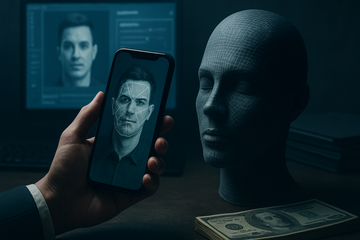
The two suits filed in Chicago in October 2026 do something no federal agency has managed: they apply a pre-AI biometric statute to a chatbot's ordinary photo features. Illinois law has long required written notice, written consent and a published retention policy before anyone collects biometric identifiers. What changed in 2026 is the theory of what counts as a biometric identifier, and who is standing in front of the court.
- Oct 7, 2026 — Padilla v. SpaceXAI Corp. et al., Northern District of Illinois: Illinois residents who uploaded a photo of their own face to Grok and asked it to analyze, rate, edit or transform that photo allege Grok captured a scan of face geometry without written notice or a written release.
- Oct 12, 2026 — Wilson v. SpaceAI Corp. and SpaceXAI LLC, same court: this complaint targets the model's outputs, arguing that facial measurements and edits that keep a person recognizable prove Grok derived, stored and retained a biometric representation.
- Relief sought in both: up to $5,000 per person for each intentional or reckless violation, $1,000 per negligent one, plus disgorgement and an injunction requiring deletion of biometric data and publication of a compliant retention policy.
- The allegations are not exotic. The complaint cites \"Project Skippy,\" a 2025 internal effort in which employees signed releases before their faces were recorded to train Grok, and asks why a consumer feature needs the same paperwork.
- A third Illinois class action over the same conduct was reported the following week. Reuters framed the pair on Oct 13, 2026 as the clearest test yet of how far Illinois law reaches into generative AI.
The damages math
The Cap on Per-Scan Damages Turned Exposure Into a Function of Audience Size
Illinois rewrote its biometric statute in 2024 to cap statutory damages at one award per person, and in April 2026 the Seventh Circuit held that the change applies retroactively. Defendants won the headline; the deeper effect is the opposite of what it looks like. Once damages run per person rather than per scan, liability is set by how many people a feature touches, not how often — which turns a free photo filter into a balance-sheet question.
Statutory ceiling for one certified Illinois class, at the $5,000 per-person maximum
Arithmetic, not forecasts. Only Apple's row reflects a certified class size; the rest show what the same per-person ceiling would cost at a given class size.
Unit: $ millions
1,000 members
$5.0 million
5
100,000 members
$500 million
500
1,000,000 members
$5.0 billion
5,000
6,500,000 members (Apple's certified class)
$32.5 billion
32,500
| Company and feature | Illinois class size | Statutory ceiling | Balance sheet reference |
|---|---|---|---|
| Apple — Photos \"People\" face tagging, certified June 2026 | About 6.5M members | $32.5B | Trailing net income $128.9B |
| Meta — smart-glasses biometric training, sued Sept 2026 | Scenario: 1,000,000 users | $5.0B | Q3 2026 operating income $12.99B |
| SpaceX — Grok photo analysis, sued Oct 7 and Oct 12, 2026 | Scenario: 1,000,000 users | $5.0B | Trailing net loss $413M |
| Snap — filters and AR face processing | Scenario: 1,000,000 users | $5.0B | Market cap $10.7B; trailing operating loss $324M |
| Serve Robotics — Chicago delivery robots, sued Oct 2026 | Scenario: 1,000 residents | $5.0M | Market cap $241M; trailing revenue $7.8M |
The second-order effect is perverse: the regime punishes thin balance sheets harder than it punishes scale. One thousand Illinois residents would be a $5.0 million problem for Serve Robotics, whose entire trailing revenue is $7.8 million, and a rounding error for Apple. The rational response for a small operator is not to comply well but to exit the feature, which pushes consumer AI toward the few platforms that can absorb a class-wide award — an anti-competitive side effect that none of the pleadings mention.
The enforcement layer
There Is No Federal Rule Coming — and That Is the Point
- Jan 14, 2026 — California opened an investigation into xAI over Grok's sexualized images of real people, noting that more than half of the 20,000 images generated over the Christmas-to-New-Year week showed people in minimal clothing, some apparently children.
- Jan 16, 2026 — California's attorney general followed with a cease-and-desist letter; on Jan 23, 2026 a bipartisan group of 35 attorneys general led by Illinois demanded action and cited an analysis putting Grok's output at roughly 6,700 sexually suggestive images an hour.
- Aug 1, 2026 — Minnesota's first-in-the-nation law banning AI nudification took effect with civil penalties of up to $500,000 per violation; xAI's challenge was denied in September, leaving both the statute and the fight intact.
- Oct 23, 2026 — Texas sued OpenAI and Sam Altman under the Deceptive Trade Practices Act over ChatGPT safety marketing, giving every state attorney general a template that needs no new AI statute.
- Jan 1, 2027 — Illinois' frontier AI safety law and its chatbot and companion-model statutes take effect, layering audit, notice and safety duties on top of the biometric statute.
- Meanwhile the federal government is litigating against state AI law from the other side: the Justice Department moved in October to intervene for xAI in its challenge to Colorado's AI Act, so Washington is a source of legal risk for AI companies rather than a safety net.
The ability to create nonconsensual intimate images appears to be a feature, not a bug.
That is the structural point. A single federal rule would let one consent screen cover the country; instead every state writes its own trigger, its own damages schedule and its own discovery regime. Compliance cost then scales with the number of states a company serves, which is why a litigation docket in Cook County can move a product roadmap faster than a rulemaking can.
The infrastructure bill
The Same State-by-State Approach Reaches the Data Center
The other half of AI's regulatory bill is not about data at all. It is about permits, and it arrives on the same footing, with no national standard for how fast a gigawatt may be built. A regulator in one state can set the pace of a campus that serves the whole country.
- Mississippi's environmental regulator issued notice to MZX Tech, the SpaceXAI affiliate building in Southaven, after construction began without the correct permits, and is seeking civil penalties of up to $25,000 per day.
- The preliminary exposure reported on Oct 23 and Oct 24, 2026 was about $6.1 million and still accruing, so the clock is the cost: every day of unpermitted construction adds to the bill.
- Separately, the NAACP sued in April 2026 alleging xAI is running 27 gas turbines in Southaven without an air permit; the Justice Department has since moved to intervene against the plaintiffs.
- The stakes are local: Mississippi's governor announced in January 2026 that xAI will invest more than $20 billion in Southaven to push the site's computing power toward nearly 2 gigawatts, so the state controls the permits the build-out needs.
Read-across
Who Actually Pays, and How Much of It Is Already Booked
| Company | What is at stake | The number that matters |
|---|---|---|
| Meta | Multistate settlement with 51 states, territories and DC on Aug 26, 2026; smart-glasses biometric suits filed Sept 2026 | Up to $17.1B announced, including $5B contingent on peer adoption; $9.89B charged in Q3 2026 |
| Apple | Photos \"People\" face-tag class certified June 2026; separate iris and retina suit filed July 2026 | Ceiling of $32.5B on about 6.5M members, against $128.9B of trailing net income |
| Snap | Paid $35M to settle the 2022 Lenses face-geometry case; now a named peer in Meta's settlement trigger | Market cap $10.7B against a $324M trailing operating loss |
| Alphabet | Narrow YouTube and Google face-recognition case settled for $6M, approved Jan 8, 2026 | Trailing net income $244.2B — the risk is precedent, not solvency |
| Serve Robotics | Chicago suits allege its robots captured faces and hands through cameras and LiDAR without notice | Market cap $241M on $7.8M of trailing revenue |
- Meta's $9.89B charge in the September quarter consumed 76% of the company's operating income of $12.99B, and management raised full-year 2026 expense guidance to $175–179 billion.
- Scale is why the arithmetic bites at platform level: Meta averaged 3.64 billion daily active people in September 2026, so the same per-person rule that is a rounding error for one app becomes a line item at Meta's scale.
- Meta's settlement also plants a competitive trigger: if Snapchat, TikTok and YouTube adopt comparable limits, Meta's daily caps tighten to 60 minutes for ten years — a pricing decision for every peer, not just Meta.
- Apple's exposure is the opposite problem: damages are affordable against $109.4 billion of quarterly revenue, but injunctive relief touching Face ID or iCloud face matching would reach the product itself.
- Serve Robotics shows the tail: a $241 million market cap, $7.8 million of trailing revenue and a $193.0 million trailing operating loss cannot absorb a $5.0 million class, let alone a larger one.
Mechanism
Inference Got Cheap Before the Law Did
The wave arrives now because of arithmetic on the cost side. Per-face analysis that would have been pointless a few years ago is close to free at current inference prices, so platforms add face-touching features by default, and plaintiffs then find a statute paying $5,000 for each person they can prove was processed. When a feature is nearly free to add and the liability is per person, the rational engineering answer is to stop deriving geometry from faces — or to do it on the device, where the geometry never reaches a server.
- Upstream: NVIDIA's Hopper and Spectrum-X systems form the fabric of Colossus, the Memphis–Southaven cluster SpaceXAI operates, and NVIDIA's trailing revenue reached $303.0 billion with $96.2 billion in the quarter ended July 26, 2026.
- Upstream: Microsoft Foundry hosts Grok models for enterprise customers, so the same Illinois theory reaches Microsoft's resellers as a contract and indemnity question.
- Downstream: Meta's smart glasses, Apple's Face ID and Photos, Snap's filters and Spectacles, and Serve Robotics' sidewalk robots are where derived face geometry actually meets consumers.
- Value follows liability: platforms that can fund consent flows, retention schedules and on-device processing keep the feature, while everyone else either pays a settlement or removes the capability.
| Role in the chain | Company | Link to the liability chain |
|---|---|---|
| Compute supplier | NVIDIA | Colossus hardware makes per-face analysis near-free at scale |
| Model distributor | Microsoft | Grok models on Foundry extend Illinois exposure into enterprise contracts |
| Consumer AI platform | SpaceX | Grok's own photo features are the named conduct in two Illinois class actions |
| Wearable AI platform | Meta | Smart-glasses suits put camera-based face analysis in court |
| Device biometrics | Apple | Certified 6.5-million-member class over derived face geometry |
| Field robotics | Serve Robotics | Chicago suits over face and hand scans in public space |
Horizons
What Moves First, and What Would Break the Thesis
- Days to quarters: the two Grok cases will turn on one question — whether a model's measured output is a \"scan of face geometry\" — and a dismissal would drain most of the risk premium in a single ruling.
- Days to quarters: Mississippi's penalties accrue at up to $25,000 per day from the August 2026 notice, so the claim compounds until permits are resolved.
- Days to quarters: SpaceX's fiscal 2026 annual report, due in early 2027, is where Grok's legal exposure gets quantified for equity holders after the Oct 22, 2026 quarterly filing.
- Days to quarters: Illinois' chatbot and companion-model statutes take effect Jan 1, 2027, while Meta reports a fourth-quarter revenue guide of $73–76 billion against full-year expenses of $175–179 billion.
- One to three years: per-person damages plus class certification is the real price tag, and it gets paid in product decisions — consent gates, published retention schedules, on-device processing, or withdrawal of face-touching features.
- One to three years: the patchwork pushes consumer AI features toward a handful of balance sheets, concentrating both the winners and the compliance cost.
- One to three years: state statutes with independent audits, starting in Illinois on Jan 1, 2027 and extending through California's chatbot laws signed in October 2026, add fixed overhead that scales with state count rather than users.
- One to three years: if a court rules that generative outputs are not biometric scans, the per-person arithmetic collapses and the cost of face-touching AI returns to near zero.
Conclusion
The Bill Is Being Written State by State, and It Is Not a Fine
Nothing in this story is a fine, and that is the point. The old enforcement model — a consent order, a nine-figure payment, a feature switched off — is what state action against AI has produced so far: Meta's $17.1 billion multistate settlement on child safety, and Mississippi's $25,000-a-day penalty clock on permits. The new model is statutory damages that scale with a company's own success: the more users it has, the more people it has processed, the more it owes. For SpaceX, which owns Grok and reported a $413 million trailing net loss on $27.08 billion of revenue, with $48.07 billion of trailing capital spending and negative free cash flow of $34.97 billion, that is a reason to re-architect the product before the class is certified.
Who this actually touches
- Illinois per-person damages make Grok's photo features a balance-sheet item: trailing net loss is $413M, so a million-user class at $5,000 each dwarfs earnings.
- Two class actions filed five days apart in Chicago, Oct 7 and Oct 12, 2026, put Grok's face analysis in the same docket logic as Apple's certified Photos case.
- Next quarter: a motion-to-dismiss ruling on whether model outputs are \"face geometry\" decides nuisance versus reserve; the fiscal 2026 annual report is the next disclosure.
- Longer term: Mississippi penalties accrue at up to $25,000 per day on the Southaven build-out, making permitting a recurring cost of the compute roadmap.
- The $9.89B legal charge booked in Q3 2026 consumed 76% of operating income of $12.99B, proving state settlements are now recurring, not one-off.
- The Aug 26, 2026 multistate agreement of up to $18.59B over ten years is the template states will reuse against model makers.
- The September 2026 smart-glasses suit alleges photo-derived biometric training, putting the Reality Labs roadmap ($4.13B Q3 segment loss) inside the same legal perimeter.
- Longer term: at 3.64 billion daily active people, per-person damages scale with Meta's own distribution, so biometrics becomes a recurring cost of consumer AI scale.
- A certified Illinois class of about 6.5 million members caps Photos exposure at $32.5B — about 25% of trailing net income of $128.9B, which is affordable.
- The real risk is injunctive: an order requiring consent before face tagging would reach Face ID and iCloud face matching, which the product depends on.
- Longer term, Apple can answer with on-device processing; Grok cannot, because its geometry is generated server-side.
- Short term: the separate iris and retina suit filed July 2026 adds a second theory on the same statute.
- Its own 2022 $35M Lenses settlement over face geometry is the precedent showing how far the first wave of biometric claims reaches.
- Named in Meta's settlement trigger: if Snapchat adopts comparable limits, Meta's caps tighten to 60 minutes a day for ten years, so compliance now has a priced consequence.
- A $10.7B market cap and a $324M trailing operating loss leave no cushion if a million-user class lands at $5,000 a head.
- Short term: any camera-based AI feature added to Spectacles or the app becomes a fresh BIPA target before a class is certified.
- A 1,000-member Illinois class at $5,000 each equals $5.0M — 64% of trailing revenue of $7.8M for a company with a $241M market cap.
- The Chicago suits allege its robots captured faces and hands through cameras and LiDAR without notice, the same theory that reached Grok and Apple.
- Longer term: either the robots get consent-aware sensing and retention controls, or they leave Illinois markets; both paths cost money it does not have.
- Trailing operating loss of $193.0M against $2.8M of working capital leaves no buffer for litigation.
- The narrow YouTube and Google face-recognition case settled for $6M, approved Jan 8, 2026, showing how cheaply old biometric conduct closes out.
- Catalyst: the court's ruling on whether derived face crops are biometric information becomes the template for Google Photos and Gemini photo features in 2027.
- Trailing net income of $244.2B means a $32.5B-style ceiling is survivable, so the risk is regulatory precedent and product design, not solvency.
- Trailing revenue of $303.0B and $96.2B in the quarter ended July 26, 2026 show inference keeps getting cheaper faster than law can price faces.
- Colossus runs on NVIDIA Spectrum-X networking across 100,000 Hopper GPUs, so the compute that makes per-face analysis near-free scales with every rollout.
- Longer term, the compliance tax lands on app operators' income statements, not the chip vendor's, so liability does not migrate upstream.
- Microsoft Foundry hosts Grok models, so Illinois per-person damages travel into enterprise contracts Microsoft resells and supports.
- Fiscal 2026 revenue of $331.8B and net income of $133.7B make any indirect exposure immaterial to the numbers.
- Longer term, distribution partners inherit model conduct risk: model-level litigation becomes a procurement and indemnity question for cloud resellers.