
Policy & trade mechanics, reframed through consumer behavior
The “tariff weapon” isn’t the only trade shock—China’s consumer backlash can act on demand first
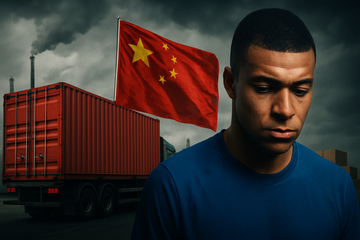
The Mbappé episode is a clean demonstration of a broader pattern: in China, perceived political-insult risk can translate into immediate, offline and online demand disruption—without the need for customs paperwork or shipping delays.
On Oct 27, 2026, Reuters reported that multiple Chinese brands ended cooperation with Mbappé “effective immediately,” citing “zero tolerance” for words or actions that “hurt the feelings of the Chinese people.” That kind of response can hit marketing spend, retailer display decisions, and consumer preference simultaneously—before any tariff-rate adjustment changes landed cost.
From an investor lens, the practical takeaway is not “boycotts happen,” but “boycotts propagate through the demand stack.” That propagation path is typically faster than policy—so earnings sensitivity can show up in quarterly sales/traffic before the trade-policy narrative fully lands.
Event verification
What happened in the Mbappé case—and why it matters for global consumer investors
Event date
Oct 27, 2026
Reuters report date on the Mbappé backlash and sponsor terminations
Chinese brand terminations
3
Mengniu, Shanghai Milkground, and Eastroc Beverage ended cooperation “effective immediately”
Trigger
Mao-related remark backlash
Reuters describes comments tied to a meme involving Mao Zedong; Mbappé later apologized
Reuters’ core facts are straightforward:
- Reuters reported that Kylian Mbappé apologized to China on Tuesday after the backlash over comments referring to late Chinese leader Mao Zedong.
- Reuters reported that Chinese brands Mengniu, Shanghai Milkground, and Eastroc Beverage ended cooperation with Mbappé effective immediately.
- Reuters included the brands’ “zero tolerance” style language focused on hurting Chinese people’s feelings.
The market-relevant point is speed. When brand partners can terminate within hours, the disruption channel is the marketing-to-demand pipeline—not a tariff line item.
Companies acted with immediate termination language tied to “zero tolerance” for words/actions that “hurt the feelings of the Chinese people.”
Transmission mechanism
Why boycotts can’t be hedged with logistics: they attack marketing-funded demand, not import math
- Boycotts remove brand-coded demand by shifting consumer choice away from celebrity-carrying products before any price adjustment can take hold.
- Partners de-risk by cutting exposure through “effective immediately” termination language that interrupts campaigns and shelf/online placements.
- Traffic can fall before revenue is “accounted for” because retailer/creator ecosystems respond to sentiment in near-real time.
A tariff mainly changes unit economics at the border. A boycott often changes unit economics inside the mind of the consumer and the risk calculus of distribution partners.
That distinction matters because “time-to-impact” is different: policy is slower, while public sentiment and sponsor politics can reprice brand attention quickly.
Investor-facing framing
A practical boycott risk model for listed consumer companies with China revenue
Below is a checklist you can apply to listed consumer companies to estimate boycott sensitivity—without assuming every backlash becomes a lasting sales impairment.
Because the Oct 27 Reuters report is an event-driven sponsor termination, it provides the “mechanics.” For financial impact sizing, companies typically only disclose geography at a segment level in filings; a quantified “boycott exposure score” requires reading those disclosures. Where China mix is not directly stated in the sources opened here, that specific quantification is treated as not disclosed.
| Score driver | What to look for | Why it matters | What typically moves first |
|---|---|---|---|
| China share of revenue | Geographic segment disclosures | Determines earnings sensitivity to China traffic shocks | Near-term sales/traffic commentary |
| Marketing-funded demand | Share of brand marketing/sponsorship and promotion intensity | High sponsorship dependency increases sudden partner pullback risk | Campaign launch timing, marketing guidance |
| Partner concentration | Whether one celebrity/event drives multiple categories | Concentrated exposure amplifies “all-at-once” cuts | Retail/online visibility changes |
| Reputational recovery runway | How quickly management can reframe, apologize, or replace assets | Recovery speed affects whether the sales hit is transient | Subsequent-quarter demand stabilization |
What the financials can—and can’t—tell you today
Fundamentals first: revenue and margin buffers shape how severe a boycott-induced demand drop can be
For global consumer firms, the “boycott channel” ultimately shows up as lower demand—so the ability to absorb a sales dip depends on gross margin and operating leverage.
Using the publicly reported financial statements available here, the direction is clear (how much demand can fall), but the China-specific boycott sensitivity is not fully quantified because the required China revenue-mix line items were not directly validated in the sources opened in this run.
Nike (FY2026 revenue)
$46.4B
FY2026 revenue reported in Nike’s annual filings for the fiscal year ended May 31, 2026
Nike (FY2026 operating income)
$3.8B
FY2026 operating income reported in Nike’s annual filings for the fiscal year ended May 31, 2026
Starbucks (TTM revenue)
$38.3B
Trailing-12-month revenue through Jun 30, 2026 from company fundamentals
Starbucks (TTM net margin)
5.2%
Trailing-12-month net profit margin through Jun 30, 2026 from company fundamentals
Core causal chain
Causal chain: politics → sponsor termination → distribution risk → demand shock
This is the chain the Mbappé case illustrates:
1) Political-national sentiment is triggered (Mao-related backlash). 2) Brand partners terminate rapidly (“effective immediately”). 3) That termination signals elevated distribution and reputational risk, causing downstream stakeholders to pull back. 4) Consumers update preferences quickly, resulting in a demand shock.
In other words, the “weapon” isn’t shipping cost. It’s the speed at which the marketplace treats reputational risk as financial risk.
Midterms-style relevance: what to watch next
Near-term vs. long-term: what moves first after the next controversy
- Within days, guidance risk rises when major partners terminate and marketing plans are disrupted (days-to-quarters window).
- Within a quarter, traffic quality becomes the story if retailer/creator ecosystems downgrade the brand’s safety for the China channel.
- Over 1–3 years, the “brand trust premium” is repriced if management repeatedly fails to de-risk political/identity symbolism.
For investors, the key is to separate “headline termination” from “sustained China impairment.” The next question to answer is whether companies can replace the sponsor assets and whether consumer sentiment normalizes after an apology/clarification cycle.
Where this boycott channel is most investable among listed names
- Nike’s core model depends on brand and campaign execution, so China sentiment shocks can pressure short-term demand before tariffs change costs.
- Nike’s FY2026 operating income of $3.8B provides some buffer, so the severity of any boycott-driven sales dip depends on operating leverage (FY2026).
- If sentiment normalizes, campaign replacement can stabilize results within 1–2 quarters rather than requiring multi-year earnings impairment.
- Starbucks has a high-frequency retail traffic model, so a China sentiment hit can show up quickly in store-level demand (days-to-quarters).
- With a trailing-12-month net margin of 5.2%, margin headroom limits how long weaker traffic can persist (through Jun 30, 2026).
- The key swing factor is whether Starbucks can distance local operations from controversy-associated symbolism fast enough to prevent sustained traffic loss.
- On’s brand marketing cycles mean sponsor/celebrity controversies can quickly change consumer preference (days-to-quarters).
- With trailing-12-month revenue of about $3.2B, even a modest China-demand wobble can matter more than for mega-cap peers (TTM).
- Because recovery is substitution-driven, the stock’s risk is asymmetric: rebounds are possible if brand sentiment repairs within 1–2 quarters.
- Luxury and timepieces tend to be symbolism- and brand-image-sensitive, so China backlash can pressure demand faster than price-based defenses (days-to-quarters).
- If the boycott affects high-margin watch lines, gross margin sensitivity becomes the earnings constraint (requires management disclosures; not validated here).
- For a multi-brand group, the ability to reroute marketing spend reduces duration risk, but not the initial shock.
- Reuters reported Mengniu ended cooperation with Mbappé effective immediately, so the company absorbed a direct sponsor disruption risk (Oct 27, 2026).
- Mengniu’s risk is that “sponsor pullback” can become broader brand sentiment, reducing demand velocity in China (days-to-quarters).
- Over 1–3 years, replacement sponsorship and message discipline determine whether the episode is a one-off or a repeat pattern.
- Reuters reported Eastroc ended cooperation with Mbappé effective immediately, so marketing-funded consumer attention likely drops immediately (days).
- If beverage demand weakens, operating leverage can magnify any quarter-to-quarter sales slowdown (requires segment/period disclosures).
- The watch item is whether Eastroc replaces the asset quickly; speed of replacement can shorten the boycott duration (1–2 quarters window).