
The consumer mechanic
Consumers Are Now Packaging the 'Dumb TV' Playbook as Software
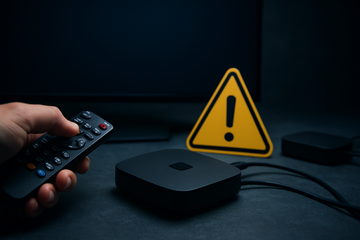
The backlash is no longer a Reddit thread — it's shipping as software. TechCrunch on Oct. 19, 2026 profiled two GitHub projects that automate the work. \"dumbtv\" turns an Amazon Fire TV Edition into a stripped-down display with no on-TV ads, no watch tracking, no over-the-air updates, and a custom launcher — all applied over ADB from another device. \"cleanyourtv\" does the equivalent for Android TV and Google TV sets from Sony, TCL Electronics, Hisense Home Appliances, Xiaomi, and Nvidia Shield. One user documented removing 25 Xiaomi packages and replacing a 192 MB stock launcher with an 83 MB custom one.
The motivation is the same one that pushed LG Electronics into damage control in December 2025, when it quietly pre-installed Microsoft Copilot on webOS TVs and reversed course after user outrage, promising users the option to delete the icon. Smart-TV platforms now arrive with ACR (automatic content recognition) that screenshots and audio-fingerprints what plays on the screen, then sells the data — a practice the Texas Attorney General moved against Samsung Electronics in a Feb. 26, 2026 settlement and LG Electronics in a separate 2026 deal, both requiring express consent before any ACR data leaves the TV.
Roku exposure
Roku Sits 90% in the Line of Fire
No listed company is more concentrated in the smart-TV ad model than Roku. Its Q2 2026 shareholder letter reported total revenue of $1.35B, of which Platform — advertising plus subscriptions plus content distribution — was $1.22B (90.1%). Advertising alone grew 25% YoY to $673M, with a 62.4% gross margin. Devices, the only non-platform line, generated just $134M at a 20.1% gross margin. The company is now guiding to roughly $5.0B in 2026 platform revenue, about 21% growth, after raising the outlook by ~$100M in Q1.
| Metric | Q2 2026 | YoY change | Note |
|---|---|---|---|
| Total revenue | $1.35B | +22% | TTM revenue $5.21B, first full-year profit in 2025 |
| Platform revenue | $1.22B | +25% | 90.1% of total — advertising $673M, subscriptions $548M |
| Advertising revenue | $673M | +25% | 62.4% gross margin; video ads in 96% of households |
| Subscriptions revenue | $548M | +26% | 41.4% gross margin |
| Devices revenue | $134M | −1% | 20.1% gross margin — narrowest cushion in the mix |
Roku also depends on the interface itself, not just the ad inventory. The company said its home screen now reaches more than half of all U.S. broadband households, and Roku Channel commanded a 2.9% share of total TV viewing in Nielsen's February 2026 Gauge — the entire FAST flywheel sits on top of the same ad-supported UI that consumers are now actively trying to gut. Streaming hours were 37.9B in Q2, up only 7% YoY against 25% platform-revenue growth, evidence that the value is migrating toward ad loads and content discovery rather than raw viewing.
Peer exposure
Amazon and Alphabet Have More Diversification but Face the Same CTV Question
Amazon is the second-largest beneficiary of CTV ad dollars and the most direct operator of a stripped-TV target. Fire TV is part of the Amazon Ads stack that generated $17.24B in Q1 2026 (+22% YoY) and is on pace for roughly $56.7B in full-year ad revenue per eMarketer — larger than Roku's entire company. Amazon also has the deepest fallback: it can re-target the same household through Prime Video ads, retail media on Amazon.com, and Twitch without needing the Fire TV home screen to perform.
Alphabet sits at the third pole of the dumb-TV resistance. Google's advertising business generated $402.84B in 2025 per Statista, with YouTube and YouTube TV riding on the same Google TV interface that 'cleanyourtv' targets across Sony, TCL, Hisense, and Xiaomi sets. Alphabet's exposure is the broadest — Pixel phones, Chrome, Search, and Google Cloud all sit outside the TV — but its growing share of smart-TV OS shipments (43% globally per SNS Insider) makes every dumb-TV install a contested household.
U.S. smart-TV OS landscape, 2025–2026
Roku's platform exposure versus the broader ad ecosystems of Amazon and Alphabet
Unit: % share
Roku OS — U.S. smart-TV OS share (Q2 2026)
L2Data, Sep 2026
24
Android/Google TV — global smart-TV OS (2025)
SNS Insider, Jun 2026
43
Roku OS — premium-segment revenue (U.S., 2025)
Mordor Intelligence, Aug 2026
38.1
Roku — U.S. CTV platform share (Apr 2026)
Parks Associates
28
OEM squeeze
Smart-TV OEMs Are Caught Between Falling Hardware Margins and a Hostile Consumer
The TV itself has long been a loss leader; the platform layer is where the margin lives. LG Electronics' Media Entertainment Solution segment — which bundles TVs with the webOS platform — generated ₩5.11T of revenue and ₩219B of operating profit in Q2 2026, helping consolidated operating profit rise 147% YoY to ₩1.58T. The growth came from selling more TVs and monetizing the webOS interface on each one. Samsung Electronics, Sony Group, TCL Electronics, Hisense Home Appliances, and Xiaomi all run the same playbook, often licensing Roku OS or Alphabet TV on sets where they do not own the OS.
| Vendor | Listed ticker | Global shipment share |
|---|---|---|
| Samsung Electronics | 005930.ks | 16.9% |
| TCL Electronics | 1070.hk | 13.9% |
| Hisense Home Appliances | hnkly | 12.8% |
| LG Electronics | 066570.ks | 11.1% |
The first warning sign is already on the income statement. LG Electronics reported preliminary Q3 2026 operating profit of ₩781.80B on Oct. 7, 2026 — below analyst expectations. With webOS sitting inside the Media Entertainment segment, every TV sold without monetizable ACR data is a unit that produces hardware margin and nothing else. OEMs that license Roku OS (Hisense Home Appliances, TCL Electronics in some SKUs) are also exposed to a partner whose ad revenue depends on the same UI they cannot fully control.
Market sizing
The CTV Prize Is Still Growing — but the Ad-Tech Foundation Is Now Contested
The macro backdrop still favors the platforms. Grand View Research sizes the global ACR market at $4.8B in 2026, on track to reach $18.9B by 2033 at a 21.6% CAGR — the data layer that powers smart-TV ad targeting. Mordor Intelligence values the broader connected-TV market at $30.01B in 2026, expanding to $37.89B by 2031 (4.77% CAGR), with CTV ad spend outpacing linear TV. The structural story for Roku, Alphabet, and Amazon is still intact; the question is whether the consumer rebellion slows the curve.
Where the smart-TV ad dollars live
Market sizes that depend on ACR data and CTV ad inventory — all of which the dumb-TV toolkit targets
Unit: $ billions
ACR market (2026)
Grand View Research, 21.6% CAGR to 2033
4.8
ACR market (2033E)
Grand View Research
18.9
Connected-TV market (2026)
Mordor Intelligence, 4.77% CAGR to 2031
30
Amazon ad revenue (FY 2026E)
eMarketer forecast, +17.9% YoY
56.7
The regulatory trend runs in the same direction as the consumer trend. The Texas settlements with Samsung Electronics (Feb. 26, 2026) and LG Electronics (2026) follow FTC inquiries into ACR data and a string of state-level privacy actions. Each ruling narrows the gap between 'opt-out by default' and 'express consent before collection.' Roku's Q2 2026 ad gross margin of 62.4% assumes a marketplace where data flows freely; every regulator that pushes the dial toward consent-based collection is taxing that margin.
Supply chain
Upstream and Downstream Both Feel the Drag
The dumb-TV trend is not contained to one node. Upstream, display-panel makers (including LG Display, BOE, and TCL's CSOT) ship into the same OEMs whose software is being attacked — every panel still leaves the factory, but a smart-TV that no longer runs the platform pays only the hardware margin. Downstream, AVOD streamers like The Roku Channel, Tubi, and Pluto TV buy their reach through the same home-screen real estate; if impressions per household fall, the CPM math on Roku Channel's 2.9% TV viewing share tightens. Adjacent, ad-tech vendors (Magnite, Pubmatic, The Trade Desk) execute on the CTV inventory that flows through these interfaces.
- Upstream: display-panel suppliers ride the same unit volume but lose the platform-attached revenue, so the dollar impact per set is much larger than the unit-volume impact
- Downstream: AVOD streamers (Roku Channel, Tubi, Pluto TV) lose reach when dumb-TV tools remove the home-screen inventory they buy against
- Adjacent: connected-TV ad-tech vendors (Magnite, Pubmatic) inherit any pricing pressure if CTV inventory per household begins to compress
Horizons
Short Term: Roku's Q3 Print Sets the Tone; Long Term: The Smart TV Either Adapts or Splits
Near term (days to quarters): Roku reports Q3 2026 on or around Nov. 5, 2026, and the market will look at two numbers: streaming hours (37.9B in Q2, +7% YoY) versus platform revenue growth (25% in Q2). The wider that gap, the more obvious the ad-load story — and the more vulnerable the model looks if consumers follow the dumb-TV playbook. The next LG Electronics earnings call will be the first read on whether Q3's operating-profit miss (₩781.80B vs. consensus) was a one-off or a sign that webOS monetization is bending.
Long term (one to three years): The smart TV either adapts (consent-first ACR, more transparent data flows, opt-out that actually works) or splits into two product tiers — a premium 'smart' set monetized through data and a cheaper 'dumb' panel-and-streamer bundle. Roku is structurally on the wrong side of that split: 90% of its revenue lives in the data layer. Amazon and Alphabet can route around the issue through Prime Video, YouTube CTV, and retail media; Roku cannot. Watch for state-level ACR consent rules in California, New York, and Washington — a second Texas-style settlement would change the platform-margin math for the entire industry.
Synthesis
What It Means, for Whom, and Over What Horizon
Fact: a growing cohort of consumers is using AI agents — packaged in open-source tools — to strip ads, ACR tracking, and bloatware from Roku, Amazon Fire TV, and Alphabet Google TV devices, and Samsung Electronics and LG Electronics have already been forced by Texas regulators to stop ACR without express consent (Feb. 2026 / 2026). Inference: the consumer side of the CTV ad equation has organized faster than the regulatory side, and the toolkit is now one-click. Speculation: if 5–10% of U.S. smart-TV households adopt dumbing tools over the next two years, Roku's 90%-platform mix means its earnings multiple gets repriced; Amazon and Alphabet absorb the hit across much larger ad businesses.
Stocks this trend touches
- Platform revenue is 90.1% of Q2 2026 total ($1.22B of $1.35B); advertising is the largest sub-line at $673M, leaving no hardware-margin cushion if CTV ad loads erode
- 100M+ streaming households and home-screen reach in 50%+ of U.S. broadband homes are the assets the dumb-TV toolkit targets first
- Q3 2026 print (expected ~Nov. 5, 2026) is the first data point on whether the 7% streaming-hour growth versus 25% platform-revenue growth gap widens or narrows
- Multiple compression risk: trading at 4.4x sales with 62.4% ad gross margin assumes a data flow that consumers and regulators are both narrowing
- Q1 2026 ad revenue of $17.24B (+22% YoY) is on pace for ~$56.7B in 2026 per eMarketer — large enough that Fire TV ad erosion is a rounding error
- Fire TV is the most-stripped target in the dumb-TV toolkit, but Prime Video ads and retail-media re-targeting absorb the loss without requiring the home-screen interface
- Devices segment is a smaller share of the P&L, so the line-item hit is limited even if every Fire TV gets dumbed down
- Google TV is the OS on roughly 43% of global smart TVs (2025, SNS Insider), putting it squarely inside the cleanyourtv target list across Sony, TCL, Hisense, and Xiaomi sets
- YouTube and YouTube TV remain the real CTV ad business — both sit on top of any interface and can be reached through phones, browsers, and casting
- $402.84B Google ad revenue in 2025 (Statista) makes the company too diversified for a single trend to move the needle, but a smart-TV OS-share loss is still a strategic cost
- Media Entertainment Solution (TVs + webOS) delivered ₩5.11T revenue and ₩219B operating profit in Q2 2026 — and Q3 2026 preliminary operating profit of ₩781.80B missed analyst expectations
- Texas ACR consent ruling (2026) directly curtails the data flow that powers webOS monetization
- Microsoft Copilot backlash in Dec. 2025 showed that LG overreach on AI features is now punished by consumers — Q1 2026 IFA lineup walks that back
- Largest smart-TV vendor share (16.9%, 2025) means any platform-level feature change reaches more households than any peer
- Feb. 26, 2026 Texas ACR settlement already forces express consent — a template other states are likely to copy
- Watches for: FTC action on ACR and any California or New York privacy law following the Texas template
- Sony Bravia TVs run Google TV — the cleanyourtv target list includes Sony by name
- Smaller smart-TV OS footprint than Samsung Electronics or LG Electronics means the direct revenue hit is contained
- Watches for: whether Sony builds a 'dumb' or 'monitor-mode' SKU as a defensive response to consumer demand
- 13.9% global smart-TV shipment share (2025) — runs Roku OS and Google TV across SKUs, so it is the third-party OEM with the most dual-platform exposure
- 1H 2026 profit alert signaled ~40–56% adjusted profit growth, but the platform-attached margin story is now at risk if Roku and Alphabet ad loads erode
- Watch: revenue mix shift toward higher-margin premium sets where the smart-TV ad model still applies