
Texas v. OpenAI
What Texas Filed, and What It Actually Wants
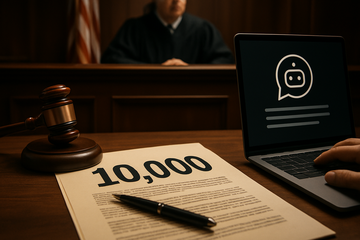
Texas filed a 67-page civil action against OpenAI and its affiliated entities, including chief executive Sam Altman, on Oct. 23, 2026 in Collin County district court. The state pleads two causes of action that run through the Texas consumer-protection division rather than through private plaintiffs: the Texas Deceptive Trade Practices Act and the Securing Children Online through Parental Empowerment Act, or SCOPE Act. SCOPE violations are treated as deceptive trade practices, and the attorney general may seek civil penalties of up to $10,000 per violation plus attorneys' fees.
The prayer for relief has two halves. Money, capped at $10,000 for each alleged violation. And an injunction that would bar Texas minors from the product and require a court-appointed evaluator to approve any new ChatGPT model before it is released to Texans. The second half is the one that changes how software ships: puts a Texas court in the path of every new model release.
Filing date
Oct. 23, 2026
Collin County district court, Texas; 67-page complaint
Causes of action
DTPA and SCOPE Act
Texas consumer protection and children's online safety statutes
Penalty ceiling
$10,000 per violation
Statutory maximum under the SCOPE Act, plus attorneys' fees
Injunction sought
Minor block and model gate
Court-appointed evaluator approval for new models; access barred for Texas minors
Texas footprint
Millions of users
Complaint alleges millions of Texas ChatGPT users, including tens of thousands under 13
The enforcement ledger
Same Prosecutor, Same Statutes, at Least $4.5 Billion in 34 Months
| Case | Announced | Outcome | Amount |
|---|---|---|---|
| Alphabet — Google Play, anticompetitive practices | Dec. 2023 | Negotiated settlement | $700M |
| Meta — unauthorized biometric capture | Jul. 2024 | Negotiated settlement | $1.4B |
| Alphabet — Google data practices | May 2025 | Negotiated settlement, finalized Oct. 2025 | $1.375B |
| Meta — child safety | Aug. 2026 | Settlement plus new age-assurance duties | Over $1B |
| OpenAI — consumer safety | Oct. 2026 | Filed; up to $10,000 per violation sought | Unresolved |
| Four completed cases | 34 months | All settled, none adjudicated | At least $4.5B |
What the per-violation ceiling has actually produced in Texas
Settlement values announced by the Texas Attorney General, $ millions. Every case ended in negotiation rather than a per-violation judgment.
Unit: $ millions
That ledger changes how the $10,000 should be read. The Texas attorney general does not adjudicate penalties one violation at a time. He settles them, and the settlement price is set by what the platform can pay and what the state accepts as compliance. The statutory ceiling is therefore the opening anchor of a negotiation, and the terms that survive into the settlement are the ones that cost money every single day.
- Meta's August 2026 settlement sets the template: turns stricter age assurance into a standing obligation, not a one-time payment.
- Teen access gets a clock: a daily two-hour limit for teen users, with notifications disabled by default during school hours unless a parent changes them.
- Night-time access gets gated by default, restricting notifications and other features for children during nighttime hours.
- Cash is the consideration, not the remedy: all four cases so far ended in negotiated payment, and none produced a per-violation judgment.
The pattern is what makes the Texas filing an architecture rather than an anecdote. A prosecutor who has repeatedly converted a per-violation ceiling into billion-dollar checks has little incentive to sue for a smaller number. The outcome investors should expect is a price set by the same ledger, paired with injunctive terms drafted by the same office. turns the penalty ceiling into a settlement price.
The arithmetic
The Multiplier Is Violations per Account, Not Accounts
The complaint alleges ChatGPT has millions of users in Texas, including thousands in Collin County and tens of thousands who are under 13 years old. Multiply the accounts by $10,000 and nothing happens. Multiply by the number of violations Texas can attach to each account, and the range becomes wide enough to matter. Nothing in the public record fixes that multiplier, which is precisely why this exposure cannot yet be underwritten.
| Alleged violations | Exposure at $10,000 each | vs. OpenAI's ~$50B annualized revenue | vs. Microsoft's $24.1B FY2026 OpenAI revenue |
|---|---|---|---|
| 20,000 | $200M | 0.4% | 0.8% |
| 50,000 | $500M | 1.0% | 2.1% |
| 250,000 | $2.5B | 5.0% | 10.4% |
| 1,000,000 | $10B | 20% | 41% |
| 2,410,000 | $24.1B | 48% | 100% |
Two features of the statute make this a consumer-revenue problem rather than a headline. The penalty attaches to accounts, so the exposure base is the free user base, while the cash arrives from roughly 50 million paying subscribers and an advertising business that reached a $1 billion annualized run rate in under 200 days. And the remedy is negotiated, not adjudicated, so the realistic outcome is a payment in the billions rather than a verdict. makes the damages formula a tax on scale rather than on revenue.
Mechanism
One Model Fleet, One Release Train
ChatGPT is not shipped market by market. It is one fleet of models with regional policy settings layered on top. A Texas-only condition on new model releases therefore cannot be satisfied by building a Texas edition; it has to be satisfied either by changing what ships everywhere or by letting a Texas court decide when a global launch proceeds. Either pathturns a state lawsuit into a global release dependency.
- Release cadence becomes docket-dependent: every new model in Texas waits on a court-appointed evaluator, so a Texas schedule becomes part of the launch checklist.
- Safety evaluation turns into a recurring regulated cost: third-party approval has to be re-earned per release rather than once per company.
- Monetization collides with the statute: with ChatGPT Ads at a $1 billion annualized run rate in under 200 days, every impression served to a minor without age verification is another count under the AG's theory.
- Precedent travels: 14 new state chatbot-safety laws were enacted in 2026, and Kentucky, Pennsylvania and Florida have already filed against chatbot operators.
Mass shooters have been aided and abetted in deadly rampages, vulnerable people have been encouraged into suicide, professionals have suffered public humiliation, users have lost critical thinking skills, and minors have become addicted to a tool that fakes human compassion to collect their data with no parental oversight.
The politics sit on the docket too. Paxton is the Republican nominee for the United States Senate, and ChatGPT competes directly with the Grok product of Elon Musk, who is funding Paxton's campaign, according to the Texas Tribune. That does not make the complaint wrong, and the state has taken no action against Musk. It does raise the odds of a fast settlement, because a prosecutor with a rival's money and a rival's competitor has little reason to let a multi-year trial set the terms. raises the probability of a negotiated exit over a litigated precedent.
Upstream
Compute and Capital Take the Hit on a Lag
CoreWeave's Q2 2026 Form 10-Q names OpenAI as a significant customer and warns that the majority of revenue comes from a limited number of large AI-industry buyers, that its credit-management steps cannot fully eliminate customer credit risk, and that it does not maintain credit insurance on customer obligations. Add a trailing net loss of $1.9 billion on $7.6 billion of revenue, with capital spending at about 2.7 times revenue, and OpenAI's credit and growth rate become load-bearing. turns an OpenAI revenue reset into a CoreWeave balance-sheet event.
CoreWeave quarterly revenue keeps compounding while leverage builds
CoreWeave quarterly revenue, $ millions, as reported in its Form 10-Q filings for the periods ended September 2025 through June 2026.
Unit: $ millions
Q3 2025
Period ended Sep. 30, 2025
1,364.7
Q4 2025
Period ended Dec. 31, 2025
1,571.9
Q1 2026
Period ended Mar. 31, 2026
2,078
Q2 2026
Period ended Jun. 30, 2026
2,575
October 2026 supplied the proof point. OpenAI's annualized revenue was reported at roughly $50 billion as of September, about $20 billion below prior investor estimates, and CoreWeave was pulled into a sector-wide selloff within days, while the company itself was reported to be aiming for at least $70 billion of annualized revenue by the end of the year. A private company's revenue revision moved a listed company's equity value. A per-violation damages formula aimed at the same consumer line is a second, legal channel for that same repricing.
The rest of the upstream chain moves more slowly. Oracle carries a reported five-year, $300 billion OpenAI compute commitment, and trailing interest expense of $5.1 billion makes schedule slippage expensive rather than fatal. SoftBank Group has invested $64.6 billion cumulatively in OpenAI for about a 13% stake, so its exposure is mark-to-market on an IPO timetable that Sam Altman has already called ill-advised for 2026.
- CoreWeave sees the fastest transmission: a consumer-side slowdown shows up as utilization and financing stress before it shows up as cancelled orders.
- Oracle sees the slowest: multi-year capacity schedules absorb a compliance delay and reprice through backlog timing rather than demand loss.
- SoftBank Group sees it as valuation timing: the position is a private mark, and the exit is an IPO, so litigation risk lands on the discount rate rather than on revenue.
- NVIDIA is the least exposed layer, since a consumer-user pricing regime cannot reach a $303 billion trailing revenue line that sits upstream of end-user pricing.
Downstream
The Consumer Line Lands on One Line Item: $24.1 Billion at Microsoft
Microsoft's FY2026 Form 10-K is where the consumer business becomes visible to public markets. It discloses an equity-method interest in OpenAI of about 25% on an as-converted basis, $13.0 billion of funding commitments with $11.9 billion funded, $24.1 billion of revenue from commercial arrangements with OpenAI inclusive of revenue-sharing payments, and a $6.0 billion receivable from OpenAI at June 30, 2026. On $331.8 billion of FY2026 revenue and $133.7 billion of net income, that is the largest disclosed transmission channel from consumer ChatGPT into a listed income statement. routes the consumer line through a single revenue-share arrangement
| Item | Figure | Period or source |
|---|---|---|
| Microsoft stake in OpenAI | About 25%, as-converted | FY2026 Form 10-K, Jun. 30, 2026 |
| Microsoft funding commitments | $13.0B, with $11.9B funded | FY2026 Form 10-K |
| Microsoft revenue from OpenAI arrangements | $24.1B, including revenue sharing | FY2026, ended Jun. 30, 2026 |
| Microsoft receivable from OpenAI | $6.0B | As of Jun. 30, 2026 |
| Microsoft revenue and net income | $331.8B and $133.7B | FY2026 Form 10-K |
| OpenAI weekly active users | More than 900 million | Reported Jun. 8, 2026 |
| OpenAI consumer subscribers | More than 50 million | Reported Jun. 8, 2026 |
| OpenAI annualized revenue | About $50B | As of Sep. 2026 |
| ChatGPT Ads annualized run rate | $1B in under 200 days | OpenAI, Aug. 31, 2026 |
| OpenAI private valuation | $852B mark in March 2026 | SoftBank's valuation, reported May 13, 2026 |
What the table cannot show is the split. The 10-K does not separate Azure hosting revenue from revenue-sharing payments, and OpenAI's registration statement is still confidential, with the confidential submission confirmed on June 8, 2026. Until that document goes public, a Texas per-violation damages model cannot be translated into a revenue-impact estimate for anyone who owns a piece of the stack. leaves the consumer split invisible until the S-1 does
The substitutes are better capitalized than the target. Alphabet's trailing revenue of $445.9 billion carries a 54.8% net margin, and Meta's $241.6 billion carries 31.1% with capital spending at 43.2% of revenue. Both have already paid this attorney general: Alphabet's Google unit paid $1.375 billion in 2025, and Meta paid $1.4 billion in 2024 and more than $1 billion in August 2026. Being the alternative does not exempt a company from the same enforcement architecture. inherits the same attorney general as the target
Horizons
Next 90 Days, Then Three Years
- Near term: the Collin County docket decides whether Texas gets an injunction before a model ships, and an early denial of the model gate weakens every copycat state suit.
- Near term: OpenAI's registration statement has to carry the case, and with the confidential submission confirmed in June 2026 and a 2026 listing called ill-advised by its chief executive, keeps the exposure in the pre-disclosure window.
- Near term: public numbers already move listed stocks, as the October 2026 revenue reset took CoreWeave down with it, so any OpenAI guidance that touches consumer revenue reprices the infrastructure complex within days.
- Near term: federal and state exposure compounds, with the FTC subpoenaing OpenAI and Anthropic on Oct. 15, 2026 and California's attorney general serving a subpoena on Oct. 1, 2026.
- One product, one gate: shipping a separate Texas-only model is uneconomic, so the first state to hold a model-release veto effectively sets the national release calendar.
- Age assurance becomes infrastructure: identity checks and parental tooling move from cost center to compliance requirement, which rewards scale and raises the barrier for smaller chatbot operators.
- The exit is a settlement, not a verdict: expect a negotiated payment in the billions with injunctive terms close to Meta's August 2026 playbook, leaving the state to supply the terms rather than a court.
- The compute chain reprices delay, not demand: multi-year capacity contracts mean enforcement risk shows up as slower utilization and heavier financing, leaving order books intact.
The enforcement wave the Texas case sits inside
Texas v. OpenAI
Filed Oct. 23, 2026
Collin County; DTPA and SCOPE Act; up to $10,000 per violation
FTC civil subpoenas
Oct. 15, 2026
OpenAI and Anthropic; potential consumer protection violations
California AG subpoena
Oct. 1, 2026
Broader inquiry into OpenAI cybersecurity risks and developer accountability
Kentucky v. Character.AI
Jan. 8, 2026
First state suit against a chatbot company; later filing alleges self-harm encouragement
Pennsylvania v. Character.AI
May 5, 2026
Chatbot falsely claimed to hold a medical license
Texas TRAIGA (HB 149)
In force Jan. 1, 2026
Separate state consumer-claims route for AI systems
Synthesis
Underwrite the Legal Cost per User, Not the Headline Fine
The right way to carry this event into a model is as a change in the cost of serving a consumer chatbot in a regulated state: a per-account legal variable cost, an approval step before model release, and a disclosure obligation that lands before the registration statement does. For listed names the transmission runs from consumer revenue to revenue share at Microsoft, to utilization and financing at CoreWeave and Oracle, to mark-to-market on private stakes at SoftBank Group, and to a defensive compliance build-out at Alphabet and Meta. makes the violation count, not the fine, the item to model
Where this event actually lands on the tape
- Books $24.1 billion of FY2026 revenue from OpenAI commercial arrangements including revenue sharing, so Texas consumer-side enforcement reaches its revenue line first.
- Holds about 25% of OpenAI on an as-converted basis with $13.0 billion of commitments and $11.9 billion funded, which makes the IPO timetable a direct earnings input.
- A $2.5 billion Texas outcome is roughly 10% of the OpenAI revenue line and under 2% of FY2026 net income, so the money is absorbable while the model-release gate is not.
- Horizon: near term an injunction slows the consumer roadmap; over one to three years a public S-1 discloses the revenue-share split for the first time.
- Names OpenAI as a significant customer while the majority of revenue comes from a limited number of AI-industry buyers, so a demand reset has nowhere to hide.
- Runs capital spending at about 2.7 times revenue with a trailing net loss of $1.9 billion and no credit insurance on customer obligations.
- OpenAI's October 2026 reset to roughly $50 billion of annualized revenue shows the sensitivity: a private-company revision repriced this stock within days.
- Horizon: days to quarters, watch contract timing and utilization; one to three years, per-user economics push OpenAI toward inference-led spend, which flatters utilization.
- Carries a reported five-year, $300 billion OpenAI compute commitment, so a Texas model gate lands on a multi-year capacity schedule rather than one quarter.
- Q1 FY2027 revenue was $19.3 billion with trailing interest expense of $5.1 billion, so schedule slippage is expensive rather than fatal.
- Headquartered in Austin, Oracle is the most Texas-exposed listed AI infrastructure vendor to the same attorney general.
- Horizon: one to three years the risk is utilization timing; in the near term litigation is noise for the cloud business.
- Trailing revenue of $303 billion at a 74.7% gross margin sits upstream of any consumer-user pricing regime, so a Texas injunction cannot reach this line.
- Regulatory cost per user pushes operators toward cheaper inference per session, which raises unit silicon content rather than lowering it.
- Capital spending of 2.4% of trailing revenue leaves the demand call on customers, so OpenAI's release cadence matters more than Texas.
- Horizon: days to quarters, the suit is immaterial here; one to three years, the independent-evaluation requirement adds measurable cost per model release.
- Paid the Texas attorney general $1.4 billion in 2024 and more than $1 billion again in August 2026, so the same playbook is already priced into its history.
- Trailing revenue of $241.6 billion at capital spending of 43.2% of revenue gives it the cash to absorb another Texas-style settlement.
- The August 2026 settlement terms, a two-hour daily teen limit and notifications off by default in school hours, are the template OpenAI is likely to sign.
- Horizon: one to three years, a Texas bar on minor ChatGPT access hands share to its assistants; near term, another Texas payment is the cost of doing business.
- Trailing revenue of $445.9 billion and a 54.8% net margin give it the balance sheet to substitute Gemini wherever ChatGPT access is restricted.
- It already paid Texas $1.375 billion in 2025 over data practices, so the substitute inherits the same attorney general and the same per-violation machinery.
- Capital intensity of 29.7% of revenue lets it absorb age-assurance compliance at scale.
- Horizon: near term, share capture in Texas is a rounding error against $445.9 billion; one to three years, the compliance build-out becomes a moat against smaller chatbots.
- Has invested $64.6 billion cumulatively in OpenAI for about a 13% stake, with the final phase of its follow-on completed on Oct. 1, 2026.
- With the chief executive calling a 2026 listing ill-advised, the mark on that stake now depends on when the registration statement goes public.
- A Texas consent decree adds a diligence item and a discount to any listing that follows, and the position is a private mark rather than a traded asset.
- Horizon: days to quarters, listen for the public S-1 and any risk-factor language on state AI enforcement; one to three years, the stake's exit is the entire point.