Latest
The day's market news, with the argument attached
New notes every trading day on earnings, policy and market structure. Each one opens with the conclusion, then the evidence, then the companies it hits.
2026-07-29


Visa’s Beat Says “Strong Volumes”—but the Travel Signal It Hides Changes the Mix Question
Visa’s latest beat is strongly supported by payments-volume growth and cross-border expansion, with travel-related activity explicitly cited as a driver of cross-border volume. But the filings do not disclose a U.S. “travel share of spend” or merchant-category mix, so investors can’t tell whether travel is lifting the quality of U.S. spending (higher ticket, more recurring spend) or whether weaker non-travel categories are being masked.
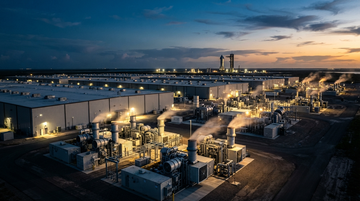
House Democrats Just Forced xAI/SpaceXAI to Answer a Clean-Air Permitting Loophole—Turning 27–60 “Unpermitted” Gas Turbines Into a Federal Risk
A House Energy & Commerce ranking-member letter to SpaceXAI demands documents and site-visit access about Colossus 1/2 turbines alleged to be operating “without air permits,” explicitly describing an attempted dodge via “mobile sources.” For hyperscalers planning behind-the-meter gas capacity, the message is simple: once on-site turbines reach scale, permitting becomes a federal oversight issue, pushing the market mix toward utility PPAs (and away from regulatory arbitrage).
2026-07-28
Amazon cutting most Nova models turns “build your own frontier stack” into a cash-flow problem
Amazon is deprecating/winding down most of its in-house flagship “Nova” AI models (Premier, Omni, Reel, Canvas), moving to a smaller set of frontier priorities. The implication for investors: the cost curve of maintaining a multi-model frontier portfolio is steep enough that AWS can’t outspend licensing and platform-scale routing through providers like Anthropic.

Anthropic’s ~$74.1B ARR run-rate turns “private mega-cap” into a measurable threat to public SaaS compounding in 2027
By July 2026, Anthropic is tracking at ~$74.1B in ARR/run-rate versus OpenAI’s ~$41.3B, about 1.79×, per ARR trackers. At that scale, even small shifts in developer mindshare and enterprise AI budgets can reallocate dollars away from public SaaS growth models—unless the incumbents’ distribution and platform economics keep outcompeting the model layer.

Apple's TV Playbook Has to Become a Content Profit Play (Not Just a Hardware Retention Tool)
A verified Apple filing and earnings materials show Apple can extract very high Services gross-margin economics (76%+ recently), but the company still doesn’t disclose how much of that margin comes from Apple TV+. The key investment question for incoming CEO Tim Cook successor John Ternus is whether Apple TV+ can grow original-content competitiveness through partnerships without eroding Services profitability.

AT&T turns spectrum into fixed-wireless and AI backhaul capacity—an $23B deal that resets the 5G arms race
AT&T is buying 50 MHz of nationwide spectrum from EchoStar for ~$23B, with FCC buildout conditions that directly shape where and when the capacity shows up. The investor angle is less “more consumer 5G” and more “mid-band for air-interface + transport for AI”: Verizon’s recent dark-fiber AI backhaul model implies carriers are monetizing connectivity as compute-adjacent infrastructure.

BetMGM's first guidance cut tied to prediction markets signals US iGaming TAM is being repriced
In its Q1 2026 update, BetMGM cut full-year 2026 net revenue guidance to $2.9B–$3.1B, explicitly pointing to a more promotional, “competitive environment.” The key investor takeaway: prediction-market venues like Kalshi/Polymarket are forcing a handle-and-hold reallocation, and regulated financial-exchange status under the CFTC is making this competition harder to dismiss as a niche trend.
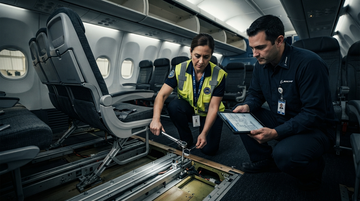
FAA’s 453-jet 737 MAX seat-track AD turns a “capacity ramp” into a workmanship audit—Boeing’s quality story now has billable hours
The FAA’s proposed AD (Docket FAA-2026-7228; Federal Register 91 FR 46881) would require inspections of incorrectly installed seat-track assemblies on 453 Boeing 737 MAX aircraft, with an FAA-estimated compliance cost of up to $2.656M for U.S. operators. The key market signal is not the dollar amount itself—it’s that regulators are forcing proof that the production system can reliably “lock” interior hardware, not just pass safety-critical validations.
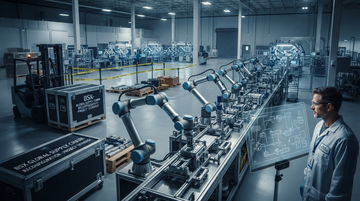
Boston Scientific’s $700–800M restructuring is a multi-year operating-leverage bet: the $500M annualized savings math has to land by 2029
Boston Scientific BSX approved a 2026–2029 restructuring with ~$700–$800M of pre-tax charges and ~$500M of annualized gross expense reduction, including ~$600–$700M in future cash outlays. The strategic read-through is that this is meant to reconfigure manufacturing and supply-chain footprint for margin expansion—not just cut costs—so 2027 peer comparisons will hinge on how much of the savings the company actually realizes versus the one-time spend.
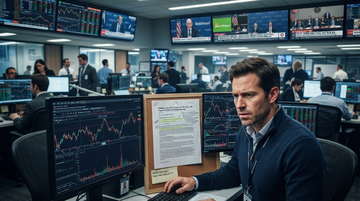
CFTC’s prediction-market rule “public-interest” fight is becoming a liquidity game—Robinhood is positioned to profit from the friction
The CFTC’s proposed “Prediction Markets; Public Interest Determinations” rule drew enough public pushback that platforms are increasingly pricing regulatory drag into their business models. That makes order-flow durability—not just contract design—the real moat, with Robinhood exposed to both the upside of trading volumes and the downside of compliance costs.
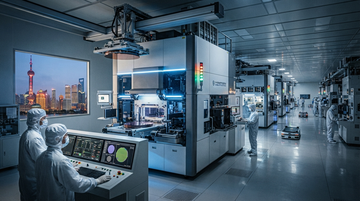
China’s first mass-produced 28nm-class immersion DUVs target ASML’s mid-range DUV bottleneck—so the real $20B risk is supply mix, not EUV panic
A Shanghai state-backed supplier has begun mass-producing homegrown immersion DUV lithography tools aimed at 28nm-class patterning, targeting ~5 systems in 2026 and ~20 in 2027 for SMIC, Hua Hong, and CXMT. The near-term threat to ASML is less about replacing EUV and more about speeding up domestic substitution in the mature-node “DUV volume” layer—where capex flows are large and timing matters.

Core Scientific’s AMD warrant lock turns 529 MW of ex-crypto capacity into an AMD-equity-aligned AI landlord bet
Core Scientific’s 15-year AMD AI infrastructure deal (filed via SEC 8-K on Jul 27, 2026) ties 529 MW of critical IT load to a warrant for up to 30M shares at a $23.47 exercise price, vesting per MW delivered. The structure shifts Core Scientific’s AI ramp from “power-only survivorship” to “AMD-aligned underwriting,” but the real investor question is whether AMD’s locked capacity scales into the deal’s up-to-2.5 GW expansion.
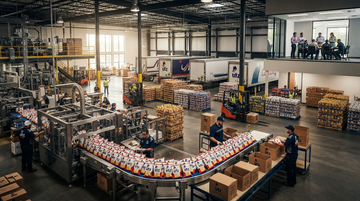
The $2.9B take-private that signals PE’s snack-roll-up playbook is already here
The clearest “family-to-platform” datapoint we can verify from primary sources is Utz Brands agreeing to a $2.9B take-private with Intersnack (private), while the Rice/Lissette family keeps a 50% stake after closing. That structure—family sellers rolling into a PE-style platform that can bolt on adjacent brands—helps explain why legacy $500M–$2B snack companies are becoming consolidation fuel, not consolidation refugees.

A “Hawkish Hold” Can Cut the Same Way as a Hike: Why September’s Fed Path Is Now Trading Like It’s Tightening Again
Ahead of the July 28–29 FOMC decision, market pricing has jumped toward a near-term hike outcome (CME FedWatch around the high-30% range), while the U.S. dollar is already acting like policy tightening (DXY at a 14-month high). The result is a positioning mismatch: even if the Fed holds, the updated SEP signaling for later in 2026 can still transmit a hawkish shock to chips, banks, and the dollar.

Google's €890M DMA fine becomes a multi-year damages threat because private plaintiffs already filed with courts as the evidence anchor moves from regulator to litigation
The EU’s first major DMA fine against Google totaled €890M across (1) self-preferencing in Search and (2) anti-steering restrictions in Play. News of private damages claims right after the enforcement decision matters because private cases can convert a one-time regulator finding into recurring P&L exposure—especially once courts treat the regulator’s factual record as a “smoking gun.” For Alphabet, the key investor question is not the €890M fine itself, but how much incremental loss-making cashflows emerge if multiple venues (Search + Play) scale into follow-on judgments and settlement ranges.

GSK's $2.5B savings drive is really a pipeline-reliability budget—so the market should price its R&D conversions, not just “patent cliff” cuts
GSK’s announced cost-savings drive is framed as funding its pipeline by improving R&D productivity and execution timing, not merely extending cash via patent protection. That shifts the reinvestment math: investors should watch whether pipeline risk-adjacent value is rising fast enough to justify sustained R&D spend and commercial intensity.
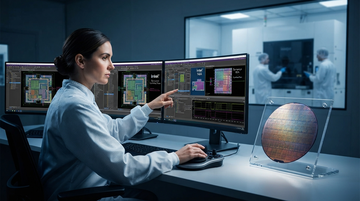
Synopsys just got Intel 14A labeled “certified”—but without a named external 14A commitment, it’s an enablement milestone, not a demand signal
On July 27, Synopsys and Intel said AI-powered EDA flows and broader IP were “certified” for Intel 14A “customer readiness.” But Intel’s disclosures around 14A are still about momentum and technical milestones—not naming committed external production customers—so the announcement is more about de-risking design work than proving external revenue pull-through.

J&J’s $5.5B talc settlement is the end of the overhang—but only if the third-party class actually gets funded
Johnson & Johnson’s most recent talc resolution step removes a chunk of remaining litigation accounting risk, but the real investor question is structural: what entity funds the third-party claimant class and at what participation rate. J&J’s filings show it still carries a remaining talc balance (~$3.7B as of 2Q26), so the “$5.5B close” narrative only fully de-risks the stock if the class funding mechanism performs as promised.

KLA turns “Q4 beat” into a tariff proxy—its guidance implies China services-access risk is hitting the backlog conversion math
KLA’s fiscal Q3 print beat, but its fiscal Q4 guidance centers on export-control licensing risk that directly constrains selling and providing services to certain China customers. The risk matters because KLA’s China concentration is large enough that licensing friction can shift order-mix and delay backlog recognition—exactly what investors read as a tariff-like tax on the AI capex cycle.
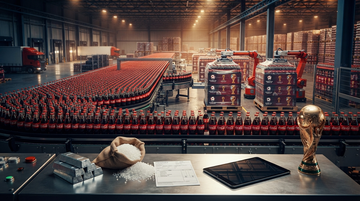
Coca-Cola just proved a World Cup volume tailwind—now the market will test whether 2026 pricing power can survive 2H cost pressure
In Coca-Cola's Q2 update, World Cup-related activity contributed to a large volume quarter and helped drive a guidance raise, including higher 2026 comparable EPS growth of 9%–10%. The core investor question is whether the pricing/mix lift is durable pricing power or whether it’s temporary cover for late-year input-cost pressure that didn’t fully show up as explicit sugar/aluminum/freight/tariff calls in management’s guidance language.
What to expect
Evidence-first notes with a visible point of view.
This section collects sharp takes on earnings, shareholder meetings, and market structure. Each new piece should make the thesis, the facts, and the implications obvious within the first few screens.
Expect direct analysis, not generic commentary.
Expect the data to be explicit and the argument to be easy to follow.