Latest
The day's market news, with the argument attached
New notes every trading day on earnings, policy and market structure. Each one opens with the conclusion, then the evidence, then the companies it hits.
2026-07-13


Paramount and Warner Bros. Discovery Are Being Repriced by Antitrust, Not Just Deal Math
The legal fight over the Paramount-Warner deal is no longer a merger-arbitrage footnote. With 12 states now trying to freeze the transaction, the market has to price regulatory duration, media concentration risk, and the possibility that content distribution gets revalued before the deal ever closes.

SK Hynix's 15% Crash Was a Liquidity Event, Not an AI Demand Reversal
The 15.4% plunge in SK Hynix and the 10.7% drop in Samsung Electronics looked like a thesis break, but the tape says leverage, geopolitical risk, and a cross-listing dislocation hit first. The deeper memory cycle is still tight, which means Seoul may be the weakest link even if the AI demand story stays intact.
2026-07-12

Apple's Back-to-School Delay Shows Premium Pricing Is Hitting Demand
Apple's 2026 back-to-school offer is late, and the delay matters because Apple already raised prices across Macs and iPads in June. The read-through is that premium positioning still works, but it is no longer frictionless: students, parents, and competing retailers now have more reason to wait, compare, and trade down.

Target's Back-to-School Reset Shows Retailers Are Selling Smart Value, Not Traffic
Target's back-to-school overhaul looks less like a pure discount event and more like a merchandising reset. The chain is leaning into newness, curated partnerships, and visible value so it can pull shoppers away from Walmart without racing to the absolute lowest price on every item.
2026-07-11

Apple's OpenAI Lawsuit Turns AI Hardware From a Growth Story Into a Trust Risk
Apple's lawsuit against OpenAI is more than a legal skirmish. It turns OpenAI's hardware ambitions into a trust and timeline problem, and it reminds investors that the next phase of AI competition is about supply-chain control, employee mobility, and who gets to own the device layer.
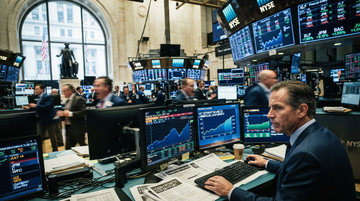
Bank Stocks Enter Earnings Season with the Fed Still on Their Side
Banks are rallying into Q2 earnings because capital markets are active, commercial loans are growing, and rates are still supportive of net interest income. The real risk is valuation, not the economy.

Boeing's Fourth 737 Line Is a Capacity Signal, Not a Victory Lap
The North Line in Everett pushes Boeing toward a 47 jets-per-month 737 rate. That is good news, but only because it shows the company is still trying to convert operational recovery into cash flow.

Canada Tariff Shock Reopens the Trade War Discount
A 35% tariff on many Canadian imports is not just a political headline. It is a tax on the most integrated bilateral supply chain in North America, and the market should price it as an inflation, margin, and FX event.

Canada's 35% Tariff Threat Reprices North American Trade
A 35% tariff on many Canadian imports is a direct hit to the North American supply chain. It pressures energy, autos, industrial margins, and eventually inflation.

Circle's Bank Charter Makes USDC a Wall Street Infrastructure Story
The OCC approval gives Circle federal oversight and turns a crypto stock into a regulated payments-infrastructure play.
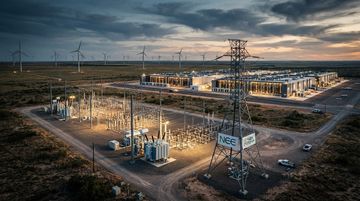
AI Power Demand Meets Subsidy Cuts: Why Clean Power Prices Are Repricing Fast
The clean-power market is getting squeezed from both ends: AI data centers need more electricity, while post-July-4 subsidy changes make new projects more expensive. That combination can reprice utilities, developers, and grid-linked stocks fast.

DeepSeek's Inference Chip Is China's Quietest Threat to Nvidia
DeepSeek moving into inference silicon is not a training-story gimmick. It is evidence that China wants more control over the lowest-margin, highest-volume part of the AI stack, which matters for Nvidia's long-term pricing power.

Delta's Strong Revenue Is Hiding a Fuel-Cost Stress Test
Delta beat revenue expectations, but the market focused on fuel costs, margin pressure, and the lack of a cleaner earnings upgrade.

The Dow Is a Price-Weighted Narrative Machine
The Dow is not a broad market map. It is a 30-stock, price-weighted signal that still matters because it is simple, durable, and culturally sticky.

Freeport Maintenance Makes U.S. Gas Feel Less Scarce, Not More Secure
A Texas LNG maintenance outage and a 61 Bcf storage build pushed natural gas lower, but the deeper story is that domestic supply is temporarily stuck inside the U.S. while export optionality goes offline.

Google's AMIE Turns Healthcare AI Into Disease-Management Infrastructure
Google says AMIE can reason through longitudinal disease management as well as, and in some respects better than, clinicians in a new Nature study. The market implication is that healthcare AI is moving beyond one-off diagnosis into workflow infrastructure for follow-up, triage, and plan quality, which matters for Alphabet, virtual-care vendors, and payer care-management stacks.

Jobless Claims Tell the Market the Labor Market Is Cooling, Not Breaking
Initial claims at 215,000 and a 4-week average of 218,750 say the labor market is softening in a way that keeps the Fed patient, not panicked.

Meta's AI Push Is Finally Becoming a Revenue Story
Muse Spark 1.1, the Meta Model API, and Iris chip production together turn Meta's AI spend from a cost concern into a monetization plan.
Meta's DSA Problem Reintroduces a Regulatory Discount to the Stock
The European Commission's preliminary DSA finding turns Meta's engagement design into a valuation issue, not just a compliance headline.
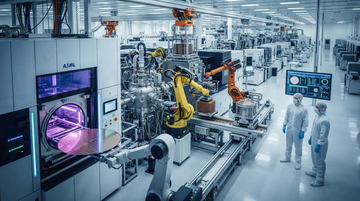
Meta's Iris Chip Plan Turns Semicap Equipment Into the Next AI Toll Booth
Meta's move toward in-house AI chips is less about replacing Nvidia than about widening the wafer-fab equipment market. The real beneficiaries are the toolmakers and the power chain behind the fabs.
What to expect
Evidence-first notes with a visible point of view.
This section collects sharp takes on earnings, shareholder meetings, and market structure. Each new piece should make the thesis, the facts, and the implications obvious within the first few screens.
Expect direct analysis, not generic commentary.
Expect the data to be explicit and the argument to be easy to follow.