Latest
The day's market news, with the argument attached
New notes every trading day on earnings, policy and market structure. Each one opens with the conclusion, then the evidence, then the companies it hits.
2026-07-10


Europe's Addictive-Design Case Puts Meta's Engagement Flywheel on Trial
The European Commission's preliminary DSA finding is not really about a fine. It is about whether Meta can keep maximizing session length, autoplay, and infinite scroll without changing the product architecture that drives ad yield.

Netflix's Next Growth Leg Is Live Programming, Not Just More Subscribers
A Wall Street Journal report that Netflix is studying live channels and streaming bundles says the company is trying to solve the real constraint in streaming: engagement. That matters because the ad business can scale only if users spend more time inside the app.

OpenAI and Anthropic Are Turning Credits Into the New AI Customer Acquisition Weapon
OpenAI's GPT-5.6 pricing and Anthropic's Sonnet 5 rollout show the frontier model race has moved from benchmark bragging rights to subsidy design. The market read-through is that the next AI winners may be the platforms that can monetize cheaper inference, not just the labs that ship the loudest launch.

SK Hynix on Nasdaq: Why the U.S. Listing Matters, What It Changes, and Where the Trap Is
A structured deep dive into the proposed U.S. listing, SK Hynix's operating inflection, and the AI-memory supply chain bottleneck behind the move.

SpaceX on Nasdaq: Liquidity, Control, and What Public Markets Really Buy
A deep dive into why SpaceX chose a public listing, what the market gets, and why governance and capex remain the real risks.

Treasury's Iran Sanctions Reprice the Energy-Risk Premium
Treasury targeted a key Supreme Leader financier and Iranian exchange houses that move billions of dollars annually after Iran resumed attacks on international shipping in the Strait of Hormuz. The market implication is broader than sanctions optics: it raises the near-term risk premium for oil, tanker routes, and financial channels tied to the Middle East, which can matter for Exxon, Chevron, shipping names, and the broader macro tape.
2026-07-09

AstraZeneca's Wainua Trial Miss Shows Late-Stage Biotech Risk Still Reprices Fast
AstraZeneca's Phase III CARDIO-TTRansform readout failed its primary objective, and the market immediately repriced the downside. The message is blunt: even quality pharma names can lose billions when one late-stage trial misses.
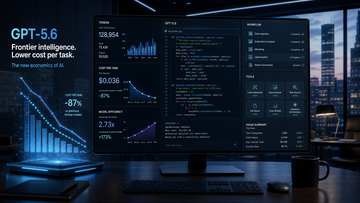
GPT-5.6 Turns Frontier AI Into a Cost-Per-Task War
OpenAI says GPT-5.6 cuts task time, token use, and cost while lifting coding, knowledge-work, and cyber benchmarks. The market read-through is bigger than one model launch: frontier AI is getting cheaper to deploy, which changes the budget math for enterprise software and cloud buyers.

Micron's $3 Billion Supply-Chain Bet Says the AI Memory Trade Is Moving Upstream Again
Micron's July 9 investment to support GlobalWafers, secure a 10-year wafer supply agreement, and deepen U.S. manufacturing makes the AI memory trade look less like a pure pricing story and more like an input-control story. The read-through reaches wafers, substrates, equipment, and every buyer that still thinks memory is only a component line.
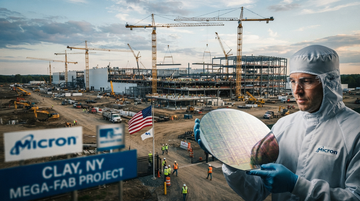
Micron's $250 Billion U.S. Build Turns AI Memory Into Industrial Policy
Micron's expanded U.S. capex plan is bigger than a semiconductor press release. By lifting domestic investment above $250 billion and tying in a $500 million wafer deal, the company is telling the market that AI memory scarcity is now a national supply-chain project.

PepsiCo's Beat Exposed a Worse Problem: U.S. Volume Still Hasn't Recovered
PepsiCo's Q2 numbers were solid on paper, but the real story is that international growth and pricing are still doing more work than U.S. volume recovery. That makes this a margin-defense story, not a clean demand-recovery story.

CFTC's 24/7 Crude Oil Standoff Slows the Push to Continuous Price Discovery
The CFTC stayed a 24/7 crude oil futures contract that CME tried to self-certify, after first asking for public comment on whether round-the-clock futures are consistent with its core principles. The market issue is not just one contract. It is who controls energy price discovery when trading stops being tied to conventional hours.

GPT-5.6 Reprices Frontier AI
OpenAI says GPT-5.6 cuts task time, token use, and cost while lifting coding, knowledge-work, and cyber benchmarks. The market read-through is bigger than one model launch: frontier AI is getting cheaper to deploy, which changes the budget math for enterprise software and cloud buyers.
2026-07-08
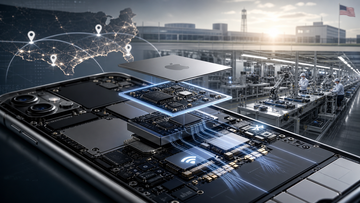
Apple Locks In Broadcom Through 2031, and Custom Connectivity Is Still Scarce
Apple extended Broadcom's chip partnership through 2031, reinforcing that wireless, RF, Wi-Fi, and Bluetooth silicon remain strategic bottlenecks even as Apple internalizes more of its own stack. The read-through is broader than one stock: Broadcom's customer concentration makes the story about supply-chain lock-in as much as it is about custom chips.

The Fed Minutes Keep the Discount-Rate Problem Alive
The July 8 Fed minutes matter because the policy rate is still 3.50%-3.75%, the effective fed funds rate is 3.63%, and the Treasury curve is still forcing long-duration assets to clear a much higher hurdle. The market is not only pricing policy; it is pricing the cost of capital for every rate-sensitive cash flow.

Levi Strauss Proved the DTC Pivot Works, but the Market Still Wants More Than a Beat
Levi Strauss posted another strong quarter, raised guidance again, and kept proving that its direct-to-consumer shift is real. The stock still sold off because investors want to know whether the premium-denim story can keep compounding without running into a softer consumer or a messy wholesale backdrop.

OPEC's August Pump-Back Turns Oil Into a Deflation Trade
OPEC+ is adding 188,000 barrels per day in August while the EIA now sees Brent at $74 in Q3 2026 and $65 in 2027. That is a transition from shortage fear to oversupply math, which changes the read-through for energy equities, airlines, chemicals, trucking, and inflation-sensitive assets.

Costco's June Sales Show the Consumer Still Pays for Value
Costco reported June net sales of $29.24 billion, up 10.6% year over year, while 44-week sales reached $250.43 billion, up 10.1%. The data says the U.S. consumer is still spending, but only when the value proposition is obvious, which keeps Costco in a stronger position than most retailers when prices, mix, and tariffs keep grinding on margins.

SEC's IPO Surge Reopens the Public Markets Funnel
The SEC says Q1 2026 saw 99 IPOs raise over $22 billion, versus 84 IPOs raising over $11.8 billion a year earlier. That rebound matters because the agency is now pairing fresh capital-formation data with a July roundtable on modernizing IPOs and expanding access to public markets, which could reshape how banks, exchanges, and pre-IPO companies think about the public-market funnel.
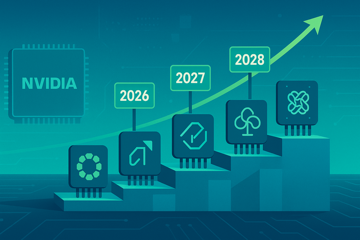
The 2026-2028 AI Chip IPO Pipeline Is Now 5 Names Deep - SambaNova, Rebellions, Tenstorrent, Cerebras, and Baidu Kunlunxin
CNBC reported on July 8, 2026 that SambaNova CEO Kunle Olukotun said the company is 'strongly considering' an IPO, likely in the U.S. - joining Rebellions (targeting a South Korea IPO in 2026) and Baidu Kunlunxin (targeting a Hong Kong IPO at $50B). The 2026-2028 AI chip IPO pipeline now has 5 names, and the read-through is direct for Nvidia, AMD, Broadcom, TSMC, ASML, and the broader AI capex stack that depends on the GPU-vs-custom-chip competition.
What to expect
Evidence-first notes with a visible point of view.
This section collects sharp takes on earnings, shareholder meetings, and market structure. Each new piece should make the thesis, the facts, and the implications obvious within the first few screens.
Expect direct analysis, not generic commentary.
Expect the data to be explicit and the argument to be easy to follow.