Latest
The day's market news, with the argument attached
New notes every trading day on earnings, policy and market structure. Each one opens with the conclusion, then the evidence, then the companies it hits.
2026-07-15


Gemini Space Station Is Down ~88% From Its $37 IPO - And the Verified Fundamentals Define What the Crypto-IPO Cohort Actually Is
Gemini Space Station closed at $4.34 on July 14, 2026, down ~88% from its $37 IPO price, on light volume of 808,052 shares. The 52-week range is $3.83 to $45.89. Market cap is $548.01 million. TTM revenue is $194.522 million. Net margin is -278.90%. EPS is -$10.87. EBITDA is -$324.18 million. Debt-to-equity is 102.68%. CEO is Tyler Winklevoss; President is Cameron Winklevoss. The verified fact set says the crypto-IPO cohort is being repriced by fundamentals, not just sentiment. Coinbase, Circle, and the spot Bitcoin ETFs are the cleaner reads on the broader digital-asset complex.

Trump's 24-Hour Hormuz Toll Reversal Was the First Real Test of the Global Shipping Industry's Leverage
On July 14, 2026, U.S. forces struck Iranian targets and reinstated the naval blockade of Iranian ports. President Trump simultaneously announced a 20% toll on cargo transiting the Strait of Hormuz via Truth Social. Within 24 hours, the policy was reversed and replaced by 'Trade and Investment Deals' with Gulf states. The episode is the first public test of whether the global shipping industry, working through the International Maritime Organization, has enough leverage to reshape a unilateral U.S. policy in real time. The read-through matters for Maersk, Hapag-Lloyd, ZIM Integrated Shipping, Diana Shipping, Frontline, and the broader tanker and dry-bulk complex.

IBM's 25% Crash Made the Enterprise Software Tape Stop Trusting Guidance
IBM closed down 25.21% at $217.07 on July 14, 2026 on 8.6x normal volume, its worst single-session decline on record. The drop did not come with an official earnings warning; what changed is that the market stopped trusting the multi-year software-and-consulting bridge that large-cap enterprise vendors have been selling since the AI capex story began. The contagion test is now in Accenture, Cognizant, Capgemini, Palo Alto Networks, CrowdStrike, ServiceNow, and Salesforce.

JPMorgan Quietly Made AI Job Cuts a Reported Number — And the Labor Market Can No Longer Ignore It
On July 14, 2026, JPMorgan disclosed that it has roughly 1,000 active AI use cases and that 'discrete areas' saw headcount reduced 30%-40%, with most affected employees redeployed rather than terminated. Headcount held at 320,560 employees, almost flat quarter-over-quarter, while net income jumped 41% year-over-year to $21.2 billion and adjusted EPS beat by 5% at $6.14. The tape ignored the EPS beat and focused on the labor story because a 30%-40% headcount cut inside the largest US bank is no longer an HR footnote — it is a labor-market datapoint the Fed cannot avoid.

June 2026 CPI at 3.5% YoY Is the Print That Just Reset the Social Security COLA Estimate - And the Fed Cut Path
The BLS June 2026 CPI report came in at 3.5% YoY, lower than expectations, driven primarily by a decline in energy prices, according to CNBC's reporting on July 14, 2026. The Senior Citizens League immediately trimmed its 2027 Social Security COLA estimate to 3.8% (unchanged from last month), while independent analyst Mary Johnson dropped her 2027 COLA estimate to 3.7% from 4.7% - a full percentage point cut in a single print. The disinflation reading is the first clean macro green-light of the cycle, and the rate-sensitive sectors (housing, regional banks, REITs, small caps) now have a real reason to lead.
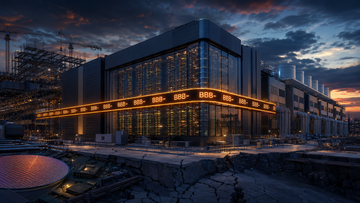
Oracle's 63% Slide From Its 52-Week High Is the First AI-Infrastructure 'Fallen-Angel Watch' the Bond Market Has to Price
Oracle is down roughly 13% over the last 10 sessions and ~63% from its 52-week high of $345.72, with the 52-week low of $127.60 set on July 14, 2026. After the June 11, 2026 8% tumble on a $20 billion capital-raise disclosure and the June 23, 2026 disclosure that Oracle shed ~21,000 roles over the past year, the equity is now pricing the risk that AI-infrastructure capex commitments are pushing the balance sheet toward fallen-angel territory. With debt-to-equity at 322.86%, the question for the bond market is no longer whether Oracle can fund the AI build, but whether the cost of capital will move before the next earnings print on September 7.

June PPI's 0.3% Drop Gives the Fed Breathing Room, but It Does Not End the Inflation Trade
The U.S. Producer Price Index fell 0.3% in June, goods prices dropped 1.4%, services rose 0.2%, and year-over-year final-demand PPI still ran 5.5%. Markets immediately read the print as lower odds of further tightening, with the 2-year yield slipping and Fed pause odds rising, but the deeper message is that goods disinflation does not erase service inflation or energy volatility. The result still matters for BlackRock, JPMorgan, UnitedHealth, housing, utilities, and every rate-sensitive part of the market that lives off the next 25 basis points.
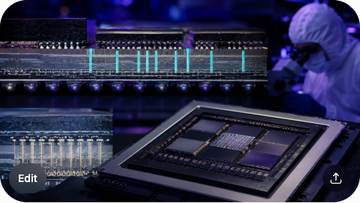
Advanced Packaging Deep Dive: How TSMC CoWoS, Samsung I-Cube, Intel EMIB, and Amkor Built the Single Most Binding Constraint of the AI Accelerator Cycle
Advanced packaging - specifically TSMC CoWoS (Chip-on-Wafer-on-Substrate) - is the binding constraint of the AI accelerator cycle, and 2026 CoWoS capacity is 100% allocated. TSMC is the dominant supplier with ~75% advanced packaging share, Samsung I-Cube is at ~10%, Intel EMIB/Foveros is at ~10%, and the OSATs (Amkor, ASE Technology, JCET) are at ~5%. This is a full-stack deep-dive into advanced packaging: 2.5D CoWoS-S/CoWoS-L/CoWoS-R, 3D Foveros/EMIB/TMV, hybrid bonding, the CoWoS-L expansion, the substrate supply chain (Ibiden, Shinko Electric), the top experts, the customer base (Nvidia, AMD, Broadcom, Apple), and the read-through for the 2026-2028 AI capex stack.
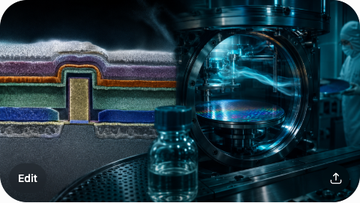
Atomic Layer Deposition (ALD) Deep Dive: How Applied Materials, Lam Research, Tokyo Electron, and ASM International Built the Most Concentrated Thin-Film Equipment Oligopoly in the AI Chip Era
Atomic Layer Deposition (ALD) is the most concentrated thin-film equipment oligopoly in the semiconductor industry. Applied Materials leads with roughly 50 percent ALD share, Lam Research is at 20 percent, Tokyo Electron is at 15 percent, and ASM International is at 10 percent. This is a full-stack deep-dive into ALD: thermal ALD vs plasma-enhanced ALD (PEALD) vs spatial ALD, the precursor chemistry, the binding layer counts (3nm logic needs 50 plus ALD layers per chip, HBM3E 12-Hi needs 30 plus), the top experts, the customer base (TSMC, Samsung, Intel, SK hynix), the 20B+ USD ALD capex 2025-2027, and the read-through for the AI capex stack.
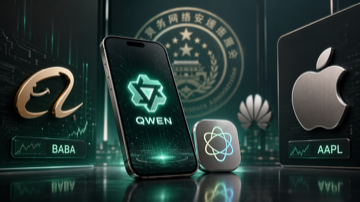
Alibaba and Apple Just Made Qwen the First Chinese AI Model Inside the iPhone Stack
Alibaba's U.S.-listed shares rose 4% in pre-market trading on July 16, 2026 after confirming its Qwen AI model will be integrated into Apple Intelligence across iOS, iPadOS, macOS, and visionOS for users in China. The Cyberspace Administration of China included Apple AI services on its approved-providers list alongside Huawei. The deal is the first time a Chinese AI model is inside the iPhone stack, and the read-through is direct for Apple, Alibaba, Huawei, Tencent, Baidu, and the entire cross-border AI-supply-chain complex.
Amazon Just Lost a 19-Year AWS S-Team Veteran Right When the AI Capex Cycle Is at Its Peak
Dave Brown, an Amazon Web Services SVP who helped assemble the original EC2 service in South Africa in the 2000s and oversaw AWS's compute and machine learning units including Bedrock and SageMaker, plans to leave the company at the end of July 2026 after nearly 19 years. He will be replaced by Dave Treadwell from the e-commerce division. Brown's exit from Jassy's 28-person S-team comes as AWS recorded 28% revenue growth in Q1 2026 and as Amazon raised at least $25B in a bond sale to fund its AI capex - the worst possible timing for a leadership transition.
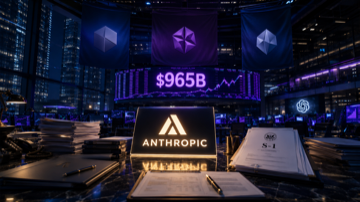
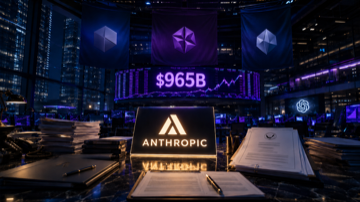
Anthropic Is Now the Cleanest Test of Whether a $965B Private AI Can Survive Wall Street's Discipline
CNBC reported on July 15, 2026 that Anthropic is scheduling investor meetings with Goldman Sachs, Morgan Stanley, and JPMorgan Chase ahead of a potential IPO as soon as October, with a confidential SEC filing already in place. The company closed a $65B funding round at a $965B valuation in May, putting it above OpenAI's $852B private mark. The Anthropic listing would be the first mega-private-AI IPO test, and the read-through is direct for the entire cap-markets fee pool that the Street has been modeling higher - and for the AI multiple that the public tape has been paying for every other mega-cap.
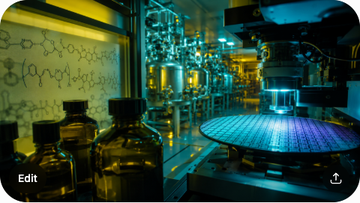
ArF Photoresist Deep Dive: How JSR, Shin-Etsu Chemical, Tokyo Ohka Kogyo, and Sumitomo Chemical Run the Most Concentrated Materials Chokepoint in the AI Chip Supply Chain
ArF (Argon Fluoride) photoresist is the binding materials chokepoint for the entire leading-edge semiconductor industry. The 4 Japanese suppliers - JSR, Shin-Etsu Chemical, Tokyo Ohka Kogyo, Sumitomo Chemical - control ~90% of the global ArF resist market, and the EUV resist oligopoly is even tighter. This is a full-stack deep-dive into ArF photoresist: polymer chemistry (polyhydroxystyrene, acrylate, COMA), photoacid generator (PAG) chemistry, line-edge roughness (LER), the EUV resist roadmap, the 12-inch resist supply chain, the top experts, the customer base (TSMC, Samsung, Intel, SK hynix), the recent CXMT/YMTC Korean/Chinese challenger progress, and the read-through for the 2026-2028 AI capex stack.
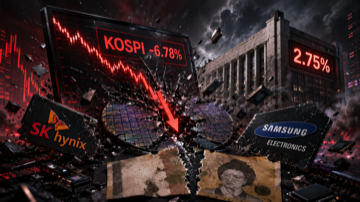
The Bank of Korea's First Hike in Three Years Is the First Asian Central Bank to Admit the Won Crisis Is Over
The Bank of Korea hiked rates 25bp to 2.75% on July 16, 2026 - the first hike since January 2023 - against June CPI at a three-year high of 3.2% and a won that had touched a 17-year low of 1,561.5 on June 5. The move is the first Asian central-bank admission that the regional currency-defense regime is ending, and the read-through is direct for Samsung Electronics, SK Hynix, Hyundai Motor, Kia, POSCO, KB Financial, and Shinhan Financial. The won at 1,484.86 is still 5% weaker than the 1,400 cycle-supportive level, and the BoK is buying time before any further tightening.

BNY Mellon Q2 2026 Beat - Raises 2026 Revenue Outlook Above Consensus - The Cleanest Single Read on the Financial-Infrastructure Cycle
BNY Corporation reported a Q2 2026 earnings beat and raised its full-year 2026 revenue-growth forecast above Wall Street expectations on July 15, 2026. The beat was driven by stronger activity across investment-services fees, asset-management fees, market-sensitive custody and administration revenue, and higher client assets supported by rising equity markets. The BNY beat is the cleanest single read on the financial-infrastructure cycle - the fee-based capital-markets plumbing that operates beneath asset managers, pension funds, ETFs, and institutional portfolios. The read-through is direct for BlackRock (BLK), State Street (STT), and the broader fee-based asset-management + custody + administration cohort that benefits from rising equity markets and higher institutional trading volumes.
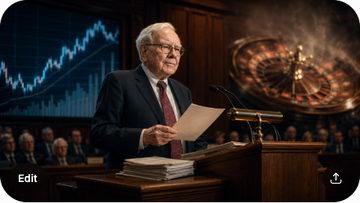
Buffett Just Told CNBC He Personally Initiated Alphabet - And 'It's Tough to Find Values When Everybody Is Preferring Gambling'
CNBC reported on July 15, 2026 that Berkshire Hathaway Chairman Warren Buffett, in an interview with Becky Quick, said he personally initiated Berkshire's Alphabet position - not incoming CEO Greg Abel - and warned that 'it's tough to find values when everybody is preferring gambling.' Buffett's first public confirmation of his direct role in the Alphabet investment is the cleanest single signal yet that Berkshire is treating Alphabet as a long-term core holding, not a tactical trade. The read-through is direct for Alphabet, Microsoft, Apple, Meta, Amazon, Nvidia, the entire Big Tech cohort, and the value-vs-growth rotation thesis.
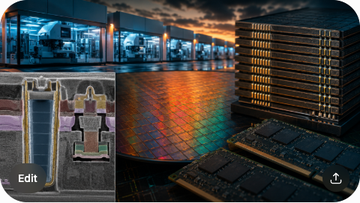
DRAM Deep Dive: How Samsung Electronics, SK hynix, and Micron Run the $118B Memory Backbone of the AI Era - and Why Conventional DRAM Is Now a Three-Player Oligopoly
DRAM is the $118B/year memory backbone of the AI era, and the supply is structurally a 3-player oligopoly: Samsung Electronics (~42%), SK hynix (~33%), and Micron (~25%). HBM is a sub-segment of DRAM, but conventional DDR4/DDR5/LPDDR5X/LPDDR6 is the bulk of the market and the cleanest single read on the AI server capex cycle. This is a full-stack deep-dive into DRAM: cell architecture (1x/1y/1z/1a/1b/1c/1d/1g nm), capacitor technology (dielectric + electrode), node roadmap, the DDR5 ramp, the LPDDR5X/LPDDR6 mobile ramp, the customer base (Apple, Dell, HP, the hyperscalers), the top experts, the expansion capex, the 2026-2028 cycle, and the read-through for the AI capex stack.
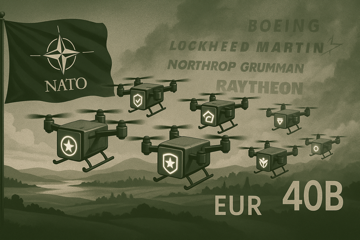
Europe Just Put $40B+ Into Drones and the Read-Through Is Helsing at $18B Not Lockheed Martin
CNBC reported on July 15, 2026 that NATO Secretary General Mark Rutte unveiled a 'drone-ready' alliance plan with $40B+ in counter-drone capability investments over five years, the U.K. committed £5B ($6.7B) to a 'UK drone transformation' program, Germany placed a 90M-euro order for 50,000 drones equipped with Auterion's operating system, and German defense-tech startup Helsing secured an $18B valuation. The drone sector is now receiving more institutional capital than the legacy defense primes, and the read-through is direct for Lockheed Martin, RTX, Northrop Grumman, General Dynamics, and every defense-tech startup trying to scale on the new European procurement.
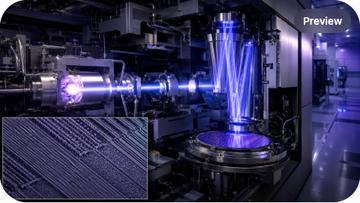
EUV Lithography Deep Dive: Why ASML and the ~5,000 Engineers at Veldhoven Run the Binding Constraint for Every AI Chip on Earth - and Why High-NA EUV Is the 2026-2028 Race
EUV lithography is the binding constraint of the entire leading-edge semiconductor industry, and the supply chain is a monopoly: ASML is the only merchant EUV supplier, with ~5,000 engineers at Veldhoven, ~$30B in 2025 EUV revenue, and a 100% market share. This is a full-stack deep-dive into EUV: light source (laser-produced tin plasma), collector mirror (Zeiss), reticle stage, wafer stage, pellicle, photoresist, masks, the High-NA EUV roadmap (ASML's TWINSCAN EXE:5000 in 2026-2027), the customer base (TSMC, Samsung, Intel, SK hynix), the ~$200M per system price tag, and the read-through for the 2026-2028 AI capex stack.

Frontier Model Tier Deep Dive: How OpenAI, Anthropic, Alphabet, Meta, xAI, and DeepSeek Are Reshaping the $400B AI Foundation Model Market - Benchmarks, Revenue, Profit, Growth, and Focus Areas
The frontier model market in 2026 is a $400B+ revenue cohort with 5 credible frontier labs (OpenAI, Anthropic, Alphabet Gemini, Meta Llama, xAI Grok) and 1-2 emerging challengers (DeepSeek, Mistral). The frontier tier is now defined by 100T+ parameters, 1M+ token context windows, multimodal training, and reasoning-specialized architectures. This is a full-stack deep-dive: benchmark performance (SWE-bench, MMLU, GPQA, FrontierMath, HLE), revenue ($13B OpenAI / $5B Anthropic / $3B Gemini), profit path (Anthropic turning profitable, OpenAI $5B loss in 2025, xAI burning $10B+/yr), growth rates (200%+ YoY for Anthropic, 100%+ for Gemini), focus areas (OpenAI agentic + ChatGPT, Anthropic coding + enterprise, Gemini search + Workspace, Meta open-source + ads, xAI real-time + X, DeepSeek cost-efficient open-weight).
What to expect
Evidence-first notes with a visible point of view.
This section collects sharp takes on earnings, shareholder meetings, and market structure. Each new piece should make the thesis, the facts, and the implications obvious within the first few screens.
Expect direct analysis, not generic commentary.
Expect the data to be explicit and the argument to be easy to follow.