Policy & Trade
Tariffs, export controls, and who absorbs them
Rulings, sanctions and trade negotiations traced to the companies that pay for them — margin by margin, route by route.
2026-07-21

2026-07-20

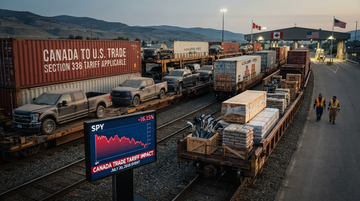
AliExpress's Record €550M EU DSA Fine: A Watershed for Cross-Border E-Commerce Compliance
On July 20, 2026, the European Commission hit Alibaba-owned AliExpress with a record €550 million ($629M) fine under the Digital Services Act for systemic failures to tackle illegal, counterfeit, and unsafe products on its platform — exceeding the €120M fine on X and the €200M on Temu. The Commission cited inadequate risk staffing, overestimated content-moderation efficacy, weak penalty enforcement against repeat-offender sellers, and a brand-authorization system easily circumvented. AliExpress has 193M European users (vs Shein's 156M, Temu's 130M).
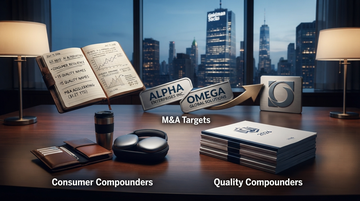
Goldman Sachs' Three Alternatives to the AI Trade: Consumer Compounders, Quality Compounders, and M&A Targets
On July 19, 2026, Goldman Sachs strategists published a note flagging three investment themes as alternatives to the volatile AI infrastructure trade: (1) consumer experience stocks benefiting from discretionary spending with limited AI disruption risk, (2) high-quality compounders with 15 names identified, and (3) potential M&A targets as U.S. announced deal activity hits $1.2T, up 32% YoY. The note comes as hedge fund positioning in AI infrastructure names has grown crowded and visibility on further AI capex is shrinking.
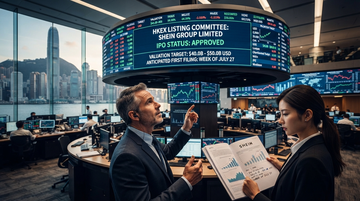
Shein Clears Hong Kong Listing Committee at $40-50B: Fast Fashion's Biggest 2026 IPO Pivots East After the NY/London Fades
On July 17, 2026, Shein received approval from the Hong Kong Stock Exchange listing committee for its long-awaited IPO, targeting a $40-50B valuation (down from $100B in 2022). The fast-fashion retailer plans to publish its first public filing the week of July 27 and could launch the roadshow as soon as late August, after pivoting away from prior New York and London attempts. The prospectus will offer a clean read on Shein's $40B+ revenue, ~$2B net profit, supply chain, and the regulatory tradeoffs of choosing Hong Kong over U.S. listings.
2026-07-19

2026-07-18

Nvidia Barely Kept the Market Cap Crown Over Apple, and That Turns the AI Trade Into a Cash-Conversion Test
The intraday fight between Nvidia and Apple is not just a market-cap headline. It is the market asking which mega-cap can still justify a premium when AI capex, memory costs, and valuation crowding are all rising at once.

The SOX Bear Market Is Not the End of AI, It Is the Start of a Capital-Discipline Regime
When the Philadelphia Semiconductor Index drops more than 20% from its high, the market is not saying AI demand vanished. It is saying the cost of owning the AI supply chain is now high enough that only the cleanest cash converters deserve a premium.

The SOX Bear Market Is Splitting AI Toll Collectors From AI Beta
When the semiconductor index falls into bear-market territory, the market is not dumping AI. It is sorting the AI stack into companies that toll the buildout and companies that are still being priced like pure beta.
2026-07-17

Chevron's Iraq Pipeline Push Turns Hormuz Risk Into a Midstream Re-Routing Trade
New Iraq agreements worth roughly $60 billion do more than add barrels. They signal that the market is starting to price alternative export routes, which changes the value of Chevron, ConocoPhillips, and the entire Gulf energy infrastructure stack.
South Korea's ETF Crackdown Proves the AI Chip Rally Had Become a Leverage Product
South Korea's move to suspend new single-stock leveraged ETF listings is not just a retail-protection headline. It is a market-structure admission that the AI chip rally had become a leverage trade layered on top of a real memory upcycle.

Kuwait's Desalination Strike Makes Gulf Utilities the Hidden Front Line of the Oil Shock
An Iranian strike on Kuwait's water-and-power infrastructure turns a crude-price headline into a utility and inflation problem. The deeper read is that Gulf desalination, not just shipping lanes, is now part of the market's geopolitical risk premium.
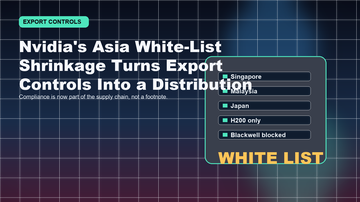
Nvidia's Asia White-List Shrinkage Turns Export Controls Into a Distribution Moat
By cutting the number of authorized Asian buyers by more than half, Nvidia is making compliance part of the supply chain. That sounds bureaucratic, but it is actually a moat: fewer customers, tighter verification, and a more controllable route to China.

TSMC's Record Earnings Selloff Exposes the Three Fault Lines the AI Trade Can No Longer Ignore
TSMC delivered a record quarter on July 16, 2026, but the stock still sold off. That disconnect is the story: the AI semiconductor cycle is still strong, yet the market is now pricing margin compression, higher capex, and a broader repricing of AI infrastructure risk.
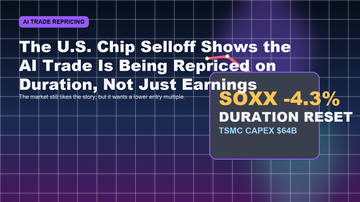
The U.S. Chip Selloff Shows the AI Trade Is Being Repriced on Duration, Not Just Earnings
Even after strong results from TSMC, the market started selling the names that had benefited most from the AI spend cycle. That is a duration reset, not an earnings collapse, and it changes how investors should size the entire semiconductor basket.

Wall Street's Red-Hot Trading Quarter Is Really an Asia Volatility Trade
The bank earnings boom is bigger than a rate story. It is a volatility story, and increasingly an Asia story, with AI-chip flows, IPOs, and cross-border risk all feeding the same trading machine.
2026-07-16
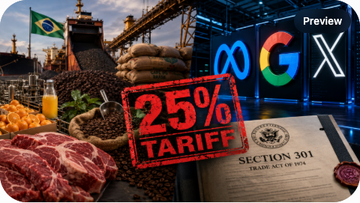
Trump 25% Section 301 Tariff on Most Brazilian Goods - Effective July 22 - The First-Ever US Tariff Targeting Foreign Government Censors of US Tech Platforms
CNBC reported on July 16, 2026 that Trump imposed a 25% Section 301 tariff on most Brazilian goods effective July 22, citing unfair trade practices including Brazil's orders to X, Meta, and Google to remove political content and suspend US users' accounts. The tariff is the first-ever US Section 301 action explicitly citing a foreign government's content moderation orders to US tech platforms. Brazil has $424.5B cumulative goods + services surplus with the US over 15 years; 2025 US goods surplus was $14.4B. The read-through is direct for Brazilian-exposed ADRs, US tech (META, GOOGL, X), US beef/orange juice importers, US aircraft (BA, RTX), and the entire Section 301 tariff regime as a 2026 trade weapon.
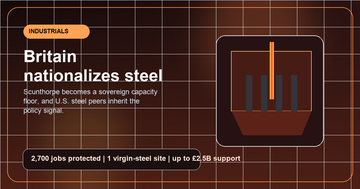
Britain's Nationalization of [British Steel] Is a Sovereign Put Option on Virgin Steel
On July 16, 2026, the UK government moved British Steel into public ownership, citing the public interest, thousands of jobs, and the need to protect a strategic steelmaking capability. The market significance is broader than one plant: when a government is willing to backstop virgin-steel capacity, industrial assets stop being simple commodity businesses and start looking like strategic infrastructure with a policy floor. That matters for Nucor, Steel Dynamics, Cleveland-Cliffs, and every investor who has to price industrial sovereignty risk.
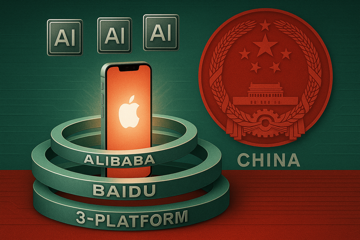
Apple's China AI Approval Is Now a 3-Platform Race - Alibaba, Baidu, and Huawei Just Became the Most Important AI Cohort in the World
CNBC reported on July 16, 2026 that Hong Kong-listed shares of Alibaba rose 5% and Baidu rose 4% after the Cyberspace Administration of China included Apple Intelligence on a list of seven approved AI service providers for iPhone users in China, alongside Huawei and homegrown AI models. The approval opens the door for Baidu's AI chip unit Kunlunxin - targeting a Hong Kong IPO at a $50B valuation - and creates a 3-platform China AI race. The read-through is direct for Apple, Baidu, Alibaba, Huawei, Tencent, and the entire China AI-cohort.

The July 16 Semiconductor Slide Shows the AI Trade Is Repricing Cash Discipline, Not Just Growth
Semiconductor stocks fell even after strong results from TSMC, which tells you the market is no longer rewarding AI growth in isolation. It now wants proof that the capex cycle, margin math, and export-control risk can all coexist without breaking returns.

Corning and Coherent Show the AI Optics Trade Is Starting to Behave Like a Crowded Winner, Not a Fresh Frontier
The July 16 market slide hit optical networking names even as AI infrastructure spending remains strong. Corning and Coherent both sagged inside a broader AI selloff, which suggests the market is no longer paying up just for exposure to the backbone of the AI buildout. Investors now want proof of pricing power, not just a good seat in the supply chain.
What to expect
Evidence-first notes with a visible point of view.
This section collects sharp takes on earnings, shareholder meetings, and market structure. Each new piece should make the thesis, the facts, and the implications obvious within the first few screens.
Expect direct analysis, not generic commentary.
Expect the data to be explicit and the argument to be easy to follow.