Policy & Trade
Tariffs, export controls, and who absorbs them
Rulings, sanctions and trade negotiations traced to the companies that pay for them — margin by margin, route by route.
2026-11-07

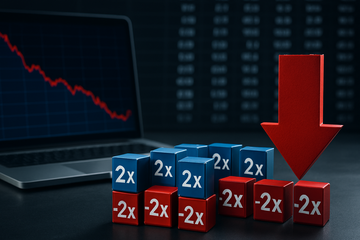
Twelve Leveraged Anthropic ETFs Are Armed Before a Single Share Trades — and the Bid Comes From a Tape That Just Fell 5.5%
ProShares' Nov. 6 launch of a 2x and a -2x Anthropic ETF completes a 12-fund single-stock complex whose own prospectuses state that ANT has not yet commenced its IPO, so the vehicles are registered but not tradeable. Once Anthropic lists, the complex will not offset itself: on an up day the +2x cohort adds exposure while the -2x cohort covers its short, and on a down day both sell, which makes the debut price a reflexive flow artifact before it is a valuation verdict. That matters now because the AI tape those flows would ride has already broken — the Nasdaq fell more than 5.5% on Nov. 5 and SK hynix dropped 10.44% on Nov. 6 — while the print under discussion is roughly 41x trailing sales.
Sweetgreen's Comps Flipped From Mix to Traffic in One Quarter — and 500 Basis Points of That Drop Was a Lettuce Scare
Sweetgreen's fiscal third-quarter 2026 comparable sales of -6.4% were nearly identical in size to June's -6.2%, but built from opposite parts: traffic fell 4.9% while product-mix damage halved to 2.1 points and menu price turned positive at +0.6%. The real trade-down is inside the menu — guests shifting to cheaper wraps — and management is buying traffic back with $11-$13 entry price points, which is why October comps turned +5% with traffic +4%. Underneath the demand noise sits the actual damage: three net new restaurants, nine permanent closures excluded from the comparable base, and restaurant-level margin down 270 basis points to 10.4%, while the only reason trailing net income is positive is a $160.6 million disposal gain. The read-across for fast casual is share shift, not a consumer pullback: Chipotle Mexican Grill and CAVA Group both grew traffic in the same quarter Sweetgreen lost it.

Brent Fell 16% on Election Night While Refining Cracks Held $47: The War Premium Now Has a December Clock
The Nov. 6 U.S. strikes on Iran's Qeshm Island were real, and President Trump confirmed them as \"minor strikes\" that disabled an air-defense site \"in about 15 minutes.\" Yet Brent rose only 26 cents to $98.32 on the day, because the market had already repriced the war from a military risk into a legislative one: the barrel's war premium, worth roughly $19 a barrel on the March consensus survey, mostly evaporated in the week after the midterms, while the 3-2-1 refining crack held at $47.84. Democrats now hold 254 called House seats and 54 Senate seats, which moves the binding constraint from the House floor to a Senate that needs 60 votes to end debate, and puts a December continuing resolution and the $1.15 trillion 2027 defense bill on the calendar. The split is clean: Marathon Petroleum at a $45.70-a-barrel refining margin, Frontline on doubled tanker revenue, Cheniere Energy on raised LNG guidance and Marsh & McLennan on war-risk brokerage have converted escalation into cash, while Delta Air Lines at $1.15 of quarterly earnings and Dow Inc on a $897 million trailing loss still carry the bill.

Warren's Banking Gavel Is a Hearing Calendar, Not a Statute Machine: 145 Bank Mergers and a $73.9 Billion Stablecoin Float Now Have an Owner
Democrats took the Senate and the House on Nov. 3, and Elizabeth Warren is widely expected to take the Senate Banking gavel in January. The rulebook she inherits is already written — the March 2026 Basel III endgame reproposal, the FDIC's September 2026 merger-review framework, and the GENIUS Act rules that switch on Jan. 18, 2027 — so the tradable variable is not whether bank capital gets tougher but who signs, who testifies and who waits for confirmation. That points to a slower deregulatory merger pipeline, a frozen crypto market-structure statute, and a private credit transparency agenda that lands on the five banks holding 63% of committed business-development-company loan amounts.
2026-11-06

China's AI-Unwind Safe Harbour Has a State-Sponsored Buyer; India's Refuge Runs on Oil, Not Chips
Goldman Sachs is right that China and India are where money goes as the AI hardware trade unwinds — but the mechanism matters more than the call. China's marginal buyer is no longer a foreign institution: state funds bought an estimated RMB 170 billion of onshore ETFs in October, on top of a stock of Chinese equities Goldman puts at roughly RMB 6 trillion, about 6% of the mainland market's capitalisation. That price-insensitive bid is what lets China internet names such as Tencent trade on 9.7x enterprise value to EBITDA with a beta of 0.73 while NVIDIA trades on 18.8x with a beta of 2.22. India's refuge runs on a different engine — a sliding oil import bill and the largest one-day foreign purchase since February 2021 — and it reverses faster than Beijing's bid does. The catch is that the state buys blue chips, not the AI complex, so Alibaba is still spending RMB 155 billion of capex a year with negative free cash flow, and the same national team sold at least US$123 billion of ETFs in January 2026.
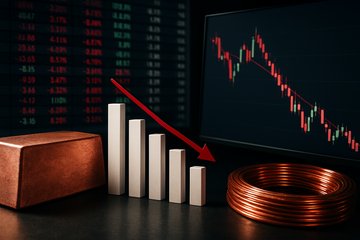
Copper Fell to Its Lowest Since July While Its Physical Market Stayed Tight: The Blue Sweep Broke Both Legs at Once
Copper's record $14,809/t rally rested on two political supports — a US tariff wall that pulled cathode into America and printed a COMEX premium, and an AI buildout both parties wanted. The Nov. 3 midterms took both out in one week: voters approved 40 of 41 data-center restrictions, and copper slid to its lowest since July even as the physical market stayed tight, because the scarcity was itself a tariff artifact. Korea's KOSPI took an 8.6% circuit-breaker halt and China's 10-year bond yield printed a record 1.58% low, so money is leaving a political premium, not a growth cycle. Own the tonnes and the gold hedge, not the copper premium.
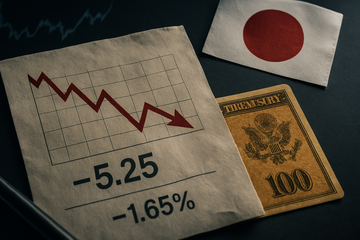
GPIF's First Loss in Six Quarters Was a Rates Shock, Not a Yen Shock — and It Puts a Price on Japan's $232 Billion Treasury Stake
Japan's sovereign savings fund lost ¥5.25 trillion, a −1.65% return, in the July–September 2026 quarter — its first loss in six quarters — and the cause was neither an AI-driven equity unwind nor a weak yen. Global sovereign yields rose across the curve after the Bank of Japan, the Federal Reserve and the ECB all hiked in September, while the yen actually strengthened about 3% on coordinated intervention and erased the translation gain on foreign equities. What matters for US duration is arithmetic: at a 5.29% 10-year Treasury yield and a 1.25% Tokyo policy rate, the yen return on a hedged Treasury is roughly 1.6%, about 140 basis points below the 3.055% yield on a 10-year JGB. That gap makes the world's largest foreign holder of Treasuries a price-sensitive marginal buyer, while the fund's own mandate caps how much it could even sell.

Korea's Defense Backlog Fell 4.1% in One Quarter — the Market Keeps Paying for a Drone Pivot With One Export Order
Seoul's arms makers have lost roughly two-thirds of their market value from their 2026 peak, and the Nov. 5 selloff after the US midterms was the trigger rather than the cause. The cause sits in the order books: Hanwha Aerospace, Hyundai Rotem and Korea Aerospace Industries together shed ₩3.06 trillion of backlog in Q3 2026, while Hyundai Rotem and Korea Aerospace Industries each won zero new overseas contracts this year. The pivot to drones and counter-drone systems is real in how Seoul buys and empty in what Seoul sells — the country has yet to export a single military drone, and LIG Defense & Aerospace has booked one missile sale to Malaysia. The investable question is not tanks versus drones; it is whether Korean order flow stops shrinking before a won that cut 13.2% against the dollar in ten weeks finishes the damage.
1-for-200, Then 1-for-40: Nasdaq's $1 Bid Rule Is Where the AI Selloff Reaches the Retail Account
Between Oct. 27 and Nov. 5, 2026, six Nasdaq-listed issuers put reverse splits and compliance extensions on the calendar: Solowin Holdings at 1-for-200, Accuray at 1-for-40, Jasper Therapeutics at 1-for-30, Robo.ai at 1-for-25, C3is at 1-for-5 after a 1-for-40 in August, and Intrusion with a second 180-day grace period running to May 3, 2027. None of them sells AI, and that is the point: what they share is a quote that fell below Nasdaq's $1.00 minimum bid and the compliance clock that follows, while the Nov. 5 AI unwind erased roughly $2.5 trillion of index value and repriced AI credit. The splits create no enterprise value, but they are the only mechanism that restores a quotable price without new capital, and they settle in the accounts of retail holders as odd lots and fractional cash, against roughly $315 billion of client margin loans at Robinhood, Charles Schwab and Interactive Brokers.
Oscar Health's Record Quarter Was a 36% Price Hike — and Its Own Guidance Books a Fourth-Quarter Loss
Oscar Health's third quarter looked like a boom: $5.14 billion of revenue, up 72%, a third guidance raise, and a swing to a $0.49 diluted profit. But membership rose only 27% while the price per member rose roughly 36%, inside a marketplace whose enrollment fell from 21.8 million to 19.2 million after enhanced subsidies expired — and a single $250 million risk-adjustment true-up was larger than the quarter's entire $178 million operating profit. Oscar's raised guidance actually implies a fourth-quarter operating loss of roughly $315 million to $415 million, because nine-month operating earnings already exceed the full-year range. For investors the question is not whether a managed-care tailwind exists; it is whether a genuinely cheaper cost structure and a redistributed book survive a 2027 market that KFF expects to shrink again.
2026-11-05
The 2028 Rate Cycle Is the Trade Nobody Priced: Part D's 50% Premium Shock and a Blue Sweep Pull in Opposite Directions
Two things landed in November 2026 that managed-care investors have not connected: Democrats took both chambers and are promising early-2027 action on Medicaid funding, while the 2027 Part D market repriced the average stand-alone premium for current enrollees from $34 to $51. The Part D shock is arithmetic, not sentiment — the base beneficiary premium is capped at 6% growth while the cost of the basic benefit rose about 25% — and it is already written into contracts, so it flows into the June 2027 bid file. Medicaid is the mirror image: enrollment fell 5.1 million in twelve months, work requirements start January 1, 2027, and CMS is about to remove the uniform-rate-increase tool states used to plug their Medicaid gaps. Both price files lock in mid-2027, before the new Congress acts, and the asymmetry favors the names that win drug volume over the names that win Medicaid enrollment.
Beijing Made Farm Purchases Conditional — and Corn Basis Cracks First, Not Soybeans
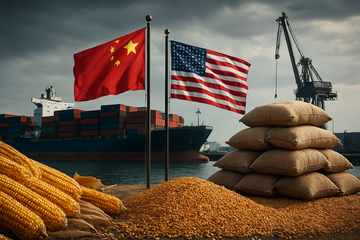
On Nov. 5, 2026 China's commerce ministry said U.S. farm purchases would move only if Washington and Beijing strike a reciprocal tariff-cut deal, turning a $17 billion annual pledge into a condition rather than a contract. The pledge is already running at a seven-year low: $7.2 billion of non-soybean farm goods bought January through September, with soybean buying now steered by state buyers rather than commercial crushers. The first crack is not in soybeans, whose basis sits above its two-year average on a record crush, but in corn, where inland basis hit record lows for the season, and in nitrogen, where China's export quotas took Indian urea tenders from $959 to $352 a ton between April and October. Positioning follows the cash basis and the fertilizer curve, not the bean headline.

Crypto's $300 Million Bought Votes, Not Rules: Inside the Fee Pool That Now Follows Rates, Not Congress
The crypto industry spent more than $300 million across the 2024 and 2026 cycles, won 29 of the 34 races it funded, and still handed both chambers to the party whose committee chairs have said oversight comes first. The CLARITY Act died on a 49–50 Senate vote and expires Jan. 3, 2027, while a Democratic replacement bill moves jurisdiction back toward the SEC and adds ethics provisions aimed at the White House. But the money at stake is not set in Washington: Circle's reserve income fell 8% year over year even as average USDC balances grew 8%, because the reserve return rate dropped 61 basis points to 3.5%, and banks have already issued deposit tokens onto public chains. For Coinbase, Circle and Robinhood, this is now a rate trade with an oversight overlay, and the deposit wall is the competitor that needs no election.

California Just Made Wealth Untaxable and Florida Just Cut $45.8 Billion From Property Taxes: Both Votes Bill the Next Arrival
Two days apart, California voters passed a constitutional ban on taxing wealth while making the top income tax permanent, and Florida voters approved the largest property-tax cut in the country. The mechanism is identical: protect the incumbent holder of the asset and shift the cost onto whoever arrives next. Florida's version arrives as millage-driven property taxes on rental housing, roughly 15% higher by 2031; California's arrives as a July 1, 2027 Medi-Cal eligibility cliff. The tradable consequences run through Florida property insurance pricing, rental landlords, homebuilder incentive loads and California managed care.

Anthropic Just Proved You Can Cryptographically Verify Which Model Wrote What — and Refused to Deploy It. Post-Election, That Gap Is the Compliance Tollbooth Nobody Bought
Anthropic's Nov. 2, 2026 release of FlashProve — an Apache 2.0 zkSNARK system that lets anyone verify a reply came from a specific committed set of model weights — is the first real answer to a question regulators and enterprises have been circling for two years: not \"was this AI-generated\" but \"which model, exactly, produced this.\" The lab itself says it has no plans to deploy the system at Anthropic or any other lab, and the economics explain why: proving a 1,024-token reply costs 70–95x the GPU time of running the model, with an 18.78 MB proof and a 17-second CPU check. With Democrats now holding both chambers after sweeping seven Senate seats and at least 24 House districts, the compliance demand for model-identity attestation is arriving faster than anyone has built the supply chain to meet it. The near-term money lands on the provenance infrastructure vendors — Adobe via C2PA, Digimarc via the verification API — while the long-term prize sits with whoever owns a per-model commitment registry.

Moonshot's 8,000 Blackwell GPUs in Europe Carry a ~$666M-a-Year Price Tag — About Six Times What Oracle's Canceled Tencent Lease Implied
Washington's chip ban is no longer being enforced at the border; it is being enforced in contracts, and the price shows up in the rent. Moonshot AI's reported talks about leasing clusters of 8,000 or more Nvidia Blackwell GPUs from European neoclouds — roughly $666 million a year at published list prices, and 30% to 50% more upfront than a non-Chinese customer would pay — are the clearest measure yet of what the third-country rental channel costs after Nvidia capped Chinese business at 49% and Oracle scrapped a $7 billion lease to Tencent. For investors the channel is immaterial to Nvidia's revenue, punitive for Tencent, and a pricing-power windfall for European capacity owners such as Nebius and CoreWeave, with the real risk sitting in contract language and in the stalled Remote Access Security Act rather than in chips.
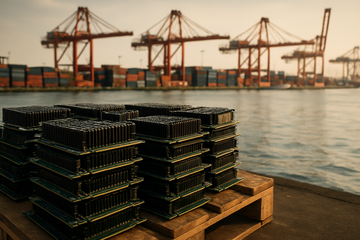
600,000 NVIDIA GPUs Are Stranded in Hong Kong — and Beijing Now Holds a $51 Billion Pricing Option
Reuters reported on Nov 5, 2026 that roughly 600,000 Nvidia AI chips are sitting in Hong Kong waiting for a mainland import approval that Beijing is withholding, even though Washington already cleared the shipments for export. The chokepoint has flipped sides: with Nvidia's own guidance assuming zero China data-center compute revenue, the stranded pile is no longer a US earnings problem but a China pricing and share problem — mainland street quotes for an eight-card H200 server ran past 6 million yuan, roughly four times the official chip price, while IDC data put Nvidia's share of China's data-center AI chip market at 34% in the first half of 2026. Upstream is insulated either way because TSMC redirected capacity and memory is sold out, while downstream buyers are rationed at 5% to 10% fill rates on approved cards and paying multiples of list price to get the rest. The investable question is no longer whether Nvidia can ship to China, but who owns the option to let China buy — and at what price the survivors pay.

Record Imports, a 0.7% Smaller Deficit, and a 3% Wider Real Gap: The Trade Number Stopped Measuring Trade
September's $105.0 billion goods-and-services deficit looked like a narrow improvement, and that is precisely the problem. In the same release the inflation-adjusted goods gap widened 3.0% to $119.5 billion, because US export prices ran 11.6% above a year earlier while import prices rose 8.1% — and the customs accounts showed $19.4 billion of tariff refunds paid back to importers against $25.3 billion of new collections. The headline now blends export-price inflation, a refund line booked straight into retailer cost of sales, and an AI capital-goods boom that turned computers into the largest import category on record. For investors, the deficit has stopped being a scorecard for the tariff wall and become a gauge of hyperscaler spending, a fiscal transfer, and — with Democrats controlling Congress from November 3 — the binding constraint on what Washington can afford to pass.
2026-11-04

73% of AI Political Ads Shipped Unlabelled: Meta, Google and TikTok Now Pay to Verify Ads They Didn't Make
More than $187 million of AI-generated political advertising ran in the 2026 midterm cycle, and 73% of the 220 ads tallied on Oct 15 carried no AI disclaimer at all — because a label costs an ad 31.5% of its click-through rate, per the NYU Stern study cited in the Interactive Advertising Bureau's August 2026 disclosure framework. With no federal mandate and roughly 30 inconsistent state laws, the verification bill has moved from the campaign to the platform: Meta now detects third-party AI creatives itself, Google keeps the check at the point of purchase and pushes attestation onto the advertiser, and TikTok declines the political ad market entirely. Democrats now control both chambers, so this becomes a 2027 hearing-risk line rather than a revenue event: the political book is 0.08% of Meta's trailing revenue, but it is 100% of the argument a congressional committee will have about what the platforms did and did not check.

China's $120 Billion Mine-Stake Spree Is the Supply Chain Washington Cannot Screen
Chinese buyers have committed more than $120 billion to overseas mines and upstream processing since 2023, and $8.8 billion to mineral acquisitions in the first nine months of 2026 alone — on pace to be the highest annual total since at least 2018 — while Chinese firms are expected to double outbound mining investment over the next five years. None of that registers as an export control, a tariff line or a screened transaction, because Beijing is buying the right to own the metal rather than the right to ship it. The proof points are a Chinese antitrust condition bolted onto the $54 billion Anglo American–Teck Resources merger, a state-owned group circling the shareholder that holds a stake in MP Materials, and a Congolese government that just showed equity holders cannot outrun the host state. The investable question is no longer who exports the metal; it is who owns the mine, holds the offtake and can pull the licence.
What to expect
Evidence-first notes with a visible point of view.
This section collects sharp takes on earnings, shareholder meetings, and market structure. Each new piece should make the thesis, the facts, and the implications obvious within the first few screens.
Expect direct analysis, not generic commentary.
Expect the data to be explicit and the argument to be easy to follow.