AI & Software
Where AI spending is actually landing
Model releases, enterprise adoption and software margins, read for what they do to revenue — across the labs, the platforms and the software they run on.
2026-11-06


The Marginal Buyer of Energy Is a Data Center — and Baker Hughes Already Holds $39.4 Billion of Those Orders
At ADIPEC on Nov. 5, 2026, Baker Hughes's Lorenzo Simonelli pitched a \"demand decade\" while bp's Meg O'Neill told CNBC to plan for a lower-price environment. They were describing two different cycles, and only one of them is investable. The volume cycle is real and already contracted: Venture Global has committed up to 11.52 GW of behind-the-meter power with GE Vernova and Baker Hughes, Vistra has contracted 2,609 megawatts of nuclear output to Meta, and Baker Hughes' industrial backlog hit a record $39.4 billion in Q3 2026. That is why the cycle survives the AI capex trims that knocked the power complex 30% to 42% off its 52-week highs — the buyer signs 20-year contracts while the equity market still prices a one-year budget. Trade booked backlog and contracted off-takers, not barrels.

Claude Reads Your Bank Account but Cannot Move Your Money — and Plaid Just Became the Toll Booth for Every AI Lab
Anthropic put Personal Finance into Claude on Nov. 5, 2026: US-only, paid tiers only, read-only, and running on Plaid's rails. Six months after OpenAI opened ChatGPT Finances to every US tier, both labs now buy the same account connectivity from one private aggregator that bills by connected account and by successful API call. The read path is where consumer AI can monetize today; the write path, where interchange lives, still belongs to the card networks building agentic rails. Investors are being asked to price that grid in real time — Anthropic filed its IPO prospectus on Oct. 26, the networks keep compounding services revenue, and the bank-technology vendors are already choosing which lab to build for.

Cloudflare Grew 39% and Fell 280 Basis Points on Gross Margin: the Edge AI Toll Is Real, the Inference Bill Is $461 Million of Commitments
Cloudflare's third quarter was the first print where metered agent traffic showed up as growth while the cost of serving it showed up as margin: revenue rose 39% to $782.5 million and GAAP gross margin fell 280 basis points to 71.2%, with only $4.1 million of the $225.3 million cost of revenue being stock compensation. The $34.1 million GAAP net loss is mostly a stock-compensation and restructuring story — stock compensation rose $64.2 million year over year and restructuring added $11.0 million — so the durable bill is contracted, not incurred: $461.1 million of compute and co-location agreements signed in October 2026 on three-to-ten-year terms, on top of network capital spending at 15% of revenue. The profit split is being settled upstream, where NVIDIA holds a 75.0% gross margin and SK hynix an 80% operating margin, which leaves the edge platform paid in growth and in the right to meter the traffic.

Dropbox's $350M Tigris Bid Prices S3 Compatibility at a Commodity Level — While the Drive Makers Keep the Pricing Power
Dropbox agreed on Nov. 3, 2026 to buy S3-compatible object-storage startup Tigris Data for about $350 million in cash — its largest acquisition since 2007 — and wrapped it in DBX Agent Cloud, a storage product sold to developers building AI agents. The read-across is not that storage software is scarce: the S3 API now has at least four credible implementations, and Dropbox paid roughly 11 times everything Tigris has raised and about 61% of the enterprise value of the only listed pure play in the layer, Backblaze. What the price reveals is where the durable margin sits: Seagate and Western Digital grew revenue 61% and 55% year over year at 57%-plus gross margins on AI exabyte demand, while the software toll layers convert that same demand into 53% ARR growth on $6.3 million of trailing capex. For investors the toll is real but the economics accrue upstream to the bytes, while the software layer's pricing power is capped by a $0.015 per gigabyte-month zero-egress card that Cloudflare publishes.

IREN Deferred $4 Billion of ARR at Its Customer's Request — and $2.5 Billion of Deferred Revenue Shows the Cash Was Already in the Door
IREN moved its more-than-$4 billion contracted AI cloud ARR target from December 31, 2026 to January 31, 2027 (possibly February 28) after a customer-requested design change and supplier timing, while revenue backlog rose 22% sequentially to $20.3 billion and the program stayed fully contracted and fully funded. Deferred revenue of $2.54 billion and $2.25 billion of net cash show the gap is a commissioning-and-acceptance problem, not a demand or funding problem. The read-through: silicon orders were already placed — Dell Technologies racks and 50,000+ NVIDIA B300s — so NVIDIA and AMD order flow is intact while the neocloud revenue multiple, and the leverage sitting behind CoreWeave and Nebius, is what breaks first.

Private AI Prints41x–55x Sales, the Public Tape Prints 6x–16x: Anthropic's IPO Is the Arbitrage Test
On Nov. 5, NEPC's Q3 2026 report put AI at 82.7% of US venture deal value — $426.7 billion of a pie that shrank from $253.5 billion in Q1 to $98.4 billion in Q3 — while the same session took5.5% off the Nasdaq Composite and roughly $5 trillion off AI and chip stocks since Oct. 6. The divergence is not a quirk to be arbitraged; it is a funding-arbitrage mechanism, and it has already raised the price of the marginal AI dollar, with AI infrastructure debt trading at 15% to 16% yields. The public tape is repricing Alphabet and Meta for cash burn and depreciation, not the margins of the suppliers who still get paid — which is why Micron sits at roughly 4.9x forward earnings and SK hynix at 4.3x trailing after losing half and58% of their value, respectively. Anthropic's IPO pricing, with a reported range of $1.5 trillion to $2.0 trillion, decides which mark survives.
Spend Flatlined, Tokens Surged 37%: Ramp's Card Data Is the Brake the AI Capex Chain Isn't Pricing
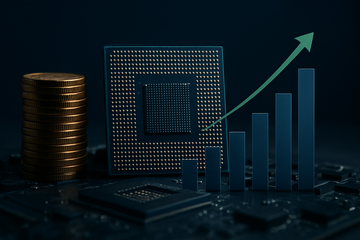
Ramp's transaction data shows AI token volume up 37.1% in the week ending October 23, 2026 while token spend rose only 8.9%, because the blended price per million tokens fell 26.8% to $0.56. That is price deflation, not demand collapse — adoption still widened to 55.9% of businesses — but it means the dollars funding GPUs now come from bond issues and equity raises rather than from enterprise token budgets. Alphabet's third-quarter free cash flow was -$9.1B, Amazon's -$34.8B and CoreWeave's trailing twelve months -$13.7B, while the layers paid in cash — Nvidia, Micron and SK hynix — run 75% to 87% gross margins. Model 2027 compute revenue off price per token and depreciation, not off application-layer spend growth.
2026-11-05

Anthropic Paid a Newswire for the First Time — and Getty Images's Chapter 11 Shows What AI Content Is Worth
Anthropic signed its first paid content license with the Associated Press, putting real-time, AP-attributed election data into Claude during the November 2026 midterms, with the price, the term and the scope all undisclosed, and the news broke days before Anthropic's IPO roadshow. The invoice is trivial beside the $895.4 billion Anthropic has already committed to buy compute and infrastructure, which is the real finding: labs have become paying customers of journalism on terms that leave the price of AI's facts unpriced. For the sellers, the receipts are rounding errors — Alphabet's publisher pilot pays about one-tenth of one percent of ad revenue, and Getty Images signed with OpenAI in June before filing for Chapter 11 in October. Treat AI content as a rounding-error revenue line for publishers and a rounding-error cost line for labs, and reserve judgment on the only number that could change the arithmetic: what training data costs if fair use does not survive.

Anthropic Just Proved You Can Cryptographically Verify Which Model Wrote What — and Refused to Deploy It. Post-Election, That Gap Is the Compliance Tollbooth Nobody Bought
Anthropic's Nov. 2, 2026 release of FlashProve — an Apache 2.0 zkSNARK system that lets anyone verify a reply came from a specific committed set of model weights — is the first real answer to a question regulators and enterprises have been circling for two years: not \"was this AI-generated\" but \"which model, exactly, produced this.\" The lab itself says it has no plans to deploy the system at Anthropic or any other lab, and the economics explain why: proving a 1,024-token reply costs 70–95x the GPU time of running the model, with an 18.78 MB proof and a 17-second CPU check. With Democrats now holding both chambers after sweeping seven Senate seats and at least 24 House districts, the compliance demand for model-identity attestation is arriving faster than anyone has built the supply chain to meet it. The near-term money lands on the provenance infrastructure vendors — Adobe via C2PA, Digimarc via the verification API — while the long-term prize sits with whoever owns a per-model commitment registry.
Palantir's U.S. Commercial Revenue Just Passed Government. That Changes Its Risk Profile, Not Its 54x Sales Multiple
Palantir's third-quarter print, reported Nov 2, 2026, put U.S. commercial revenue of $984 million above U.S. government revenue of $953 million for the first time, with total commercial revenue of $1.168 billion passing total government revenue of $1.146 billion. The crossover was won rather than forced: U.S. government revenue still grew 96% year over year, so federal exposure held near 41% of sales for a fourth straight quarter instead of shrinking. What the print changes is the shape of the downside — one quarter of U.S. commercial growth added $587 million of revenue, more than a 30% cut to federal revenue would remove. It does nothing for the multiple: at 53.7x trailing sales, roughly 46x the midpoint of its own fiscal 2026 guidance, Palantir already trades above every software comparable, and the stock fell 1.65% on Nov 3 as Democrats took the Senate and were projected to take the House, because investors were trading a bookings deceleration rather than a political overlay.

Snap Fell Over 10% on a Half-Percent Revenue Miss — the Answer-Engine Print Was Reddit's, Six Days Earlier
The market punished Snap for four million missing daily users, not for a broken ad business: Q3 revenue of $1,722 million missed the $1.73 billion consensus by roughly 0.5%, while ARPU of $3.48 actually beat the level implied by consensus, adjusted EBITDA of $383 million beat by 13.5%, and fourth-quarter guidance landed above the street. The genuine answer-engine evidence came six days earlier at Reddit, which disclosed Google search referrals falling by more than a million a week and guided daily uniques to a low-double-digit decline, and at Alphabet, which said AI Mode monetizes less per search than classical search. So the discovery budget was not taken; it was repriced, and Snap now sells the most repriced inventory on the board — upper-funnel brand ads, whose decline management attributed to weak consumer-goods spending. The deeper issue is that Snap is quietly changing the scoreboard, retiring daily users as its headline metric from Q1 2027 at the exact moment user growth halved, while trailing stock compensation of roughly $1.03 billion exceeds trailing free cash flow of $777 million.

Uber's 20% Bookings Beat Came With a 510-Bp Mobility Take-Rate Bill: Buying Drivers Now, Automating in 2028
Third-quarter results at Uber Technologies split cleanly: gross bookings of $59.82B, up 20%, and adjusted EBITDA up 31%, but Mobility gross bookings rose 18% to $29.51B while Mobility revenue fell 2% to $7.52B, taking the segment's revenue margin from 30.6% to 25.5%. Management blamed elevated fuel prices and thin driver availability in international markets, then shifted incentive dollars from riders to drivers to rebuild marketplace balance. The automation investors are underwriting is arriving on the supply side, not the demand side: third-party AI agents filled four rides in the quarter, while roughly 700 driverless vehicles by year-end and a 35,000-vehicle Lucid commitment carry the marketplace into 2028 — the year Waymo ends Uber exclusivity in Austin and Atlanta.
No Fed Put: November 5's 5.5% Nasdaq Rout Prices What Warsh's October Hold Does to AI Capex
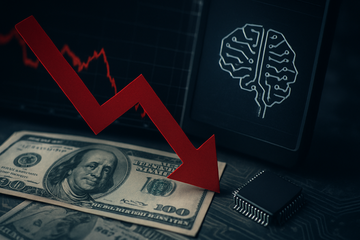
On October 28 the FOMC held at 3.75%–4.00% on a 10–2 vote, upgraded the economy to 'expanding at a strong pace', left inflation 'elevated', and Chair Warsh told reporters that interest rates 'get in the cracks' and that AI investment is not insulated from monetary policy. Six days later Democrats took both chambers, and on November 5 the AI complex cracked: the Nasdaq Composite closed 5.5% lower, the Philadelphia Semiconductor Index fell 9%, the VIX jumped 71% to 28.3, and the 10-year Treasury rallied to 4.84%. Because roughly a third of hyperscaler capex is now debt-financed and heading to 35% in 2027, the marginal AI dollar must clear a credit market rather than a central bank — which sorts the trade into balance sheets that can fund the boom and balance sheets that need it to continue.
2026-11-04

Garry Tan's $200,000 Token Bill Prices an AI Employee Like a Utility — and It Breaks Seat Pricing
Y Combinator CEO Garry Tan said he spends $100,000 to $200,000 a year on model tokens to run AI agents, which is the first operating line anyone has put on the record for what vendors call an AI employee. At Anthropic's published prices that bill buys roughly 167 premium seats, about 225,000 finished agent jobs, or 1.47 times the median software developer's salary — so the unit of AI labor is consumption, not a licence. The pricing industry is already repricing to match: Microsoft switches new Microsoft365 Copilot Business licences to usage-based billing by default from December 1, 2026, and Salesforce sells the same agent by conversation or by Flex Credit. Margin migrates with it, from seat vendors to meters, memory and compute, while Chinese open-weight models deflate the price of a token faster than seat prices can fall.

73% of AI Political Ads Shipped Unlabelled: Meta, Google and TikTok Now Pay to Verify Ads They Didn't Make
More than $187 million of AI-generated political advertising ran in the 2026 midterm cycle, and 73% of the 220 ads tallied on Oct 15 carried no AI disclaimer at all — because a label costs an ad 31.5% of its click-through rate, per the NYU Stern study cited in the Interactive Advertising Bureau's August 2026 disclosure framework. With no federal mandate and roughly 30 inconsistent state laws, the verification bill has moved from the campaign to the platform: Meta now detects third-party AI creatives itself, Google keeps the check at the point of purchase and pushes attestation onto the advertiser, and TikTok declines the political ad market entirely. Democrats now control both chambers, so this becomes a 2027 hearing-risk line rather than a revenue event: the political book is 0.08% of Meta's trailing revenue, but it is 100% of the argument a congressional committee will have about what the platforms did and did not check.
AMD Doubled Data Center Revenue and Guided 2027 to +80%: The Market Paid 6.5% Because HBM4 Now Sets the Margin
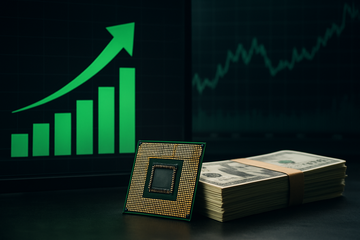
AMD's fiscal Q3 2026 data center revenue jumped 97% to $8.55 billion and management guided 2027 revenue growth above 80%, yet the shares rose only about 8% the morning after the release and sit roughly 27% below their 52-week high. The argument is inside the guide: roughly $17 billion of December revenue at about 55% non-GAAP gross margin, down from 56%, because rack-scale Helios revenue carries memory, switches and power that AMD buys rather than makes. That scarcity rent is visible upstream, where SK hynix earned an 80% operating margin and Micron an 86.8% gross margin in the September quarter, while AMD turned only 4% of revenue into free cash flow. The second-source mandate is genuinely won, with five named hyperscalers running production racks, but the margin on it accrues first to the bottlenecks, not to the accelerator vendor.

Apple's 18+ Gate on AI Companions Is the AI Safety Rule Congress Still Can't Pass
Apple has done what Washington has not: from November 16, 2026, any App Store app whose virtual companion engages users in sexual or romantic content must carry an 18+ rating, with declarations due January 12, 2027, while the federal GUARD Act that would bar minors from AI companions still has no floor vote. Enforcement happens where installs happen — Apple's own adult-confirmation pipeline blocks 18+ downloads in Australia, Brazil and Singapore, and the Declared Age Range API hands apps an age signal — so the compliance bill lands on companion apps while Apple's first-party assistant, sold outside the App Store, carries no descriptor at all. Roblox has already run the same experiment, cutting daily users 9% and bookings 12% in a single quarter, which is the best available price tag on a permanent age gate. For investors, the binding constraint on AI consumer apps has moved from model capability to distribution eligibility, and whoever writes the eligibility rule captures the category.

$490 Million and Zero Sold: Ballistic's AI-Security Fund Is a Bet on Exit Math, Not a New Category
On November 2, 2026, Ballistic Ventures filed to raise $490 million across two vehicles — a $360 million third flagship and a $130 million Fund B — and both SEC notices report $0 sold with no first sale. The filings show a specialist crossing from seed into growth, not a generalist widening its mandate, and they expose the real constraint: the exit. Private AI-security marks are set by two listed comparables, with Island's $6.4 billion valuation implying about 32x revenue against CrowdStrike's 45.7x, while the rest of the listed security complex clears at 7x to 11.5x. For public shareholders, that gap decides who ends up buying Ballistic's winners — and who gets left holding the fund.

Big Tech Added $750 Billion After the Blue Sweep — Because Voters Just Made New Data Centers Harder to Build
Democrats took both chambers on Nov. 3, 2026, and the market split the AI complex along one line: platforms that already own compute gained roughly $750 billion in market value, while the companies that must build new data centers were sold hard. Voters in 36 of 36 counted local ballot measures backed restrictions on data center construction, Texas elected a governor promising an immediate moratorium, and the four largest hyperscalers now spend 91 cents of every operating cash dollar on capital expenditure. A permitting brake is therefore a pricing and cash-flow event for Amazon and Microsoft, which can charge more for compute they already own, and a revenue event for everyone downstream of a new site, from CoreWeave to Constellation Energy. This was not a deregulatory trade: Democrats closed off federal preemption of state AI law, so what the market bought was a capex brake, not a regulatory gift.

Disney's 20% Cost Target Is a Pricing Signal, Not a Demand Signal — and It Cuts Less Than Netflix's 6%
Disney is asking some managers for 20% cuts in annual costs across the TV networks and the motion picture studio, a move Bloomberg reported on Nov 2, 2026, with savings redirected into programming, technology and the parks. Treat it as a price, not a volume call: in the June quarter Disney grew Entertainment revenue 6% while holding segment costs flat at $9,757M, turning that into 64% segment operating income growth to $1,680M, so the cost base — not the audience — is the variable being reset. The headlines overstate how much Disney is cutting and understate what the number means: Netflix cut 6% of its workforce on Oct 14, Comcast booked a $1B-plus charge on Oct 22, and the merged Paramount Skydance group is chasing $6B-plus of savings, so 20% is becoming the sector's cost benchmark. The milestones are dated: fiscal 2026 results and the first post-cut headcount on Nov 17, 2026.
What to expect
Evidence-first notes with a visible point of view.
This section collects sharp takes on earnings, shareholder meetings, and market structure. Each new piece should make the thesis, the facts, and the implications obvious within the first few screens.
Expect direct analysis, not generic commentary.
Expect the data to be explicit and the argument to be easy to follow.